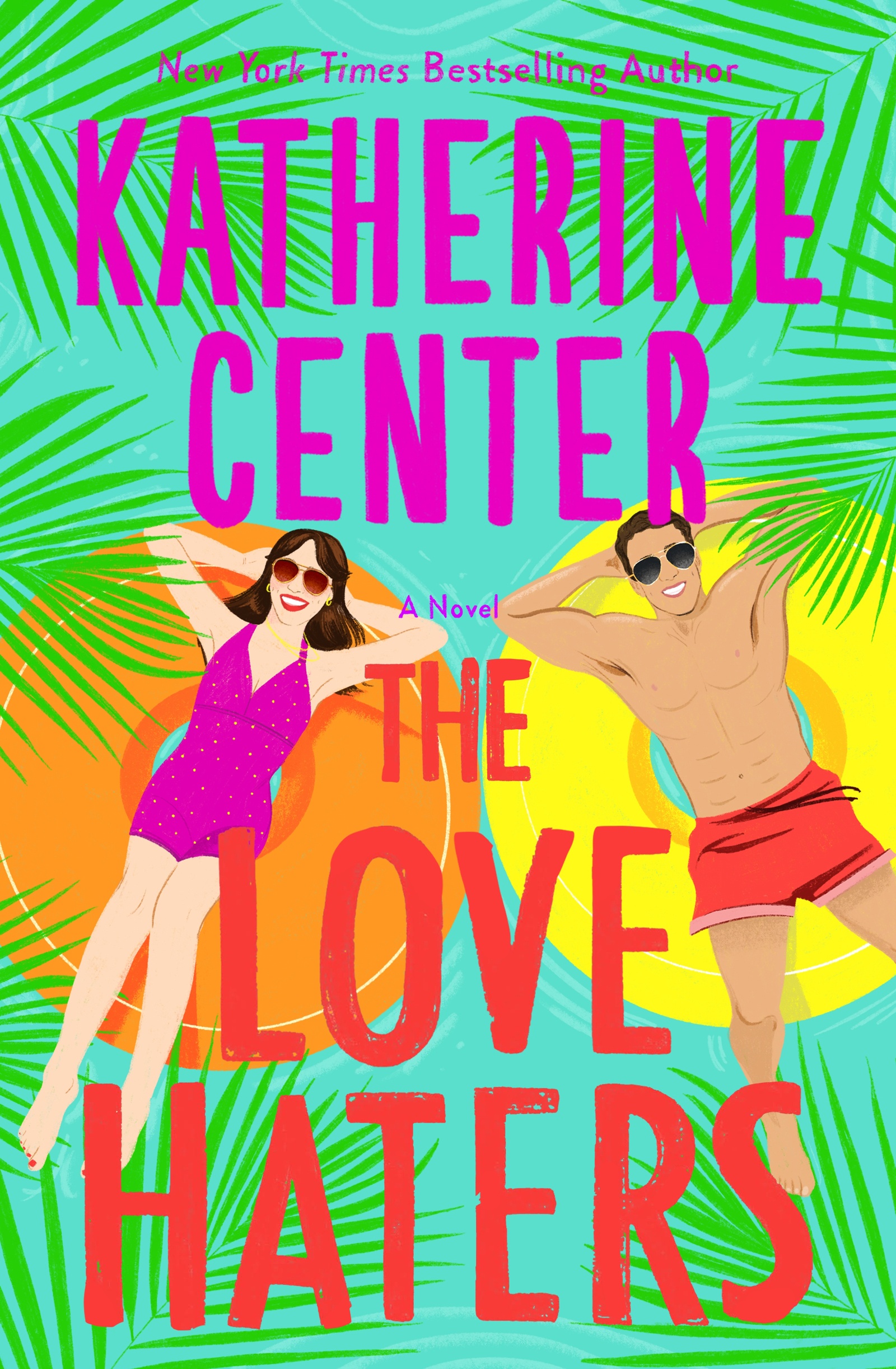
The Love Haters
About this book
Katie Vaughn is trying to keep her career afloat when her company offers one improbable reprieve: produce a profile of Tom “Hutch” Hutcheson, a celebrated rescue swimmer who happens to be her colleague’s brother. The job would be difficult even without her fear of water and the recent upheaval she has told almost nobody about.
Cole, the colleague who arranged the shoot, has also described Katie as his girlfriend. That fiction gives her access to a close-knit family in Key West and puts every honest response on unstable ground, especially as Hutch proves far more perceptive than the uncomplicated hero the film is meant to sell.
Training flights, ocean rescues, a large dog, and the peculiar intimacy of documentary work keep the romance tied to things Katie must actually do. Her body and confidence are not makeover problems; the story turns on whether she can stop organising her life around anticipated rejection.
The Love Haters is a warm contemporary romance about professional reinvention and the exhausting work of appearing fine. Katherine Center gives the buoyant setting real emotional weight without mistaking cheerfulness for the absence of fear.
Read a sample
5,012 words
Plain text
From the opening
One
IT WAS QUITTING time on a Friday, but Cole Hutcheson didn’t care.
Nobody cared too much right then, in fact. Because we were all about to get laid off.
Or, too many of us were, anyway.
That’s when Cole showed up at my cubby, perched on the edge of my desk, and asked if I wanted to spend a few weeks in Key West filming a video about a US Coast Guard rescue swimmer.
My answer, of course, was, “Sure.”
Did I know what a rescue swimmer was? Could I locate Key West on a map? Could I tell you anything about the US Coast Guard—other than it had something to do with guarding the coast? Did I even like the ocean?
All no.
But it didn’t matter.
That’s how it was in this business: the cutthroat world of mid-level video production.
That’s also how it was when the company director—a tall lady with tall shoes who we all just called “Sullivan”—was planning to lay off a third of the department over the next month. Most likely the newest employees. Which included me.
She sent an email about it, of all things. An email so full of jargon about rightsizing and rebalancing and adjusting to levels of demand that I had no real idea what it said.
I skimmed it, honestly. And went back to work. For a few minutes.
Until the stampede of office-wide panic.
I would have said yes to the Coast Guard project, anyway. But I guess Sullivan’s email made me say yes faster.
As soon as I agreed, Cole—my work superior—gave me all the details. Rapid-fire, in our now mostly vacated office. It was fine. He was doing me a favor. This was the kind of assignment that could demonstrate my value.
As of today, I needed to get on that.
I grabbed a notebook to jot down the important stuff.
“It’s a Coast Guard air station in Key West,” Cole said.
“Shouldn’t it be a water station?” I said, half joking.
Cole ignored me. “It’s to shoot a recruiting video. They want to film a rescue swimmer on a helicopter—”
“A swimmer on a helicopter?” I interrupted.
Now Cole squinted at me like he couldn’t decide if I was serious.
Then, he made a decision. “Right,” he said, and started to stand up. “Maybe this isn’t for you.”
“Wait!” I said, holding out my hands like Stay until he eased back down.
But Cole was studying me. “Do you know anything about the Coast Guard? At all?”
The stakes of the situation were not low. If I could’ve pulled off a lie, I’d have lied. “Not really,” I said.
“You’re not gonna be right for this,” Cole said, with a headshake.
“I am gonna be perfect for this,” I countered. Bluffing, of course. “It’s the fact that I don’t know anything about the military that makes me the best choice.”
Cole waited, crossing his arms over his chest to brace against whatever bullshit I was about to offer up.
“It’s a promo, right?” I went on, thinking fast. “Which means our target audience will be people—like me—who know nothing. I can teach them as I’m learning! I’ll have a fresh perspective. I’ll see things others won’t.”
I wasn’t even sure what the job was yet, honestly.
But whatever it was, I needed it.
More accurately: I needed to not get fired.
Cole sighed and then seemed to make the real-time decision to continue this conversation on a provisional basis. In a tone you’d use with a toddler, Cole said, “The Coast Guard flies helicopters out over the big ocean so their swimmers can rescue people out of the dangerous water.”
A new visual came to my mind. I had definitely seen images of rescue guys jumping out of helicopters into the ocean. “That’s the Coast Guard?” I asked. “The guys in the flippers?”
Cole blinked so slowly it read as sarcastic. “Yes. But don’t call them flippers.”
I tried to think of another word for flippers.
“They’re fins,” Cole said. Then another headshake. “This should go to someone else.”
“No, no!” I said. “I’ve got this.”
“If I hear the word flippers again, you’re out.” Then he added, “I almost gave this to Jaden.”
Cole gave most things to Jaden, who had been here two months longer than me. “Why didn’t you?”
Cole shrugged. “He can’t swim.”
Okay, don’t tell anybody: I also couldn’t swim.
“Not swimming is a deal breaker?” I asked.
“I mean, yeah,” Cole said. “Half this job will happen in the water.”
“In the water?”
“In it, over it, near it.”
“Not under it, though, right? It’s not, like, a scuba-diving deal?”
Cole thought for a second. “No. These guys are swimmers, not divers.”
“So on the water—not in the water.”
“Unless things go horribly wrong.”
I shouldn’t have asked. But I did. “Horribly wrong?”
Cole shrugged. “The helicopter could go down in the ocean.”
“Does that happen?”
“It can happen. It has happened.”
Oh, god. I took a breath.
“And if it does happen,” Cole went on, “you need to know how to swim. Because helicopters flip upside down as soon as they hit the surface.”
Maybe he should give this to someone else.
But I nodded, all cool, like Sure. Then, I asked, in a Remind me again tone: “Why do they flip upside down?”
Continue reading the sampleClose the sample
Cole blinked. Clearly, he thought everyone already knew this. “You know those big spinny blades up top?”
I gave him a look. “Yes.”
“Just below them is the engine.”
I nodded, like, Huh.
“So helicopters are top-heavy,” he continued.
“So they just—roll belly-up?” I asked.
“Only if they crash.”
“But they don’t crash, right?”
Cole shrugged. “Sometimes they do. When it happens, it happens. The crew has to train for it. They have to get strapped into a simulator … and then practice getting out. And whoever we send for this project has to do that training, too.”
Wait—what?
“I’m sorry,” I said. “Whoever’s doing this video has to get flipped upside down inside a helicopter underwater?”
“In a simulator,” Cole said. “Insurance requires it.”
I shifted to a poker face. “Cool.”
I decided not to ask any more questions.
“Anyway,” Cole went on, refocusing. “Just making sure you’re fine with water.”
“Yes.” I nodded definitively. That wasn’t a lie, right? I mean, who isn’t fine with water?
“Great,” Cole said. “Because I’m trying to help you out here.”
He was? “You are?”
“Yes,” he said, impatient. “Jaden’s out, but I could’ve gone with Dylan. Or Arjun. Or Mila.” Other recent hires who were now also on the chopping block.
“Why me, then?” I asked, surprised I was on his radar.
“Because Sullivan’s about to lay off fifty percent of the company.”
“Fifty?” I said. “I heard it was thirty-three.”
“It’s fifty. It’s going to be a bloodbath. She’s restructuring everything. She’s hired consultants. You heard about her divorce, right?”
I nodded.
“Did you hear he cheated on her with his Pilates instructor?”
Oof. That was rough. I shook my head.
“And he did some kind of sneaky shit with the lawyers where he walked away with most of their money.”
Now I frowned protectively for Sullivan. Who I had never talked to.
“That’s what I’m saying. She’s got some rage to burn. And she’s channeling every ounce of it into turning this company into a profit machine. And that means getting rid of people like you.”
“People like me?”
“But I want you to stay. Because if she fires all the talented people, that makes my life harder. And I don’t need my life to be any harder.”
“You think I’m one of the talented people?”
“I do.” Cole shrugged.
This was news to me. “Since when?”
“Since the other night. When you told me about your dreams.”
Oh, god. Had I done that?
I thought back. We’d had a company dinner. I might have had a little too much to drink. Cole and I were the last two people in the rideshare heading home, and okay, to be honest … I might have gotten a little weepy about my long list of recent disappointments. And—ugh, yes—possibly overshared a few things.
Dammit, Katie! I scolded. Don’t tell people about your dreams!
“Sorry about that,” I said, wincing.
“It was strangely endearing,” Cole said. “I normally don’t notice junior employees too much. How long have you been here? Six months?”
I wasn’t that junior. “Twelve.”
He nodded. “The tears got my attention. You also told me about getting jilted—and I’ve been jilted myself.”
Was he sharing? Did he want me to commiserate? Were we about to bond?
But then he went on. “You just seemed so … what’s a nicer word for pathetic?”
“Pitiable?” I offered.
“Exactly. Pitiable. Do you remember when you blew your nose straight into your blouse like a Kleenex?”
I did now.
“You also told me about the videos you’ve done for your ‘Day in the Life’ project,” Cole went on. “And I went home and watched one. And it was surprisingly good.”
This conversation was like a Ping-Pong game. “It was?”
“Your cinematography is strong. Your camera angles are unexpected. And you get fantastic emotion out of your interviewees.”
That was a specialty of mine, for better or worse: making people cry.
I didn’t realize how good that encouragement would feel until it was happening. Cole might be overly confident, and a smidge narcissistic, and not exactly my favorite person in the office. But he was good at his job.
And when a person who’s good at something says that you are also good at that same thing … it’s nice. No matter how much trouble Cole Hutcheson was about to cause me, I have to admit that him flat-out acknowledging my professional strengths like that was inspiring.
Because I really had been jilted.
And I really did love my work.
And I really did not want to get fired.
“That’s why you’re helping me?” I asked.
Cole counted off on his fingers. “I’m helping you because: One, now I’ve seen your stuff, and it’s good. Two, if you get fired, that makes my life harder. And three: this job fits your topic.”
My topic.
Oh, god. Had I told him about that, too?
I worked at this corporate video company on the weekdays. You know what corporate videos are, right? They’re like if a TV commercial and a documentary had a baby—but the TV commercial had all the dominant genes. Hallmarks of corporate videos include branding, marketing, and client pleasing. Plus, lots of upbeat, royalty-free music.
Nothing wrong with that.
It was a fun job in a nice building with pleasant colleagues. I had health insurance and a paycheck—at least for now. No complaints.
But. The thing about doing creative work for hire is that you’re not exactly following your own vision. You’re following your vision of what you think somebody else’s vision is.
Which isn’t the same thing.
So, on the weekends, I did my own thing.
A passion project.
I made charming little six-minute mini-documentaries for my fledgling YouTube channel.
And the mini-documentaries were about … heroes.
That was my topic.
I profiled people who had pulled children out of burning cars, or intercepted robberies, or plunged headfirst into riptides. I filmed them at their homes morning, noon, and night and got them to tell me the story of the heroic thing they’d done—and why, and how, and if it had changed them, and what it meant.
A “Day in the Life.” That’s all. A little portrait of an ordinary person who had once decided to do an extraordinary thing.
The idea had come to me at a time when I was feeling, shall we say, just so disappointed in humanity. A time when I really needed to hear stories like that: of kindness and heroism and sacrifice. Of people doing good.
It worked this way: I spent exactly twenty-four hours with each subject, filming every aspect of that one day—from drinking coffee in the morning, to putting on socks, to feeding the cat, to driving to work. All that was B-roll, which is videographer-speak for filler images, except I didn’t use it as filler. I used it as the whole framework. While I was there, I interviewed the subjects to get the story of the heroic thing they’d done, from start to finish, in great detail. That’s an art: Asking the right questions. Getting the real story about what it was like—really like—to be a hero.
I filmed the interviews, but then I just used the voices. Heroic people telling their own stories for six minutes—with lots and lots of B-roll flashing by on the screen to keep it interesting.
I’ll just say it. The videos were cool.
Unnoticed, but cool.
Here’s a twist. So far, I’d only featured women. Not for feminist reasons, exactly—but because I truly spent a full-circle day with these folks, even sleeping at their houses. They had to agree to that up front in the contract. One full day of me filming everything. You could get impossibly amazing shots that way: people blow-drying their hair in slo-mo, or doing morning sit-ups at sunrise, or the steam rising off that first cup of coffee. Not to mention pasta noodles twining on forks, phone calls with sick parents, cuddles with pets. Sighs, frowns, laughs. Tears.
Personal things. True things.
The fact was, I just wasn’t going to ask some random man out of nowhere if I could sleep over at his place alone.
Not even a hero.
Maybe I’d add some men to the series when I was rich and successful and could bring a crew with me. Or a bodyguard. But until then, it was ladies only.
But next, Cole said, “That’s why I’m giving you this. The guy we’re profiling for this promo is a bona fide hero. So you should go to Florida and make the official video—but, while you’re there, do a ‘Day in the Life’ with him on the side.”
Ah. What was it I just said about saying yes and figuring it out later?
Okay, fine. This guy being a guy was problematic. But I’d seen enough opportunities come and go to keep that to myself.
“What kind of hero is he?” I asked.
“You definitely saw it on the news. It was everywhere a few years back. He saved a golden retriever that fell off a cliff.”
I sat up. “Jennifer Aniston’s dog?”
“Yeah.”
“I know that video,” I said. “That video was everywhere!”
“Right? I know. It would have been everywhere anyway because the footage was so dramatic—”
I was nodding now. “He got lowered down to the beach on that wire, and then he climbed all the way back up to that tiny ledge—”
“A hundred feet—”
“And the dog was in so much pain, it was snapping—”
“And he hummed the song ‘Heart and Soul’ over and over until it felt safe.”
I nodded. As heroes went, this one was pretty top-notch. “Remember that little paw he splinted?” I said.
Cole nodded. “And then he put the dog in a rescue basket, and climbed in with him, and did the hoist.”
Guess Cole had seen it a few times, too.
“What was his name again?” I asked, like it was on the tip of my memory.
“The media nicknamed him Puppy Love.”
“Tom something,” I said, thinking.
But now Cole tilted his head at me. “Wait. Did you watch it all those times and never realize that was the Coast Guard?”
I tried to think of a more respectable answer than yes. “I knew he was some type of rescuer person?”
Cole shook his head. “This is why they need promo videos.”
I waved my hands. “Look, I wasn’t focused on the military details. I was focused on the heartwarming … -ness.”
To my surprise, Cole accepted that. “It was very heartwarming,” he said, in a tone like maybe it was a little too heartwarming.
“That video would’ve been huge no matter what,” I said. “But then add Jennifer Aniston into the mix? That moment when he delivers the dog into her arms—and she’s crying?”
Wasn’t that what we were all looking for? Something real?
“That’s great television,” Cole agreed.
A pleasant moment of harmony.
Then I said, “And the swimmer they want us to profile just happens to be him?”
“It’s not a coincidence. It’s because it’s him. It’s a recruiting video, after all.”
“But…” I thought back. “Didn’t that guy refuse to do interviews?”
“Correct.”
“What changed his mind?”
Cole cocked his head, like Hello? “His superior officer changed his mind.”
“I seem to remember him saying, ‘I’m not a hero. I was just doing my job.’”
“That’s absolutely something he would say,” Cole said. Then he added, “Though he doesn’t usually say much,” like he knew him or something.
I waited for more.
But Cole just went on, “So getting him in your YouTube series would be a great catch. Like, a career-saving catch. If this guy did a ‘Day in the Life’ with you, it would take over the internet. You’d be on easy street.”
I mean, probably not. Documentary filmmakers were pretty much never on easy street. Unless they happened to be Ken Burns. It was kind of the lowest-ranked filmmaking passion you could pursue. None of the glamour of Hollywood. None of the money or fame. Just quietly trying to tell the stories that you felt should be told—and then trying to convince the world to listen.
Plus: covering obscure topics that nobody cared about until after they’d seen the film? Never easy.
But Cole had a point. Everybody already loved this guy. We were all desperately curious about him, or had been at the time—and our curiosity was still unsatisfied.
The fact that he didn’t want to be famous had made him more famous.
A six-minute documentary about him would definitely get some traction.
And by traction, I mean millions of views.
Would it save my career?
It couldn’t hurt.
“Why are you helping me, again?” I asked Cole.
“You’d be helping me,” he said. “Because I’m actually the one who’s supposed to do this project.”
“You’re supposed to do the promo?”
Cole nodded. “The hero himself requested me. And put in with his superiors to get our random Dallas company hired for the job.”
“So why aren’t you doing it?”
“I don’t want to.”
Why did his voice sound so bitter?
“Why would that guy request you?” I asked. “And why wouldn’t you want this huge opportunity? And, while we’re at it, why would Jennifer Aniston’s Puppy Love let me, of all people, do a ‘Day in the Life’ with him—when he fully refused everything with everyone else?”
Now Cole was nodding. “Good questions,” he said. Then he tapped my notebook, like I should write the next thing down, and said, “And the answer to each of them is the same.”
I got my pen ready.
But then Cole made me wait a good, solid eternity before finally saying:
“Because that guy … is my brother.”
Two
DID COLE HUTCHESON, mid-level production editor at a mid-level commercial video company, seem like he would be the brother of a certifiable hero and internet sensation?
Umm, no.
Cole didn’t possess anything you might call star power.
In fact, he was one of those people you really didn’t notice much. Unless he was actively irritating you—interrupting you in a meeting, for example, or asking you to do something that was technically his job as if you were his secretary (which you most definitely were not)—he was just kind of … there.
The idea that Cole was the brother of Puppy Love?
Mind-boggling.
And yet, who was I to complain?
If my slightly superior work colleague wanted to help me not get fired, I was hardly in a position to say no. Was it my fault if he had some kind of beef with his brother?
But guess what the beef was?
His brother was too awesome.
This guy had the coolest nickname in the world, for one: Hutch.
And things went downhill from there.
“He’s a total badass,” Cole explained, making me write it all down. “He’s morally upstanding and physically unstoppable. He does two hundred push-ups a day. He can hold his breath underwater for three minutes. He has never had a cavity. He’s more of a machine than a human. He just goes around all day doing good deeds.”
“So he’s … too likable?”
“He’s the opposite of likable! He’s perfect.”
“Not sure those are opposites.”
“He’s totally serious all the time. And he’s not a talker. He never talks. He never has fun. His main hobby is frowning.”
“His hobby is frowning?”
“He has no inner life,” Cole went on. “He’s all exterior, no interior.”
“Everybody has an inner life,” I argued.
“Not Hutch,” Cole said, like Trust me. “He just works out, drinks water, eats healthy, and rescues people all day long. He never drinks. He won’t even have one beer. And he hasn’t dated anyone in a year.”
“So?” I said. That could happen.
“Wait till you see him.”
“What?”
Cole shrugged. “He’s good-looking, okay? A guy that good-looking doesn’t stay single unless he hates love.”
“You think he hates love?”
“I’m just saying,” Cole said. “His life choices speak louder than words.”
Huh. “I haven’t dated anyone in a year. Do I hate love?”
“I don’t know,” Cole said. “Do you?”
It was a good question.
Maybe.
A year. I hadn’t noticed until I said it: I’d been single for a year.
But I hadn’t thought I hated love. I’d thought I was just recovering from it.
You couldn’t hate love, could you? Was that even allowed?
But, actually … what had love ever done for me? Other than frustrate, exhaust, mislead, and disappoint me? Hadn’t it just been a waste of time and energy? Maybe I’d been too gullible. Watched too many Disney movies. Imprinted on too many nineties rom-coms.
Maybe I should have been a little more discerning.
“I don’t think I hate love,” I finally said to Cole. “But that’s actually not a bad idea.”
I PERSONALLY HAD been jilted one year ago by my fiancé, the now-very-famous Lucas Banks. Who had been a perfectly nice unsuccessful musician for years—until one of his TikTok videos blew up on the very same night he asked me to marry him.
Truly: the ring had been on my finger about three seconds before his phone started buzzing with notifications that a song he’d posted that morning had hit 100,000 views. People were sharing it. And duetting it—adding instruments and harmonies. At first just ordinary people—but then, suddenly, Noah Kahan jumped in, and before dinner was done, it had over a million. Views. In one day.
I was as excited as anyone, at first. Lucas and I sat in that fancy restaurant until closing time, hunched over his phone, our brand-new engagement fully forgotten as we watched the numbers climb and witnessed him making it big in real time—meeting eyes over and over in astonishment, like Can this be happening?
Next, Lucas had talent coaches reaching out and sponsorship offers with agencies—and his whole life just changed.
In weeks.
Some folks who make it big on TikTok only have one song—or, honestly, just seventeen seconds of a song. Some of them don’t even know how to sing at all—have never even been in a recording studio. I read an article with one manager describing a guy with millions of fans—who couldn’t even keep time. She flew all the way to New Jersey to sign him … and then she left empty-handed.
But Lucas was the real deal. He’d been writing songs since middle school, and he played piano and guitar and harmonica, and he had a whole backlog of songs he could release, one right after the other. When his big chance came—he grabbed it with both hands.
I was happy for him. I was.
But it wasn’t exactly a journey I could go on with him. I was working full time at the University of North Texas back then, in their advancement department, making fundraising videos. I couldn’t suddenly just abandon my standard forty-hour workweek, pack up, and take off like a roadie. I was an adult.
Lucas hit the road alone, playing clubs and filming more videos, and then he got invited to open for the Jonas Brothers on tour, and then he was just … gone all the time. I saw more of him on my phone than in real life.
Maybe it was inevitable that he would cheat on me.
Did everybody else see that coming?
It’s probably a good thing that we never got around to going through with the wedding. Once the frenzy started, he just couldn’t make time to sit down with the calendar. We never set a date, and I didn’t pressure him. I kept telling myself we had a whole lifetime to make it happen.
But then came the internet scandal where Lucas was photographed canoodling with Lili Ventura—herself newly married—and the photos started showing up on gossip sites.
By showing up, I mean avalanching.
Sites I would never have noticed, by the way. But then people started texting me marked-up screenshots of Lucas’s hand on Lili Ventura’s ass, circled with commentary like, IS LUCAS HAVING AN AFFAIR??? and HOW DARE HE OMG!!!
Lili Ventura got the brunt of the internet judgery, to be honest. Lucas somehow got a pass.
But not from me.
I obsessed over the pictures, A Beautiful Mind style.
How could I not?
Did Lucas have his arm draped silkily over Lili Ventura’s shoulder in the red carpet line at the Grammys? Were they holding hands in that crowd shot by the entrance? And did he grind up behind her in that pic at the Grammys after-party?
I was no FBI analyst, but … yes to all.
The night it all blew up, I texted him in LA with no preamble: Hey. Are you cheating on me with Lili Ventura?
To no one’s surprise but mine, he didn’t reply.
The next day he called, sounding hoarse, and said, “Let’s talk when I get home.”
But we didn’t really need to talk.
I could tell from his voice. And the five hundred photos on the internet.
“It’s better to know now,” my cousin Beanie had insisted, and she was probably right.
Apparently, that was a full year ago—and now I was well into my current project of thriving anyway. I’d kicked Lucas out, and bought all new bedding, and taken up crochet. In a late-night compulsive urge for instant self-improvement, I’d cut my own bangs with a pair of kitchen scissors. I’d purchased an air fryer, developed an audiobook addiction, and changed day jobs, from making promo videos for a university to … another job making promo videos. For anyone who hired us.
I was fine.
It was a relief, to be honest. I was never cut out to be fame-adjacent. And there were upsides. Breaking up meant I’d never have to sit quietly and pretend to be enraptured while Lucas played his guitar at me again. Or listen to him parse a conversation with his agent for three hours over dinner. Or—best of all—ever have to go to another awards show.
Awards shows were the worst.
For me, in particular. Because I was basically the opposite of everything that’s valuable at an awards show. I wasn’t famous, or rich, or stunningly gorgeous, or even particularly talented.
All I had, ultimately, was my connection to Lucas. Which wasn’t nearly enough to protect me.
I learned this the hard way at my very first Billboard Music Awards the first year Lucas was famous. I was so proud of him, and I felt sweetly giddy at the prospect of doing something so glamorous. I went shopping and found a vintage-y, floral-print dress that I, personally, thought was gorgeous. I had my hair done and my nails painted. I moisturized my calves.
I fully expected to feel like Cinderella at the ball.
And guess what? I did. At first.
Until I started getting texts that the internet hated my dress.
Photos of me next to Lucas started popping up all over even before the show was over with questions like, Why did Lucas Banks bring his mother to the Billboard Awards? and Who is the frumpy lady with Lucas Banks? and Is Lucas Banks dating Mrs. Doubtfire?
Sorry—did you miss the one where someone thought I was Lucas’s mother?
I was twenty-six. And he was four years older than me!
And, for the record, none of those comments was actually true. I did not—and do not—look like Mrs. Doubtfire.
Now you’re wondering what I do look like.
For a long time, that was a hard question for me to answer.
I don’t know. I just looked … pleasant.
Unremarkable, but friendly—like your nonthreatening best friend. Five-five. Collar-length brown hair. Arms, legs, boobs—the usual. The single most remarkable thing about me was that I had nondescript hazel-ish eyes with a blurry little pie-piece section in one iris that was light brown. And it wasn’t even that noticeable. I never even noticed anymore. And as far as I knew, Lucas had never noticed at all.
Which was probably lucky, in the end. The last thing I needed was some song about me called “Pie Eyes” or something.
The point is, the most unusual thing about me was something you could see only if you were really, really looking.
And none of us were. Myself included.
I guess I was kind of like those before-and-after pictures of women who’ve had cosmetic surgery where you’re like, “Why did she do that to herself? She was fine before.”