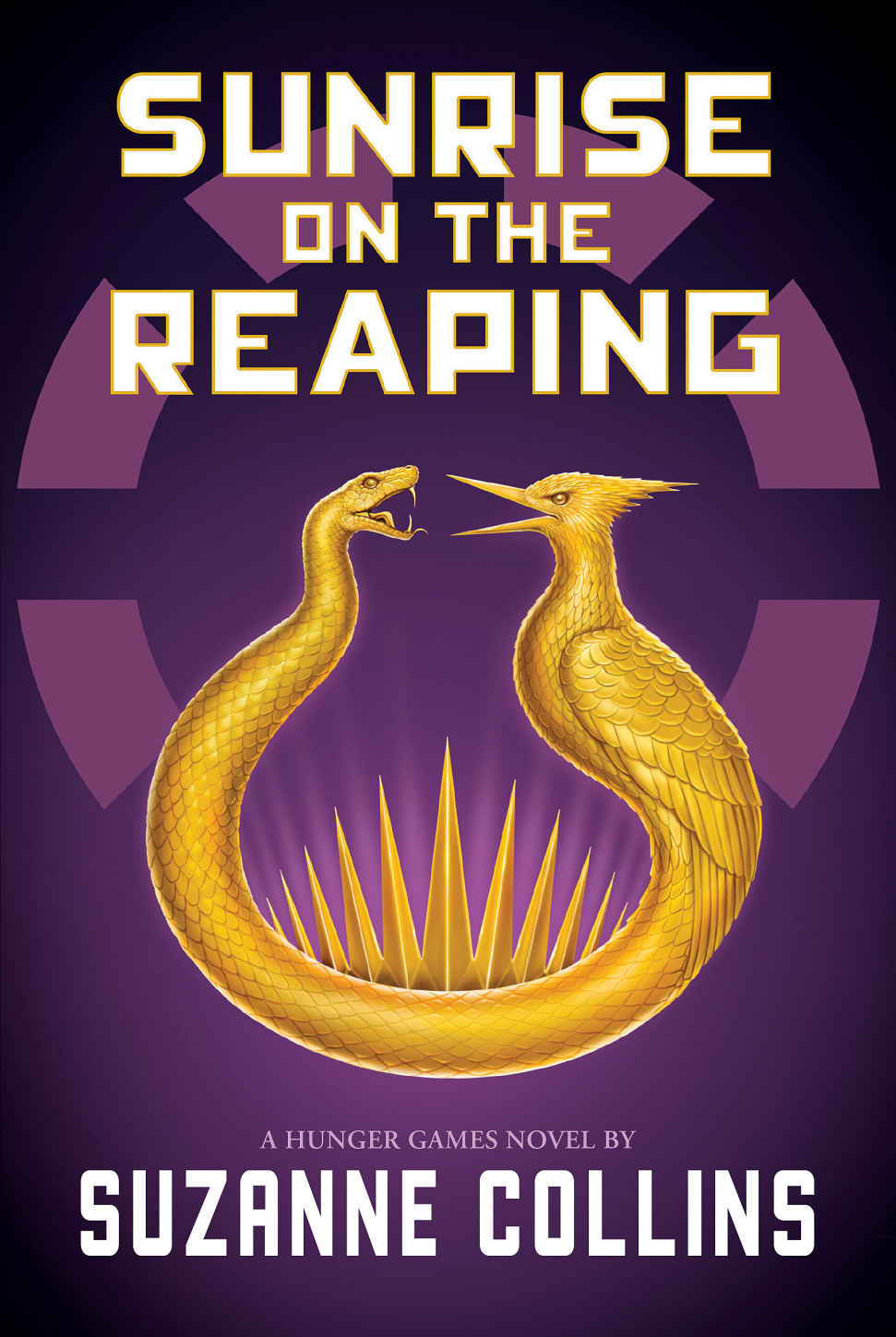
Sunrise on the Reaping
About this book
Haymitch Abernathy turns sixteen on reaping day. He expects the usual ceremony, a few stolen hours with Lenore Dove, and another year of staying beneath the Capitol's notice. Then the rules of the fiftieth Hunger Games demand twice the usual number of tributes.
Taken with three other teenagers from District 12, Haymitch enters a spectacle whose outcome is being shaped long before the arena opens. Sponsors, stylists, cameras, and edited stories decide which lives will be visible and what viewers are allowed to understand.
Haymitch is observant enough to see the machinery and angry enough to test it. The qualities later buried beneath drink are present here as wit, loyalty, and a refusal to let the Capitol's version of events stand uncontested.
Sunrise on the Reaping revisits the Second Quarter Quell from inside Haymitch's experience. Published in 2025, it is a novel about propaganda, stolen memory, and the price paid by people whose acts of resistance survive only in distorted form.
Read a sample
5,006 words
Plain text
From the opening
“All propaganda is lies, even when one is telling
the truth. I don’t think this matters so long as
one knows what one is doing, and why.”
— George Orwell
“A truth that’s told with bad intent,
Beats all the lies you can invent.”
— William Blake
“Nothing appears more surprising to those, who consider human affairs with a philosophical eye, than the easiness with which the many are governed by the few; and the implicit submission, with which men resign their own sentiments and passions to those of their rulers. When we enquire by what means this wonder is effected, we shall find, that, as Force is always on the side of the governed, the governors have nothing to support them but opinion. It is therefore, on opinion only that government is founded; and this maxim extends to the most despotic and most military governments, as well as to the most free and most popular.”
— David Hume
“That the sun will not rise tomorrow is no less intelligible a proposition, and implies no more contradiction, than the affirmation, that it will rise.”
— David Hume
“Happy birthday, Haymitch!”
The upside of being born on reaping day is that you can sleep late on your birthday. It’s pretty much downhill from there. A day off school hardly compensates for the terror of the name drawing. Even if you survive that, nobody feels like having cake after watching two kids being hauled off to the Capitol for slaughter. I roll over and pull the sheet over my head.
“Happy birthday!” My ten-year-old brother, Sid, gives my shoulder a shake. “You said be your rooster. You said you wanted to get to the woods at daylight.”
It’s true. I’m hoping to finish my work before the ceremony so I can devote the afternoon to the two things I love best — wasting time and being with my girl, Lenore Dove. My ma makes indulging in either of these a challenge, since she regularly announces that no job is too hard or dirty or tricky for me, and even the poorest people can scrape up a few pennies to dump their misery on somebody else. But given the dual occasions of the day, I think she’ll allow for a bit of freedom as long as my work is done. It’s the Gamemakers who might ruin my plans.
“Haymitch!” wails Sid. “The sun’s coming up!”
“All right, all right. I’m up, too.” I roll straight off the mattress onto the floor and pull on a pair of shorts made from a government- issued flour sack. The words courtesy of the capitol end up stamped across my butt. My ma wastes nothing. Widowed young when my pa died in a coal mine fire, she’s raised Sid and me by taking in laundry and making every bit of anything count. The hardwood ashes in the fire pit are saved for lye soap. Eggshells get ground up to fertilize the garden. Someday these shorts will be torn into strips and woven into a rug.
I finish dressing and toss Sid back in his bed, where he burrows right down in the patchwork quilt. In the kitchen, I grab a piece of corn bread, an upgrade for my birthday instead of the gritty, dark stuff made from the Capitol flour. Out back, my ma’s already stirring a steaming kettle of clothes with a stick, her muscles straining as she flips a pair of miner’s overalls. She’s only thirty-five, but life’s sorrows have already cut lines into her face, like they do.
Ma catches sight of me in the doorway and wipes her brow. “Happy sixteenth. Sauce on the stove.”
“Thanks, Ma.” I find a saucepan of stewed plums and scoop some on my bread before I head out. I found these in the woods the other day, but it’s a nice surprise to have them all hot and sugared.
“Need you to fill the cistern today,” Ma says as I pass.
We’ve got cold running water, only it comes out in a thin stream that would take an age to fill a bucket. There’s a special barrel of pure rainwater she charges extra for because the clothes come out softer, but she uses our well water for most of the laundry. What with pumping and hauling, filling the cistern’s a two-hour job even with Sid’s help.
“Can’t it wait until tomorrow?” I ask.
“I’m running low and I’ve got a mountain of wash to do,” she answers.
“This afternoon, then,” I say, trying to hide my frustration. If the reaping’s done by one, and assuming we’re not part of this year’s sacrifice, I can finish the water by three and still see Lenore Dove.
A blanket of mist wraps protectively around the worn, gray houses of the Seam. It would be soothing if it wasn’t for the scattered cries of children being chased in their dreams. In the last few weeks, as the Fiftieth Hunger Games has drawn closer, these sounds have become more frequent, much like the anxious thoughts I work hard to keep at bay. The second Quarter Quell. Twice as many kids. No point in worrying, I tell myself, there’s nothing you can do about it. Like two Hunger Games in one. No way to control the outcome of the reaping or what follows it. So don’t feed the nightmares. Don’t let yourself panic. Don’t give the Capitol that. They’ve taken enough already.
Continue reading the sampleClose the sample
I follow the empty cinder street to the hill with the miners’ graveyard. A jumble of rough markers spikes the slope. Everything from headstones with carved names and dates to wooden boards with peeling paint. My pa’s buried in the family plot. A patch of Abernathys, with one limestone marker doing for us all.
After a quick check for witnesses — no one’s here much, and certainly not at dawn — I crawl under the fence into the woods outside District 12 and begin the trek to the still. Brewing white liquor with Hattie Meeney is dicey business, but it’s a picnic compared to killing rats or cleaning outhouses. She expects me to work hard, but she works hard herself, and even though she’ll never see sixty again, she can do more than a person half her age. There’s a lot of grunt work involved. Collecting firewood, hauling grain, taking in the full bottles and toting back the empties to be refilled. That’s where I come in. I’m Hattie’s mule.
I stop at what we call the depot, a bare patch of ground concealed by the drooping boughs of a willow tree, where Hattie drops off supplies. Two twenty-five-pound sacks of cracked corn await, and I swing one over each shoulder.
It takes about half an hour to reach the still, where I find Hattie tending a pot of mash next to the remains of a small fire.
She offers me her long-handled wooden spoon. “Why don’t you give this a stir?”
I drop the bags of corn under a lean-to where we keep supplies and raise the spoon in victory. “Whoa, a promotion!”
Me being allowed to handle the mash is something new. Maybe Hattie’s starting to train me to be a partner one day. Two of us brewing full-time would increase output, and there’s always more demand than she can meet, even for the eye-watering stuff she makes with the Capitol grain. Particularly for that, since it’s cheap enough for the miners to afford. The good stuff gets bought up by disorderly soldiers — Peacekeepers, that is — and the richer folk in town. But bootlegging’s illegal ten different ways, and all it would take is a new Head Peacekeeper — one who didn’t like a stiff drink himself — to land us in the stocks or worse. Mining’s tough work, but they don’t hang you for it.
While Hattie packs pint bottles of white liquor into a basket lined with moss, I squat down and stir the mash on and off. When it’s cooled some, I pour it into a deep bucket and she adds the yeast. I set the mash in the lean-to so it can ferment. She’s not distilling today since she doesn’t want to risk the smoke attracting attention if the mist burns off. Our local Peacekeepers may turn a blind eye to Hattie’s still and her stall in the Hob, an old warehouse that serves as our black market, but she’s worried their Capitol counterparts in their low-flying, cloaked hovercraft will spot us from the air. No hauling in the bottles today either, so I’m tasked with chopping wood for the week. When the pile’s replenished, I ask what else needs doing, and she just shakes her head.
Hattie’s endeared herself to me by throwing in a tip sometimes. Not with my wages, which she pays directly to my mother, but by slipping me a little something on the sly. A handful of cracked corn I can take to Lenore Dove for her geese, a packet of yeast I can barter with at the Hob, and today a pint of white liquor for my own use. She gives me her broken-toothed grin and says, “Happy birthday, Haymitch. I figure if you’re old enough to make it, you’re old enough to drink it.”
I have to agree and, though I’m not a drinker myself, I’m glad to get the bottle. I can easily sell it or trade it or possibly pass it on to Lenore Dove’s uncle, Clerk Carmine, so that he might have a kinder opinion of me. You’d think the son of a washerwoman would be harmless enough, but we Abernathys were known rebels back in the day, and apparently we still carry the scent of sedition, scary and seductive in equal parts. Rumors spread after my father’s death, rumors that the fire had not been an accident. Some say he died sabotaging the mine, others that his crew was targeted by the Capitol bosses for being a pack of troublemakers. So it could be my kin’s the problem. Not that Clerk Carmine has any love for the Peacekeepers, but he’s not one for yanking their chain either. Or maybe he just doesn’t like his niece running around with a bootlegger, even if the work’s steady. Well, whatever the reason, he rarely gives me more than a terse nod, and he once told Lenore Dove that I was the kind that died young, which I don’t think he meant as a recommendation.
Hattie yelps as I impulsively give her a hug. “Oh, enough of that. You still sparking that Covey girl?”
“I’m sure trying,” I say, laughing.
“Go bother her, then. You’re of no more use to me today.” She dumps a scoop of cracked corn into my hand and shoos me away. I pocket the corn and take off before she can change her mind about her best gift: unexpected time with my girl. I know I should probably head home and get a jump on filling the cistern, but I can’t resist the thought of a few stolen kisses. It’s my birthday and, for once, that cistern can wait.
The mist begins to thin as I run through the woods to the Meadow. Most people comment on its beauty, but Lenore Dove calls it the friend of the condemned, because it can hide you from the Peacekeepers. She tends to take a dark view of things, but maybe that’s to be expected from someone named for a dead girl. Well, half for the dead girl called Lenore in this old poem and half for a shade of gray, which I found out the day I met her.
It was the fall after I’d turned ten and the first time I’d ever snuck under the fence that surrounds our district. I’d been deterred by both the law and the threat of wild predators, which are rare but real. My friend Burdock had finally worn me down, saying he did it all the time and there was nothing to it and there were still apples if you could climb. And I could climb and I loved apples. Plus, him being younger than me made me feel like a big scaredy-cat if I didn’t.
“Want to hear something?” Burdock asked as we ventured deep into the woods. He tilted back his head and sang out in that remarkable voice of his. High and sweet like a grown-up woman’s but cleaner, nothing warbly about it. Everything seemed to go still, and then the mockingjays began to pick it up. I knew they’d sing for other birds, but I’d never heard them sing for a person before. Pretty impressive stuff. Until an apple dropped smack on Burdock’s head, cutting him off.
“Who’s squawking at my birds?” a girl’s voice demanded. And there she was, about twenty feet up, sprawled out on the branch like she lived there. Crooked pigtails, dirty bare feet, munching on an apple, a small clothbound book in her hand.
Burdock cocked his head and laughed. “Hey, cuz. You allowed out here alone? ’Cause I’m sure not.”
“Well, I didn’t see you,” she said.
“Me you either. Toss us down some, would you?”
In answer she stood up on her branch and began to bounce up and down, showering us with apples.
“Hang on, I’ve got a sack with my bow.” Burdock ran off. She scooted down the branches and swung to the ground. She wasn’t one of Burdock’s Everdeen cousins, but I knew he had some distant ones on his ma’s side. I’d seen her around at school — kind of shy, I thought, but I didn’t know her to speak to. She didn’t seem in a rush to change that, just stood there looking me over until I broke the silence.
“I’m Haymitch.”
“I’m Lenore Dove.”
“Dove like the bird?”
“No. Dove like the color.”
“What color’s that?”
“Same as the bird.”
That started my head spinning and I guess it’s never quite stopped. Soon after at school, she waved me over to a dog-eared dictionary and pointed. Dove color: Warm gray with a slight purplish or pinkish tint. Her color. Her bird. Her name.
After that, I started to notice things about her. How her faded overalls and shirts concealed snips of color, a bright blue handkerchief peeking from her pocket, a raspberry ribbon stitched inside her cuff. How she finished up her lessons quick, but didn’t make a fuss about it, just stared out the window. Then I spotted her fingers moving, pressing down imaginary keys. Playing songs. Her foot slipped from her shoe, her stockinged heel keeping time, silent against the wood floor. Like all the Covey, music in her blood. But not like them, too. Less interested in pretty melodies, more in dangerous words. The kind that lead to rebel acts. The kind that got her arrested twice. She was only twelve then, and they let her go. Now it would be different.
As I reach the Meadow, I slip under the fence and pause to catch my breath and drink in the sight of Lenore Dove perched on her favorite rock. The sunlight picks up the hint of red in her hair as she bends over an ancient piano accordion. She coaxes a melody out of the wheezy old thing, serenading a dozen geese grazing on the grass, her voice as soft and haunting as moonlight.
They hang the man and flog the woman
Who steals the goose from off the common,
Yet let the greater villain loose
That steals the common from the goose.
It’s a treat to hear her sing, since she never does it in public. None of the Covey do. Her uncles are really more musicians than singers, so they just play tunes and leave the singing to the audience if they’re so inclined. Lenore Dove likes this better anyway. Says it makes her too nervous to sing in front of people. Her throat closes up.
Clerk Carmine and her other uncle, Tam Amber, have raised her since her ma died in childbirth, seeing her pa’s always been something of a mystery. They’re not blood kin, her being a Baird, but the Covey look out for their own. They worked out a deal with the mayor, whose house boasts the only real piano in District 12. Lenore Dove can practice on it if she plays during an occasional dinner or gathering. Her in a faded green dress, an ivory ribbon tying back her hair, lips tinted orange. When her family performs around District 12 for money, she makes do with the instrument she is playing now, which she calls her tune box.
The law demands that we atone
When we take things we do not own,
But leaves the lords and ladies fine
Who take things that are yours and mine.
This is not a song her uncles let her play at the mayor’s house. Or even when she performs around District 12. There’s the danger that some people might know the words and start a ruckus. Too rebellious. And I have to say I agree with Clerk Carmine and Tam Amber. Why go around asking for trouble? Plenty to be had without inviting it in.
The poor and wretched don’t escape
If they conspire the law to break.
This must be so but they endure
Those who conspire to make the law.
I scan the Meadow. It’s secluded, but we all know there are eyes everywhere. And eyes generally come with a pair of ears.
The law locks up the man or woman
Who steals the goose from off the common.
And geese will still a common lack
Till they go and steal it back.
Lenore Dove explained to me once that the common was land anyone could use. Sometimes the Peacekeepers chase her and the geese off the Meadow for no reason. She says that’s just a teaspoon of trouble in a river of wrong. She worries me, and I’m an Abernathy.
A few of the geese hiss to announce my arrival. Lenore Dove’s was the first face they saw when they hatched, and they don’t love anyone but her. But since I’ve got corn, they’ll tolerate me today. I toss it a ways away to call off her bodyguards and lean in to kiss her. Then I kiss her again. And again. And she kisses me right back.
“Happy birthday,” she says when we come up for air. “Didn’t expect to see you until after.”
She means the reaping, but I don’t want to talk about it.
“Hattie let me go early,” I tell her. “Gave me this, too — a present for my big day.” I pull out the bottle.
“Well, that won’t be hard to trade. Especially today.” Besides New Year’s, today’s when most people get drunk. “Four kids . . . That’s going to hit a lot of families.”
I guess we’re going to talk about it. “It’s going to be all right,” I say, which rings hollow.
“You don’t really believe that, do you?”
“Maybe not. But I try to. Because the reaping’s going to happen no matter what I believe. Sure as the sun will rise tomorrow.”
Lenore Dove frowns. “Well, there’s no proof that will happen. You can’t count on things happening tomorrow just because they happened in the past. It’s faulty logic.”
“Is it?” I say. “Because it’s kind of how people plan out their lives.”
“And that’s part of our trouble. Thinking things are inevitable. Not believing change is possible.”
“I guess. But I can’t really imagine the sun not rising tomorrow.”
A crease forms between her eyebrows as she puzzles out a response. “Can you imagine it rising on a world without a reaping?”
“Not on my birthday. I’ve never had one that came without a reaping.”
I try to distract her with a kiss, but she’s determined to make me see. “No, listen,” she says earnestly. “Think about it. You’re saying, ‘Today is my birthday, and there’s a reaping. Last year on my birthday, there was also a reaping. So every year, there will be a reaping on my birthday.’ But you have no way of knowing that. I mean, the reaping didn’t even exist until fifty years ago. Give me one good reason why it should keep happening just because it’s your birthday.”
For a girl who’s quiet in public, she sure can talk up a storm in private. Sometimes, she’s hard to keep up with. Lenore Dove is always patient when she explains stuff, not superior, but maybe she’s just too smart for me. Because while it’s a fine idea, thinking about a world with no reaping, I don’t really see it happening. The Capitol has all the power and that’s that.
“I didn’t say it was just because it was my birthday. I said —” What did I say? I can’t even remember now. “Sorry, you’ve lost me.”
Her face falls. “No, I’m sorry. It really is your birthday, and here I am going on about who knows what.” She digs in her pocket and holds out a small package wrapped in a scrap of dove-colored fabric, tied with a ribbon the same dappled green as her eyes. “Happy birthday. Tam Amber made it. I traded eggs for the metal and helped him design it.”
Besides playing a crazy good mandolin, Tam Amber’s the best hand forger in District 12. He’s the go-to blacksmith for new gadgets or broken parts for old machines. Burdock has a dozen of his arrow tips that he treats like gold, and some of the richer folks in town have jewelry he made from actual gold or silver, melted down from heirlooms and refashioned. I can’t think what he’d make for me, but I eagerly untie the bow.
The object that slips into my palm doesn’t register at once. It’s a thin strip of metal, shaped like a C. My fingers naturally grip the curved back as I examine the colorful animals facing off at the opening. The head of a snake hisses at the beak of a long-necked bird. I flatten out my hand and see that their enameled scales and feathers travel around the piece until they merge and become indistinguishable. Two small rings are welded on, one behind each head. For a chain, maybe?
“It’s beautiful,” I say. “It’s to wear, right?”
“Well, you know I like my pretty with a purpose,” Lenore Dove replies cryptically, making me work it out myself.
I turn it over in my hand, then grip the C again, this time covering the animal heads with my fingers. Then I see its purpose. The smooth steel edge isn’t solely decorative.
“It’s a flint striker,” I conclude.
“It sure is! Only you don’t have to have flint. Any decent sparking rock like quartz will do.”
At home, we have a beat-up old striker passed down through my ma’s family. Ugly and dull. On long winter nights, she made me practice with it until I could reliably get a fire going, so we wouldn’t have to waste money on matches. A penny saved is a penny earned.
I run my finger over the fine metalwork of the feathered neck. “I wouldn’t want to ruin it.”
“You won’t. That’s what it’s made for.” She touches the snake’s head, then the bird’s, in turn. “It takes a lot to break these two. They’re survivors.”
“I love it.” I give her a long, soft kiss. “And I love you like all-fire.”
All-fire is Covey talk, but that expression is ours. Usually it makes her smile but she’s dead serious now. “You, too.”
We kiss until I taste salt. I don’t have to ask why.
“Look, it’s okay,” I assure her. “We’re going to be fine.” She nods but the tears keep trickling. “Lenore Dove, we’re going to get through today, just like last year and the year before, and eventually move past it.”
“But we won’t really,” she says bitterly. “No one in Twelve will. The Capitol makes sure the Hunger Games is burned into our brains.” She taps the bottle. “Guess Hattie’s in the right business. Helping people to forget.”
“Lenore Dove.” Clerk Carmine doesn’t holler, but he has one of those voices that carries without needing to. He stands at the edge of the Meadow, fists shoved in his patched overalls. He’s a fiddler and protective of his hands. “Better be getting ready.”
“I’m coming,” she says, wiping her eyes.
Clerk Carmine doesn’t comment on her state, just shoots me a look that says he holds me responsible, then turns on his heel. He never paid me much mind until Lenore Dove and I got serious. Since then, nothing I do seems right. I once told Lenore Dove I thought he just hated love. That’s when she revealed that he’d been together some thirty years with the fellow in town who replaces busted windows. They have to keep it quiet because loving differently can get you harassed by the Peacekeepers, fired from jobs, arrested even. Given his own challenges, you’d think Clerk Carmine would be a champion of our love — I’m certainly supportive of his — but I guess he thinks Lenore Dove could do better.
She hates us to be at odds, so all I say is, “I’m definitely growing on him.” That gets her to laugh enough to break the mood. “I can come by after. Got some chores, but I should be done about three. We’ll go to the woods, okay?”
“We’ll go to the woods.” She confirms it with a kiss.
Back home, I take a cold-water bucket bath and pull on the pants my pa got married in and a shirt my ma pieced together from handkerchiefs from the Capitol store where the miners shop. You have to at least try to look dressed up for the reaping. Turn up in raggedy clothes and the Peacekeepers hit you or arrest your parents because that’s not how you show respect for the Capitol war dead. Never mind that we had plenty of war dead of our own.
Ma gives me my birthday presents: a year’s supply of flour sack underwear and a brand-new pocketknife, with strict instructions that the latter’s not to be used for mumblety-peg or any other knife games. Sid presents me with a piece of flint rock wrapped in a grubby bit of brown paper, saying, “I found it in the gravel road by the Peacekeepers’ base. Lenore Dove said you’d want it.” I pull out my flint striker and try it out, making some beautiful sparks in the process. And though Ma isn’t sold on Lenore Dove, given that she’s a distraction, she likes the striker enough to thread a leather bootlace through the metal rings and tie it around my neck.
“It’s an awful fine striker,” says Sid, touching the bird wistfully.
“How about tonight I teach you how to use it?” I suggest.
He lights up at the promise of doing grown-up stuff combined with the promise that I’m not going anywhere. “Yeah?”
“Yeah!” I ruffle his mop of hair so his curls go every which way.
“Quit!” Sid laughs and bats my hand away. “Now I’ve got to comb it again!”
“Better get on it!” I tell him. He runs off and I drop the striker down my collar, not ready to share it with the world, not on reaping day.
I’ve got a few minutes to spare, so I head into town to trade. The air’s turned heavy and still, promising a storm. My stomach clenches at the sight of the square, plastered with posters and crawling with heavily armed Peacekeepers in their white uniforms. Lately the theme has been “No Peace” and the slogans bombard you from every side. NO PEACE, NO BREAD! NO PEACE, NO SECURITY! And, of course, NO PEACEKEEPERS, NO PEACE! NO CAPITOL, NO PEACE! Hanging behind the temporary stage in front of the Justice Building is a huge banner of President Snow’s face with the words PANEM’S #1 PEACEKEEPER.
At the back of the square, Peacekeepers check in the reaping participants. As the line’s still short, I go ahead and get that over with. The woman won’t meet my eye, so I guess she’s still capable of shame. Or maybe it’s just indifference.
The apothecary shop has a flag of Panem in the window, which pisses me off. Still, this is where I’ll get the best deal on my white liquor. Inside, the sharp odor of chemicals makes my nose twitch. In contrast, a faint, sweet scent comes from a bunch of chamomile flowers resting in a jar, waiting to become tea and medicine. I know Burdock collected these in the woods. Of late, he’s added wildcrafting to his game business.
The place is deserted except for my classmate Asterid March, who’s arranging tiny bottles on a shelf behind the counter. A long blond braid falls down her back, but the damp heat has brought out tendrils of hair that frame her perfect face. Asterid’s the town beauty and rich by District 12 standards. I used to hold that against her, but she showed up one night in the Seam, alone, to treat a neighbor woman who’d been whipped for back-talking a Peacekeeper. She brought some ointment she’d concocted herself, then slipped away, never mentioning payment. Since then, she’s who people turn to for help when a loved one goes under the lash. I guess Asterid has more substance than her pack of snooty town friends suggests. Besides, Burdock’s nuts about her, so I try to be nice even though he’s got about as much chance with her as a mockingjay with a swan. Town girls don’t marry Seam boys, not unless something really goes haywire.
“Hey. You got any use for this?” I place the white liquor on the counter. “For cough syrup or some such?”
“I’m sure I can find one.” Asterid gives me a fair price and throws in a sprig of chamomile. “For today. They say it’s good luck.”
I slide the stem into a buttonhole. “Who says? Burdock?”