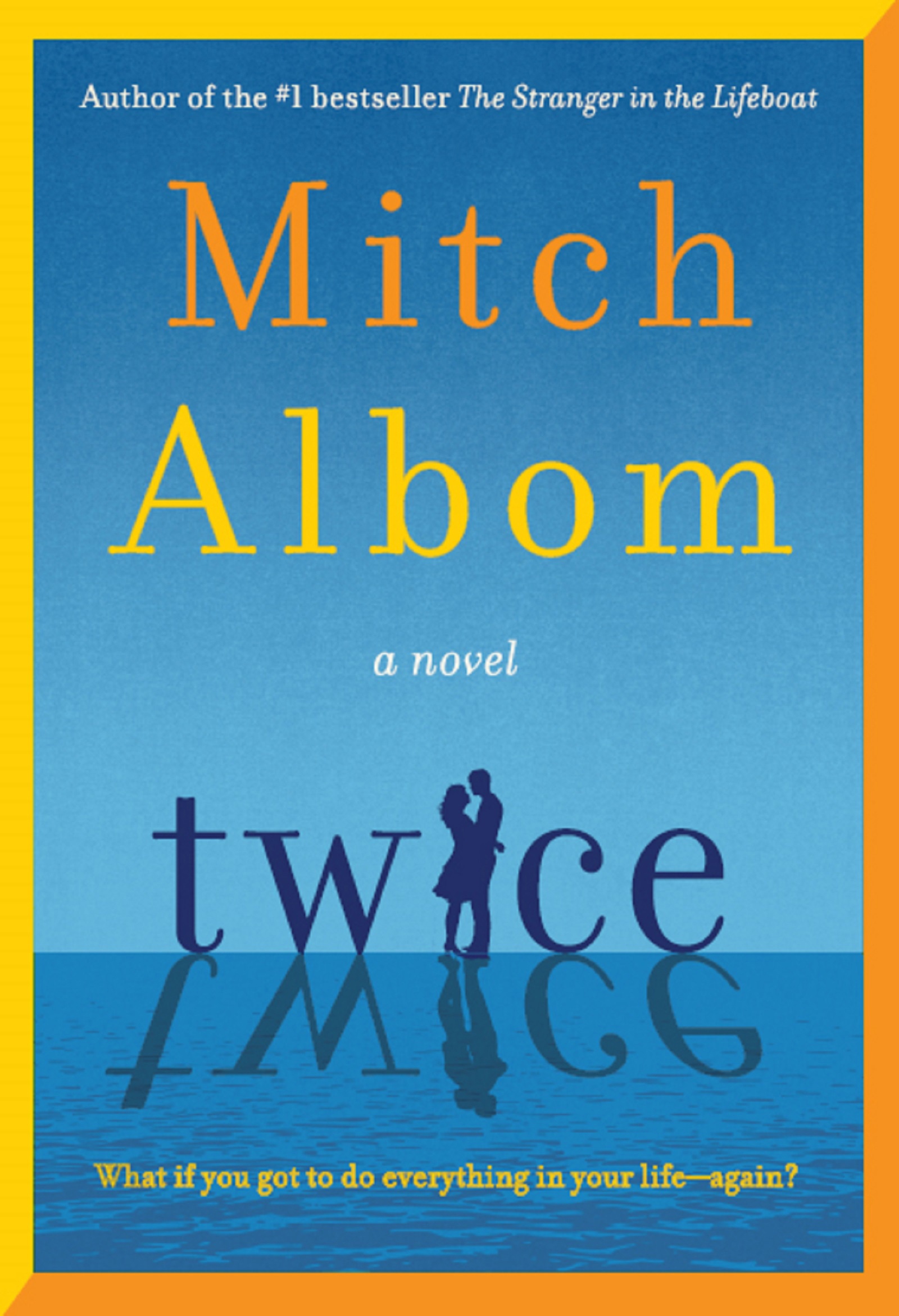
Twice
About this book
The gift at the centre of Twice appears simple: one return to a chosen moment, with knowledge of what followed. Its value becomes harder to calculate when the past contains not only mistakes but relationships shaped by everything that happened afterward.
Revisiting a decision offers the possibility of repair and the danger of treating other lives as pieces in a private correction. Love, regret, and mortality turn the power into a moral choice rather than a convenient route to a better outcome.
Mitch Albom works in the territory between fable and contemporary drama, using a speculative rule to clarify ordinary emotional evasions. The story moves quickly, but the consequences depend on what cannot be restored by changing one scene.
Twice is a compact novel about time, responsibility, and the difference between repeating a moment and truly meeting it. Its second chances ask for honesty before they offer comfort.
Read a sample
5,001 words
Plain text
From the opening
One
Nassau, BAHAMAS FORTY YEARS LATER
The detective clucked his tongue. He stared at the gray-haired man slumped across the table.
“Come on, friend. How did you do it?”
Silence.
“We can sit here all day if that’s what you want to do. Is that what you want to do? Sit here all day?”
The small room inside the police station was hot and in need of paint. The only furniture was a wooden table and the two occupied chairs. The detective, Vincent LaPorta, opened a roll of hard candy, plucked the top one out, cherry red, and popped it in his mouth.
“Want one?”
The man snorted a laugh.
“What’s so funny?”
“The name.”
“Life Savers?”
“Yes.”
“Wish you had one now?”
“My life’s been saved too many times already.”
LaPorta waited for more, but the suspect hooked his fingers and looked down, as if praying. His face was tanned and unshaven, his jaw and cheekbones well-defined, maybe too defined, like a man who’d grown thin from an illness. His mustard-colored shirt and navy-blue pants were badly wrinkled, as if he’d slept in them.
“Let’s go over the accusation against you,” LaPorta said. “Maybe it will jog your memory.”
He slid a photograph across the table.
“In a single visit, at the island’s largest casino, you correctly played three straight roulette numbers, winning over two million dollars. Then you walked out the door.”
“Is that a crime?”
“No, but only because we haven’t pieced together how you did it.”
“So, not a crime?”
“Look, friend. My job is catching casino cheats. I’ve been doing it a long time. Vegas. Atlantic City. Now here in the Bahamas. What you did, you can’t do without breaking the law.”
“I see.” The man nodded thoughtfully. “May I ask you a question, Detective?”
“Go ahead.”
“Why this kind of work?”
“What are you, a shrink?”
“Just curious.”
LaPorta smirked. “Let’s just say I don’t like people who bend the rules.”
“Ah. Then you wouldn’t like me.”
LaPorta studied his tall, rangy suspect, who wore a small earring on his left lobe and no socks under his weathered loafers. LaPorta guessed he was in his late fifties and not particularly well-off. In that way, he was like any number of men you’d find placing bets at an island casino. But his attitude under interrogation was unusual. Normally, suspects were jumpy, perspiring, answering too quickly or too slowly. This man almost seemed bored.
“Come on. Tell me how you did it. You got an inside guy?”
“I’ve committed no crime.”
“Three straight roulette numbers? You don’t call that suspicious?”
“Suspicion and belief can’t share the same bed.”
“What’s that supposed to mean?”
“It means if I told you the truth, you’d have to accept something you can’t.”
“Try me.”
The man squinted. “No.”
“You realize cheating a casino can get you sent to jail?”
“Yes.”
“For a long time.”
“Time doesn’t mean much to me.”
“Why not?”
“It’s complicated.”
LaPorta bit down on his hard candy.
“Tell me about a woman named Gianna Rule.”
The man’s expression changed. LaPorta perked up. Here we go. Stay with this.
“You went to a bank after you won that money and you wired it to a Gianna Rule. We can find her. Bring her in. Maybe charge her as a coconspirator. Is that what you want?”
The man blinked. LaPorta leaned across the table.
“Like I said: try me.”
“All right,” the man said, exhaling. “I had a bag when you picked me up.”
“So?”
“I’ll need it.”
LaPorta thought for a moment.
“Stay put.”
He rose and, locking the door behind him, went to his office and retrieved a faded leather satchel. He returned and handed it to the man, who reached inside and pulled out a composition notebook with a black marble cover. On the label were nine handwritten words: For the Boss, To Be Read Upon My Death.
He pushed it across the table.
“What?” LaPorta said. “I should read this?”
“Only if you want answers.”
The detective leafed through the handwritten pages.
“What is it?” he mumbled.
The man almost smiled.
“A love story,” he said.
The Composition Book
Dear Boss,
So how do I begin? That I’m dying? I suspect you know that by now. The other day you came into the beach house and found me on the floor by the laundry basket with my left leg splayed out and my head on my elbow and you said, “Alfie, what are you doing?” and I said, “I’m looking for ants.” You smiled but I could see in your eyes a genuine concern, and as you helped me to my feet there was a gentleness in your touch, the way your arm hooked under mine, the way your fingers spread against my back. If I didn’t know better, I might call it a loving embrace. But I do know better. It’s knowing better that leads me to this confession.
I’m not afraid of dying, Boss. I know you tell me not to call you “Boss,” but hey, you pay my salary, and I guess I’m old-fashioned. Anyhow, I’m not afraid. I’ve skirted death many times. That may sound exaggerated. It’s not.
In my long life—and it’s been far longer than anyone knows—I have leapt off a mountain in Spain, dived into a pool of sharks in Australia, stood in front of an oncoming train in China, even taken a bullet during a Mexican bank robbery.
Continue reading the sampleClose the sample
I did most of these things to see what it was like, to feel the breath of God or the devil or whatever awaits me when this life is over. It wasn’t courage. I knew I would survive. The reason I knew will be difficult to believe, Boss, but please try, because I’ve been waiting a long time to tell you.
All right. Here goes.
I get to do things twice.
I mean it. I get a second chance at everything. Do-overs. Rollbacks. Whatever you want to call them. It’s a gift. A power. There’s no explanation. But while everyone in the world must suffer the consequences of their actions, I can undo mine and try again. Not endless chances, mind you. I can’t keep messing up and wiping the slate clean. Can’t take the same test a hundred times.
Twice. I get two shots at everything. The thing is, I have to live with my second try. There’s no going back. Over the years, I have found this to be the price that I pay for this gift.
And the price I have paid in love.
I’ve had one great love in my life, Boss. One woman in whose eyes I found the better version of myself. But I made a grave mistake, one I could not go back and fix. It’s a cruel trick to have two chances at your heart’s desire. It can make—
Nassau
LaPorta stopped reading and looked up from the notebook.
“You’re screwing with me, right?”
“I’m sorry?”
“You want me to believe you can go back in time and correct things?”
“If I choose to, yes.”
LaPorta chuckled. “I doubt that will hold up in court.”
“It’s the truth.”
“Who’s your boss?”
“Doesn’t matter.”
“It will if he helped plan your crimes.”
“My boss is a woman. And she didn’t.”
LaPorta scratched his eyebrow.
“You’re really dying?”
The man nodded.
“Of what?”
“Does it matter? Neurological.”
“Sorry to hear.” LaPorta sat back in his chair. “If I were dying, I sure as hell wouldn’t be writing a farewell note to my boss, I can tell you that much.”
“Keep reading.”
“You really want this as your alibi?”
“You asked.”
“Is it because of—what’s her name—Gianna Rule?”
The man looked away.
“Well, then, by all means, let’s keep going,” LaPorta said. “But from now on . . .”
He slid the notebook across the table.
“You read it. Out loud.”
Then he added, almost mockingly, “Alfie.”
The Composition Book
OK, Boss. Assuming you haven’t thrown this notebook away by now, dismissed it as the ramblings of a longtime employee/friend whose time has come and whose mind has gone a bit cuckoo, I will tell you how I learned of my unique power, and when I first discovered it, by accident, as a child.
It was 1966. A Saturday morning. I was eight years old, and we were living in Kenya, in a small village north of Mombasa. My parents were missionaries. New ones. In their mid-thirties they’d heard the call to spread the Lord’s gospel. At least my mother did. My father went along dutifully, perhaps hoping the Holy Spirit would embrace him at the airport.
We’d been there for a year, living in a thatched-roof cabin with a pull-chain toilet. Before Africa, we had lived just outside Philadelphia. I missed it terribly. I hated the relentless sun of this new continent. There was no television and little for me to do. My mother discovered an old piano in the village church, and she taught me just enough chords to play a few hymns. One Sunday she gathered the local kids in a circle and made me sing “Nearer My God to Thee.” They laughed at my voice. I wanted to disappear.
I made two friends the whole time I was in Africa, one human, one animal. The animal was an elephant named Lallu. She belonged to a nearby rancher, who used her for pulling plows. On Saturdays, he let Lallu rest, and I got to play with her. She would coil her trunk around me and lift me up. It was scary at first, but over time, it felt strangely protective.
Lallu was responsible for my second friend, a wiry girl with piercing green eyes and dark hair cut in pageboy bangs. Her mother was from the Philippines, but her father was American. He had been transferred to Kenya with Del Monte foods, and on Saturdays he would bring his daughter to play with Lallu as well.
We’d take turns being lifted. But we were impatient. You know how kids are. One time, as we jockeyed for position, the elephant picked us both up together. I remember her small body squeezed next to mine, shoulder to shoulder. Our cheeks touched and we both hollered “Whoaaaa!” and when Lallu let us down, we started laughing so hard we couldn’t stop.
That was the first time she told me her name. Princess. I said that’s not a name. She said that’s what everyone in her family called her. I said all right.
The next week, Princess brought me some red mabuyu sweets. The next week I brought her a sliced coconut. The next week she brought a book about butterflies and read it out loud under a tree. The next week, we held hands when Lallu scooped us up. From then on, we did it every time.
When you are lonely and you suddenly find a friend, it fills up your world. Although I was just eight years old, my time with Princess felt like something more than companionship. Puppy love, I guess. Saturdays became the only thing I looked forward to.
The last time I saw Princess, Lallu sprayed us both with water and we had to change clothes in the trees. I peeked at her naked back as she pulled a borrowed shirt over her head. She turned, caught me looking, and smiled.
“We should build a house here one day, Alfie, by the ocean. And then we can get married and Lallu can live with us. OK?”
“OK,” I said.
She smiled. I smiled back. I felt the afternoon sun drying my skin. It’s the best memory I have of Africa.
Then came the worst.
✶
Eleven months into our stay, my mother got sick from a bug that bit her and had to go to the hospital, where she remained for several weeks. When she came home, she was thin and weak, but I took her return as a sign she was getting better.
I had been into comic books back in the States, and before we’d departed, I’d begged my father for a Superman costume. In Kenya, I slept every night with the red cape on. A reminder of home, I suppose.
When I awoke that particular Saturday morning, I bounced to the mirror with my red cape over my white undershirt and posed, hands on hips, flexing what little muscle I had.
“What are you doing?”
My father was at the door. I dropped my arms.
“Nothing.”
“Go sit with your mother.”
“Why?”
“Just go sit with your mother.”
“Why?”
“Because I told you to, that’s why.”
“But I haven’t had breakfast yet.”
“Do as I say. I’m going to get her medicine.”
“Can I go?”
“No.”
“I’m still going to play with Lallu later, right?”
“We’ll see. Go sit with your mother. Move it.”
I dragged down the small hallway until I heard the front door shut. I peeked in my parents’ room. My mother was in bed, her eyes closed under the white mosquito netting. I held there, listening to her breathe. I told myself if she didn’t stir within a minute, I wasn’t supposed to wake her, and I should go outside and play.
A minute passed. Absolving myself, I scooted out the door and ran to the local soccer field, which was really just a large patch of cinnamon-colored dirt. It was empty, so I raced from one end to the next, my cape flapping behind me, leaping every fifth step, as if I might lift into the air.
The sun was high and the breeze was light. After many failed launches, I lay down in some nearby kikuyu grass and stared up at the long white clouds. Eventually, I nodded off.
When I awoke, I meandered through the village. I caught the usual stares of our neighbors. The red cape didn’t help. I passed the church where my parents worked and saw the local pastor, his tweed suit coat draping a clerical collar. He was tending a goat. I waved. He waved back. The goat bleated. It was almost noon.
I walked back home in the oppressive heat, listening to my sneakers grind the gravelly dirt. I noticed a green jeep parked in front of our cabin. When I entered, I heard mumbled conversation, then my father yelling, “Alfie? Is that you? Alfie, don’t come in here!”
Suddenly, he was in front of me, having shut the bedroom door behind him.
“Where did you go?”
His voice sounded wobbly.
“Mom was sleeping so I went out.”
“You went out?” He bit his knuckles. “You went out?”
I remember him glaring, as if that were the cruelest thing I could have said. I didn’t understand. What had I done? It was only when I saw a doctor exit the bedroom that I had the sense something terrible had just happened, and that, in playing Superman on a soccer field, I’d missed it.
✶
My mother died while I was trying to fly. A pulmonary embolism. From what they told me, she went quickly and “didn’t suffer,” but since no one was there, I’m not sure how they knew. I remember sitting on my mattress that night, sobbing, gagging on my breath, then sobbing again. Down the hall, I heard my father turn up the radio, really loud, then make a terrible howling noise, like a bear with its paw caught in a trap.
Before I went to sleep, I threw my red cape out the bedroom window. I watched the wind blow it across the dirt. I returned to bed wishing the day had never happened, hating Africa, hating Superman, hating myself, and missing my mother in every molecule of hot air being moved around the room by a plastic fan. I slapped my body repeatedly, whispering the words “stupid, stupid.” It began to storm outside and I fell asleep to the sound of rain.
✶
When I awoke the next morning, the red cape was somehow draped around me again. My eyes were blurry. I heard my father’s heavy feet enter the room.
“What are you doing?”
“Nothing.”
“Go sit with your mother.”
“What?”
“Go sit with your mother.”
I swallowed.
“How?”
“What do you mean how? Go sit with her. I’m going to get her medicine.”
I know this sounds impossible, Boss. I can only tell you that it happened, and that I went along with it, the way you go along with a dream, even to someplace you don’t want to go. I reached my mother’s room. The door was open. When I finally looked inside, she was sleeping under the netting, just like the day before.
Had I been older, I might have run off screaming. But as an eight-year-old boy, I just wanted to be with her, no matter how impossible it seemed. So I stood there, frozen, until my mother’s eyes opened and she saw me hovering, and she smiled and hoarsely whispered, “Well, hello, Superman.”
I must have recoiled, because it registered on her face.
“Alfie? What’s wrong?”
I couldn’t answer. My breath came in puffs.
“Alfie? Tell me.”
“Mom . . . ?” I whispered.
“Oh, no.” Her expression changed. “Alfie? Have you been here before?”
“Uh-huh.”
“And the last time, did something bad happen?”
“Yes.”
“Did I die?”
I nodded.
“And you saw that?”
“No . . . I . . . I went out to . . .”
I started crying.
“I’m sorry, Mommy.”
She took a deep breath. Her voice rose. “We don’t have much time, then, sweetheart. Listen to me.” She pulled the netting aside, leaned forward, and put my face between her hands. “This is something you’re going to be able to do the rest of your life. Get second chances. Do you understand?”
I shook my head no.
“It’s a gift. A power. Some people in our family get it. You’re blessed to be one of them. But it won’t fix everything, Alfie. The second time won’t always be better than the first.”
She squeezed my hand. “Don’t try and change everything, OK? Don’t correct every mistake. Don’t take advantage of people. Don’t use your power for money. Be careful. Do you hear me, Alfie? Alfie, are you listening?”
I felt like I was suffocating.
“Mom,” I blurted out, “are you going to die again?”
She bit her lip, then patted a space on the edge of the bed.
“Sit here, baby,” she said, forcing a smile. “Let me tell you all the things I love about you.”
✶
Now, in case you’re wondering, Boss, my mother still died that morning, this time in front of me, after listing a dozen or so things she loved about her only child. I saw her grab her arm, I heard her groan, I watched her head roll back. My father returned and found me weeping against the bed, the mosquito netting hanging over my face.
This is when I first learned the limits of my “gift”: I can’t change mortality. If someone’s time is up, it’s up. I can travel back to before the death takes place. I can alter how I experience it. But it’s still going to happen. Nothing I can do to stop it.
Can I say it was better, rewinding my mom’s departure? I don’t know. The first time, I left the house and returned motherless. The second time, I stood witness as she departed this world. You tell me.
Nassau
Alfie looked up from the pages. LaPorta was staring.
“You’ve got some imagination. I’ll give you that.”
“I didn’t imagine it,” Alfie said.
“Sure, you didn’t.”
LaPorta rocked slowly in his chair.
“It’s a weird name. ‘Alfie.’ You don’t hear it very often.”
“No.”
“Your passport says Alfred.”
“My father’s father’s name. My mother said it sounded like a British lord. She started calling me Alfie after that song.”
“What song?”
“From the ’60s. ‘What’s it all about, Alfie?’ ”
“Oh, right.”
“If I had a dollar for every time someone sang that to me—”
“You’d have as much money as you stole?”
Alfie smiled. “I didn’t steal anything.”
“Really? You immediately wired your winnings to some woman, and we picked you up the next morning at a travel agency, buying tickets to Africa.”
“So?”
“Sooo, that sounds a lot like a guy trying to run and hide from something.”
“The tickets weren’t for me.”
“Who were they for?”
“If you just let me finish this—”
“Yeah, yeah. Your alibi notebook. I know.”
LaPorta checked his phone. No message yet from the Bahamian police. He sighed. Things took forever in the islands.
“It’s from a movie, isn’t it?” LaPorta said. “That song? Alfie?”
“Yes. A movie about a playboy who gets all these women to fall in love with him, but eventually pays a price.”
“So that’s you? A playboy?”
“No. Just the guy who paid a price.”
“Well, I don’t give a crap. How’s that? When do we get to the roulette scheme?”
“I told you. It’s part of the story.”
LaPorta drummed his fingernails on the table.
“Come on then, playboy. Keep reading.”
The Composition Book
My father and I moved back to America, to our old neighborhood outside Philadelphia. My mother was buried a few miles away, in a cemetery just off the highway. I remember the constant whoosh of traffic as they lowered her casket into the ground. It felt so disrespectful, people driving past, going to work, listening to their radios. I put my hands over my ears. I didn’t hear most of what the pastor said.
After everyone left, I stood there with my father, staring at the grave.
“Why do they throw dirt in there?” I asked.
“That’s just how they do it, Alfie.”
“Mom didn’t like dirt.”
“No, she didn’t.”
“Dad?”
“Yeah?”
“Should we clean it out?”
He bit his lip and squeezed my shoulder. The wind blew. I think that was the moment I realized it was just him and me now.
✶
We settled into a small Colonial-style house and I started wearing long sleeves again. I watched television. I snacked on Scooter Pies. Everything from Africa felt like a dream. Someone in our church offered my father the old Baldwin piano my mother used to play, and he put it in the basement. I spent a lot of time down there, trying to remember the hymns she had taught me.
It took some time before I repeated my “magic.” My mother’s second death was an unsettling memory, and I was in no hurry to go through something like that again. I hadn’t told anyone, not even my dad. Part of me wasn’t sure it ever really happened.
Then, a few months after we’d returned from Africa, I experienced it again. I was on my way home from school, me and my walking buddies from the neighborhood, Stewie, Sandy, and Paul. It was a gray afternoon, and a cold rain was falling. We passed a small, rickety A-frame home with faded brown shutters and a muddy swath of dead leaves covering the grass.
“Witch’s house,” Sandy mumbled.
We called it that because every now and then kids in the neighborhood would spot a crouched, white-haired woman staring out through the flimsy screen door. The legend was that one Halloween she had pulled a trick-or-treater inside, and when he came out, he was never the same. I have no idea if the story is true. We were just kids.
Suddenly, Stewie blurted out: “Yo, Alfie, I dare you to knock on her door.”
The others joined in.
“Yeah, Alfie!” “Do it!” “Don’t be scared, Alfie!” “C’mon!”
I looked away. My mother’s death had dealt a huge blow to my confidence. I found it hard to engage with people, especially neighbors who whispered, “They never should have gone to Africa.” I missed my mother terribly, the long, meandering conversations we had over peanut butter crackers in our kitchen, and the way she rubbed my hair after kissing me good night.
Without her, our house was unbearably silent. At night, my father would stare at the black-and-white TV. I would lie on the couch and cover my eyes with the back of my hands. Sometimes my heart would begin to race and I found it hard to breathe. I coughed and choked. My father would ask, “What’s wrong, Alfie?” But I didn’t know myself. I just wanted to stop feeling scared all the time, worrying that another bad thing was going to happen.
That day at the witch’s house, it seemed to come to a head. I was tired of being frightened and I didn’t want the boys calling me chicken all the way home. So I accepted their challenge and moved slowly toward the door. I stopped a short distance from the screen, not wanting to be snatched if the witch suddenly appeared.
“Hurry up, before she sees you!” Stewie whisper-yelled.
“Or kills you,” Sandy added.
They laughed. I quickly lost my nerve. Why had I agreed to this? I leaned forward at the waist. My entire body was trembling. I stretched toward the door, squeezed my eyes shut, and made my fist knock. Once.
Then I ran away.
I ran as fast as I can ever remember running, my feet making wide leaps over the street puddles. Tears were streaming down my cheeks. In my mind I saw my mother’s face, lying on her deathbed, looking at me as if I were pathetic. In the distance, I heard the cackling laughter of my three friends, and Stewie shouting, “There’s no one home, stupid!” By then it was too late. I had shown my true colors, and they were the yellows of cowardice.
I couldn’t sleep that night. I dreaded having to face those boys again. I so wanted to erase what happened at the witch’s house that for the first time, I considered what my mother had told me. (This is something you’re going to be able to do the rest of your life. Get second chances.) If that were true, I was ready to try.
I replicated what I’d done on the night my mother died. I wished the day had never happened. I tapped my thighs. I even mumbled the words “stupid, stupid,” in case I needed to repeat everything exactly.
The next morning, when I awoke, the cold, drizzly weather was the same as the day before, and when we walked to school, the boys were wearing the same clothes and none of them said anything about the incident. In class, we covered the same pages in the history book. We took the same spelling test.
I was stunned. Everything was repeating itself. I moved through the day in blinking wonderment, knowing exactly what was going to happen and watching it unfold.
Even the walk home went as it had previously gone, right up to the moment when Sandy mumbled, “Witch’s house.”
Which is when I changed the story.
“Let’s see if she’s in there,” I blurted out.
The others gaped at me.
“What’s the matter?” I said. “Are you scared?”
“No way,” Paul said.
“Nuh-uh,” Sandy said.
“I dare you,” Stewie said, crossing his arms.
I glared at him, anger and excitement mixing in my gut.
“Watch me,” I said.
Watch me? I had never uttered those words before. I was the kind of kid who didn’t want other people looking at him. Watch me? I walked steadily to the front door.
“Still dare me?” I said, looking back.
“You won’t do it,” Stewie insisted.
I took a deep breath, planted my feet, and banged. Then I banged again. Knowing she wasn’t home, I shot a glance at my disbelieving friends, then screamed, “Come out, Witch! Show your ugly face!”
That did it. Sandy, Stewie, and Paul bolted down the street, just as I had the day before. As I watched them run, I was flushed with a new sensation, one that would shape my life going forward. Knowing what’s going to happen before it happens is more than a unique power. It’s godlike.
And that is how I felt.
✶
Now, at this point, Boss, you probably have questions, the kind that always come with time travel stories. What happens if you step on a butterfly, that sort of thing? Let me clear things up right here. I’m not a comic book hero. I can’t wave my hand and go frolicking with dinosaurs or zap myself onto the deck of the Titanic.
Unless it happened to me, I have no way of revisiting it. I can select any moment in my own life and change it once. But after it’s changed, I’m stuck with that new version going forward.
I’m more of a duplicator, really, a reshaper of my own existence. If you interacted with me, then I can change that experience, and you’ll have no recollection of our previous encounter.
But I will.
That’s the price I pay.
Nassau
LaPorta laughed out loud.
“What?” Alfie said, glancing up from the notebook.
“For a guy who stole a couple million bucks, you sure feel sorry for yourself.”
“You think this is a joke?”
LaPorta nodded sarcastically. “Yes. I. do.”
“Can I ask you a question, then?”
“I can’t wait.”
“Why do you think I wrote all this down?”
“I don’t know, Alfred ‘Alfie’ Logan. Because you’re crazy? Because criminals often exhibit weird behavior?”
“And if I told you this notebook will prove I’m not a criminal?”
“I thought you said it was a love story. You should make up your mind.”
LaPorta glanced at his watch. It was almost noon. He popped another Life Saver into his mouth.
“Giving up smoking?” Alfie asked.
“How’d you know? Wait. Don’t tell me. You traveled back in time and saw me light up.”
Alfie sighed. “You’re not taking me seriously.”
LaPorta rolled the candy slowly over his tongue. He did wish it were a cigarette.
“Keep reading,” he said.