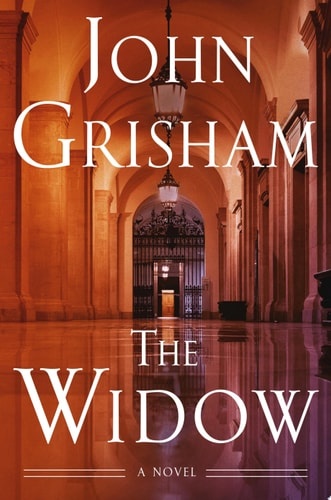
The Widow
About this book
Simon Latch is accustomed to modest cases and financial pressure when an elderly client appears with a story about a substantial inheritance. The possible fee could transform his practice, but the money also attracts questions that routine legal work cannot answer.
As competing claims and concealed relationships emerge, professional shortcuts become evidence of motive. Simon has to navigate investigators, beneficiaries, and the uncomfortable fact that his own desperation makes every decision look less innocent.
John Grisham returns to the practical mechanics of wills, client trust, and courtroom leverage. The law does not stand outside the mystery; documents and duties determine who can move the money and who will be blamed when someone dies.
The Widow is a legal thriller about temptation arriving in the form of a client. It follows how quickly an ordinary practice can become a crime scene when an improbable estate appears to solve the lawyer’s problems.
Read a sample
5,014 words
Plain text
From the opening
Chapter 1
The clients drawn to the quaint little law office at the corner of Main and Maple brought problems that Simon was tired of. Bankruptcies, drunk driving charges, delinquent child support, foreclosures, nickel-and-dime car wrecks, suspicious slip-and-falls, dubious claims of disabilities—the stock-in-trade of a run-of-the-mill street lawyer whose law school dreams of riches had faded so dim they were almost gone. Eighteen years into the grind and Simon F. Latch, Attorney and Counselor (both) at Law, was burning out. He was weary of other people’s problems.
Occasionally there was a break in the misery when an aging client needed some estate work, like an updated last will and testament. These were almost always uncomplicated matters that any first-year law student could handle, regardless of how somber Simon tried to make them. For only $250, he could write, or “draft” as he preferred to say, a three-page simple will, print it on heavy gold bond paper, get it notarized by his “staff,” and convey the impression that the client was “executing” something profound.
The truth was half of them didn’t even need a will, regardless of how simple, though no lawyer in the history of American jurisprudence had ever said so to a paying client. It was also true that the $250 fee was a rip-off because the internet was filled with free simple wills that were just as binding. It was also true that Mr. Latch would hardly touch the will. Matilda, his secretary, filled in the blanks and printed the important documents.
The current client was Ms. Eleanor Barnett, age eighty-five, a widow who lived alone in a modest suburban home she and her late second husband had purchased ten years earlier. She had no children, though Harry Korsak, her last husband, had two sons from a bad first marriage and had tried for years to convince Eleanor, his beloved second wife, to adopt the pair for various reasons, none of which appealed to her because, as she confided to Matilda during their lengthy second phone chat, she loathed the boys. They were nothing but trouble.
“And do you have a mortgage on your home?” Matilda had asked, politely interrupting the beginning of what promised to be a windy narrative about the two sorry sons.
No. The house was paid for, as was the car. There were no debts. Harry Korsak had been quite frugal, a child of Depression-era parents, you know, and simply hated the idea of debt. Between phone calls, Matilda did her usual internet checking and learned that the home, as assessed by the county for $280,000, was indeed free of liens, and the car, a fifteen-year-old Lincoln, was also unencumbered. Digging a bit deeper, she found a rap sheet for Clyde Korsak, the elder of the two un-adopted sons. Decades earlier he had been caught peddling cocaine and spent four years in prison.
Ms. Barnett would not discuss any more financial matters over the phone, said she’d rather wait until her meeting with Mr. Latch. She arrived promptly at 2 P.M., dressed like a mildly affluent old lady on her way to church. Matilda had seen a thousand of them come and go, and she sized her up immediately as she poured coffee into a fine china cup she kept around for the old gals. Most clients got paper cups. Ms. Barnett walked just fine, no cane, no tottering, a good stride and nice gait, and she sat properly in a reception chair and sipped her coffee, pinkie in the air, a clear sign of either good manners or a trace of snobbery. From all outward appearances, she was in good shape physically, probably had another decade to go before her new last will and testament would be called into action.
After a few minutes, Matilda announced that Mr. Latch was finished with his “judicial conference call” and would like to see her. She led Ms. Barnett down a short hallway and into the conference room where the dark walls were lined with thick law books Mr. Latch hadn’t touched in years.
Simon’s goal was to be rid of her in thirty minutes. Add another thirty next week when the new will was properly signed, and he would earn, in theory, his hourly rate of $250. A good friend from law school was currently billing four times that much in a Washington tax firm, but Simon tried not to think about such things. Over the years he had almost convinced himself that his quality of life in the small town of Braxton, Virginia, was far better, money be damned.
He turned on the charm, as he always did with the older women, and knew right away that she was smitten. “That’s a lovely necklace,” he said, fawning.
She smiled and flashed a mouth full of natural, yellow teeth. “Why, thank you.”
“I see from the notes that you are single, live alone, and have no children or grandchildren. Two husbands, both deceased.” He scanned Matilda’s report as if reading the Magna Carta.
“And you kept the name Barnett after you married Mr. Korsak.”
“Well, not exactly. After Harry died I decided to go back to ‘Barnett.’ I never really liked the name Korsak, you know? Between the two of us, I enjoyed Vince Barnett a lot more than Harry Korsak. Vince and I were childhood sweethearts, you know, married young and sort of grew up together. We were younger and more romantically active, know what I mean?”
Continue reading the sampleClose the sample
Simon knew exactly what she meant and had no desire to explore further. “Do you have a current will?”
“They don’t expire, do they?”
“Well, no, they don’t.”
“Yes, but I have doubts about it. I’d like to do a new one, and I want to hire you as my attorney for other matters. On a retainer.”
“What other matters concern you?”
“Oh, well, one never knows, especially nowadays with so much fraud and scamming out there. Senior citizens are the favorite targets. It’s just awful how many of them lose everything. I want to be protected, and I want you kept on retainer to review things for me. My friend Doris always keeps a lawyer on retainer.”
At the moment, Simon could think of nothing worse than being at the beck and call of an elderly client who thought she was being scammed. But if she insisted, then $1,000 might be a fair arrangement.
“How much is her retainer?”
“Oh, not much. She says you can get one pretty cheap.”
Simon took a deep breath and tried to get the consultation on track. “Let’s get back to your will. It’s important that I take a look at your previous one.”
“Yes, I know. Matilda out there mentioned it over the phone but I forgot to bring it. Seems like I’m forgetting more and more these days.”
Goes with the territory. If they were over eighty, he assumed a few marbles were missing. He and Matilda would confer later and decide if Ms. Barnett had sufficient mental capacity to understand what she was doing. But the first impression was good, and for $250, he was willing to worry only so much.
“Could you possibly drop it off in a day or so?”
“Yes, no problem. Sorry to be a pain.”
“Quite all right. We need to talk about your assets and liabilities.”
“There are no liabilities. Not one penny of debt. Harry, my late husband, despised debt. Wouldn’t even use a credit card. We lived free and clear.”
Simon loved the sound of those words and could only dream of one day clawing his way out of debt. “That’s admirable,” he said piously, as if she needed his blessings. Everything he owned was heavily mortgaged.
“But I got one after he died. A Visa card.”
He scribbled something meaningless and said, “Okay, what about assets? Do you own your home?” He knew she did but most older clients enjoyed bragging about the things they had accumulated. They were proud of their frugal lifestyles and that after decades of pinching pennies they were financially secure.
“I certainly do.”
“Any idea of its market value these days?”
“Well, not really, but the county has it assessed for two hundred and eighty thousand, I think. Something like that.”
“Okay, that’s close enough. The home is usually the biggest asset in a person’s estate.”
“Not in my case,” she said sharply, as if mildly offended.
He kept scribbling and absorbed the first hint that this little will might not be so simple. “Do you own other real estate? A vacation home? Rental properties?”
“Oh no. Harry didn’t like real estate. Said it was too much trouble.”
Then what, please, did Harry like? “I see. Do you have other investments?”
She took a deep breath and suddenly looked worried. “I can trust you, right, Mr. Latch?”
“Of course. I’m your lawyer, duty bound to keep everything confidential.” Simon noticed a slight flutter in his intestines, as if some truly wonderful and unexpected facts might be in the works. He’d had a few surprises in the past eighteen years as a pseudo estate lawyer, but nothing significant.
“Well, you see Mr. Latch—”
“Please call me Simon.”
“Simon, what a nice name. You see, Simon, Harry worked for almost forty years as a district sales rep for Coca-Cola. I think that’s what killed him. He got his blood sugar up, had a stroke at sixty-nine, never recovered. We always had plenty of Coke, the real thing, not diet, in the fridge and he drank too many, at least in my opinion. Anyway, he qualified for stock options, a few at a time, and he bought every share of Coke he could get his hands on. Never sold a share, just enjoyed watching it pile up. And boy did it. Then about thirty years ago, he began selling Coke products to Wal-Mart and became fascinated with the company. It was selling a lot of soft drinks. Harry began buying stock in Wal-Mart and he never sold a share. When he died suddenly, he was wondering what to do with all that stock. He didn’t want to leave it to his boys, because they were nothing but trouble. Still are. And here’s the thing, Simon, the boys don’t know about the stock. Harry never told them, never told anyone but me. He thought it was funny that we lived quietly in our modest little home and no one knew we were worth millions.”
Millions? Simon managed to keep scribbling on his yellow legal pad but his handwriting, illegible on a good day, quickly deteriorated into nothing more than chicken scratch. At that moment, he could not remember a single will he had ever drafted for a person worth a million dollars, excluding the real estate.
He maintained a lawyerly frown as if thoroughly unfazed. “What, uh, did he do with all that stock?”
“He left it to me, along with everything else. What’s it called—‘the marital deduction’?”
“Yes, that’s it. You can leave everything to your spouse free of estate taxes. Harry must have been a smart man.”
“Funny thing, he never claimed to be smart. He was quite modest, worked hard, paid his debts, saved his money, bought his stocks, then left it all to me. He wanted to do something to help his sons, and, frankly, he tried everything. But if they had known about his portfolio they would have driven him crazy. So, he never told them. Then he died suddenly.”
It was rare for a client seeking a simple will to throw around words like “portfolio” and “marital deduction.” Simon’s radar went up another notch or two.
“What’s the value of the portfolio?”
She actually put a hand over her mouth as if she couldn’t say. Then she rubbed her eyes and looked frightened. She lowered her voice and said, “And all of this is strictly confidential, right?”
“We’ve already established that, Ms. Barnett. If you want me to draft a proper will, then I have to know what’s in the estate. A simple will may not be what you need.” He could almost feel the new document growing thicker by the moment. And the retainer was growing too, now up to $5,000.
“If people only knew. My friends, Harry’s boys. No one knows, Simon.”
Simon flashed a comforting smile, as if to say, You can tell me anything. Instead, he said, “These walls are made of steel, Ms. Barnett. Nothing leaks through. I’m ethically bound to keep all your secrets.”
Fortified, she gritted her teeth and said, “As of last week, the stocks were worth slightly more than sixteen million. The market goes up and down, you know?”
Simon scribbled down the number while managing to keep a solemn poker face, as if this was nothing out of the ordinary.
She leaned in closer and asked, “That’s a lot, right?”
“It is.”
“Is it pretty unusual?”
“I’d say yes. I rarely get a client with this type of net worth.” Rarely? How about never?
“And I don’t know what to do with it all?”
Oh, the questions. And the suggestions.
“Uh, well, how much of the estate is in Coke stock?”
“About ten million. About six or so in Wal-Mart.”
“And the dividends?”
“Well, as you know, Wal-Mart doesn’t pay squat for dividends, pennies per share. But Coke, well that’s a different story. It’s paid four percent a year forever.”
“Four percent of ten million annually?”
“Thereabouts. It’s a bit over four hundred thousand a year. And it just piles up, you know? I don’t know what to do with it. Can you help me, Simon?”
“I’m sure we’ll think of something, but this will not be just a simple will, Ms. Barnett. This will take some time.”
“Could you please call me Netty? It’s my old nickname, but only a few people use it. If you’re Simon, then I’m Netty.”
He gave her the sappiest smile yet and said, “Of course,” as they grew closer. “I guess with that type of income you must have substantial cash in the bank.”
“Yes, I do.”
A pause. “Okay, how much cash?”
“Almost four million.”
“And it’s in, well, what type of accounts?”
“Checking, savings, and certificates of deposit. But the bank’s not here. Harry wouldn’t dare bank with the locals. He was always afraid prying eyes would see our accounts and, well, you know how people love to gossip. So he banked with East Federal in Atlanta, one of the biggest.”
“Atlanta?”
“Yes, we lived there for years. Coke’s headquarters, you know?”
“Of course.” Simon had no idea where Coke was headquartered. He scribbled away as his mind spun in circles. He flipped the pages of his legal pad and started on a blank one. He wrote down the number $10,000, followed by “Retainer.”
“Just curious, Netty, in your last will, who did you leave your assets to? The stocks and bank accounts?”
She sighed as if it might be too painful to talk about. “Well, Simon, that’s one reason I’m here. I don’t like my current will. I signed it weeks ago and I haven’t had a good night’s sleep ever since.”
“Who drafted it?”
“A lawyer across the street. Wally Thackerman. You know him?”
“Oh, sure. I know all the lawyers in town.”
“Do you trust him? Is he a good guy?”
“Yes, no, sort of, maybe. Wally is nice enough, but I wouldn’t call him a friend. Do I trust him? I’m not sure. Why? Do you trust him?”
“I did, but now I don’t know. You see, Simon, I wasn’t sure who to put in my will. Who gets the stocks and the money, you know?”
“Uh-huh.”
“So Wally convinced me to leave it all to him, in trust. When I pass, he’ll sell the stock, put the cash in a trust of some sort, I really never understood it, and then he would have the authority to give the money to my favorite charities.”
“And what are your favorite charities?”
“I don’t have any.”
“None?”
“No. You see, Harry didn’t believe in giving money away. He had the attitude that no one gave him money when he was broke and hungry, as a kid, so why should people expect him to give them something? I wouldn’t say he was stingy, but maybe he was. Whatever, we just never got in the habit of giving.”
“What about after he died and you inherited everything?”
“Well, there was this one charity I liked, or at least I thought so. Years ago I saw something on cable about the spider monkeys in Uganda and how they were starving to death because of some chemicals the government was spraying. Poor things were just shriveling up and dying by the hundreds. It was heartbreaking, so I sent a thousand dollars to the Spider Monkey Trust, had an address in Boston. They said thanks, sent me a calendar and all, made me a member of one of their boards, then asked me for more money. I sent another check, then another, and they kept asking. Wanted to send an executive out here to meet me and have lunch and so on. Then they sold my name and address to somebody else and before long my mailbox was jam-packed with letters from folks trying to save whales and buffaloes and cheetahs and Canadian wolverines. I sent them nothing. Got so bad I changed my mailing address. Then the FBI busted the Spider Monkey Trust, whole thing was a scam. Got me for eleven thousand. So, no, Simon, I don’t fool with charities.”
Simon managed to listen while his mind raced around that little weasel Wally Thackerman across the street, putting his name in the will and controlling everything. It was highly unethical and grounds for disbarment, but then who needs a law license when you’re drowning in cash?
She was prattling on. “Ever since I signed that will I’ve worried about it. Doesn’t seem right for the lawyer to be able to get his hands on everything, right, Simon?”
“I need to see the will, Netty.”
She pulled a tissue out of a pocket and was tapping it on her cheeks. “I’m sorry. This is so confusing. I never really felt right, you know, leaving everything to Mr. Thackerman, a man I don’t really know. That was not very smart, was it?”
Of course not. Downright stupid. But with the client in tears and vulnerable and sitting on a fortune, Simon grew even warmer. “We’ll take care of it, Netty. Trust me. This is easy to fix. Sometimes proper estate planning requires a significant portion of the assets to be placed in trust, and the attorney is often named as the trustee.”
“Legal gobbledygook.”
“Yes, I’m sorry, but the law can get complicated. Let me take a look at the will and we can go from there.”
“Okay.”
Simon was dizzy with rapid thoughts. He closed his legal pad, put the cap on his pen, and said, “Look, tomorrow I have some business in Fairhaven close to where you live. Let’s meet at that new Starbucks on Millmont Street. You know where it is?”
“I think so, but I really don’t mind coming downtown.”
“No, I insist. Same time, two P.M. tomorrow. And I’ll look over your will.”
“I guess.”
“And here’s something sensitive, Netty, something I can tell only you. Matilda out there is not the most discreet person I’ve ever hired. We’ve had issues over her ability to keep secrets, and this is just the type of gossip that she might repeat to the wrong person.”
“Oh dear.”
“Right. I’ll have to terminate her soon enough. A lawyer cannot have a blabbermouth in the office. In the meantime, though, not another word to her. If you need me, just call my cell phone.” He slid across a business card.
“Oh dear.” She was feigning surprise but also enjoying the intrigue.
“It’ll be okay, trust me. I can prepare the will myself and she’ll never see it. It’s best that way.”
“If you say so.”
“Trust me. Two P.M. tomorrow at Starbucks.”
He followed her down the hall to reception, chatting the whole way about the weather. Netty glared at Matilda as she walked by but said nothing. Simon opened the front door and stepped outside with her. As she wandered off and got in her car, the old Lincoln, he stared at the law office across Main Street.
Law Offices of Walter J. Thackerman. What a slimeball.
Back inside, Matilda said, “Nice little lady. You have the questionnaire? I’ll do the will right now.”
Simon stopped and looked out the front window as if there was trouble. “Might have a problem. She could be crazy, really off her rocker. I think she’s being treated, gotta be careful. And she’s not sure what to do with her house so she wants to think about it for a few days. Could be a real pain.”
“I thought she was rather lovely.”
“We’ll see. Do I have any other appointments this afternoon?”
“Yes, the Pendergrasts. Their bankruptcy is causing problems.”
“Great.”
Chapter 2
The rest of the day was shot. He couldn’t stomach the thought of sitting for an hour with Mr. and Mrs. Pendergrast as they squabbled over who was to blame for their financial problems. Simon’s speciality was bankruptcies and they were often more trouble than divorces, which he loathed. He called the Pendergrasts and canceled with one of the many standard lawyer fibs used to duck and weave: he said he was suddenly needed in federal court. But he really wasn’t needed anywhere. The most pressing file on his desk involved the purchase and sale of an ice-cream shop down the street, a $20,000 deal for which he might earn a fee of a thousand bucks or so.
Suddenly, every file seemed so trivial. An elderly client with $16 million in stocks and more in cash had just left his office with a current will that left her fortune to a rat-faced little lawyer across the street. Simon could think of nothing else. As soon as Matilda said goodbye promptly at five, he left ten minutes later and drove to a watering hole in a motel bar out near the interstate. It was favored by lawyers and judges who didn’t want to be seen drinking too much in town, though there were some who drank openly and excessively. Luckily, none of them were there, and Simon nursed a beer in a dark corner and tried to sort out his thoughts.
First things first. He had to see the will to verify that his dear Netty was telling the truth. It was still hard to believe that a lawyer, any lawyer, would be brazen enough to insert himself in a will and have unfettered access to an entire fortune. But the fact that he, the Honorable Simon Latch, was thinking of doing something very similar to that made him realize it was indeed possible. Upon Netty’s death, there would certainly be a massive legal brawl with lawsuits flying, but the only named trustee, at the moment one Wally Thackerman, would be in the driver’s seat.
Of course the fortune wouldn’t be $20 million. Last time he checked, the state and federal estate taxes were 40 percent, almost all of which could be avoided with the marital trust. However, since Netty had no husband, her estate would be on the chopping block and fair game for the tax collectors. Eight million in taxes up in smoke. He actually grimaced at the thought of paying so much to the government.
But $12 million was still more than he would earn working for thirty years at the corner of Main and Maple. Then he remembered something he’d read in a newspaper. Congress had been tinkering with the tax rates before its December recess. He couldn’t recall the details and usually did a half-ass job of staying informed, because his clients never worried about gift and estate taxes.
He called a buddy from law school who practiced in a prestigious tax firm in D.C., an hour away. After the usual chatter, he got around to business. Dirk, his friend, laughed and said, “Come on, Simon. You haven’t heard the big news?”
“I guess not.”
“Congress adjourned without repealing the amendment.”
Simon wasn’t sure what that meant so he kept quiet. Dirk liked to talk anyway. “Those clowns dropped the ball big-time. The estate tax deal fell through, no compromise, no tax. Zero, zilch, nada. For the next twelve months there will be no federal estate taxes, and, since most states follow the Feds, now is the perfect time to die. So tell your geezer clients to get their shit in order and get ready to pull the plug. Have a big Christmas this year, then it’s adios. Their kids and grandkids will love them for it.”
“Right! I saw that. What a screw-up.”
“Par for the course these days.”
As the conversation drifted dangerously close to politics, Simon switched gears and asked about another law school classmate who was battling cancer. Since both were busy lawyers, they managed to wrap up the conversation with promises to get together soon.
Back to $20 million! Simon got another beer and thought about the conversation for a long time. Later, he would go online and do some research, try to find out why Congress allowed the estate tax provisions to slip away. As if one might be able to understand anything Congress did.
Chapter 3
Simon and his wife, Paula, had not filed for divorce because they could not afford one. Both desperately wanted out, but since they were barely afloat financially with one household they could not imagine trying to maintain two. Both wounded and scarred, they were tired of fighting and had settled into a somewhat sustainable coexistence that allowed them to pass the days in muted suffering as their three kids grew up. Fortunately, the two older ones were teenagers who were struggling through the usual strains of puberty and adolescence but not yet causing serious problems. They seldom left their bedrooms and never allowed themselves to be caught offline. A device was always in hand. The youngest, Janie, was nine years old and still a sweet kid.
To avoid conflict and keep the tension away from the children, Simon usually slept at the office. He had remodeled a small suite upstairs, knocked out a couple of walls, and configured a small pad where he survived with a tiny bathroom and narrow bed. When talking only to himself he called it The Closet. It wasn’t nice but at least it was away from Paula.
She was out this Tuesday night, the monthly book club gathering where wine seemed to be more important than literature. It gave him the green light to cook his favorite Italian sausage meatballs with pasta and hang out with Janie in the kitchen. They talked about school and soccer and life in general. She caught him off guard by asking, “Where do you go at night?”
“Well, I often work late and just sleep at the office.”
“That’s weird. Why don’t you just come home? It’s not that far away.”
“I don’t want to wake up everybody. Mom’s a light sleeper and needs her rest.”
“Buck thinks you and Mom are getting a divorce.”
Buck had always been a nosy brat and too mature for his years. Simon managed a smile while realizing that it was the first time the word “divorce” had been uttered by one of the children, or at least to his knowledge.
He said, “No, we’re not getting a divorce, Janie. Mom and I are both working too hard and don’t have a lot of time for each other, but that’s not unusual these days. Everything will be okay. Tell Buck to stop talking like that.”
Divorce had been on the table for at least three years but they had been careful around the kids. Buck was sixteen and missed nothing. Danny was fourteen and going through puberty with his head in the clouds. Janie was a little girl who loved both parents. The thought of leaving her was painful.
“It seems weird that you would sleep at the office when your bedroom is here in the house with us.” She watched him as she said this, as if she knew the truth.
“Everything is okay, Janie, I promise. The pasta is ready, so go get your brothers.”
The only time Buck and Danny left their rooms was to eat. Both had insatiable appetites, along with awful table manners. Paula had given up on the rules. Danny ate with earbuds and an iPad with some dreadful acid rock band screeching away, barely audible but loud enough to be annoying. Buck had earbuds and a cell phone. Simon asked them to unplug things and talk about their school days. They looked at him as if he were a trespasser and flagrantly disobeyed. At that point, Simon could slap the table, raise his voice, make a scene, start a fight he could not win, and create even more bad blood. Paula would hear about it and weigh in on behalf of her children. It was easier to ignore their behavior, another act of cowardice that had become routine around the Latch household.
So Simon chatted nonstop with Janie as the boys ate like pigs. The sooner they finished, the sooner they could escape to the safety of their rooms. They left their plates on the table, more rules violations, but Simon just ignored them again. After dinner, when the kitchen was spotless and the house was quiet, Simon kissed Janie on the forehead and said he had to get back to work. She wanted to say something but didn’t. He locked the doors, made sure the house was secure, and left a few minutes before ten. Paula would be home soon, and the less he saw of her the better.