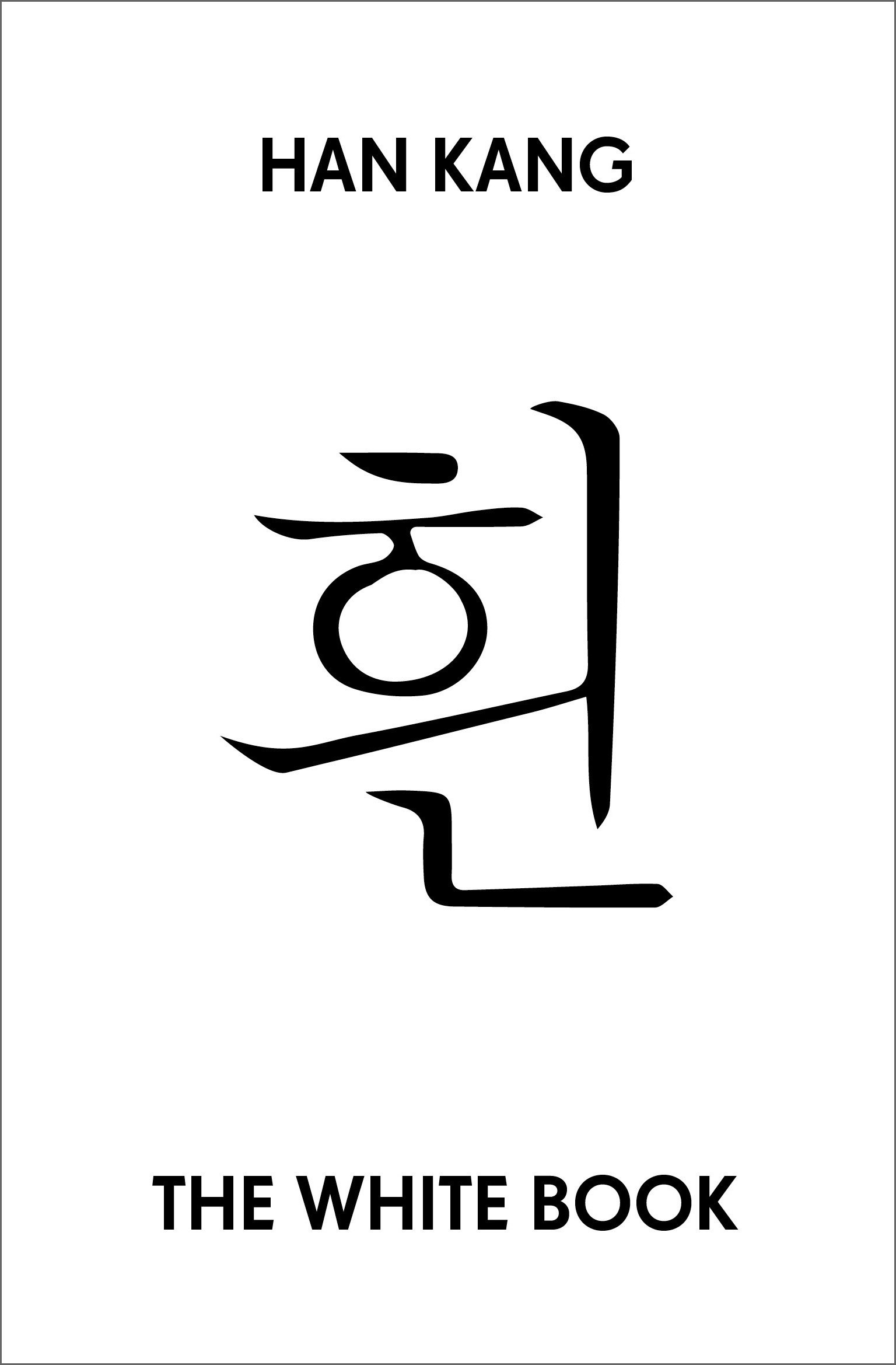
The White Book
About this book
The project begins with a list: swaddling bands, salt, snow, rice, waves, paper, hair, shroud. Each white thing opens a brief reflection whose concrete texture keeps grief from becoming merely symbolic.
The narrator imagines the life of the sister whose survival would have changed the family and perhaps prevented her own birth. That impossible substitution lets the book ask what it means to offer one person the life another received.
A war-damaged European city enters through walls, fog, cold, and reconstruction. Its historical wounds do not become equivalents for private loss; they create another landscape in which whiteness can mean cleansing, erasure, fragility, or beginning.
The White Book is Han Kang’s hybrid work translated by Deborah Smith. Its short sections are best read slowly, as an attempt to make language light enough to carry mourning without claiming to resolve it.
Read a sample
5,070 words
Plain text
From the opening
In the spring, when I decided to write about white things, the first thing I did was make a list.
Swaddling bands
Newborn gown
Salt
Snow
Ice
Moon
Rice
Waves
Yulan
White bird
“Laughing whitely”
Blank paper
White dog
White hair
Shroud
With each item I wrote down, a ripple of agitation ran through me. I felt that yes, I needed to write this book and that the process of writing it would be transformative, would itself transform into something like white ointment applied to a swelling, like gauze laid over a wound. Something I needed.
But then, a few days later, running my eyes over that list again, I wondered what meaning might lie in this task, in peering into the heart of these words.
If I sift those words through myself, sentences will shiver out, like the strange, sad shriek the bow draws from a metal string. Could I let myself hide between these sentences, veiled with white gauze?
This was difficult to answer, so I left the list as it was and put off anything more. I came abroad in August, to this country I’d never visited before, got a short-term lease on an apartment in its capital, and learned to draw out my days in these strange environs. One night almost two months later, when the season’s chill was just beginning to bite, a migraine set in, viciously familiar. I washed down some pills with warm water and realized (quite calmly) that hiding would be impossible.
*
Now and then, the passage of time seems acutely apparent. Physical pain always sharpens the awareness. The migraines that began when I was twelve or thirteen swoop down without warning, bringing with them agonizing stomach cramps that stop daily life in its tracks. Even the smallest task is left suspended as I concentrate on simply enduring the pain, sensing time’s discrete drops as razor-sharp gemstones, grazing my fingertips. One deep breath drawn in and this new moment of life takes shape as distinctly as a bead of blood. Even once I have stepped back into the flow, one day melding seamlessly into another, that sensation remains ever there in that spot, waiting, breath held.
Each moment is a leap forward from the brink of an invisible cliff, where time’s keen edges are constantly renewed. We lift our foot from the solid ground of all our life lived thus far and take that perilous step out into the empty air. Not because we can claim any particular courage, but because there is no other way. Now, in this moment, I feel that vertiginous thrill course through me. As I step recklessly into time I have not yet lived, into this book I have not yet written.
Door
This was something that happened a long time ago.
Before signing the contract for the lease, I went to look at the apartment again.
Its metal door had once been white, but that brightness had faded over time. It was a mess when I saw it, paint flaking off in patches to reveal the rust beneath. And if that had been all, I would have remembered it as nothing more than a scruffy old door. But there was also the way its number, 301, had been inscribed.
Someone—perhaps another in a long line of temporary occupants—had used some sharp implement, maybe a drill bit, to scratch the number into the door’s surface. I could make out each individual stroke: 3, itself three hand spans high; 0, smaller, yet gone over several times, a fierce scrawl that attracted attention. Finally, 1, a long, deep-gouged line, taut with the effort of its making. Along this collection of straight and curved wounds rust had spread, a vestige of violence, like long-dried bloodstains, hardened, reddish-black. I hold nothing dear. Not the place where I live, not the door I pass through every day, not even, damn it, my life. Those numbers were glaring at me, clenching their teeth shut tight.
That was the apartment I wanted that winter, the apartment where I’d chosen to spin out my days.
As soon as I’d unpacked, I bought a can of white paint and a good-size paintbrush. Neither the kitchen nor the bedroom had been repapered, and their walls were spotted with stains large and small. These dark splotches were especially conspicuous around any electrical switches. I wore pale gray tracksuit pants and an old white sweater, so the splatters wouldn’t show up too badly. Even before I’d started to paint, I was unconcerned with achieving a neat, even finish. It would be enough, I reasoned, just to paint over the stains—surely white splotches are better than dirty ones? I swept my brush over the large patches on the ceiling where the rain must have seeped through at one time, watching gray disappear beneath white. I gave the sink’s grubby bowl a wipe with a washcloth before painting it that same bright white, never mind that its pedestal was brown.
Finally, I stepped out into the corridor to paint the front door. With each swish of the brush over the scar-laced surface, its imperfections were erased. Those deep-gouged numbers disappeared, those rusted bloodstains vanished. I went back inside the apartment to take a break and get warm, and when I came back out an hour later I saw that the paint had run. It looked untidy, probably because I was using a brush rather than a roller. After painting an extra coat over the top so the streaks were less visible, I went back inside to wait. Another hour went by before I shuffled out in my slippers. Snow had begun to scatter down. Outside, the alley had darkened; the streetlights were not yet on. Paint can in one hand, brush in the other, I stood unmoving, a dumb witness to the snowflakes’ slow descent, like hundreds of feathers feathering down.
Continue reading the sampleClose the sample
Swaddling bands
Swaddling bands white as snow are wound around the newborn baby. The womb will have been such a snug fit, so the nurse binds the body tight, to mitigate the shock of its abrupt projection into limitlessness.
Person who begins only now to breathe, a first filling-up of the lungs. Person who does not know who they are, where they are, what has just begun. The most helpless of all young animals, more defenseless even than a newborn chick.
The woman, pale from blood loss, looks at the crying child. Flustered, she takes its swaddled self into her arms. Person to whom the cure of this crying is as yet unknown. Who has been, until mere moments ago, in the throes of such astonishing agony. Unexpectedly, the child quiets itself. It will be because of some smell. Or that the two are still connected. Two black unseeing eyes are turned toward the woman’s face—drawn in the direction of her voice. Not knowing what has been set in motion, these two are still connected. In a silence shot through with the smell of blood. When what lies between two bodies is the white of swaddling bands.
Newborn gown
My mother’s first child died, I was told, less than two hours into life.
I was told that she was a girl, with a face as white as a crescent-moon rice cake. Though she was very small, two months premature, her features were clearly defined. I can never forget, my mother told me, the moment she opened her two black eyes and turned them toward my face.
At the time, my parents were living in an isolated house, in the countryside near the elementary school where my father taught. My mother’s due date was still far off, so she was completely unprepared when, one morning, her water broke. There was no one around. The village’s sole telephone was in a tiny shop by the bus stop—twenty minutes away. My father wouldn’t be back from work for another six hours.
It was early winter, the first frost of the year. My twenty-two-year-old mother crawled into the kitchen and boiled some water to sterilize a pair of scissors. Fumbling in her sewing box, she found some white cloth that would do for a newborn’s gown. Gripped by contractions and terribly afraid, she plied her needle as tears started down. She finished the tiny gown, found a thin quilt to use as swaddling bands, and gritted her teeth as the pain returned, quicker and more intense each time.
Eventually, she gave birth. Still alone, she cut the umbilical cord. She dressed the bloodied little body in the gown she’d just made, and held the whimpering scrap in her arms. For God’s sake don’t die, she muttered in a thin voice, over and over like a mantra. After an hour had passed, the baby’s tight-sealed eyelids abruptly unseamed. As my mother’s eyes met those of her child, her lips twitched again. For God’s sake don’t die. Around an hour later, the baby was dead. They lay there on the kitchen floor, my mother on her side with the dead baby clutched to her chest, feeling the cold gradually enter into the flesh, sinking through to the bone. No more crying.
Moon-shaped rice cake
Last spring, someone asked me whether I’d had “a particular experience, when you were young, which brought you close to sadness.” For a radio interview.
Faced with that question, it was this death that came to me. It was a story that I had grown up hearing. The most helpless of all young animals. Pretty little baby, white as a moon-shaped rice cake. How I’d been born and raised in the place of that death.
“White as a moon-shaped rice cake” never made much sense until, at six, I was old enough to help out with making the rice cakes for Chuseok, forming the dough into small crescent moons. Before being steamed, these bright white shapes of rice dough are a thing so lovely they do not seem of this world. Only afterward, dished up on a plate with a pine-needle garnish, did they become disappointingly matter-of-fact. Glistening with roasted sesame oil, their color and texture transformed by heat and steam, they were tasty, of course, but utterly unlike that former loveliness.
So when my mother said “white as a rice cake,” I realized, she meant a rice cake before it is steamed. A face as startlingly pristine as that. These thoughts made my chest grow tight, as though compressed with an iron weight.
Last spring, in the recording studio, I didn’t mention any of this. Instead, I spoke of my pet dog, which died when I was five years old. He was an unusually intelligent dog, I said, a mongrel, but descended in part from the famous Jindo breed. I still have a black-and-white photo of the two of us, a candid shot of an intimate moment, but, strangely enough, I cannot remember him alive. My one vivid memory is of the morning when he died. White fur, black eyes, still-damp nose. From then on I developed an aversion to dogs that has persisted to this day. Rather than reaching out to tousle soft fur, my arm stays clamped to my side.
Fog
Why do old memories constantly drift to the surface here in this unfamiliar city?
When I go out into the streets, the scraps of conversation that pull into focus when the speaker brushes past me, the words stamped on street and shop signs, are almost all incomprehensible. At times my body feels like a prison, a solid, shifting island threading through the crowd. A sealed chamber carrying all the memories of the life I have lived and the mother tongue from which they are inseparable. The more stubborn the isolation, the more vivid these unlooked-for fragments, the more oppressive their weight. So that it seems the place I flee to is not so much a city on the other side of the world as further into my own interior.
The early hours of the morning, and the city is cloaked in fog.
The border between sky and earth has been scrubbed out. The only view my window offers is the blurred suggestion of two poplars, ink-wash contours wavering four or five meters up from where the street lies hidden; all else is white. But can we really call it white? That vast, soundless undulation between this world and the next, each cold water molecule formed of drenched black darkness.
I remember a morning on an island long ago, when the fog had been as thick as this. A walk along a cliff path with the others in the group. Pine trees flickering in and out of existence. Towering ashen cliff. The backs of my companions’ heads, which seemed eerily blank and hard-edged as they peered down at the black waters shifting beneath the thick sea fog. But how ordinary a scene that same path showed when I walked it again the following afternoon. What I had fancied a mysterious swamp was a dry, dust-clogged puddle. The pine trees, which had seemed otherworldly when seen in snatched glimpses, were cordoned off by a stretch of barbed wire. The sea’s deep blue had the sheen of a tourist postcard. Everything was back within its own borders, holding its breath. Holding its breath and waiting for the next fog.
What do the ghosts of this city do, these muffled early-morning hours?
Slip soundlessly out to walk through the fog that has been holding its breath and waiting?
Do they greet each other through the gaps between those water molecules that bleach their voices white? In some mother tongue of their own, another whose meaning eludes me? Or do they only shake or nod their heads, without the need for words?
White city
I saw some footage of this city, taken by a US military aircraft in the spring of 1945. The film was screened in the projection room on the first floor of the memorial hall, situated in the east of the city. The subtitles said that over a period of six months, starting in October 1944, 95 percent of the city was obliterated. This city, whose people rose up against the Nazis, from which the German soldiers were driven out in September 1944 and where a month of civilian government was achieved, hence Hitler’s decision to use any means necessary to sweep it clean out of existence as an example.
When the film opened, the city seen from far above appeared as though mantled with snow. A gray-white sheet of snow or ice on which a light dusting of soot had settled, sullying it with dappled stains. The plane reduced its altitude, and the city’s visage sharpened. There was no snow covering it, no soot-streaked ice. The buildings had been smashed to pieces, literally pulverized. Above the white glow of stone ruins were blackened flecks as far as the eye could see, showing where the fire had touched.
Riding the bus back to my apartment, I got off at the park, which I’d heard housed a very old castle. After a while walking through its forested grounds, I came upon an old hospital building. A faithful reconstruction of a building that had been destroyed in a 1944 air raid, no longer used as a hospital but as an art gallery. As I passed along the narrow trail, vaulted with a mass of intertwined tree limbs, where the birds’ high trill put me in mind of skylarks, it occurred to me that all of these things had at one time been dead. These trees and birds, paths and streets, houses and trams, and all of these people.
In this city there is nothing that has existed for more than seventy years. The fortresses of the old quarter, the splendid palace, the lakeside villa on the outskirts where royalty once summered—all are fakes. They are new things, painstakingly reconstructed based on photographs, pictures, maps. Where a pillar or perhaps the lower part of a wall happens to have survived, it has been incorporated into the new structure. The boundaries that separate old from new, the seams bearing witness to destruction, lie conspicuously exposed.
It was on that day, as I walked through the park, that she first came into my mind.
A person who had met the same fate as that city. Who had at one time died or been destroyed. Who had painstakingly rebuilt themselves on a foundation of fire-scoured ruins. Who was therefore something new. Who, some broken pediment having survived, has ended up bearing a strange pattern, the new distinct from the old.
Certain objects in the darkness
Certain objects appear white in the darkness.
When darkness is imbued with even the faintest light, even things that would not otherwise be white glow with a hazy pallor.
At night, I make up the sofa bed in the corner of the living room and lie down in that wan light. Instead of trying to sleep, I wait, feel my senses attune to the passage of time. The trees outside the window cast silhouettes onto the white plaster wall. I think about the person who resembles this city, pondering the cast of their face. Waiting for its contours to coalesce, to be able to read the expression it holds.
The direction of the light
I read an account by a man born in this city, in which he claimed to have lived for as long as he could remember with the soul of his elder brother, who had died at the age of six in the Jewish ghetto. The child’s voice came to him from time to time, he said, with neither form nor texture. In addition, the language was foreign to him, as he’d been adopted by a Belgian couple and grown up in that country, meaning he hadn’t at first been able to tell that the speaker was his brother. It could only be a waking dream, he thought, in which everything is doomed to recur, or else a symptom of derangement. When, at the age of eighteen, he finally came to learn of his family history, he began to study the language of this country, to understand what this soul was trying to tell him. And thus he learned of his brother’s fear, this brother both older and younger. That he was screaming the same terror-struck words, choked out when the soldiers had come to arrest him.
*
I slept badly for several days after reading this, unable to stop my thoughts from turning to the final moments of that six-year-old child, who would ultimately have been murdered. In the small hours of one such restless night, when the roiling inside me had finally calmed, it occurred to me that if I had been similarly visited myself, by my mother’s first child who had lived just two hours, I would have been utterly oblivious. Because the girl had never learned language at all. For an hour she had held her eyes open, held them in the direction of our mother’s face, but her optic nerves never had time to awaken and so that face had remained beyond reach. For her, there would have been only a voice. Don’t die. For God’s sake don’t die. Unintelligible words, the only words she was ever to hear.
And so I can neither confirm nor deny that there are times when she has sought me out, hovering at my forehead or by the corners of my eyes. That some vague sensation I had known as a child, some stirring of seemingly unprompted emotion, might, unbeknownst to me, have been coming from her. For there are moments, lying in the darkened room, when the chill in the air is a palpable presence. Don’t die. For God’s sake don’t die. Turned toward indecipherable sounds laden with love and anguish. Toward a pale blur and body heat. Perhaps I, too, have opened my eyes in the darkness, as she did, and gazed out.
Breast milk
The twenty-two-year-old woman lies alone in the house. Saturday morning, with the first frost still clinging to the grass, her twenty-five-year-old husband goes up the mountain with a spade to bury the baby who was born yesterday. The woman’s puffy eyes will not open properly. The various hinges of her body ache, swollen knuckles smart. And then, for the first time, she feels warmth flood into her chest. She sits up, clumsily squeezes her breast. First a watery, yellowish trickle, then smooth white milk.
She
I think of her living to drink that milk.
I think of stubborn breathing, of tiny lips mumbling at the nipple.
I think of her being weaned and then raised on rice porridge, growing up, becoming a woman, making it through every crisis.
I think of death deflected every time, faced with her back as she moves firmly forward.
Don’t die. For God’s sake don’t die.
Because of those words knitted into her, an amulet in her body.
And I think of her coming here instead of me.
To this curiously familiar city, whose death and life resemble her own.
Candle
As I have imagined her, she walks this city’s streets. At a crossroads, she sees a section of redbrick wall. In the process of reconstructing yet another shattered building, the wall had been taken down and rebuilt a meter in front of its original position, along with a low epitaph explaining that the German army used it to line up civilians and shoot them. Someone has put a vase of flowers in front of it, and several white candles are crowned with wavering flames.
Wreaths of fog still shroud the city, less thick than in the early morning, translucent as tracing paper. If a strong wind got up and skimmed off the fog, the ruins of seventy years ago might be startled into revealing themselves, pushing out from behind the present reconstructions. The ghosts that were gathered there, very close to her, might stand up straight against the wall where they were slaughtered, their eyes blazing out.
But there is no wind, and nothing is revealed beyond the already apparent. The warm white candle wax creeps ever downward. Feeding themselves to the white wicks’ flames, these stubs sink steadily lower, eventually out of existence.
Now I will give you white things,
What is white, though may yet be sullied;
Only white things will I give.
No longer will I question
Whether I should give this life to you.
Rime
The window is not quite flush in its frame, allowing rime to form on its glass. Midwinter. That pattern of frozen white recalled the snow ice that forms on a stream’s surface. The writer Park T’ae-won said that just such a window had drawn his gaze when his first daughter was born, hence the name he coined for her: Seol-yeong. Snow flower.
She’d once seen the sea itself frozen over. An unusually shallow stretch of water, compounded by a cold current, had formed serried ranks of frozen waves, like layer upon layer of dazzling white flowers captured in the moment of unfurling. She saw frozen fish strewn over the sandy shore, the hard glint of their scales. On such days, the people of that region say “the sea is rimed over.”
Frost
The day she was born was one of frost rather than snow, yet her father chose seol, snow, as one of the characters for his daughter’s name. Growing up, she was unusually sensitive to the cold and resented the chill embedded in her name.
But she liked to tread the frost-covered ground and feel the semifrozen earth through the soles of her sneakers. The first frost, as yet untrodden, has the fine crystals of pure salt. The sun’s rays pale slightly as the frost begins to form. White clouds of breath bloom from warm mouths. Trees shiver off their leaves, incrementally lightening their burden. Solid objects like stones or buildings appear subtly more dense. Seen from behind, men and women bundled up in heavy coats are saturated with a mute presentiment, that of people beginning to endure.
Wings
It was on the outskirts of this city that she saw the butterfly. A single white butterfly, wings folded on a reed bed, one November morning. No butterflies had been seen since summer; where could this one have been hiding? The air temperature had plummeted in the previous week, and it was perhaps on account of its wings frequently freezing that the white color had leached from them, leaving certain parts close to transparent. So clear, they shimmer with the black earth’s reflection. Only a little time is needed now and the whiteness will leave those wings completely. They will become something other, no longer wings, and the butterfly will be something that is no longer butterfly.
Fist
Walking this city’s streets until her calves had grown stiff, she waited. For something of her native language, sentences or even mere scraps of words, to surge swiftly to the tip of her tongue. She thought she might be able to write about snow. In this city, where they say it snows for half the year.
She kept a dogged watch for the coming of winter. Studied the shop windows, the reflections shown there not yet blurred by streaks of snow. The heads of others passing through the streets, still with no powdery dusting. Those slanting forms, not yet snowflakes, barely grazing the foreheads of strangers. Her own cold fists, which she clenched to white.
Snow
Against the background of a black coat sleeve, a large flake of snow will reveal its crystals even to the naked eye. A scant couple of seconds and she has witnessed it all. Mysterious hexagons melting clean away.
When it first begins to fall, people stop what they are doing and turn their attention to the snow. On a bus, they lift their eyes from their laps and gaze out of the window for a time. Once the snow has been soundlessly strewn about, with an equal absence of joy or sorrow, and the street’s erasure is complete, the people turn their faces away, and the blurring streaks are no longer reflected in their eyes.
Snowflakes
One late night long ago, she’d seen a man lying at the foot of a telegraph pole. He was slumped on his side. Had he fallen? Was he drunk? Should she call an ambulance? While she vacillated, unable to move away from the scene yet wary of drawing nearer, the man heaved himself halfway up and focused his blank gaze on her. She flinched, startled; though there seemed no immediate threat of violence, the alley was otherwise deserted. She walked on with hurried steps, then turned to look back. The man was squatting on the cold pavement, still in the same awkward position, staring piercingly at the grimy white wall that stretched along the alley’s opposite side.
he who had shipwrecked himself in an alley, who had pushed himself up on cold-numbed hands,
thinking of what his life has been,
of the loneliness that waits for him at home,
thinking what is this, what the hell is this
damned dirty white
falling snow.
Sparse flakes fly in all directions.
In the black air where the streetlights do not touch.
Whirled above the black branches of wordless trees.
Brushing against the bowed heads trudging through the night.
Perpetual snow
She’d considered living somewhere in sight of perpetual snow. Where the bodies of trees clustered close outside her window would mark each shift in season against the unchanging backdrop, off in the distance, of permanently ice-capped mountains. Cool as the hands on her fevered forehead when she lay at home on a school day.
There was a black-and-white film made here in 1980, in which the protagonist lost his father when he was seven years old and was raised by his calm, gentle mother. (His father had been only twenty-nine when he met with disaster, climbing the Himalayas with a group of friends. His body was never found.) The son moved out of his mother’s house as soon as he was old enough, and lived by an incredibly strict code of ethics. Whenever he had to make a decision, he would see in his mind’s eye an oppressive landscape: fresh snow falling on the icebound Himalayas, like a whiteout inside his head. Each time, he made the choice that went hardest with himself, the choice that many others would have quailed at. In a period when corruption was rife, he alone refused to take bribes and for that he was ostracized, even physically attacked. In the end, he walked into a trap, was hounded out of his place of work, and returned home alone. There, allowing himself to become lost in thought, the peaks and ravines of that far mountain range filled up his field of vision. The very place where he could not go. The land of ice, in which his father’s frozen body was hidden, where humans were not suffered to tread.
Wave
In the distance, the surface of the water bulges upward. The winter sea mounts its approach, surging closer in. The wave reaches its greatest possible height and shatters in a spray of white. The shattered water slides back over the sandy shore.
Standing at this border where land and water meet, watching the seemingly endless recurrence of the waves (though this eternity is in fact illusion: the earth will one day vanish, everything will one day vanish), the fact that our lives are no more than brief instants is felt with unequivocal clarity.
Each wave becomes dazzlingly white at the moment of its shattering. Farther out, the tranquil body of water flashes like the scales of innumerable fish. The glittering of multitudes is there. The shifting, stirring, tossing of multitudes. Nothing is eternal.
Sleet
There is none of us whom life regards with any partiality. Sleet falls as she walks these streets, holding this knowledge inside her. Sleet that leaves cheeks and eyebrows heavy with moisture. Everything passes. She bears this remembrance—the knowledge that everything she has clung to will fall away from her and vanish—through the streets where the sleet is falling, that is neither rain nor snow, neither ice nor water, that dampens her eyebrows and streams from her forehead whether she stands still or hurries on, closes her eyes or opens them.