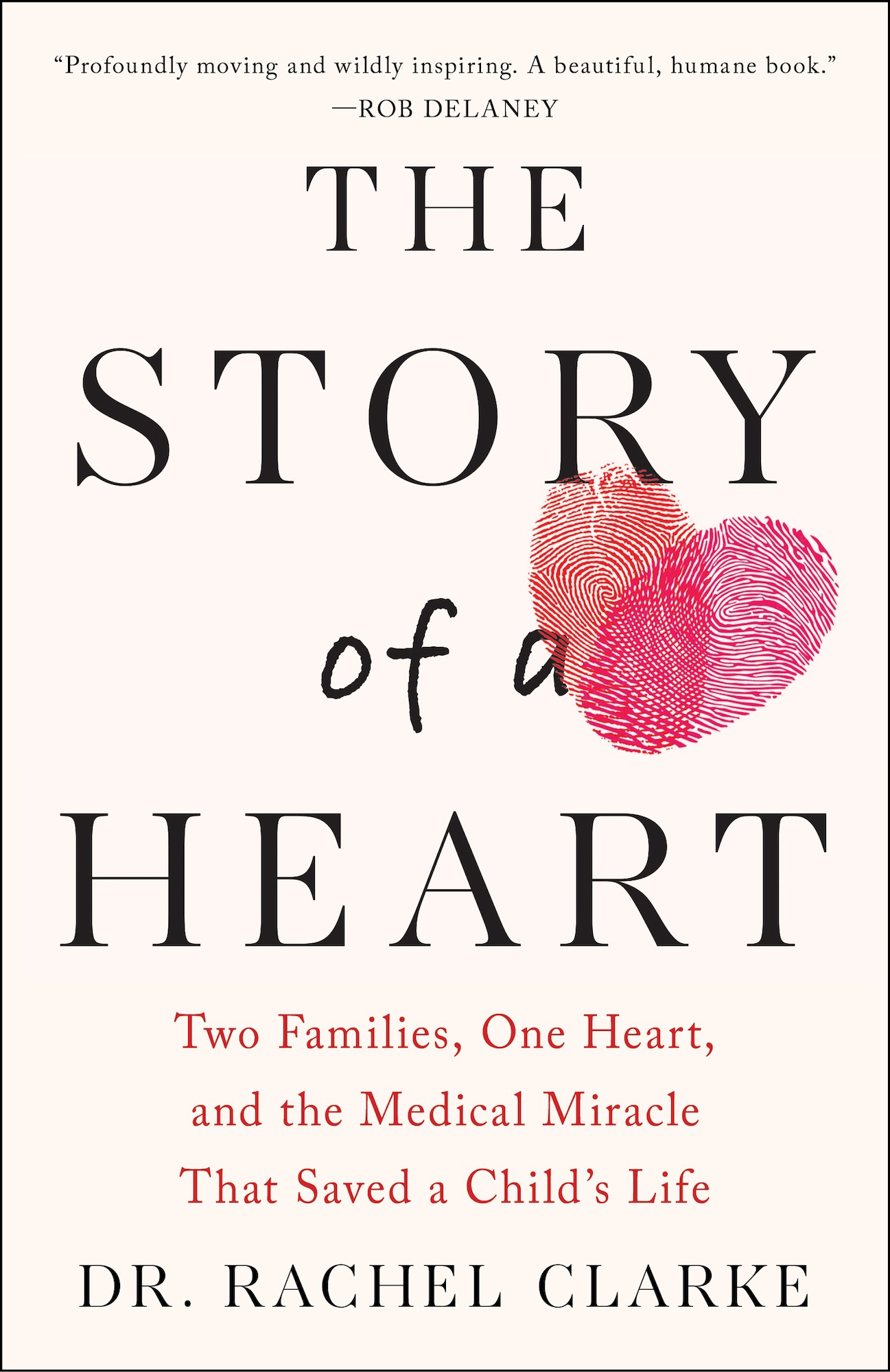
The Story of a Heart: Two Families, One Heart, and the Medical Miracle That Saved a Child's Life
About this book
One family faces the sudden death of a child and the decision to donate organs; another waits beside a child whose failing heart leaves little time. Their stories meet through teams coordinating consent, transport, surgery, and intensive care.
Clarke explains the medicine without allowing technique to erase the people involved. The heart is muscle, electrical system, symbol, and gift at once, and every successful step depends on professionals working inside an exact and emotionally charged timetable.
Drawing on interviews and her experience in medicine, she attends to the language clinicians use when certainty is impossible. Donation is not presented as compensation for death, nor transplantation as a simple ending to illness.
The Story of a Heart is narrative nonfiction about grief, hope, and modern cardiac care. It shows how one life can continue materially within another while both families retain stories that cannot be merged.
Read a sample
5,062 words
Plain text
From the opening
Prologue
This is the tale of a boy, a girl, and the heart they share. It is a story that no one was meant to tell. In the impassioned world of transplant surgery, the families of organ donors almost never encounter the people into whom those organs are transplanted. For obvious reasons, transplant services go to great lengths to ensure that donor and recipient families are kept at a distance. The entire process of organ donation is fraught enough without creating additional emotional entanglements that could heap distress upon vulnerable individuals.
Exceptionally rarely, however, donor and recipient families do discover each other’s identity. Invariably the catalyst is media attention. I first encountered the story of nine-year-old Max Johnson in the Mirror, in June 2017. In England at that time, people who wished to donate their organs after death had to proactively opt in to making their wishes known by signing up to the national organ donor register. Many medical and patient advocacy groups argued that more lives could be saved if the law was changed so that—as in a growing number of other countries—adults would be presumed to have consented to organ donation unless they opted out. The hope was that this would address the scarcity of organs, enabling many more lives to be saved. The Mirror, a newspaper with a history of advocating on a wide range of social issues, chose to run a campaign on this one. Under the headline “Change the Law for Max,” the paper ran a front-page splash making a powerful appeal to the then UK prime minister Theresa May to introduce new legislation addressing the scarcity of organs available for transplant.1 The editor hoped that public pressure would galvanize the government into making the drafting of the necessary legislation a priority.
Max had been a soccer-playing, tree-climbing, play-fighting force of nature until a mysterious illness caused his heart to fail, leaving it so dangerously weak and unstable he was forced to spend nine months confined to a hospital bed. Ordinarily, nothing in the human body is quite as single-minded as the heart. Its four chambers, fibrous flesh, electrical waves, and swing-door valves are designed with one aim and one alone: to beat. Through beating—or, more accurately, through contracting then relaxing—the muscle of the heart jolts blood into every last crevice of the human body, delivering oxygen, nutrients, and hormones to tissues, while whisking away the cellular by-products of life. Around 100,000 times a day—3 billion times over an average lifetime—all four chambers squeeze as one, forcing blood to surge through our arteries. The adult heart pumps 260 liters of blood every hour, enough to fill a small swimming pool each day. One contraction is so powerful it can send blood spurting ten feet straight up into the air if the aorta, the body’s principal artery, is severed. The heart, in short, is a toiling, tireless, muscular miracle. Barely the size of a pair of clasped hands, its capacity for circulating blood is extraordinary.
Max’s heart muscle had been fatally harmed, probably by a mild viral infection he had scarcely noticed. While Max was in the hospital, his parents acquired the new and terrible knowledge that up to one in five children in Britain and America might die while waiting on the transplant list. They were equally aware that the only thing that could give Max what he needed to live was the death, appallingly, of someone else’s child. Max became the poster boy for the Mirror’s campaign. Young, sweet, and immensely charismatic, he captivated the hearts of readers. After months of waiting for a replacement heart—and just when it started to seem that hope was lost—another child, Keira, had the terrible misfortune to suffer a catastrophic brain injury as a result of a road traffic collision. Keira’s family, upon being told she was brain dead, immediately decided to gift her organs. They knew with absolute certainty that this was what their daughter would have wanted.
In September 2017, a photo of Max in his hospital bed dominated the front page of the Mirror once more.2 The former wraith whose haunted stare had so moved readers was now pink-cheeked and beaming. His chest was bandaged, hiding a livid median sternotomy scar that extended all the way from the top of his sternum to the bottom of his ribs. Behind that scar, Keira’s heart sat and squeezed, flooding his body with blood and life. In addition to Max, Keira’s organs had saved the lives of another child and two adults. Overwhelmed with gratitude, Max’s parents, Emma and Paul Johnson, shared the following letter with the UK’s transplant service, NHS Blood and Transplant, who gave it in turn to the anonymous child’s family:
To the donor family,
We are writing to you as you hold a very special place in our hearts. Our son, Max, is 9 and he had a heart transplant. He was very poorly and a heart transplant was his only chance of coming home and starting a new life.
We are so sorry that you lost your loved one, but we would like to thank you for the incredibly kind, courageous decision that you made to allow organs to be donated. We do not know the circumstances, but we can only imagine what a dreadful, harrowing time you have been through and are doubtless still going through, with the loss. Even in your grief, you have made a selfless decision to help others and we are indescribably grateful to you.
Continue reading the sampleClose the sample
We hope that it brings you some comfort to know that Max’s post-transplant recovery has been smooth and without complication. His new heart has been described as a happy heart and a brilliant heart. Max is very thankful and he is looking after his new heart. He says “Good Morning” to his new heart every day and sends it lots of love, while it adjusts to the new environment.
He is eating healthily and exercising when he feels able, so that his heart will stay fit and strong. Max is getting used to all the medication, but he is full of energy and enthusiasm, as a result of the new lease of life that has been gifted by your family. He is relishing every moment back at home, without sickness, tubes, wires, machines, procedures etc. It was a very upsetting time, waiting so long for the call, but when we did get the call, we prayed for you and your family.
We continue to pray for you and think about you. We wanted you to know that your sacrifice was not in vain and you have given an incredible legacy of love and good will to others. We thank you so much for making a decision that has saved our son and given him the prospect of a future ahead of him. As he grows older, we will encourage him to cherish his heart in memory of you.
With our eternal gratitude,
Emma and Paul
When Keira’s parents received this letter, they realized that the Max to whom it referred was very likely to be the same Max whose plight they had read about in the Mirror. It took no time at all for Keira’s mother, Loanna, to locate Emma Johnson on Facebook. After much deliberation, Loanna decided to write a letter of her own, introducing herself via a private message to the mother of the boy whose life her daughter had almost certainly saved. What happened next would change the history of transplant surgery in the UK.
Organ transplantation is both a marvel of modern medicine and one of the purest expressions of human altruism. In 2022 alone, the lives of 42,887 people in the US were saved by the generosity of 21,369 people donating their organs after death.3 Collectively, over a million lifesaving transplants have been successfully performed in the US since records began. In the UK, the numbers are smaller but still remarkable. In 2022, organs donated by 1,429 people after their death saved the lives of 3,575 people.4 Right now, there are currently over 60,000 people alive in Britain—planning their child’s birthday party, setting off on a bike ride, enjoying an ice cream, savoring the summer sun—thanks to the gift of another person’s heart, liver, kidney, or lungs.5 Without this radical generosity, the vast majority of those individuals would be dead. None of them would be alive without the doggedness, toil, and creative genius of a remarkable cast of doctors and scientists whose obsession and brilliance in the twentieth century led to the series of medical breakthroughs that enabled the death-defying act of removing an organ from one human body and successfully reimplanting it in another.
Transplant surgery today is conducted with such skill and rigor that almost no part of the anatomy is too challenging to replace. Bones, tendons, heart valves, veins, voice boxes, uteruses, penises, nerves, and entire limbs have all successfully been transplanted. In 2008, a thirty-eight-year-old woman in the UK gave birth to the world’s first baby from a transplanted ovary.6 Two years later, the first total face transplant—comprising skin, muscles, eyelids, nose, lips, upper and lower jaw, teeth, palate, and cheekbones—was performed on a man in Spain who had been severely disfigured in a shooting accident.7 Since then, bilateral arm and leg transplants have occurred, unmanned drones have delivered donor kidneys to patients in remote hospitals, and lifelong illnesses such as sickle cell disease and type 1 diabetes have been cured by transplants of bone marrow8 and insulin-producing pancreatic islet cells,9 respectively.
The hidden logistics required to ensure no viable organ goes to waste are immense. Most moderate- and high-income countries have a national organ register and transplantation service that coordinates the retrieval, distribution, and transplantation of organs according to fairness and need.
The UK’s National Organ Retrieval Service comprises sixteen teams of exceptionally skilled surgeons, anesthesiologists, and theater operatives. At any given moment, day or night, 365 days a year, up to eleven of these teams can plunge into action, retrieving precious organs from hospitals anywhere in the country. The allocation of organs is determined by the NHS Organ Donor Register, established after a lengthy campaign by two bereaved parents, John and Rosemary Cox, who fought for their twenty-four-year-old son, Peter, to become a donor after he died of a brain tumor in 1989.10 In the midst of their grief, the Coxes were dismayed to discover that no national register existed of people who wanted to donate their organs after their death. They wrote hundreds of letters, gave multiple newspaper and television interviews, and tirelessly lobbied the government until, in 1994, the register was finally set up. Today, more than 30 million people are registered, representing 42 percent of the UK population.11
Underpinning both the positioning of patients on the waiting lists for organs and the logistics of organ procurement is rigorous science. Every human organ is delicately embedded in a cat’s cradle of veins, arteries, nerves, and tissues that sustain and control its function. Less than a century ago, the idea of surgically excising a human organ, transporting it on ice, and successfully implanting it into another living person’s body was the stuff of science fiction. Children in end-stage organ failure today stand a chance at life thanks to decades of laborious effort and flashes of inspiration from immunologists, vascular surgeons, physiologists, pharmacologists, anesthesiologists, engineers, and many other doctors and scientists. An entirely new medical specialty—intensive care—had to be invented before transplantation could occur successfully, not to mention the small matter of redefining the very concept of death itself.
Sustaining the science of transplantation is something equally wondrous: the human instincts that underpin every donation. There is no purer act of giving. The impulse to donate your organs after death, or those of your child, arises from the desire—as profound as it is simple—to help a fellow human being, irrespective of who they are or where they come from. Grieving relatives will often derive immense comfort from the knowledge that the person they once loved so dearly has, through their death, enabled others to live, but this does not diminish a donor or a donor family’s fundamental altruism.
As with all medical advances, however, the new technologies of transplantation expose uncomfortable truths and ethical dilemmas. Organs are inherently scarce. Therefore, as moral philosopher Janet Radcliffe Richards says in her elegant book on the subject, The Ethics of Transplants: “to put the matter objectively and starkly, there is a perpetual competition between the people who need organs and the rest of us who have them. We are all now potential sources of spare parts for people whose own organs have failed, and whose hope lies in getting one of ours.”12
At its ugliest, this conflict is played out in horror stories from around the world about black-market organ trafficking. In Afghanistan, for example, after the Taliban returned to power in 2021, crushing poverty and famine forced displaced, starving people to sell both their children and their body parts. At the time, the going rate for a kidney was around 150,000 afghani or just over £1,000 (a daughter could be sold for less than half this price).13 In China, despite official denials, evidence exists of systematic, state-sanctioned, involuntary harvesting of kidneys and portions of livers from prisoners while they are still living, plus the macabre phenomenon of “execution by organ procurement” in the case of those incarcerated on death row, whose organs are harvested prior to, not after, their slaughter.14 It is tempting to recoil from the amorality of this trade in stolen body parts. Kazuo Ishiguro, in his devastating novel Never Let Me Go, chooses instead to confront and interrogate the psychology of a world in which children are cloned and bred for the sole purpose of harvesting their organs once they reach adulthood.15 His fictional dystopia forces us to consider how fiercely we yearn to extend our own lease on life, and—perhaps even more uncompromisingly—the life span of those we love.
Several thousand people die in the UK and the US every year while hoping and waiting for a donor organ, the clock inexorably ticking down. The donors from whom organs are euphemistically “sourced” or “made available” are, of course, human beings themselves, with all the ethical consequences that entails. Radcliffe Richards makes the assumption that:
The people on the waiting list for transplants from deceased donors are, in effect, hoping that one of the rest of us will die so that they can have our organs. And, furthermore, their hopes are not for the incidental scraps left behind by those of us who have reached the inevitable end of a long life, because if we die from the wearing out of our own body parts they will not be of much use to anyone else. What the patients hoping for transplants need, ideally, is the sudden death of a young and healthy person, whose organs are still in good condition.16
Yet for those waiting for organs and their families there is a subtle but incredibly important distinction. Far from “wishing” that someone else’s child will die, their only hope is that—should another family find themselves in the unthinkable situation of losing a child—they might find it within themselves to say yes to organ donation going ahead.
Moreover, these moral complexities ensure that organ donation is rightly one of the most tightly regulated areas of modern medicine. It is crucial that the instinctive altruism underpinning a person’s decision to donate their own organs after their death, or those of a deceased family member, is not in any way tainted by the suggestion that doctors are seeking to retrieve organs through opportunistic or self-serving means. The medical teams who treat patients and diagnose death are deliberately kept entirely separate from the teams responsible for organ donation. Nobody in the UK or US is paid for their organs. Nor do clinicians or managers profit from arranging an organ retrieval. These are not transactions of power or of wealth. They are exchanges whose driving force is compassion. They reflect the startling capacity of death’s proximity to strip away life’s trivial details. If we allow ourselves to consider, for a moment, our final days, could anything befit them more than helping to save—through death—the life of another human being? How could we resist such radical kindness?
I am not a surgeon but a physician who specializes in palliative care, the branch of medicine in which matters of life and death are more intricately entwined than any other. I became captivated by the wonder of transplant surgery during my pediatrics rotation at medical school. I had just returned to my studies after a year’s maternity leave. My son was at the age where everything—airplanes, trucks, cobwebs, bananas—was intoxicating. He stampeded more than toddled, roared when excited, and routinely laughed with such gusto he would tip himself onto the floor. The fear and anguish endured by the parents I met on the children’s ward was painful to witness.
One day, I accompanied one of the hospital’s most experienced pediatric cardiologists on his morning ward round. Tall and grizzled, an elder statesman of the children’s hospital whom I will call Dr. Brewer had three decades of expertise in the medicine of keeping young hearts beating. We entered the room of a young boy, perhaps ten or eleven years old. “Hello, Ben. Hello, Gary,” said Dr. Brewer to the child and his distraught-looking father, whose names, again, I have changed. As Dr. Brewer crouched down so as not to tower over Ben, the crack of his knees filled the room. Ben’s bedsheets were strewn with untouched electronic detritus—iPad, headphones, mobile. A tub of sweets sat unopened on the bedside table. His body was limp, eyes barely focused. His pale face was sheened in sweat, and beneath the condensation fogging the oxygen mask, his lips were unmistakably blue. Ben, like Max Johnson, was in acute heart failure. A viral infection had caused the muscle of his heart to weaken so catastrophically it could no longer pump effectively. Blood no longer raced through his arteries, but clogged and distended the veins of his body and lungs, which were, by now, so waterlogged that Ben could barely breathe.
“How are you feeling today?” Dr. Brewer asked gently.
“Okay,” whispered Ben—a transparent lie.
“What now?” asked Gary as his son’s eyelids fluttered and closed. The hospital’s cardiologists and cardiothoracic surgeons were locked in a dispute about how best to manage Ben’s condition. Although he had been placed on the waiting list for an urgent heart transplant, he had deteriorated to such an extent that he needed immediate mechanical assistance—an artificial metallic pump to supplement the dwindling efforts of his heart to beat. The experts were wrangling over which device was best.
“I will speak to the surgeons and come back to see you this afternoon,” said Dr. Brewer. “We need to sort this out today.”
A short while later, the ward round complete, I was heading back to the lecture hall when two doctors sped past at a sprint. Their pagers crackled and a telephonist barked: “Pediatric crash call. Pediatric crash call. Proceed to Robin Ward, Room Three.” I stopped in my tracks. It was Ben’s room.
Inside the darkness of the lecture hall, news spread and somebody whispered, “God, did you hear about that boy with dilated cardiomyopathy on Robin?” Ben had suffered a cardiac arrest minutes after we left his bedside. The crash team had been unable to restart his heart and he died as his father looked on. When I left the hospital at the end of the day, I happened to pass Dr. Brewer. He looked older, diminished, and freighted with sorrow. We hovered awkwardly in the corridor. “I’m so sorry,” I mumbled. He nodded slowly before turning away, his eyes filling with tears.
Those scenes are as vivid to me today as when I first witnessed them. A transplant snatches life from death. Depending on your point of view, the transplantation of a human heart is a miracle, a violation, a leap of faith, an act of sacrilege. It’s a dream come true, a death postponed, a biomedical triumph, a day job. Perhaps it is all these things simultaneously. One thing is abundantly clear, though. Transplant surgery, more than any other branch of medicine, poses ethical questions of immense importance. How, for example, does any parent contemplate their child’s heart pumping while their brain is dying? How do they face the prospect of another child seeing through their own child’s eyes, or of breathing through their lungs? Does the act of removing one person’s organs and implanting them into another’s body not so much push at as transgress the boundaries of being human? What does it cost a healthcare professional to sit beside a grieving parent and first broach the topic of donating their child’s organs? And how does a parent reconcile the flood of relief that a transplant may save their child with the guilt of knowing that this comes at the cost of another child’s life? Questions like these propel the narrative of this book. Those of us who have never had to ask them are lucky indeed.
As soon as I learned about Max and Keira’s story, I was captivated by the way in which their lives became entwined around a single, shared heart. From the moment Keira was fatally injured, her heart began a journey so momentous it was scarcely believable. First, there were the emergency chest compressions at the scene of the crash—a junior doctor’s palms bearing down with all their might, striving to keep oxygen flowing through her body. Next, the strange metaphysical limbo between life and death as Keira lay in intensive care, warm, flushed, apparently sleeping, yet somehow—unfathomably—brain dead. Then the moment when her heart was stilled by an anesthesiologist’s drugs so that the surgeons, silently at work within the cave of her chest, no longer faced a moving target. From there, the light aircraft dash halfway across the country to deliver the organ, chilled on ice, into gloved and poised surgical hands. Finally, the intricate knitting of the heart’s great vessels into another child’s torso—and the agonizing wait, every second an ordeal, to see if its chambers would resume their vital work.
I knew there was only one way I wanted to tell this extraordinary story: by placing the heart itself center stage. When Keira’s heart defied nature to traverse time and space from one body to another, it affected the lives of all those involved in its journey—parents, siblings, surgeons, nurses, paramedics, bystanders, organ donation teams, pilots, psychologists, cardiologists. I set out to re-create this journey as faithfully as possible by writing, in essence, the biography of Keira’s heart. Over the last four years I have interviewed each of the key individuals whose interventions enabled Keira’s heart to resume its beat inside Max’s body. Nothing is fictionalized or based on conjecture. Anything appearing in direct quotes was recorded by me in a formal interview, either in person or via video or a phone call. I have edited quotations as little as possible, and only for grammar or clarity. The dialogue in the book is based on the recollections of the people interviewed. Woven alongside the journey of Keira’s heart is the broader historical story of how a dazzling array of biomedical achievements throughout the twentieth century enabled modern transplant surgery.
I have tried, in short, to write as complete an account as possible of the wonder and anguish, the science and soul, of a single heart in transit. This is Keira’s heart. And here is its story.
Keira
Keira. A name that takes flight, like the cry of a bird. Just right for the child who here and now is slicing through sky, as near as flying herself, laughing out loud with the joy of it. Her horse Charlie’s hooves are thumping on the turf. The fields pour past, the farm is a blur, the trees are molten.
At nine years old, your whole world is the present. Keira beams with delight, giddy, exultant, as somewhere beneath the grip of her thighs an equine heart opens, closes, opens, a liter of blood punched out with each contraction. Keira giggles and grins. She can’t contain her excitement. When riding her horse, she’s an arrow, a hawk. A child alight with the act of living.
When Keira returns to the yard from her ride, her mother, Loanna, finds herself grinning, too. How could you not be enchanted by this child’s smile? With her face still pink and her own heart still racing, Keira wraps her arms around Charlie’s neck. Her hair, light-colored, almost golden, falls in gleaming waves down her back. She leans in closer, pressing her cheek to the dampness of his coat, and whispers, praises. Good boy, Charlie. Good boy.
For the next hour at least, Loanna knows, her daughter will vanish inside the stables. It’s an open secret within the family that Keira loves looking after Charlie even more than she loves riding him. Caring, loving, soft, gentle. Anyone who knows her describes the child in these terms. Notably, Keira is so besotted by animals she cannot walk past an overturned snail without having to stop and right it. A glass jar sits on her bedside table, home to displaced beetles, spiders, and other rescued invertebrates. She dreams of one day working with animals. Her favorite color is bright clown fish orange.
Don’t be too long, Loanna calls after her daughter as Keira leads Charlie away from the paddock. It’s late July—summer vacation time—and tonight the family has plans. Husband and wife, Joe and Loanna Ball, are taking Keira and her younger brother, Bradley, aged seven, to enjoy fish and chips on Barnstaple beach. Their two older children—Katelyn, age eleven, and Keely, age twelve—are having a sleepover with their auntie. It’s getting late. Already the hillside is gilded with early-evening sunshine.
Much of Britain is rightly called beautiful, but swaths of Devon are irresistible. Every year the sea cliffs, sandy beaches, wild coves, and rolling pastures entice vacationing families and retirees in the thousands. Barnstaple, the north Devon coastal town where Keira lives with her family, stands on rich, dark soil on which dairy herds have flourished for centuries. The children’s summer vacations are an open-air idyll on their grandparents’ farm. They tend the horses, collect eggs from the chicken coop, run riot.
The cool recess of the stable is a welcome respite from the heat of midsummer. In the darkness Keira has no concept of time as she croons and chatters to Charlie. She fills a bucket with water and watches with undisguised pleasure as he guzzles it dry. Next, she unbuttons his saddle and tack, the leather stiff and unyielding to diminutive fingers. With a currycomb she loosens the dirt on his coat, working methodically, lovingly, from ear to tail. Now the dandy brush, to sweep away any debris. The horse nickers contentedly as the bristles dig deep, nodding and shuffling his pleasure. To Keira, these scents—sawdust, sweat, and the sweetness of hay—are the smell of home. She whistles and hums, so absorbed in her task she is unaware of the stable dust glinting around them.
The next morning—Sunday, July 30, 2017, at eleven o’clock precisely—everything is going to change. Later, and for the rest of her life, Loanna will keep returning to this moment. What will sit at the core of her, needling, taunting, is how outlandish the odds were. If events had aligned only fractionally differently, perhaps it all could have been undone. Suppose, for example, if Keira and Bradley, when offered the treat of a day out with Mum, had chosen the beach instead of learning how to leap through urban environments at junior parkour? Or if Loanna had decided not to take a detour, en route to the concrete park, to pick up a few supplies from a farm shop? Or—the most minuscule and therefore brutal tweak of all—if she had simply left the house one, two, three seconds later. Anything to take her car off that precise road, at that precise time. You could lose your mind just thinking about it.
The truth, though, as the forensic collision investigators will know the moment they are told the name of the road in question, is that for Keira the odds were rigged from the outset. The location of the crash—a section of the A361, also known as the North Devon Link Road—is infamous, both locally and nationally. In 2019, according to the UK Road Safety Foundation, this twenty-six-mile stretch of tarmac had the dubious accolade of being the tenth most dangerous rural road in Britain.1 Fatal collisions occur here with astonishing frequency. Local media regularly list the names of the dozens of people who have been killed on the A361 since 2000, while road safety campaigners single it out as one of the small number of “persistently high-risk” roads that the government must urgently focus on improving to cut fatality rates.2 Its most obvious flaw is the short passing lanes that merge with little notice, leading frustrated drivers into risky attempts at getting past slower vehicles. Each new fatality generates a clamor in Devon for upgrades and proper divided highways, but the necessary funding is never forthcoming.
The result is that even as it carves its way through some of the most beautiful countryside in the whole of England, the A361 is a twenty-six-mile minefield. Indeed, the very next day after the crash involving Loanna’s car, two more vehicles will collide on the same stretch of road.3 Almost inconceivably, another mother, Jane Baker-Lockett, and two more children, twelve-year-old twins James and Amy, will be killed when their car hits a semitruck. Three years after those children perish, works to improve the North Devon Link Road will finally be approved by the Department for Transport—though they have still not been completed at the time of writing.