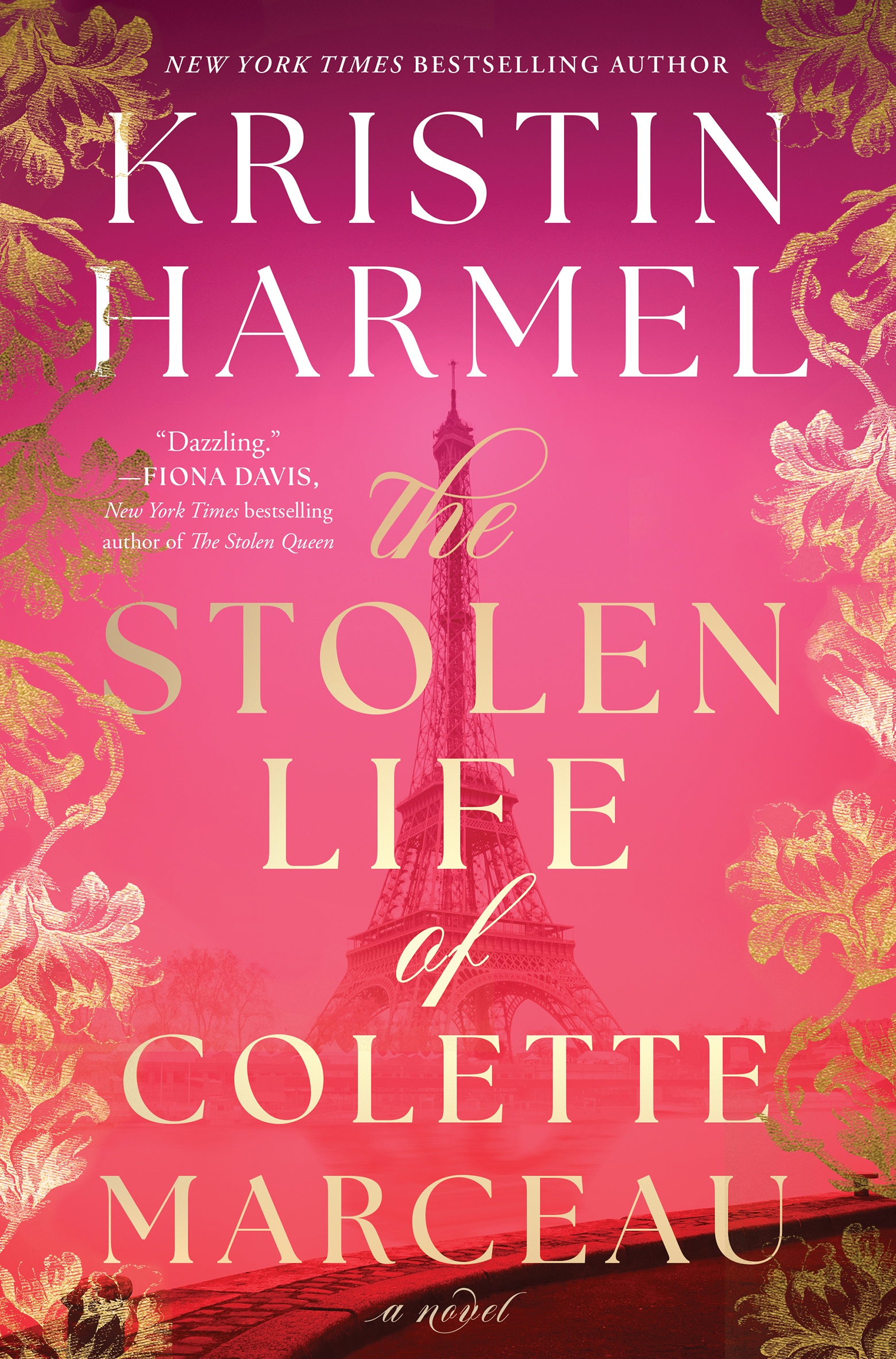
The Stolen Life of Colette Marceau
About this book
Colette Marceau belongs to a lineage of thieves who follow a family code: take only from those who acquired wealth through exploitation, and return what history displaced. Her work in 2018 remains tied to two matching bracelets made for her mother before the Second World War.
The narrative returns to occupied Paris, where Colette’s family enters resistance, survival, and betrayal under Nazi rule. A theft involving the bracelets and the loss of someone she loved create questions that remain unresolved long after liberation.
When one bracelet reappears in the present, the investigation joins provenance, family memory, and the moral ambiguity of reclaiming an object outside the law. The jewels matter because they have carried competing claims through every hand that held them.
The Stolen Life of Colette Marceau is a dual-timeline historical novel about resistance and restitution. Kristin Harmel gives the heist plot emotional weight by asking whether recovering property can ever recover the life attached to it.
Read a sample
5,041 words
Plain text
From the opening
PROLOGUE
The twin bracelets were born on a Monday in May 1927, conceived by a jeweler in Paris for one of his best clients, Salomon Rosman, whose family had dealt in diamonds for generations.
The jeweler was a man named Max Besner, and his passion was creating pieces he hoped would outlive him by hundreds of years. If one poured his heart and craftmanship into his work, if one used only the finest gemstones and metals, one’s creations would be passed from generation to generation for a long time to come.
Besner loved a challenge, and what Salomon Rosman was asking of him made him glow with pride.
“You are the only one in France who can do it, my friend,” Rosman said as he handed over a small bag of diamonds. “I want Hélène to know how much I love her, and how much I love our children, too.”
“Twins, my friend,” Besner replied, beaming. “A blessing.”
Rosman’s wife had given birth the day before to two healthy babies, a son they named Daniel, and a daughter they named Ruth. “A blessing indeed,” Rosman agreed, his voice thick with emotion. “I want them to inherit the jewels one day. But since there are two of them…”
“I must make two pieces,” Besner concluded.
“But my wife must be able to wear them as one,” Rosman said. “Beautiful on their own, but stronger together.”
“Just like your children, who will always be able to rely on each other,” Besner said with a smile. He pulled a velvet-lined tray from beneath the counter and raised a brow at Rosman, who nodded his permission. Besner poured Rosman’s jewels out, resisting the urge to gasp at the sheer number of them, the dazzling beauty, a constellation of tiny, perfect stars. “There are hundreds,” he managed to say. He hoped his eyes were not bulging; what if Rosman saw how impressed he was and decided that he was not the man for the job?
“What good are jewels if they sit in a drawer collecting dust?” Rosman said. “No, they must be brought to life. I’ve been saving these over the past few years.”
With his forceps, Besner picked carefully through the small fortune before him, turning over stones here and there, counting, assessing. As he watched them catch the light, his mind was spinning, imagining the ways he could put them together to make something extraordinary, something the world had never seen before. Already, he was picturing a celestial design, moon and skies and heavens.
“I think I will make—” he began, but before the words were out of his mouth, something strange happened. Through the open window high above his workbench, a butterfly flitted into the room, the first one Besner had seen all spring, and the only one he had ever seen within these walls. His shop was on the rue Choron, quite near the Grande Synagogue de la Victoire, but not particularly close to any of Paris’s sprawling parks. The world outside his doors was cement and brick, not a welcoming place for such creatures.
This one didn’t seem lost, though. In fact, it seemed to know exactly where it was going. It fluttered casually down and landed gently on the rim of the velvet tray of gems, as if it, too, was waiting to hear what the jeweler had in mind.
But Besner was no longer thinking of night skies. He was staring at the butterfly, a striking creature with snow-white wings with edges that looked like they’d been dipped in ink.
“A Pieris brassicae,” Rosman noted with a smile. “My wife’s favorite. She says they mean good luck and balance in the world.”
Besner stared at the butterfly on the table. As if showing off, the creature slowly lifted and lowered its magnificent wings. They caught the light in a way that seemed as magical and improbable as the sparkling of the diamonds spread before the two men, and at once, Besner had his answer. He looked up at Rosman. “Then she shall have bracelets modeled after one.”
“Modeled after a butterfly?” Rosman sounded dubious.
The jeweler bent to get a better glimpse of the creature’s wings. “Twin bracelets,” he said slowly, the diamonds already arranging themselves in his mind, pieces of a puzzle only he could see. “Apart, they will look like lilies of peace. Together, a beautiful butterfly.”
Rosman looked first at the gems, then at the butterfly before them. The creature itself seemed to be considering the proposal. And then, as if it knew its job was done, it lifted off. It hung suspended in the air between the two men for a few seconds before it rose and fluttered back toward the window, leaving the way it had come in.
Rosman turned his attention back to Besner. “It’s perfect,” he said. “Hélène and I will give our children wings, and they will soar.”
The jeweler felt a tingle of excitement, the kind that came when he knew he was on the cusp of something great. “As you wish, my friend,” Besner said. “I will call upon you later this week with some sketches.”
Three months later, the bracelets were complete, and Rosman was able to present them as a surprise to Hélène. He couldn’t have imagined, when he was a younger man, how full his heart would feel when he looked upon his children and their beautiful, raven-haired mother; he sometimes felt as if he might burst with love, though he found it hard to say such things aloud. The bracelets, however, told the story that his words could not. They symbolized his devotion to Hélène, and his hope for the future of Ruth and Daniel.
Continue reading the sampleClose the sample
It was 1927. The world was his for the taking. Paris was alive with possibility and hope, with music and culture, with art and fashion.
Just thirteen years later, the light would go out in that very same city, plunging it into despair. Still, Salomon and Hélène had their two beautiful children, who were growing up bright and resilient, kind and strong. Together, they would survive. Together, they would weather the storm.
And then, one night in July 1942, there was a banging on the Rosmans’ door and the world changed forever. Three Germans loomed at the threshold, there to take the family away.
“These arrests are usually the work of the French police,” said an officer named Möckel as he stepped into the opulent parlor of their apartment. He looked around, sniffing like a dog picking up a scent. “But I heard that you have beautiful things. I knew I needed to see for myself.” His gaze lingered on Hélène. “I see the rumors are correct.”
“We are French citizens,” Rosman said stiffly. “We have committed no crime.”
The German sniffed again. “Ah, but you’re Jews,” he said simply, as if that explained everything. “Go now, children, get your things ready. You won’t be returning.”
“Papa?” Ruth said softly, glancing at her father.
He could hardly meet his daughter’s eye, for he understood now exactly what was happening. “We are going on a trip, children,” he said, trying to keep his tone light. He looked into his wife’s eyes and could see there that she, too, understood the truth, and knew, as did he, that their children must be shielded from it as long as possible. They were fifteen, nearly adults, but he would protect them as long as he could. “Take your warmest coats. Hurry, my dears.”
Ruth and Daniel exchanged worried looks but did as they were told. While they hastily packed, Möckel cheerfully relieved Hélène of all the jewels she was wearing, from her diamond engagement ring to the interlocking butterfly bracelets on her wrist, which she had worn every day since her husband had given them to her a decade and a half before. “Designed by Max Besner, if I’m not mistaken?” Möckel asked.
In the years since Rosman had ordered the bracelets, Besner had become a bit of a celebrity in the jewelry industry, but still, Rosman was startled to realize that his friend’s reputation had reached the Germans. “Yes, that’s correct,” he said stiffly.
“They’re extraordinary,” Möckel said, holding them up to the light. They twinkled and danced, as if showing off for the German. “The way they link together, there’s nothing like them.”
“Please, when will I get them back?” Hélène asked in a small voice, though certainly she had to have known the answer.
Möckel just laughed and directed his men to go through all the drawers in the house to uncover whatever other treasures the Rosmans might be hiding.
Salomon Rosman would not survive the year, nor would his wife Hélène. Never again would the apartment in the eleventh arrondissement belong to their family; never would the children smell the sweet smoke of their father’s pipe or hear the timbre of his laughter. Never would they taste the challah their mother labored over each week or hear the soothing sound of her voice as she sang softly to herself in the kitchen.
But just as the jeweler had promised, the bracelets would live on. Diamonds always do.
CHAPTER ONE
2018
As the canary diamond across the room caught the light, Colette Marceau’s fingertips itched, just as they always did before a score. Patience, she reminded herself. Steady, girl. She was nearly ninety, for goodness’ sake, too old for this, too wise. But age brought with it some advantages. Yes, it would be harder to make a fast getaway with a bad back, and the arthritis that had begun to stiffen her fingers as the decades passed made it more difficult to undo complicated clasps. But should she ever be caught, claiming senility would be an easy defense. After all, perhaps she hadn’t known what she was doing when she slipped a Rolex from a man’s wrist or relieved a woman of her diamond studs.
“Ladies and gentlemen, may I have your attention?” The voice of the evening’s host, Massachusetts state senator John Nierling, boomed out from the speakers at the front of the elegant Cherry Blossom Ballroom. Overhead, crystal chandeliers twinkled and threw the light, but they couldn’t compete with the piece Colette was here for, a cushion-cut 8.07-carat yellow diamond ring worth $90,000. “I’d like to introduce my longtime friend and colleague,” Nierling continued as the chatter in the room began to subside and heads turned toward the podium. “Please welcome Linda Clyborn, the president of the Boston Orchestral Education Consortium.”
There was a smattering of applause from the hundred or so attendees, all orchestra donors dressed to the nines, most clutching wineglasses that made it difficult to clap. As a result, Linda Clyborn’s walk to the podium felt oddly subdued. She teetered a bit on heels too narrow to balance her wide hips, and her hair was an unflattering shade of blond, though she surely had access to the best colorists in Boston. These were things Colette noticed without trying to, the way that even the wealthiest people often didn’t quite fit into the social circles they aspired to. Those who came from old money were born into the ways of moving and dressing and speaking that came with family inheritance. Those who had worked hard and found success were often quiet and humble. But those who had clambered their way into wealth often lacked polish, the way an uncut diamond lacked shine.
“Thank you, my friends,” Linda said, slurring the s ever so slightly. Colette could feel the corners of her lips twitching. The more the woman drank, the easier it would be to slip the pale yellow diamond from her finger.
Rings were tricky. In fact, though Colette had been relieving unpleasant people of their jewels since she was ten years old, she hadn’t become truly comfortable with rings until she was nearly thirty. Bracelets were easy; she could unhook a clasp with a firm but gentle lift of her thumb as she brushed against an unsuspecting donor. Necklaces, too, often fell easily with a graceful move Colette had come to think of as a syncopated chassé; she could unfasten the most complicated closures with a flick of her right wrist just as she turned and brushed against the person, apologizing with her eyes downcast in feigned embarrassment as she let the jewels tumble into her left hand. Men’s watches were the easiest of all; the fold-over clasp of a Patek Philippe was no more challenging than the ardillon buckle of a Piaget, though it had taken her countless hours of training to release both without directly touching the wrist of the wearer.
Rings, however, were a different story. It was feasible to steal them only when they were visibly loose, which eliminated a fair number of potential scores. It was also impossible to steal a ring without a fair amount of physical contact. The key, therefore, was distraction. Her favorite move for a female mark was to wait until there was a visibly inebriated man, or at the very least a visibly pompous one, in the vicinity. Colette would reach out and give the mark a sharp pinch in the side with her right hand while grabbing the mark’s hand with her left, pretending to help steady her while expressing indignation. In the millisecond during which their hands were touching and the mark was distracted, she would reach over with her right hand and slide the ring off, something that had taken Colette years of practice to perfect. The woman would always be so incensed by the pinch, and so intent on finding the offender, that she wouldn’t feel the ring being slipped off. Later, when she reported the loss of the jewelry to the police, she would almost inevitably mention the pinch, but never the small-framed woman who had come to her aid before melting back into the crowd. Most of the time, the marks never saw Colette’s face at all.
Up at the podium, Linda was thanking a laundry list of fellow millionaires for their support. No one ever thanked the underpaid assistant who kept things running behind the scenes or the third-grade teacher who’d once told them they could be anything they wanted to be. No one thanked the second-chair bassoonist or the play’s understudy, the stagehands or the ushers. If a mark ever broke protocol and, for instance, addressed a member of the catering staff with genuine respect, or held a door for a hotel housekeeper, Colette would abort her mission and assume she’d gotten things wrong.
That had never happened, though, because Colette never chose her targets carelessly. No decent person deserved to have their possessions taken. It would go against the code Colette had sworn allegiance to as a little girl.
She had lived her life by that code. Her own mother had died by it.
And now, Linda Clyborn’s number was up. Not only had she maneuvered to block her husband’s three daughters from inheriting anything from his estate after his untimely—and some said suspicious—death at the age of sixty, but she had also been linked definitively to a neo-Nazi group, which she was helping to fund using the proceeds from her late husband’s substantial estate.
Colette had experienced enough Nazis to last a lifetime, thank you very much. Having lived in Occupied France seven and a half decades earlier, she simply had no room for them here in Boston in the year 2018.
“And finally,” Linda Clyborn was saying as Colette continued to slip unnoticed through the crowd, “I’d like to thank all of you here tonight. Your support has made it possible for the Boston Orchestral Education Consortium to continue providing programs for both our valuable professional musicians and for the children who might one day wish to pursue careers in the arts. Enjoy the evening, and don’t forget to bid on the silent auction items.”
She waved to the crowd and descended from the stage to another underwhelming round of applause. She greeted the oily Senator Nierling, whom Colette planned to relieve of his own Rolex at some point in the future. But not tonight.
Linda Clyborn teetered through the crowd, shaking hands and kissing cheeks, and when the deejay started playing hits from the 1980s and the crowd began gyrating awkwardly, Colette straightened her wig—an unassuming gray bob with curtain bangs—and commenced her approach.
She glided through the throng until she was a foot away from her target. A trio of fortysomething men approached from the opposite direction, one of them visibly drunk, sloshing beer from a pint glass as he walked. Just then, Linda glanced in Colette’s direction, and Colette froze. If Linda noticed her, she would need to abort the mission for the evening. But Linda looked right through her, in search of someone more important than a small, modestly dressed octogenarian. Colette rolled her eyes. To people like Linda Clyborn, the elderly were invisible. Really, it made scores like this almost too easy.
As Linda shook hands with another woman and set off through the crowd again, Colette made her move. Just as the trio of men passed, Colette reached out and pinched Linda, simultaneously grasping the woman’s hand, feigning aid while sliding the ring smoothly from the woman’s left middle finger. She felt it slip into her own palm with a satisfying plunk, all eight-plus carats now liberated.
She quickly closed her hand around the prize and slid it into her pocket as Linda Clyborn whipped around, focusing her rage on the drunkest of the three men, who was stammering a confused apology, unsure what he was being accused of. As the pitch of the woman’s voice rose, Colette melted backward into the crowd.
Later, when Linda Clyborn discovered that her ring was gone, no one would remember a small, gray-haired woman in a nondescript black cocktail dress, making her way casually toward the exit as her mark’s aggrieved shrieks rose from the dance floor.
CHAPTER TWO
1934
Annabel Clement was born to be a thief, just like her mother, her grandmother, and her great-grandfather before her. It was a responsibility she had taken seriously from the very first time her own mother had sat her down to explain that she was descended from the real Robin Hood—and that she was expected to carry on the family tradition. When she became a mother herself, she knew that as soon as her daughter was old enough to understand, she would share the legacy with her, too.
“It is who we are,” Annabel explained a few days after Colette’s sixth birthday, pulling her close in their apartment in the eleventh arrondissement of Paris, miles away from the West Yorkshire village where she’d been raised. She had fallen in love at eighteen and followed her new husband across the Channel to his native France. On this evening, Roger, a school headmaster who had never warmed to Annabel’s calling, was working late, leaving Colette and Annabel alone. “It is who you are born to be. When you turn ten, I’ll teach you how to steal, just as my mother taught me at that age.”
“But stealing is wrong, Mum,” Colette said in a small voice. “Isn’t it?”
Annabel loved that the girl addressed her with the British term of endearment rather than the French Maman. It made her feel a bit less homesick for her own hometown, tucked into England’s Barnsdale Forest. “It is only wrong in a world that is black and white, darling. If you can take from people who are cruel and unkind and use what you’ve taken to make the world a better place, then what you have done is heroic, not criminal. It is your destiny, Colette.”
Colette’s face scrunched in concentration. “Then why can’t I learn to steal now?”
Annabel chuckled. “It’s important that you understand first why we do what we do. That’s why we always start with the history in our family. The stories are who we are.”
Colette sighed. “Very well, Mum.”
Annabel smiled down at her. “Once upon a time, in the village of Wentbridge, lived a man named Robin Hood. He felt strongly, as do I, that no one who has earned his money or his worldly possessions honestly should be parted from them, even if he’s far richer than anyone should be. But he who has evil in his heart, or has used his fortune to bring harm to others, no longer has a claim on his property. Those are the people Robin stole from then, and they’re the people we steal from now.”
“But why did he steal, Mum?” Colette asked, looking up at Annabel with wide eyes. “What happened to him?”
“You see, the king at the time was a bad man, who was making life worse and worse for his subjects. Robin and his friends tried to get by, but the taxes grew and grew, and soon, the local sheriff started to imprison those who didn’t have the ability to pay. ‘We must make a change, then,’ Robin decided, and he began to free those who’d been falsely imprisoned and to take back the things that had been stolen from the townspeople.”
“He was a hero, then.”
“That he was, my darling. And do you want to hear my favorite part of the story?”
Colette nodded. “Yes, Mum.”
Annabel smiled and pulled Colette closer. “High above the Barnsdale Forest, near Wentbridge, where Robin lived, flew a white-tailed eagle who believed in Robin’s quest for justice. He looked over Robin and his men, keeping them safe. When there was danger, he called out, ‘Kyi-kyi-kyi!’ Can you say that?”
“Kyi-kyi-kyi!” Colette repeated with a grin.
Annabel threw her head back and trilled, “Ko-ko-ko.” She smiled down at Colette. “That’s how the eagle always ended every call. To this day, that’s the way a white-tailed eagle sounds, if you listen closely enough. I’ve always thought it sounded a bit like, ‘Come, come, come,’ as if the descendants of that first eagle are urging us to follow him into adventure.”
“Did you hear the eagle?” Colette asked. “When you were my age?”
Annabel nodded, a wave of homesickness washing over her. She loved Paris, and of course she loved Roger, but there would always be a piece of her heart in England. “Every day of my childhood, my darling. You’ll hear it one day, too.”
Four years later, on the day Colette turned ten, Annabel sat her down again, just as her own mother had done with her a generation before.
“I’ve told you stories of your forefather since you were old enough to understand,” Annabel said gently, staring into the wide green eyes of her firstborn. Annabel and Roger had just welcomed their second child, a daughter named Liliane, who lay sleeping beside them in her bassinet. One day, Annabel would teach her about her legacy, too. “Now it is time for you to begin following in his footsteps.”
“I’m ready, Mum.”
“You must promise me, my sweet Colette,” Annabel said, “that wherever you go, you will never forget who you were born to be.”
Colette nodded solemnly. “I promise.”
“And,” Annabel had said, leaning in to whisper, “you mustn’t tell Papa.” She felt guilty asking Colette to keep secrets, but she knew that Roger would put a stop to Colette’s training if he knew. Over the years, he had tolerated Annabel’s need to steal, but he had never approved of it. Early in their marriage, she had often come home with a new piece to fence, wanting to tell him about all the good she would do with the proceeds, but his face always hardened into a scowl, and he held up his hands to stop her from speaking, saying that the less he knew, the better. As time had gone on, she had mostly stopped trying. “You must keep this between just the two of us.”
“I know,” Colette said, casting a nervous glance toward their apartment door, through which her father might enter at any moment. “But why doesn’t he care for what you do, Mum?”
A lump rose in Annabel’s throat. “To some people, stealing is a crime, no matter the reason. But I firmly believe that as long as we ensure that we only take from those who are cruel, and we always find a way to help those who are kind, we are on the side of God.”
“Then Papa will understand one day. He has to.”
“I hope you’re right, Colette. But enough of that. Let’s begin with our training, shall we?”
Annabel started not with lessons about undoing clasps and distracting marks, but rather with etiquette sessions so that Colette would easily blend in wherever she went. She taught her daughter everything from the correct forks to use to how to politely exit a conversation without giving up any personal information. On weekends, they took long walks to the Bois de Boulogne, the closest thing Paris had to the Barnsdale Forest, so that Colette could learn to run long distances over rough terrain, to forage, and to climb trees, all things that would help her to survive should a robbery ever go wrong.
On the afternoons when Roger worked late, Colette and Annabel huddled at the kitchen table, their heads bent together, practicing how to unhook all types of jewelry clasps, how to free cuff links, even how to jostle people so that in their startlement, they wouldn’t notice rings being slipped from their fingers.
Colette stole her first piece in the summer of 1938, an elegant Longines pocket watch slipped from the vest of a Swiss banker named Vallotton who had swindled dozens of Parisians out of their life savings. He had a few friends high up in the police prefecture, and he had become untouchable; the authorities simply looked the other way while he destroyed people’s lives.
“I’m nervous, Mum,” Colette said softly as they finished their drinks—a glass of wine for Annabel, a citron pressé for Colette—at the café Vallotton frequented. He was a creature of routine—he ordered a Ricard on the terrace of the same café each day at precisely five o’clock—which made him very easy to target. He was the perfect mark for Colette’s first score.
“Don’t be worried, my dear,” Annabel said, putting her hand over her daughter’s and giving a comforting squeeze. “Vallotton is notoriously self-absorbed. He’s the easiest type of person to steal from, for he won’t even notice your existence.”
At five o’clock on the dot, Vallotton strode up to the café, sliding like an oil slick into his usual chair. Annabel’s heart thudded as she watched her daughter study the man. Colette’s eyes were sharp and calculating, but her hands trembled.
“Steady, my darling,” Annabel murmured. “Remember, this is who you were born to be.”
Taking a deep breath, Colette nodded and stood from the table. Annabel stood, too, leaving a bit of money for the waiter, and the two of them began to exit the café, weaving by Vallotton’s table. As Annabel watched, her little girl squared her shoulders and jostled against Vallotton as they passed.
“Hey!” the man exclaimed, whirling around in his seat. “Watch where you’re going!”
“I’m very sorry, sir, very sorry,” Colette said quickly, keeping her eyes downcast just in case Vallotton tried to get a good look at her face, but as Annabel knew would be the case, he hardly looked at her at all. While Colette continued to stammer an apology, she simultaneously unhooked the watch and slipped it from Vallotton’s front pocket into the folds of her dress in one fluid motion.
“They shouldn’t allow children in cafés, I’ve always said,” Vallotton grumbled, shooting an accusatory glare at Annabel, who turned her head and looked away to ensure that Vallotton wouldn’t be able to describe her later, if it came to that.
“Oh, yes, sir, quite right, sir,” she said cheerfully. “They’re the scourge of the earth.” And then, without looking back, she and Colette strolled casually out to the sidewalk and turned right, heading away from the café.
“Mum,” Colette said the moment they’d turned the corner. “I did it! I really did it!” Her cheeks were pink with excitement, her eyes glistening. “Do you think Robin Hood would be proud, Mum?”
“I know he would be,” Annabel said, blinking back tears of pride. “And so am I. You’re going to do so much good in the world, my love. I can’t wait to see what the future brings.”
CHAPTER THREE
2018
The morning after the theft of Linda Clyborn’s ring, Colette sat at her kitchen table in the Boston suburb of Quincy, admiring the way the pale yellow diamond caught the light, throwing beams across the room in a glittering rainbow. She never tired of the jewels themselves, the meticulous cuts, the razor-sharp lines, the prisms of color they held within their hearts.
When had Clyborn noticed it missing? Had it been during the cocktail party, or had she been too drunk on her own power to register the lack of weight on her finger? Had she flashed her hand deliberately to show it off, only to realize it was no longer there? Had theft been her first guess when she’d realized the ring was gone? Or did a part of her think that she’d lost it herself?
Colette hoped for the latter; when a person believed she had mislaid her own jewels, she tended to be defensive with the police rather than truly trying to recall every face she’d seen the night before. Not that the woman had registered her existence anyhow.
Colette slid the ring onto her bare left ring finger, where she’d never worn a ring of her own. She sighed at the perfect fit, the way it looked like it was meant to be there. If only she could keep a piece here and there, enjoying the jewels for herself, but that would subvert the family tradition, the one her mother and her uncle Leo had raised her to firmly uphold.