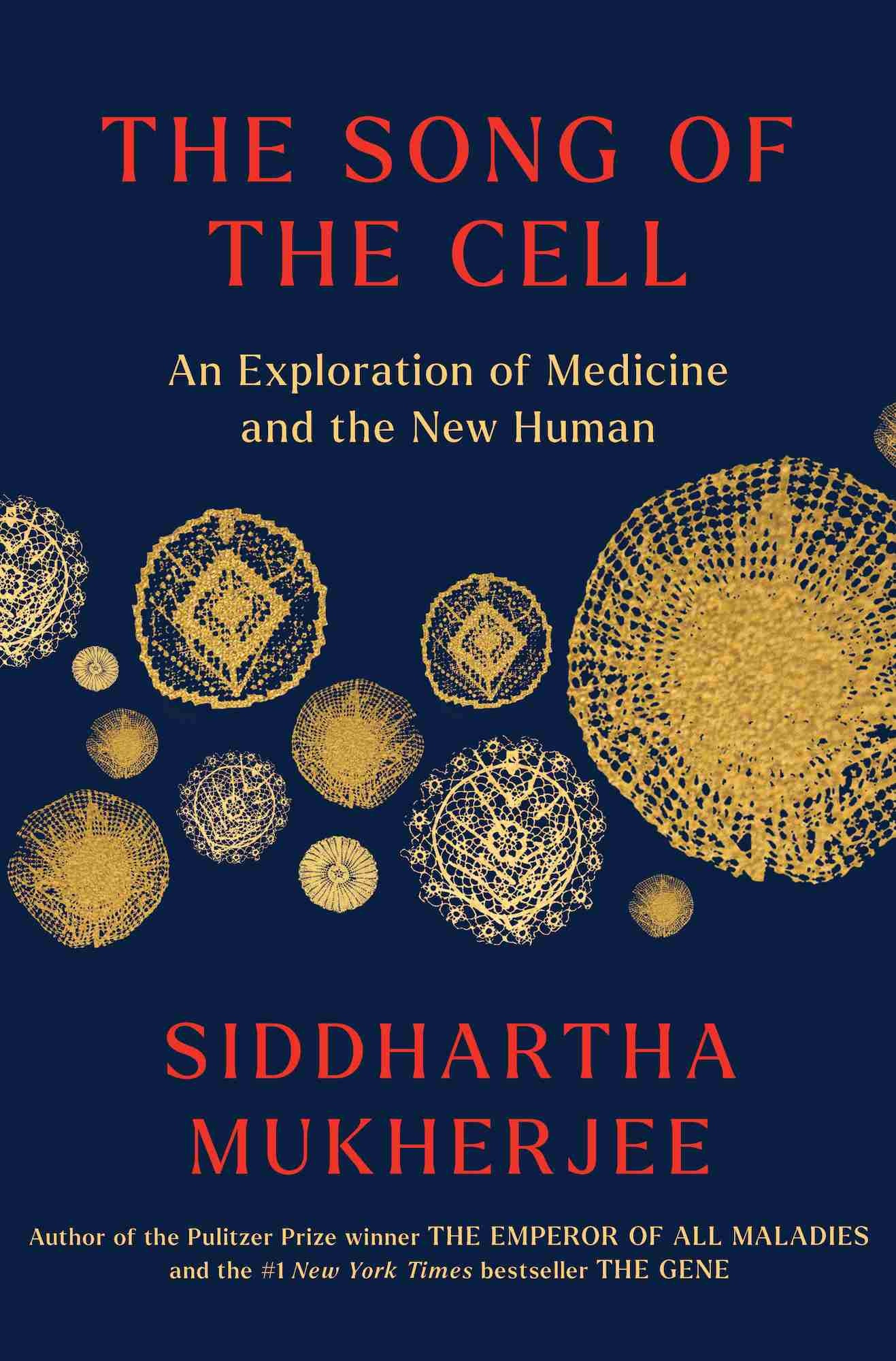
The Song of the Cell: An Exploration of Medicine and the New Human
About this book
The story begins with early microscopes and the recognition that living bodies are composed of cells. Cell theory changes disease from an imbalance of the whole person into processes that can sometimes be located in particular structures and lineages.
Mukherjee moves through bacteria, blood, immunity, reproduction, cancer, neurons, stem cells, transplantation, and engineered therapies. Scientists and patients appear together because a cellular idea becomes medicine only when it enters a body with risks and needs.
The book also examines what intervention can disturb. Cells cooperate, specialise, communicate, and rebel inside systems, so treating one population may damage another or alter the organism whose health made the intervention meaningful.
The Song of the Cell: An Exploration of Medicine and the New Human is a scientific history with clinical stakes. It is the third large-scale biological narrative by Mukherjee and works independently, making cellular medicine legible without presenting it as a finished project.
Read a sample
5,023 words
Plain text
From the opening
PRELUDE “The Elementary Particles of Organisms”
“Elementary,” he said. “It is one of those instances where the reasoner can produce an effect which seems remarkable to his neighbor, because the latter has missed the one little point which is the basis of the deduction.”
—Sherlock Holmes to Dr. Watson, in Sir Arthur Conan Doyle, “The Crooked Man”
The conversation took place over dinner in October 1837. Dusk had likely fallen, and the city’s gas lamps had lit up the central streets of Berlin. Only scattered memories of the evening survive. No notes were taken, and no scientific correspondence ensued. What remains is the story of two friends—lab mates—discussing experiments over a casual meal, and the exchange of one crucial idea.I One of the two diners, Matthias Schleiden, was a botanist. He had a prominent, disfiguring scar across his forehead, the remnant blemish of a prior suicide attempt. The other, Theodor Schwann, a zoologist, had sideburns that descended to his jowls. Both worked under Johannes Müller, the eminent physiologist at the University of Berlin.
Schleiden, a lawyer turned botanist, had been studying the structure and development of plant tissues. He had been “hay gathering” (“Heusammelei”), as he called it, and collected hundreds of specimens from the plant kingdom: tulips, dog hobble, spruce, grasses, orchids, sage, linanthus, peas, and dozens of kinds of lilies. His collection was prized among botanists.
That evening, Schwann and Schleiden were discussing phytogenesis—the origin and development of plants. And what Schleiden told Schwann was this: in looking through all his plant specimens, he had found a “unity” in their construction and organization. During the development of plant tissues—leaves, roots, cotyledons—a subcellular structure, called the nucleus, became prominently visible. (Schleiden did not know the function of the nucleus but recognized its distinctive form.)
But perhaps more surprisingly, there was a deep uniformity in the construction of the tissues. Each part of the plant was built, bricolage-like, out of autonomous, independent units—cells. “Each cell leads a double life,” Schleiden would write a year later, “an entirely independent one, belonging to its own development alone; and an incidental one, in so far as it has become part of a plant.”
A life within a life. An independent living being—a unit—that forms a part of the whole. A living building block contained within the larger living being.
Schwann’s ears pricked up. He, too, had noted the prominence of the nucleus, but in the cells of a developing animal, a tadpole. And he, too, had noted the uniformity in the microscopic construction of animal tissues. The “unity” that Schleiden had observed in plant cells was, perhaps, a deeper unity that ran through life.
An inchoate but radical thought—one that would swerve the history of biology and medicine—began to form in his mind. Perhaps that very evening, or soon after, he invited Schleiden (or dragged him, possibly) to the lab at the anatomical theater, where Schwann kept his specimens. Schleiden looked through the scope. The developing animal’s microscopic structure, including the prominently visible nucleus, Schleiden confirmed, looked almost identical to that of the plant’s.
Animals and plants—as seemingly different as living organisms could be. Yet, as both Schwann and Schleiden had noticed, the similarity of their tissues under the microscope was uncanny. Schwann’s hunch had been right. That evening in Berlin, he would later recall, the two friends had converged on a universal and essential scientific truth: both animals and plants had a “common means of formation through cells.”
In 1838, Schleiden collected his observations in an expansive paper entitled Contributions to Our Knowledge of Phytogenesis. A year later, Schwann followed Schleiden’s work on plants with his tome on animal cells: Microscopical Researches into the Accordance in the Structure and Growth of Animals and Plants. Both plants and animals, Schwann posited, were similarly organized—each an “aggregate of fully individualized independent beings.”
In two seminal works, published about twelve months apart, the living world converged to a single, sharp point. Schleiden and Schwann weren’t the first to see cells, or to realize that cells were the fundamental units of living organisms. The acuity of their insight was in the proposition that a deep unity of organization and function ran through living beings. “A bond of union” connects the different branches of life, Schwann wrote.
Schleiden left Berlin for a position at the University of Jena in late 1838. And in 1839, Schwann left, too, for a position at the Catholic University in Leuven, Belgium. Despite their dispersal out of Müller’s lab, they kept up a lively correspondence and friendship. Their seminal work on the foundations of cell theory is indubitably traced back to Berlin, where they had been intimate colleagues, collaborators, and friends. They had found, in Schwann’s words, the “elementary particles of organisms.”
This book is the story of the cell. It is a chronicle of the discovery that all organisms, including humans, are made of these “elementary particles.” It’s a story of how cooperative, organized accumulations of these autonomous living units—tissues, organs, and organ systems—enable profound forms of physiology: immunity, reproduction, sentience, cognition, repair, and rejuvenation. Conversely, it is the story of what happens when cells become dysfunctional, tipping our bodies from cellular physiology into cellular pathology—the malfunctioning of cells precipitating the malfunction of the body. And finally, it is a story about how our deepening understanding of cellular physiology and pathology has sparked a revolution in biology and medicine, leading to the birth of transformational medicines, and of human beings transformed by these medicines.
Continue reading the sampleClose the sample
Between 2017 and 2021, I wrote three articles for the New Yorker magazine. The first was about cellular medicine and its future—in particular, about the invention of T cells reengineered to attack cancers. The second concerned a new vision of cancer centered on the idea of the ecology of cells—not cancer cells in isolation, but cancer in situ, and why specific locations in the body seem so much more hospitable to malignant growth than other organs do. The third, written in the early days of the Covid-19 pandemic, was about how viruses behave in our cells and bodies, and how that behavior might help us understand the physiological devastation caused by some viruses in humans.
I wondered about the thematic links among these three pieces. At the center of all of them, it seemed, was the story of cells and cellular reengineering. There was a revolution in the making, and a history (and future) that had been unwritten: of cells, of our capacity to manipulate cells, and of the transformation of medicine that is unfolding as this revolution unfolds.
From the seed of those three pieces, this book grew stalks, roots, and tendrils on its own. This chronicle begins in the 1660s and 1670s, when a reclusive Dutch cloth seller and an unorthodox English polymath, working independently, and about two hundred miles apart, looked down their handcrafted microscopes and discovered the first evidence of cells. It moves to the present—a time when human stem cells are being manipulated by scientists and infused into patients with chronic, potentially life-threatening diseases such as diabetes and sickle cell anemia, and electrodes are being inserted into cellular circuits of the brains of men and women with recalcitrant neurological illnesses. And it brings us to the precipice of an uncertain future, in which “maverick” scientists (one of whom was jailed for three years and has been permanently disbarred from performing experiments) are designing gene-edited embryos, and using cell transplantation to blur the boundaries between the natural and the augmented.
I draw from an array of sources: interviews; patient encounters; itinerant walks with scientists (and their dogs); visits to labs; visions through a microscope; conversations with nurses, patients, and doctors; historical sources; scientific papers; and personal letters. My purpose is not to write a comprehensive history of medicine or of the birth of cell biology. Roy Porter’s The Greatest Benefit to Mankind: A Medical History of Humanity, Henry Harris’s The Birth of the Cell, and Laura Otis’s Müller’s Lab are exemplary accounts. This, rather, is the story of how the concept of the cell, and our comprehension of cellular physiology, altered medicine, science, biology, social structures, and culture. It culminates in the vision of a future in which we learn to manipulate these units into new forms, or perhaps even create synthetic versions of cells, and parts of humans.
There are, inevitably, gaps and lacunae in this version of the story of the cell. Cell biology is inextricably linked with genetics, pathology, epidemiology, epistemology, taxonomy, and anthropology. Aficionados of particular niches in medicine or cell biology, legitimately partial to a particular cell type, might have viewed this history through a very different eyepiece; botanists, bacteriologists, and mycologists will doubtless miss adequate focus on the plants, bacteria, and fungi. To enter each of these fields in a non-desultory manner would be to enter labyrinths that fork into further labyrinths. I have moved many aspects of the story to footnotes and endnotes. I urge readers to read them seriously.
Throughout this journey, we will meet many patients, including some of my own. Some are named; others chose to be anonymous, with their names and identifying details removed. I feel an immeasurable gratitude to these men and women who have ventured into uncharted territories, entrusting their bodies and minds to an evolving and uncertain realm of science. And I feel an exhilaration, just as immeasurable, as I witness cell biology come to life in a new kind of medicine.
INTRODUCTION “We Shall Always Return to the Cell”
No matter how we twist and turn, we shall eventually come back to the cell.
—Rudolf Virchow, 1858
In November 2017, I watched my friend Sam P. die because his cells had rebelled against his body.
Sam had been diagnosed with a malignant melanoma in the spring of 2016. The cancer had first appeared as a coin-shaped mole, purple-black with a halolike aureole, near his cheek. His mother, Clara, a painter, had first noticed it during a late-summer vacation on Block Island. She had cajoled—and then begged and threatened—him to have it examined by a dermatologist, but Sam was a busy, active sportswriter for a big newspaper, with little time to worry about a pesky spot on his cheek. By the time I saw and examined him in March 2017—I was not his oncologist, but a friend had asked me to look at his case—the tumor had grown into a thumb-sized, oblong mass, and there was evidence of a metastasis in his skin. When I touched the growth, he winced in pain.
It is one thing to encounter a cancer, it is quite another to bear witness to its mobility. The melanoma had begun to travel across Sam’s face toward his ear. If you looked closely, it had marked its progression like a ferry moving across the water, leaving a wake of stippled, purple dots behind it.
Even Sam, the sportswriter who had spent his life learning about speed, motility, and agility, was astonished by the pace of the melanoma’s progression. How, he asked me insistently—how, how, how—had a cell that had sat perfectly still in his skin for decades suddenly acquired the properties of a cell capable of careening along his face while also dividing furiously?
But cancer cells don’t “invent” any of these properties. They don’t build anew, they hijack—or, more accurately, the cells that are fittest for survival, growth, and metasisis are naturally selected. The genes and proteins that cells use to generate the building blocks required for growth are appropriated from the genes and cells that a developing embryo uses to fuel its fierce burst of expansion during the first days of life. The pathways used by the cancer cell to move across vast bodily spaces are commandeered from those that allow inherently mobile cells in the body to move. The genes that enable unfettered cell division are distorted, mutated versions of genes that allow cell division in normal cells. Cancer, in short, is cell biology visualized in a pathological mirror. And as an oncologist, I am, first, a cell biologist—except one who perceives the normal world of cells reflected and inverted in a looking glass.
In late spring 2016, Sam was prescribed a medicine to turn his own T cells into an army to fight the rebel army that was growing in his body. Consider this thought: for years, perhaps decades, Sam’s melanoma and his T cells had coexisted, essentially ignoring each other. His malignancy was invisible to his immune system. Millions of his T cells had brushed past his melanoma every day and just moved on, bystanders that had turned their faces away from a cellular catastrophe.
The drug that Sam had been prescribed would hopefully uncloak the tumor’s invisibility and make his T cells recognize the melanoma as a “foreign” invader and reject it, much as T cells reject microbe-infected cells. The passive bystanders would become active effectors. We were engineering the cells in his body to make visible what had previously been invisible.
The discovery of this “uncloaking” medicine was the culmination of radical advances in cellular biology that date back to the 1950s: an understanding of the mechanisms used by T cells to discriminate the self from the nonself, the identification of the proteins that these immune cells use to detect foreign invaders, the uncovering of pathways by which our normal cells resist being attacked by this detection system, the way cancer cells co-opt it to make themselves invisible, and the invention of a molecule that would strip the malignant cells of their cloak of invisibility—each insight, built atop an earlier insight and each dug by cell biologists out of hard, cold earth.
Almost immediately after Sam began his treatment, a civil war unfolded in his body. His T cells, shaken awake to the presence of the cancer, were pitched against his malignant cells, their vengeance provoking further cycles of vengeance. The crimson boil on his cheek turned hot one morning because the immune cells had infiltrated the tumor and unleashed a cycle of inflammation; then the malignant cells folded camp and left, leaving smoldering, dying campfires. When I saw him again a few weeks later, the oblong mass and the stipples behind it had vanished. Instead, there was just the dying remnant of a tumor, shriveled like a large raisin. He was in a remission.
We shared a coffee to celebrate. The remission had not just changed Sam physically; it had charged him psychologically. For the first time in weeks, I saw the creases of worry in his face relax. He laughed.
But then things turned: April 2016 was a cruel month. The T cells that attacked his tumor turned on his own liver, provoking an autoimmune hepatitis, an inflammation of the liver that could barely be controlled with immune-suppressive drugs. In November, we discovered that the cancer—in remission just weeks prior—had battened to his skin, muscles, and lungs, hidey-holing in new organs and finding new niches to survive the attack of his immune cells.
Sam maintained a steely dignity through these victories and setbacks. At times, his withering humor seemed like its own form of counterattack: he would desiccate the cancer to death. When I visited him at his desk in the newsroom one day, I asked if he’d like a private space—the men’s bathroom, perhaps—where he could show me where the new tumors had arisen. He laughed breezily. “By the time we get to the bathroom, it will have moved to a new site. Better look at it while it’s still here.”
The doctors blunted the immune assault to control the autoimmune hepatitis, but then the cancer grew back. They restarted the immunotherapy to attack the cancer, and the fulminant hepatitis returned. It was like watching some kind of sport of bestial warfare: put the immune cells on a leash, and the animals would strain against their chains to attack and kill. Unleash them, and they would indiscriminately attack both the cancer and the liver. Sam died on a spring morning, about six months after I had first felt his tumor. In the end, the melanoma won.
On a blustery afternoon in 2019, I attended a conference at the University of Pennsylvania, in Philadelphia. Nearly a thousand scientists, doctors, and biotech researchers converged on a brick-and-stone auditorium on Spruce Street. They were there to discuss advances in a bold frontier in medicine: the use of cells, genetically modified and transplanted into humans, to cure diseases. There were talks on T cell modifications, on new viruses that could deliver genes into cells, and on the next major steps in cellular transplantation. The language, on and off stage, felt as if biology, robotics, science fiction, and alchemy had gotten together on an ecstatic evening and produced a precocious child. “Reboot the immune system.” “Therapeutic cellular reengineering.” “Long-term persistence of grafted cells.” It was a conference about the future.
But the present was also present. Sitting just a few rows ahead of me was Emily Whitehead, then fourteen, a year older than my elder daughter. She had tousled brown hair, wore a yellow-and-black shirt and dark pants, and was in her seventh year of remission from leukemia. “She was happy to miss a day of school,” her father, Tom, told me. Emily smiled at the thought.
Emily was Patient No. 7, treated at the Children’s Hospital of Philadelphia (CHOP). Nearly everyone in the audience knew her or knew of her: she had altered the history of cellular therapy. In May 2010, Emily had been diagnosed with acute lymphoblastic leukemia (ALL). Among the most rapidly progressive forms of cancer, this leukemia tends to afflict young children.
The treatment for ALL ranks among the most intensive chemo regimens ever devised: seven or eight drugs given in combination, some injected directly into the spinal fluid to kill any cancer cells hiding in the brain and spine. Although the collateral damage of the treatment—permanent numbness in the fingers and toes, brain damage, stunted growth and life-threatening infections, to name just a few—can be daunting, the treatment cures about 90 percent of pediatric patients. Unfortunately, Emily’s cancer fell in the remnant 10 percent, proving unresponsive to standard therapy. She relapsed sixteen months into treatment. She was listed for a bone marrow transplant—the only option for a cure—but her condition worsened while she awaited a suitable donor.
“The doctors told me not to Google” her chances of survival, Emily’s mother, Kari, told me. “So, of course, I did that right away.”
What Kari found on the web was chilling: of the children who relapse early, or relapse twice, almost none survive. When Emily arrived at Children’s Hospital in early March 2012, nearly every one of her organs was packed with malignant cells. She was seen by a pediatric oncologist, Stephan Grupp, a gentle, burly man with an expressive, ever-moving mustache, and then enrolled in a clinical trial.
Emily’s trial involved infusing her body with her own T cells. But these T cells had to be weaponized, via gene therapy, to recognize and kill her cancer. Unlike Sam, who had received drugs to activate immunity inside his body, Emily’s T cells had been extracted and grown outside her body. This form of treatment had been pioneered by the immunologist Michel Sadelain at the Sloan Kettering Institute in New York and by Carl June at the University of Pennsylvania, building on earlier work by the Israeli researcher Zelig Eshhar.
A few hundred feet from where we had been sitting was the cell therapy unit, a vault-like, enclosed facility with steel doors, sterile rooms, and incubators. There groups of technicians were processing cells collected from dozens of patients enrolled in the clinical studies and then storing them in vat-like freezers. Each freezer bore the name of a character from the animated TV sitcom The Simpsons; a fraction of Emily’s cells were frozen in Krusty the Clown. Another portion of her T cells had been modified to express a gene that would recognize and kill her leukemia, cultured in the lab to increase their numbers exponentially and then returned to the hospital to infuse them back into Emily.
The infusions, which took place over three days, were largely uneventful. Emily sucked on an ice pop while Dr. Grupp dripped the cells into her veins. In the evenings, she and her parents went to stay with an aunt who lived nearby. The first two nights, she played games and got piggyback rides from her father. On the third day, though, she crashed: throwing up, and spiking an alarming fever. The Whiteheads rushed her back to the hospital. Things rapidly spiraled downward. Her kidneys failed. Emily drifted in and out of consciousness, verging on multi-organ system failure.
“Nothing made sense,” Tom told me. His six-year-old daughter was moved to the intensive care unit, where her parents and Grupp kept an all-night vigil.
Carl June, the physician-scientist who was also treating Emily, told me candidly, “We thought she was going to die. I wrote an e-mail to the provost at the university, telling him that one of the first children with the treatment was about to die. The trial was finished. I stored the e-mail in my out-box but never pressed Send.”
The lab technicians at Penn worked overnight to determine the cause of the fever. They found no evidence of infection; instead, they found elevated blood levels of molecules called cytokines—signals secreted during active inflammation. In particular, levels of a cytokine known as interleukin 6 (IL-6) were nearly a thousand times normal. As the T cells killed the cancer cells, they were releasing a storm of these chemical messengers, like a rioting crowd disgorging inflammatory pamphlets on a rampage.
By a strange twist of fate, however, June’s own daughter had a form of juvenile arthritis, an inflammatory condition. He knew about a new drug, approved by the US Food and Drug Administration (FDA) just four months earlier, that blocks IL-6. As a last-ditch effort, Grupp rushed an application to the hospital pharmacy requesting permission to use the new therapy off-label. The board granted its approval for the IL-6–blocking drug that evening, and Grupp injected Emily with a dose in the ICU.
Two days afterward, on her seventh birthday, Emily woke up. “Boom,” Dr. June said, waving his hands in the air. “Boom,” he repeated. “It just melted away. We did a bone marrow biopsy twenty-three days later, and she was in a complete remission.”
“I have never seen a patient that sick get better so quickly,” Grupp told me.
The deft management of Emily’s condition—and her startling recovery—saved the field of cell therapy. Emily Whitehead remains in that deep remission to this day. No cancer is detectable in her marrow or her blood. She is considered cured.
“If Emily had died,” June told me, "it’s likely that the whole trial would have been shut down.” It would have set back cellular therapy perhaps a decade or even longer.
During a pause in the sessions at the conference, Emily and I joined a tour of the medical campus led by Dr. Bruce Levine, one of Dr. June’s colleagues. He is the founding director of the facility at Penn where T cells are modified, quality controlled, and manufactured, and was among the first to handle Emily’s cells. The technicians here worked singly or in pairs, checking boxes, optimizing protocols, shuttling cells between incubators, sterilizing their hands.
The facility may as well have doubled as a small monument to Emily. Photographs of her were plastered on the walls: Emily at eight, in pigtails; Emily at ten, holding a plaque; Emily at twelve, with missing front teeth, smiling next to President Barack Obama. At a certain point during the tour, I watched the real Emily looking out the window at the hospital across the street. She could almost see into the corner ICU room where she had been confined for nearly a month.
The rain came down in sheets, streaking the windows with droplets.
I wondered how she felt, knowing that there were three versions of her in the hospital: the one here today, on a break from school; the one in the pictures, who had lived and almost died in the ICU; and the one frozen in the Krusty the Clown freezer next door.
“Do you remember coming into the hospital?” I asked.
“No,” she said, looking out into the rain. “I only remember leaving.”
As I watched the advance and retreat of Sam’s illness, and the remarkable recovery of Emily Whitehead, I knew that I was also observing the birth of a kind of medicine in which cells were being repurposed as tools to fight illness—cellular engineering. But it was also the replay of a centuries-old story. We are built out of cellular units. Our vulnerabilities are built out of the vulnerabilities of cells. Our capacity to engineer or manipulate cells (immune cells, in both Sam’s and Emily’s cases) has become the basis of a new kind of medicine—albeit a kind of medicine that is still in midbirth. If we knew how to arm Sam’s immune cells more effectively against his melanoma without unleashing the autoimmune attack, would he be alive today, spiral notebook in hand, writing sports pieces for a magazine?
Two new humans, examples of cellular manipulation and reengineering. Emily, for whom our understanding of the laws of T cell biology were seemingly sufficient to hold a lethal disease at bay for more than a decade, and, hopefully, for her lifetime. Sam, for whom we still seem to be missing some critical insight of how to balance a T cell’s attack on cancer and an attack on the self.
What will the future bring? Let me clarify: I use the phrase “new human” throughout the book, and in its title. I mean it in a very precise sense. I explicitly do not mean the “new human” found in sci-fi visions of the future: an AI-augmented, robotically enhanced, infrared-equipped, blue-pill-swallowing creature who blissfully cohabitates the real and virtual worlds: Keanu Reeves in a black muumuu. Nor do I mean “transhuman,” endowed with augmented abilities and capacities that transcend the ones we currently possess.
I mean a human rebuilt anew with modified cells who looks and feels (mostly) like you and me. A woman with crippling, recalcitrant depression whose nerve cells (neurons) are being stimulated with electrodes. A young boy undergoing an experimental bone marrow transplant using gene-edited cells to cure sickle cell disease. A type 1 diabetic infused with his own stem cells that have been engineered to produce the hormone insulin to maintain a normal blood level of glucose, the body’s fuel. An octogenarian who, following multiple heart attacks, is injected with a virus that will home to his liver and permanently lower artery-clogging cholesterol, thus reducing his risk of another cardiac event. I mean my father, implanted with neurons, or a neuron-stimulating device, that would have steadied his gait so that he might not have suffered the fall that led to his death.
I find these “new humans”—and the cellular technologies used to create them—vastly more exciting than their imaginary sci-fi counterparts. We’ve altered these humans to alleviate suffering, using a science that had to be handcrafted and carved with unfathomable labor and love, and technologies so ingenious that they stretch credulity: such as fusing a cancer cell with an immune cell to produce an immortal cell to cure cancer; or extracting a T cell from a young girl’s body, engineering it with a virus to weaponize it against leukemia, and then transfusing it back into her body. We will meet these new humans in virtually every chapter in this book. And as we learn to rebuild bodies and parts with cells, we will meet them in the present and in the future: in cafes, supermarkets, train stations, and airports; in neighborhoods; and in our own families. We will find them among our cousins and grandparents, our parents and siblings—and perhaps in our selves.
In a little less than two centuries—from the late 1830s, when the scientists Matthias Schleiden and Theodor Schwann proposed that all animal and plant tissues were made of cells, to the spring of Emily’s recovery—a radical concept swept through biology and medicine, touching virtually every aspect of the two sciences, and altering both forever. Complex living organisms were assemblages of tiny, self-contained, self-regulating units—living compartments, if you will, or “living atoms,” as the Dutch microscopist Antonie van Leeuwenhoek called them in 1676. Humans were ecosystems of these living units. We were pixelated assemblages, composites, our existence the result of a cooperative agglomeration.
We were a sum of parts.
The discovery of cells, and the reframing of the human body as a cellular ecosystem, also announced the birth of a new kind of medicine based on the therapeutic manipulations of cells. A hip fracture, cardiac arrest, immunodeficiency, Alzheimer’s dementia, AIDS, pneumonia, lung cancer, kidney failure, arthritis—all could be reconceived as the results of cells, or systems of cells, functioning abnormally. And all could be perceived as loci of cellular therapies.
The transformation of medicine made possible by our new understanding of cell biology can be broadly divided into four categories.
The first is the use of drugs, chemical substances, or physical stimulation to alter the properties of cells—their interactions with one another, their intercommunication, and their behavior. Antibiotics against germs, chemotherapy and immunotherapy for cancer, and the stimulation of neurons with electrodes to modulate nerve cell circuits in the brain fall in this first category.
The second is the transfer of cells from body to body (including back into our own bodies), exemplified by blood transfusions, bone marrow transplantation, and in vitro fertilization (IVF).
The third is the use of cells to synthesize a substance—insulin or antibodies—that produces a therapeutic effect on an illness.
And most recently, there is a fourth category: the genetic modification of cells, followed by transplantation, to create cells, organs, and bodies endowed with new properties.