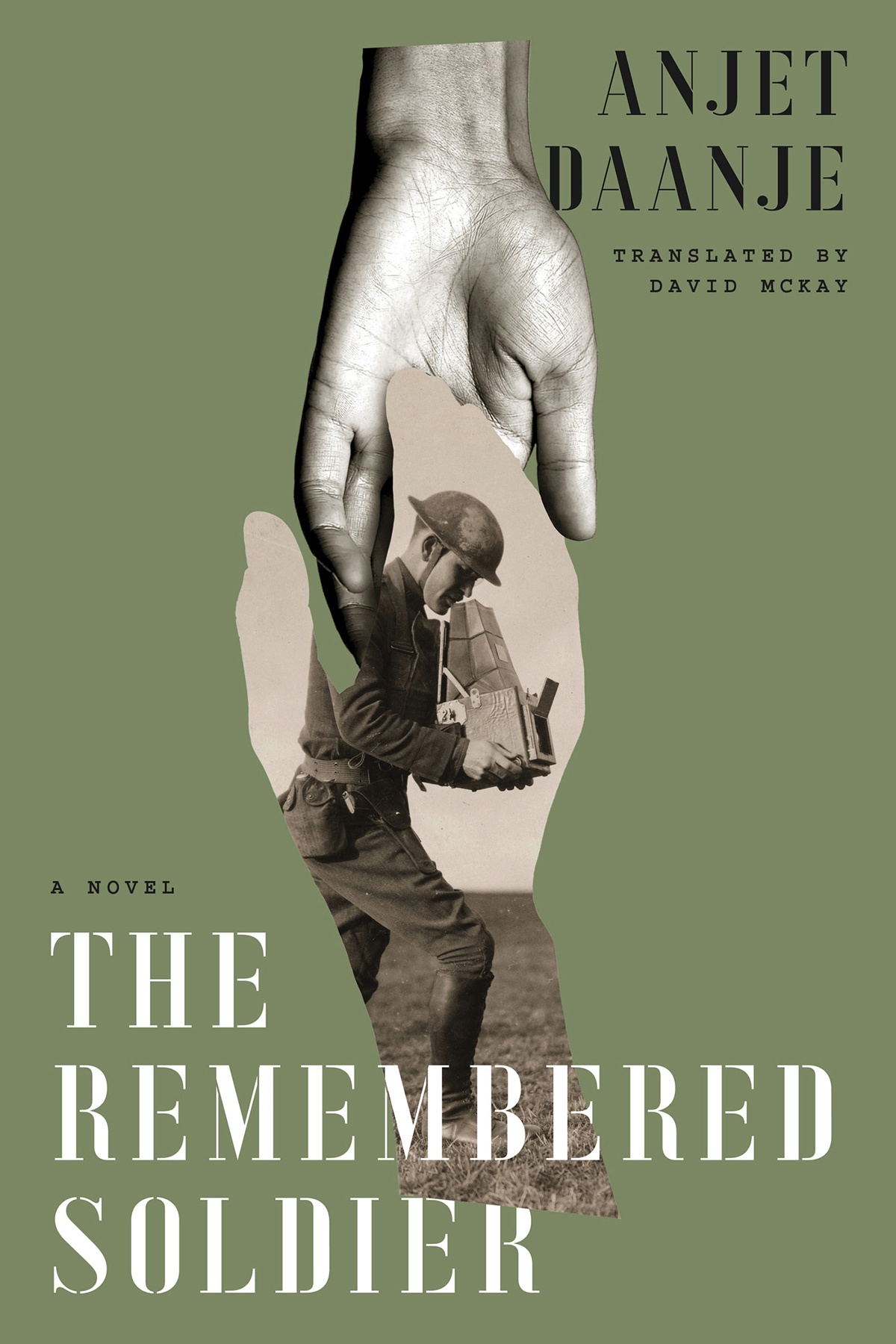
The Remembered Soldier
About this book
In 1920s Flanders, a newspaper notice brings women to a psychiatric hospital hoping to recognise soldiers whose identities have been lost. Julienne identifies Noon Merckem as Amand Coppens, a missing photographer, and takes him home against medical advice.
Family photographs, neighbours, children, and Julienne’s stories supply a biography Amand cannot independently confirm. Their relationship grows in the space between gratitude and suspicion, where even tenderness may be evidence of an earlier intimacy or a carefully rehearsed account.
Anjet Daanje treats memory as collaborative and unstable. War trauma has broken the protagonist’s continuity, but the novel also asks how every marriage depends on stories partners repeat and how power changes when only one person remembers them.
The Remembered Soldier is a large historical and psychological novel translated by David McKay. Its mystery concerns identity, yet its deepest tension lies in whether love can remain real when the past supporting it cannot be verified.
Read a sample
5,115 words
Plain text
From the opening
1
Maybe this is the last time he will walk down the familiar corridor as the man called Noon Merckem, that door there on the left with those welcoming panes of glass could mean the end of his existence, weak in the knees like a man being dragged to the gallows, that’s how he feels in this instant, as the hope that sustained him, the certainty that everything would be new and better beyond imagining and normal at last, that he would pass through that everyday door and be another man when he came out, a man with a home and a family and a life outside these walls, all drains away. And he comes to a halt on the sun-dappled tiles and Brother Reginald turns toward him and sees the desperation on his face and murmurs that God will never test Noon more harshly than he can bear, and gives an encouraging nod, and Noon remains silent, because in his four years here he has not seen much to reassure him about God’s notions of what is bearable.
And his heart pounds in his throat as he sits on the chair in Dr. De Moor’s office and stares at the colored tiles on the floor, the recurring pattern, its predictability, and he tries not to think of the door leering at him, motionless, a few yards away, soon to open and let her in. The garden, he is in the garden, on his knees pulling weeds in the gentle rain, the heads of lettuce, the endives, the cabbage, the beans, everything is covered with fat drops of water and he watches their slow roll downward, down to their death in the black earth. And just when the silence of the garden has rendered her imminent arrival impossible, made it unthinkable like a fantasy that has filled his mind for days and now loses its hold on him as he awakens, just then he hears her voice in the corridor. She is speaking to Dr. De Moor as they approach, what a shrill, unpleasant voice she has, she doesn’t seem to sense that everything here is supposed to make as little noise as possible, the people and footsteps and things and even the nightmares, like hiding your head under the covers so long you start to suffocate, that’s how it sometimes feels, and when the wind rages and the other men grow restless and fearful, Noon steals out into the garden to hear the cry of the gale around the building and imagine himself for just a moment a living part of the world.
And she talks about her husband, she calls him Kamiel, she never could believe he was dead, she says, she tried, but she went on dreaming about him as he had been when he was with her, and then in the morning it seemed he had come in the night to give her courage. And she stops outside the door, and he sees through the grid of the glass her silhouette, a woman’s frail head, a broad-rimmed hat bustling with flowers, and his breath is ragged in his throat, and she, she must be just as nervous as he is, he thinks he hears it in her voice, and he feels a slight pity for her, and at the thought of her fear, his own abates. And the handle is lowered on the other side of the door, and Brother Reginald motions to him to stand up, and the door swings open, and Dr. De Moor steps aside and lets her enter first.
And she is beautiful, he had pictured his wife only in the vaguest outlines, like a figure in a dream, more a feeling than a tangible presence, but never like this woman, with her dark hair arranged in artful, wavy strands, stylish and slender, and in a tasteful outfit. And she doesn’t dare look up at him, as she crosses the threshold he feels her gaze linger on his crude asylum shoes, then creep up the legs of his trousers and hover at knee level until the doctor silently closes the door behind her and with desperate courage she decides the time has come. She raises her head and, trembling, looks him in the eye, hers are large and dark brown, the color of damp soil, and it must be her, it can’t be otherwise, she is a woman he could love, sincerely, deeply, and a weight lifts from his shoulders, and he gives her a cautious smile.
But she stares at him, and deep disillusionment shadows her lovely features, so deep that all the beauty rushes out of her, and her dark eyes fill with tears and she shakes her head, not in quiet denial, but wildly, as if to punish herself for entertaining naive, stupid thoughts for weeks, thoughts she now wishes to cast off by force. And she turns to Dr. De Moor and begins to speak of her husband, Kamiel, conjuring him up, as if she hopes Noon will have turned into her husband the next time she dares to look, and her shrill voice fills the office, her Kamiel, she says, was a hero who fought for the fatherland, he offered himself up for his comrades in arms, he shared the last of his food with them, risked his own life to carry the wounded back to the trenches, that was what they wrote to her after he disappeared, she tells the doctor. And she doesn’t say it, but it echoes in every word, this man, this simple man who stands before her in his scruffy asylum uniform, could never live up to the standards she’s set for her Kamiel, who’s been missing since December 1917, she’s had almost five years to perfect him, he is her masterpiece, her sanctuary, and she’s outraged that Dr. De Moor’s advertisement persuaded her that her Kamiel could ever assume the shape of a madman with amnesia.
Continue reading the sampleClose the sample
And Dr. De Moor listens placidly, his eyes focused on her face with a friendly look as if weighing her words, just as he does in his sessions with his patients, but Noon knows from experience that after the first sentence he draws his conclusions and after the second he lets his mind wander and then he hears nothing except what confirms his diagnosis.
And Noon can’t stand to go on listening either, the feeling that he is the one who has caused her this pain, this immense disappointment she’s been trying to purge with her words for minutes and minutes and is sure to remember until the end of her days, that feeling grips him by the throat, nothing, he has done nothing but sit here and wait for her, and he is no one, he does not exist, and yet evidently he is capable of being the wrong man, and he tells her he’s sorry, and the torrent of words lurches to a startled halt, and she begins to turn toward him but doesn’t dare, her gaze alighting on his left ear and then shrinking back, as if he is her greatest nightmare made flesh, and he closes his mouth and bows his head and stares at the pattern of the tiles, and tries to forget her and her suffering.
And it takes awhile before she leaves, Dr. De Moor tries several times to bring the conversation to a polite close, but she goes on talking, and not once does she turn to face Noon, the man she came for, she’s afraid of him and at the same time doesn’t dare to give up the idea that he might be her Kamiel and face the daylight without the illusions of an hour ago, and she keeps talking, she just keeps talking. And finally Dr. De Moor says the next woman is waiting, and she breaks off, stunned, the next woman, and Noon thinks for an instant that she will cry, she wrings her face into a tortured grimace, and he can’t bear the sight of her grief, he sits in the chair with his head in his hands and doesn’t dare look up until he hears the door shut, and she’s gone, it’s as if she has taken his desires away with her, the silent garden in the rain has vanished, the world outside the walls, the next woman, and he waits.
And next is a woman like the ones he sees on Sundays, who visit the other men in the dormitory, unruffled by the sight of the asylum, respectable, practical women, they are, who make the best of things and ignore their husbands’ complaining, or swat it dead with a comforting cliché. And she stands in the doorway and right away she searches him out with her eyes, and their gazes collide like clumsy strangers in a cramped space, and she’s older than he is, mid-forties, he estimates, and skinny and unattractive, but there’s something poignant about her face, something that touches him, as if she’s working terribly hard to conceal her emotions, and even so her eyes betray her sleepless nights and grasping hope, and he fears that he once fell in love with that, with her fruitless attempts at self-control, and that this is the woman he’s been trying to dream of for weeks.
And a fearful hesitation passes over her face, as if she doesn’t want to give in to her doubts and the disappointment they bring, and her gaze sweeps across his forehead and chin and then over his chest and downward, his hands, his legs, and Noon looks back in anxious anticipation, at her plain clothes and tanned skin and working woman’s hands, and their eyes meet by accident, and it’s as if she’s sizing up an animal, the shameless way she looks him straight in the eye without the slightest regard for his feelings or opinions. And she asks Dr. De Moor if he could say, good day, my turtledove, she pronounces each word like a separate sentence in an effort to conceal her working-class accent, and again he is touched, and he repeats the words as plainly as he can, like a nursery rhyme, but from the first syllable her expression changes, and a strange kind of intimacy springs up between them, and though both are aware the feeling is based on a fantasy, still they cannot dismiss it, and for a moment he thinks he knows how it is to be married, the domesticity, the unquestioning certainty that your spouse will always be there, and she allows, truly allows herself to think he is her husband, and the things she had to forget to survive now come flooding back to her, and her face opens, as defenseless as a child’s, and he says it again, good day, my turtledove, and she smiles at him and he sees the tears surge to her eyes, and he too could cry, out of her emotion, and because suddenly his four years in the asylum seem so deathly blank.
And Dr. De Moor orders him a few steps back and asks her to name a physical characteristic of her husband, and they both awaken from their self-deception, too abashed to meet each other’s eyes, and she mulls it over and says her husband has a birthmark on the back of his thigh, like so, she says, and her fingers show half an inch, and Dr. De Moor turns to Noon and asks him to expose his leg. And Noon does not move, and Dr. De Moor repeats his request, and Noon bows his head, and Dr. De Moor says if Noon won’t cooperate he’ll have no choice but to call in two of the friars for assistance, and how would you feel then, he asks, being undressed by two friars in front of a woman.
And Noon removes his jacket, and as he slides his suspenders off his shoulders, he steals a glance at her, and if anything she is even more embarrassed than he is, and he drops his trousers with lowered eyes, and at Dr. De Moor’s insistence he also rolls up the legs of his underwear, and she doesn’t want to, but she has to look, and he hears the rustle of her skirts as she kneels behind him, and he knows she is staring at his thighs and will find no birthmark there, and the longer the situation drags on, the more their intimacy of a moment ago seems far-fetched and ridiculous.
And now Dr. De Moor also squats to examine his legs, and a moment later she straightens up, and Dr. De Moor tells her he is sorry, and she says nothing, and in the instant before she hurries out the door, he spies the disappointment on her face, even more profound and painful than the last woman’s, and she bids Dr. De Moor a polite farewell, but not a glance, not a word for the man who could have been her husband, who has caused her such grief that for a while she will no longer dare to believe in her fantasies of his return, and weeks, months, will pass before she indulges in such thoughts again.
And Noon feels so guilty and miserable about the whole thing, he had thought he would finally discover who he is, but all he’s learned is who he isn’t. The man he’s painstakingly built out of nothing over the past four years, all the habits of his Monday afternoon routine, which he clings to like the banister of a rickety staircase, have lost their meaning, every one of them, and deep inside him, dark and untethered to the world, panic stirs, and the fear of that all-consuming panic comes in waves and is almost as unbearable as the panic itself.
And he tells Dr. De Moor he can’t do this, and Dr. De Moor tells him to go to the dormitory for a little rest, and in an hour, he says, you can meet the third woman, and no, Noon says, I can’t, and he hears the desperation in his voice as if listening to the voice of a stranger. And he feels Dr. De Moor’s gaze resting on his face, a cool, appraising look, and he must look bad, because Dr. De Moor says softly, all right, tomorrow, you can meet the other women tomorrow, and he says there are only two more, one who thinks she’s his mother, and another who claims he is her husband, and who knows, who knows, maybe one of them is right, he says, and he goes on in a reassuring tone about the dozens of women who responded to the advertisement and were asked to send descriptions of their missing loved ones, at which point most were eliminated, he says, and the missing husbands of those who remained were looked up in the military archives, and so, he says, it is likely that one of the two women Noon has yet to meet really does know him, and just think how that would change your life, he says, and he smiles at him. And Noon yearns beyond words for the vegetable garden and the greenhouse, and for his bed in the dormitory between Maurice’s and Basiel’s, and for the voices of the girls in the kitchen ringing out through the courtyard in the evening, and for the calm predictability of it all.
And he hoes out the weeds between two rows of potatoes, trying to focus on the movements of his arms and the hot sun on his back, while Jules, who is following him and picking up the weeds and tossing them into a basket, speaks insistently to him of his wife, who is a whore because she’s been cheating on him with God knows who ever since he went to the front, and still is now, that’s why she never visits, he says, and Noon knows there’s no point in reminding him his wife has been dead for years.
And at the end of the field, against the wall of the pavilion for paying patients, Cyriel and Ferdinand and Eugene are smoking and talking, about the war, no doubt, Cyriel about the German beheaded by shrapnel before his eyes, and Ferdinand about his brother who died in battle, and Eugene is certain the war isn’t over and the place is swarming with German spies, and not one of them hears what the others are saying, they interweave three monologues under the pretext of conversation, and when Brother Honoré walks past they quickly change the subject, because Dr. De Moor says talk of the war slows the healing process and cannot be permitted.
And in the row next to Noon’s, André is weeding, and all day, literally all day, he’s been mumbling the Lord’s Prayer to atone for his guilt, but he can’t make it clear to anyone what that overwhelming guilt is all about, what he did wrong, and Maurice is nodding off in the sand in the middle of the potato field because he lies awake at night for fear of nightmares, which he once told Noon in confidence are ghastly memories of the front, but worst of all, they get him so worked up he ejaculates and has to go out to the faucet in the middle of the night to clean his sheets, and then there’s Alfred with his paralyzed limbs, his left leg one day, his right arm the next, and Constant with his nervous tics and stutter.
As if from a distance, Noon sees it all unfold around him, as if he’s been away for months and can’t adjust to being back, and thoughts of the two women and their dashed hopes still drift through his mind, detached from reality, as if he’d invented them, and although he often consoles the other men and listens to the stories they endlessly repeat, now no one asks how his meetings with the women went, as if nothing could possibly happen to him outside their familiar world. And he tries to take these men and their strange behavior for granted again, to fit himself into their life, but it clenches his head like a vise, and he leans his hoe against the wall and walks away, and Brother Honoré trusts him and lets him go, and he sits in the stifling hot greenhouse among the tomato plants and the grapevines, and at last it’s quiet.
They’re all envious of his memory loss, never tormented by memories or nightmares, even the friars envy him, to them interchangeability of appearance and personality is the greatest good, a form of detachment that brings them closer to God, and they see him as the undeserving recipient of what they must earn with a lifetime of suffering, and those women were happy with his lack of memories, everyone fills him in just as they please, like a coloring book, and he cannot stop them. And he tells himself stories about the only part of his life he remembers, his years here in the asylum, about his certainties, his doubts, his accomplishments, about the man he must be, whatever happened before, whatever will happen.
But at supper in the refectory, he still feels the same strange alienation, there’s Octave gagging down his meal because everything he puts in his mouth reminds him of the rotting corpse of a fellow soldier that blew up in his face when he stumbled over it, and there’s Brother Deodatus forcing Eugene’s mouth open, and Brother Thomas cramming in a bite of food, because Eugene is certain German spies are trying to poison him, and the two friars wrestle with him as he tries to spit it out, and the whole thing is repeated with each mouthful, and there’s Constant, whose tics are so severe today that he spills half his soup on the floor, Noon has sat at the table with them a hundred times, but tonight he cannot bear it, and he leaves his food untouched.
And he sits on the floor in the corridor with his back to the wall and hears footsteps approaching, it’s Basiel, he sits down next to him and takes his pencil and notebook from his pocket and writes something in it and shows it to Noon, how did it go, that’s his question, and Noon realizes that he’s uncomfortable talking about his meetings with the women, that searching for words and saying them out loud only makes their disappointment more unbearable, as if he is hurting them again and this time on purpose, and he fobs him off with a few brief sentences, and Basiel writes in his book that he’s glad Noon will be staying a little longer, and Noon nods, me too, he says, and they smile at each other and sit together in silence on the cool tile floor, and that’s the nice thing about Basiel’s company, when they’re together Noon sometimes forgets he’s there but even so he doesn’t feel alone, and Dr. De Moor thinks Basiel is refusing to talk not because he’s unable, but because unconsciously he doesn’t want to, he has defused the horrors of war by keeping silent about them, just as Noon has forgotten them.
And in the evening they all play cards in the recreation room, and after six rounds of pandoer, Alfred is the big loser, so he has to stay up tonight to wake the others from their nightmares, and Basiel plays the piano and plays well and because all the sounds of the day are so unremarkable, the notes find a path straight into their hearts, and they all listen, moved, and Ferdinand and Octave cry, and Noon forgets the women he hurt and the two he will hurt tomorrow and sinks away into his life as if into a down mattress, and not until he starts undressing in the dormitory does he remember what makes this day different from the days before it, and the respite from his worries makes his meetings with the women seem all the more ominous and insurmountable.
And Constant knocks over a ewer of water to distract Brother Konrad, and Noon and Jules and Basiel go unnoticed as they tie André to the bedframe with their socks because he fears otherwise he will kill himself in the night in a fit of unreason, and Dr. De Moor has told them not to tie him up, he’s certain André won’t take his own life, but André is so afraid of himself that if they don’t do it he’ll keep them up all night with his weeping and muttering and be transferred to the unruly pavilion. And Brother Konrad blows out the lamps, leaves the door open, takes his seat in the corridor, and picks up his book, and Noon turns onto his side and closes his eyes, and that beautiful woman swirls through his mind again, and he thinks of her, lying in bed now too and crying, he thinks, she’s crying because of him, and he tries to imagine how his life would have looked if he’d been her husband, if she had recognized him and filled him with her life.
And someone is shaking him roughly, he wakes with a start, and Alfred is in the darkness by his bed, whispering that Noon was tossing and turning and thrashing his arms around, and Noon thanks him, and they hear Brother Konrad shift his chair in the corridor, and Alfred darts back to his own bed and lunges into it. And Noon lies on his back, and those women, it’s those women of course, he almost never has nightmares, hasn’t had one for a year, and when he does he never remembers what he dreamed, and even now not a single image resurfaces, the dream has left him with nothing but horrid desolation and self-loathing, and he lies down and waits for it to lift, but it won’t be dispelled.
And the night creeps by, black and timeless, and the light from Brother Konrad’s lamp, spilling through the door’s narrow opening, casts mournful shadows on the floor, and from the distance come the screams of the desperate men in the unruly pavilion and the isolation cells, reverberating through the dark, empty corridors, and though this is a familiar background noise, like the chirping of birds or the clatter of cutlery, only now it blends with the terrible feeling from his dream. And Constant and Jules are woken by Alfred in time, before Brother Konrad notices their bad dreams and considers transferring them to the unruly pavilion, and new, recurring nightmares, always the same, fill the groaning, thrashing, snoring hall.
And then at last, at last, the reluctant day dawns, and still the lifeless feeling of self-loathing will not fade, it shadows him as he stands and dresses, and all through Mass, as he sits in the pew, he mumbles the Latin formulas mindlessly, and the meaningless words are like gentle music, and the exalted calm of the service shelters him in its wings, but the feeling lingers, merely changing shape, so it no longer overwhelms him and he can observe it from a distance.
And by the time Brother Thaddeus comes to bring him to Dr. De Moor’s office, he knows for certain, and says he doesn’t want to meet the two women, and Brother Thaddeus tells him to sit quietly while he informs Dr. De Moor. And a little later Dr. De Moor comes rushing in, and Noon repeats his decision, and Dr. De Moor calls it a selfish whim, those poor women, he says, he has made them wait a whole day, and if he sends them home now, their entire journey will have been for nothing. And Noon tries to explain to him how frightfully hollow he feels, and that he fears the man he has struggled so hard to become for the past four years will abandon him, and Dr. De Moor, unmoved, says learning to accept responsibility is part of the healing process, and a gentleman does not go back on his promises just because they’re no longer convenient, and besides, he says, it’s just one woman, the other one was so upset by yesterday’s delay that she left for home, one woman, ten minutes of his life, so that at least this one woman can put her doubts to rest and sleep through the night again. And Noon says that all he brought those two women yesterday was pain, they would have been better off never meeting him, he’s made his decision not just for his own good, but also for the good of that unknown woman, and Dr. De Moor replies calmly that it is not up to Noon to decide her fate, and in fact, he is not even capable of deciding his own, Dr. De Moor must do it for him, and if you refuse to cooperate I will have to force you, he says.
And by now Brother Thaddeus has gone off and returned with Brother Thomas, who is holding a cream-colored jacket with long sleeves, and Noon knows what will happen next, he dashes for the door, and Brother Thomas grabs him firmly around the waist, and Noon wrestles with the two friars but doesn’t stand a chance, and a few minutes later they have shoved his arms into the jacket and Brother Thaddeus is fastening the clasps, leaving Noon’s arms crossed over his chest, his hands almost touching his back.
Go sit in that chair, says Dr. De Moor, and from his frosty tone of voice Noon hears what he has become, a lunatic, and they have treated him this way before, but never when he could think clearly and explain himself, and a rage churns inside him that could be vented only by charging through the office like a dangerous madman and banging his head against the wall.
And he sits in the chair and takes a few deep breaths, and even that doesn’t really work because Brother Thaddeus has pulled the straps too tight, and he bows his head and tries to slip away into the regular pattern of the tile floor. And he hears Dr. De Moor’s heavy footsteps and a woman’s faster, lighter ones, and the door opens, and he won’t look up, even after the door shuts behind them, he won’t look up.
And Dr. De Moor says to her, he is angry today, and the way he says it, as if Noon is a difficult child, and the woman asks, don’t you want to see me, in a deep, drawling voice, as if life bores her, and the unquestioning way she does not address herself to Dr. De Moor but to him, the man for whom she has come, who has made her wait a day, and she does not even resent him for that.
And his eyes slide across the red-and-beige tiles to where she stands and cautiously climb their way upward, and her shoes are old but shined to a high gloss, and her dark-brown Sunday dress is plain, and her coat is not fashionable either, and her breathing is quick, and her pulse pounds visibly in her throat, and oh, she says, a strange animal noise that seems to have escaped her body in spite of her, and he looks her in the face, and never before has he seen so much genuine beaming happiness, it’s like crying and laughing and dreaming all at once, and she has forgotten everything and everyone around her, she knows only that he is there, and he had no idea one person could look at another that way, and he smiles at her, dumbfounded. And she starts toward him, but Dr. De Moor stands in her way and tells her she’d better not get too close to his patient, but that’s Amand, she says, in a tone of bewilderment, and Dr. De Moor instructs her to sit down and remain calm, and she sits in the chair in front of his desk, and he goes over her husband’s particulars with her, Amand Stephaan Coppens, age thirty-five, height one meter sixty-three, disappeared near Diksmuide on the eighteenth of December 1917, and yes, she says distractedly, that’s all correct, and meanwhile she is staring at him as if she can’t believe her eyes, and Dr. De Moor reminds her that the man she sees here was not found until the twenty-second of December, behind the front near Merckem, and she says he must have wandered lost for days, and Merckem is not far from Diksmuide, she says.