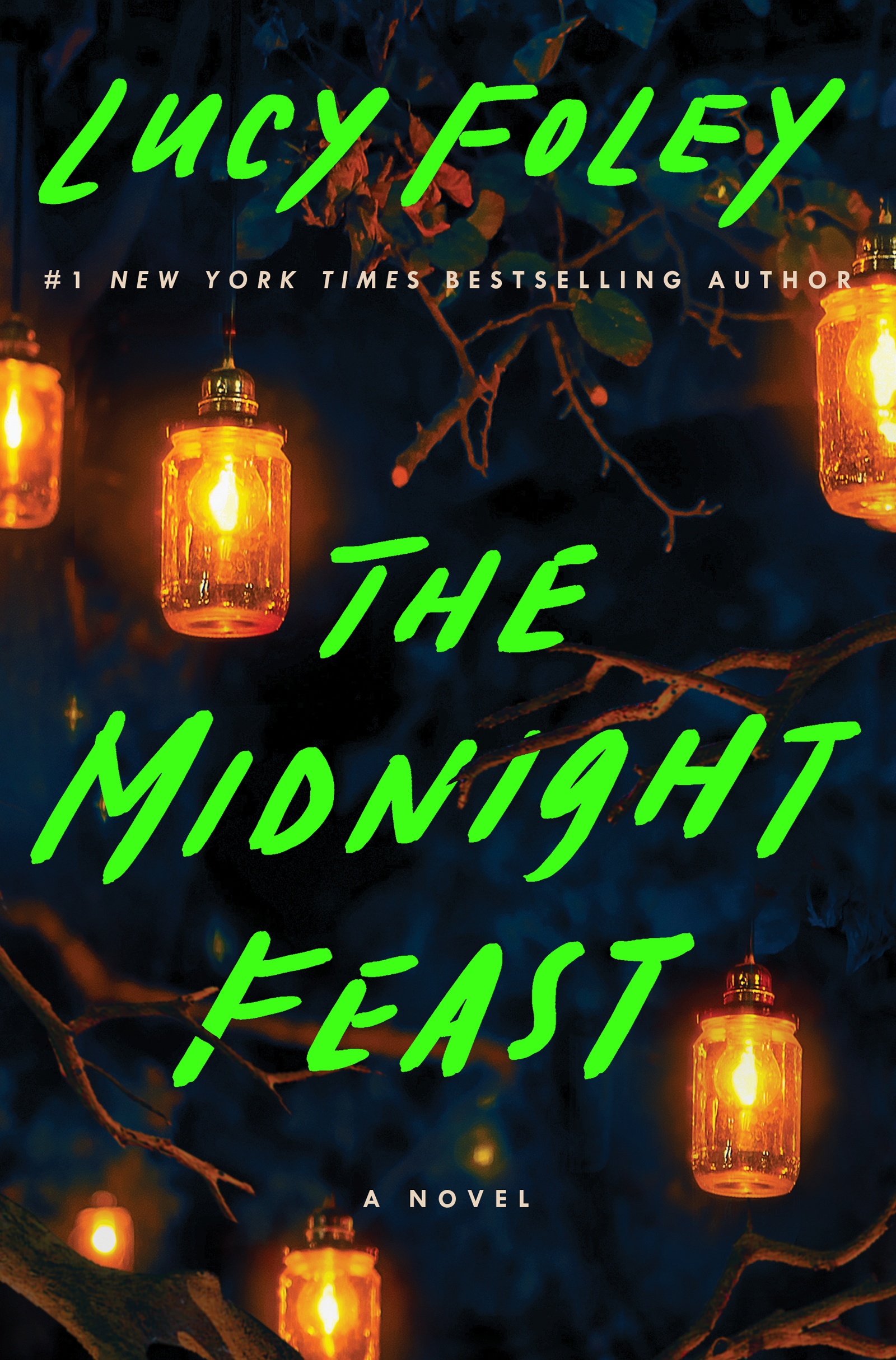
The Midnight Feast
About this book
Francesca Meadows presents The Manor as a carefully branded refuge of wellness, exclusivity, and natural beauty. Her husband Owen designed the transformation, but the staff and surrounding community know that the property has another history beneath the new language.
Bella arrives with a purpose she keeps hidden, young employee Eddie sees more than guests assume, and entries from an older summer journal reopen events from adolescence. Chapters after the solstice show investigators approaching the ruins before the book identifies every victim.
Bird symbols, woodland legends, class resentment, and performance converge during the opening celebration. The alternating timeline turns influencer polish into evidence, revealing which details were curated and which were warnings nobody with money wanted to read.
The Midnight Feast is Lucy Foley's ensemble mystery about reinvention and local memory. The Manor offers a fresh setting and cast, while the delayed identification of the dead lets the reader investigate both a present crime and the story that made it possible.
Read a sample
5,000 words
Plain text
From the opening
The Woods
An engine idling on the edge of the woods at night.
A message left in a hollow tree.
A summoning.
Prologue
A FOX, BROWSING IN THE dead beech leaves for the trail of a rabbit, stops still. Raises its head, ears pricked, paw raised, before turning and fleeing. The owls halt their night-time chorus, lifting as silent pale ghosts from the branches to find another patch of woodland. A small herd of deer scatters more noisily, crashing through the undergrowth in its haste to get away.
Something is moving through the trees now, disturbing the normal night-time harmony. Shadows with form, with substance. Rustling through the leaves, treading upon the woodland floor, snapping twig and bracken.
Deep in the woods they gather. The same clearing they have always used; and their forebears before them, since the legends began. A strange flock. Black-robed, beast-headed. Born of the unknown depths of the wood: an image from a medieval woodcut, a dark folktale to frighten badly behaved children. In the modern world, a world of busyness, of speed and connection, they make no sense. But here among the trees, hidden from moonlight and starlight, it is as if the modern world is the fairy tale: other and strange.
A short distance away, the old man sits in his study in the woods: a converted cabin surrounded by ancient trees.
The door is ajar to the elements. Now that darkness has fallen there’s a chill to the air. It creeps in at the open door, it rifles through the papers on the desk.
In front of him is a single feather, its black down ruffled by the breeze.
The old man doesn’t pay it any attention.
He doesn’t pay it any attention because he is dead.
Bella
JUNE 2025, OPENING NIGHT
IT’S OPENING NIGHT OF THE Manor, the “new jewel of the Dorset coastline.” The drama is all out front: soaring ocean views, emerald lawns stretching to the cliff edge, the Owen Dacre–designed infinity pool. But on this side, the landward side, there’s another world. A bristle of dense ancient forest behind the main building, which guests can access via a series of gravel paths that wind between the “Woodland Hutches.” One of these is mine.
I close the door. Follow the sound of music and laughter through the purple twilight to the welcome drinks, which are taking place on the very edge of the trees. I step into a chic take on a woodland grotto. Hundreds of lanterns hang from branches. An actual harpist plays. Antique rugs and huge scatter cushions have been strewn about the forest floor with bohemian abandon. I sit down on one, gulp back a “Woodland Spirit” cocktail—“a dash of locally harvested birch bitters and rosemary infused gin.”
My fellow guests loll around, chatty and giddy with the anticipation of a weekend in the sun beside the sea with nothing to do but eat, drink, swim, and make merry. Many of them seem to know one another: wandering about shrieking as they bump into old friends, some reclining on the rugs and calling to acquaintances to join them. The vibe is relaxed, albeit spiced with a faint note of social competition.
No one needs the ultra-soft woolen blankets provided because—though the sun is setting—it’s still warm enough to wear only a single layer of linen (there’s a lot of linen). The first flare of the impending heatwave.
In the middle of the scene, like a fairy queen—like Titania on her woodland throne—sits the owner of The Manor. Francesca Meadows. Radiant in a pale rose, off-shoulder fantasia of washed silk, hair rippling down her back, face aglow with candlelight. The culmination of a dream: that’s what she said in the article. I’m so excited to share this place with everyone. Well, everyone who can afford it, anyway. But who’s quibbling?
I look around me. I suppose it’s all pretty idyllic if you’re part of a couple or larger group, if you’ve come here for a weekend of escaping the city. Maybe it’s just me for whom it doesn’t feel quite so mellow and chummy.
I wait for the alcohol to hit, my gaze flitting toward the deepening shadows between the trees, to the ragged ceiling of branches uplit by the lanterns, down to my own outfit: linen, yes, but with the tell-tale creases that show it’s just been pulled from a packet. But the one place my eyes linger time and again—I can’t help it—is on the face of Francesca Meadows. She looks so zen. So very fucking content.
Suddenly there’s a commotion, deep in the wood. Her gaze snaps in that direction. The guests fall silent and peer into the gloom. The harpist stops playing.
Suddenly a group of newcomers bursts into the grotto. Not dressed in linen. A raggle-taggle bunch in hiking boots. Mainly women, a few piercings and tats, untouched gray roots. Francesca Meadows doesn’t move, her smile doesn’t snag. But a member of the staff—a small blonde woman in a white shirt and heels, perhaps a manager—walks toward them, as if dispatched by silent command. She speaks in a discreet murmur. But the leader of the raggedy pack is having none of it.
“I don’t give a flying fuck,” she says. “There’s been a right of way through here for centuries—before that house even existed. You’re the ones trespassing. Local people have always walked among these trees . . . using their wood, their flora and fauna. There’s a unique convergence of ley lines here. Keeping people away from the land—from their land—like this, it’s evil. It’s a kind of murder.”
Continue reading the sampleClose the sample
She looks over the woman’s head and straight at Francesca Meadows as she shouts: “I’m talking to you, by the way! I don’t care that you clearly paid off the council, whatever it was you did. As far as we’re concerned these woods belong to us more than they ever will to you. So you can just let us carry on through here, or we can really make a scene. What’s it gonna be?”
The manager takes a step back, uncertain. There’s a split-second glance toward the owner. Perhaps the tiniest inclination of Francesca Meadows’s golden head. Then the manager mutters something to the little crew. Whatever it is it seems to work because after a moment’s deliberation they carry on their way. Straight through the clearing—looking around in distaste. Beneath the force of their glares the lounging guests sit up a little straighter, rearrange their rumpled clothing. One of the trespassers tips a cocktail over with her foot and the group departs to the sound of breaking glass.
The harpist resumes her playing, the barman picks up his cocktail shaker.
But I can feel it. Something in the air has changed.
The Day After the Solstice
THE FISHING BOAT GOES OUT just before dawn, wake shining silver in the halogen lamps. The fishermen are heading for the deep water, tracking a wide berth around The Giant’s Hand, five limestone stacks that stick out beyond the line of the cliffs like four huge fingers and a thumb. It’s a little before five in the morning. This is almost the earliest the sun will rise all year: the day after midsummer, the longest day.
Already the sky is pinkening from violet to mauve. Something strange this morning, though. A second streak of color has appeared, like a duplicate sunrise but in the opposite direction, over the land. A paint spatter of livid scarlet.
Later, they will say they could actually feel the heat of it. Even there, all the way out to sea. The hot breath of it on the backs of their necks like the warmth of a second sun.
“What’s that light?” The first to notice points it out to the guy next to him.
“What, mate?”
“There: right there above the cliffs.”
Now the other guys turn to look, too. “That’s not a light. That’s . . . what is that? Oh. Shit.”
“That’s a fire.”
“Something’s burning. Right on the coastline.”
As the wind shifts they smell the smoke, too. Flecks of ash appear in the air, dancing around them, settling upon the deck, the waves.
“Jesus. It’s a building.”
“It’s that place. The hotel that just opened . . . The Manor.”
They cut the engine. Stop and watch. All of them fall silent for a moment. Staring. Horrified. Thrilled.
One guy takes out a pair of binoculars. Another takes out his phone. “Can’t feel all that bad,” he says, snapping a few shots. “The shit they’ve been up to. Feels like just deserts.”
A third man snatches at the phone. “Nah—that’s not on, mate. People could be dead in there. Innocent people . . . members of staff . . . locals.”
All of them fall silent as this possibility sinks in. They watch the smoke, which is beginning to billow in huge ashen clouds. They can smell it now, acrid, scoring the back of the nostrils.
One of the guys gets on the phone to the police.
The light changes again. The smoke spreads like ink in water, spilling fast across the blue-white of early morning, blocking out the newly risen sun. It’s as though the darkness of night is returning, a shroud being drawn across the sky. It is as though whatever is happening back there on the cliffs has canceled the dawn.
Eddie
OPENING NIGHT
IT’S JUST BEFORE MIDNIGHT. NEARLY the end of my shift. All the guests are still at the welcome drinks so the inside bar is empty. I’m unloading glasses from a crate onto the shelves and listening to Rita Ora on my headphones. The guys on the rugby team used to give me crap for my music tastes, but “I’ll Be There” has really been getting me through the mountains of dirty dishes and glasses—stacking and unloading and rinsing and doing it all again as they come down from the Seashard (the restaurant here). I saw the food when it went out: it looked amazing. But it’s like stuff you’d feed to pigs now. I’m hungry but not even tempted to steal a bite.
It’s my first proper shift, now the hotel’s full of guests. I still haven’t got the hang of the sprayer hose thing: I’ve managed to soak my shoes twice. All the staff wear trainers here at The Manor, because the whole vibe is “casual,” but they’re Common Projects, which I’d never actually buy myself because they cost about three times my weekly pay.
I jump as someone lifts one of the cans from my ear. But it’s just Ruby, my mate from reception.
“All right Eds? Come to grab a Coke.” I reach into the fridge and hand her one. “Need some caffeine. Frigging knackered from smiling all day.”
Ruby’s moved down from London. Most front-of-house jobs were taken by non-locals, like her, with experience (she worked somewhere called Chiltern Firehouse) and the right accent.
A guy wearing a pale pink suit and posh trainers wanders in. “Got any Macallan twenty-five in here?” He peers at the shelf behind me. “Only eighteen? Huh.” He huffs off, clearly unimpressed. Ruby takes a slug of her Coke. When he’s out of sight she says, “Do you feel like there are men whose entire personality is ‘rich white douche’?” She takes another sip. “Think most of them are staying this weekend.”
Ruby’s one of the few members of staff here who isn’t white—her dad’s Trinidadian. When she’s not in uniform she wears a leather trench and little Matrix-style glasses and I’d find her too pretty and cool to chat to if she wasn’t also super nice and a bit geeky—she’s starting an English MA at Exeter soon. Besides, there’s no way she’s into Dorset farm boys who are miles thicker than her, so I don’t have a chance to blow in the first place.
After Ruby’s gone I turn my music up and get into a rhythm stacking tallboys, tumblers, martini glasses, champagne coupes. There’s a little game I play when I put them into the dishwasher: trying to guess the cocktail from the smell and the color of the liquid left behind. Maybe it sounds lame, but I think of it like practice. I feel like a good bartender would be able to work it out. The indoor bar special is “The Manor Mule”: grapefruit, ginger, vodka, and a dash of CBD oil—that stuff seems to be in everything here.
Turns out working summers on your dad’s farm doesn’t qualify you for more than washing dishes. But everyone has to start somewhere, right? And if I “prove myself” over the next couple of days, the manager, Michelle, says I can help out at the feast on Saturday night, serving drinks and that. I want to be a bartender, to escape Tome and have a whole new life in London. In a way the ACL injury was a relief. I didn’t want to play rugby at that level. It wasn’t fun anymore, there was too much pressure. I don’t want to go to uni, either. And I definitely don’t want my dad’s life, to take over the farm. My brother was meant to do that.
I catch a flicker of movement out of the corner of my eye. Just manage not to swear when I see a dark figure approaching the bar. Where did she appear from? She moves nearer, into the light.
“Hi,” she says. “Can I get a martini?”
She looks like London and money. Blonde, reddish lipstick, smells of smoky, expensive perfume. Kind of old. Not mum old but definitely a lot older than me. But she has a pretty face, nice normal eyebrows. Loads of scary eyebrows around these days. My ex-girlfriend Delilah went through a stage of drawing hers on with a Sharpie.
I wipe my damp hands on my jeans and clear my throat. I’m not supposed to make drinks. If Michelle caught me . . .
But I can’t say it. I can’t bring myself to tell this woman that I’m just the guy who does the dishes.
“Er . . . gin or vodka?” I ask.
“Which would you choose?”
Isn’t someone like her meant to know how they take their martini? I notice there’s something jumpy about her now I look more closely. She’s fiddling with the stack of cocktail napkins, tearing one into ragged little strips. I clear my throat. “I guess it depends what you like?” To sound more confident, I use a line I heard Lewis, the head bartender, use: “But it’s gin for the win, if you ask me.” Like I make hundreds of them a day. “And I can do dirty or with a twist.”
She smiles almost gratefully. “Gin it is, then. I trust you. Two gin martinis, please. What does dirty mean?”
I blush. Hopefully it’s dark enough in here that she can’t see. “Er . . . it means you add olive brine.”
“Dirty then, please.”
Is she flirting? Delilah always said I was totally thick about girls coming on to me: “Fuckssake Eddie. They could come over, flash their tits, and dry hump you and you’d be like: ‘Oh, that Jenny’s friendly, isn’t she?’”
“Two dirty gin martinis coming right up,” I say, as confidently as I can. Do I sound like a knob? Like a West Country farm boy trying to be something he’s not? Well, guess that’s exactly what I am.
“You know what?” She slides off the bar stool. She’s shorter than I imagined, but then I’m taller than pretty much everyone. “Could you bring them to my room? I’m in Woodland Hutch number”—she fishes a key out of her bag, checks it—“eleven. The one nearest the woods.”
“Er . . .” I think. If Michelle caught me going to a guest’s room she might actually murder me. Ruby told me yesterday she thinks Michelle has “crazy Liz Truss eyes” and that: “you don’t want to get on the wrong side of her. She’d cut you in your sleep.”
“I’d be so grateful,” the guest says, and flashes a smile. There’s something kind of needy about it.
The guests are always right. Michelle literally told us that last week in training. Especially guests who stay somewhere like this.
“Sure,” I say. “Coming right up.”
I KNOCK ON the door to Woodland Hutch number 11 ten minutes later. It’s a pretty long walk to the Hutches along the lamplit gravel paths with a tray of drinks, especially while keeping an eye out for Michelle. The welcome drinks must have finished: there’s no music or voices, all I can hear are the owls and the sound of the wind in the leaves. This Hutch is the farthest away from the main building, pressed up against the trees, branches curling round it like they’re trying to claw it deeper into the woods. You couldn’t pay me to sleep here.
These rooms are called Hutches because rich people like to pretend they’re roughing it when really they’re tucked up in super kings with their own outdoor bath and rain shower. They’re the cheapest ones, without the sea views of the Clifftop Cabins round the other side of The Manor. Cheap relative to the others, that is. The new Treehouse rooms, I suppose, will be for rich people who want the same sort of experience but also to sleep several feet off the ground.
“Hey,” the guest says as she opens the door. “You were quick.” Somehow in her husky voice it sounds kind of dirty, like Nigella talking about sausages or melted butter (Mum and I used to watch a lot of cooking shows together; Nigella was my first major crush). Her lipstick’s a little smudged and she’s taken off her shoes.
I want to say something cool or clever, but all I manage is: “Yeah, no worries.”
“How about you set the drinks down in here?” She holds open the door to the room. “Come in.”
As I shrug off my soggy shoes (I’ve been hardcore trained in this sort of thing by Mum) I sneak a look around. I’ve haven’t been inside any guest rooms yet. I don’t know what I was expecting but it’s even posher than I’d imagined. It’s small, but there’s a big four-poster bed at one end draped in white linen and a couple of dark green velvet armchairs at its foot, a glass and gold coffee table between them. The fact that it’s a wooden cabin somehow makes all the fancy furniture look even more fancy. And it smells expensive, like the rest of The Manor. They’ve been diffusing a “signature scent” through all the spaces. Ruby says it gives her a migraine.
I set the tray down on the coffee table. I’m expecting a husband or boyfriend or the like to pop out for the second martini, but there’s no one. The guest sits down in an armchair, takes one of the glasses. The breeze must have picked up because the branches are scrabbling against the windows now.
“And the other drink?” I ask. “Shall I just leave it here?” Yeah, I’m hovering a bit as this could be my first chance—my only chance?—for a tip.
“That one’s for you,” she says.
“Er—” I’ve already crossed a line here but I reckon that would be going about several thousand miles beyond it. “I don’t—”
“It’s nearly midnight. There’s no one else in the indoor bar. You’ll be fine. Keep me company?” She pats the seat next to her.
There’s something about the way she said that last bit. Her voice changed. She sounded suddenly—what? Lonely? Afraid? Like she doesn’t want to be left here by herself? I sit down on the very edge of the armchair, feeling seriously uncomfortable.
Another scrabbling of branches against the roof and I see her wince.
“This was the last room they had,” she says. “I guess I just didn’t think about what it would be like being here on my own, after dark.”
I do get off shift pretty soon. Also, I’m not really sure how to say no. Most of the people who stay at places like this are very used to getting their own way.
She picks up the martini glass, sloppily, and some liquid sloshes over the rim. “Oops!” A nervous little laugh. She takes a sip and says, “You were right.”
I blink at her, no idea what she’s talking about. “Excuse me?”
“Gin wins. The drink. Try yours.”
I take a sip, because again I can’t say no. Another line crossed: well done, Eddie. It tastes how I imagine lighter fluid would, like being drunk for the first time. I can’t even tell if it’s good, but she seems happy so I feel pretty proud. It looks professional, too, with the olive garnish.
“What did you say your name was?”
“Eddie.”
“Hi Eddie. I’m Bella. So . . . you’re from around here? Your accent . . .”
“Uh, yeah. Nearabouts.” I’m not going to tell her I come from the farm down the road because I’ve already heard a couple of guests complain about the smell. The staff have been laughing about it, too: it’s one reason I haven’t told most people I work with, either.
She’s watching me closely, like she’s trying to work something out. I can feel myself blushing again.
“Sorry,” she says, realizing she’s staring. She glances away, reaching for her drink.
There’s a sound from outside. A moan. That isn’t what I think it is, is it? I can feel my blush getting worse; I’m glad it’s dimly lit in here. Many things at The Manor are state-of-the-art—but maybe not the soundproofing in the Woodland Hutches. Another sound: a squeal . . . then a groan. Oh God. Oh no. Somewhere pretty nearby—maybe even only a few meters away—someone has started having really loud, Pornhub-style sex.
I don’t know what to do with my face. Then she laughs, which is a relief because I can copy her and pretend I’m not totally mortified. When the laughter dies away I can’t think of anything to say. Maybe she can’t either because the silence stretches until it would be really difficult to get any words into it. There are some more yelps and a rhythmic thumping. I couldn’t cringe any harder. It feels even quieter in here by comparison.
“I don’t really know what I’m doing here,” she blurts out, suddenly. Almost like she’s talking to herself.
“What, in this room?” That makes two of us, I guess.
“No . . . I mean here, at The Manor. I booked it on impulse, you know?” She seems sort of anxious. Almost . . . afraid? “And now . . . well, now that I’m here I’m wondering whether it was such a good idea—” She breaks off. “Shit, sorry. I’m rambling. It’s the martini, I guess.” But she doesn’t sound drunk. She sounds wired.
I don’t really see how it could ever be a bad thing, being able to afford three nights in a place like this . . . where all you need to think about is whether to go to the pool or beach, what to eat for breakfast. Rich people problems. Ruby says they manage to make everything into a drama because when you have no real difficulty in your life you end up creating your own.
“I mean . . . it seems like it would be a pretty nice place to stay?” I say.
“Yeah,” she says. “Yeah, I suppose it would be. If—” She stops again and smiles. “I definitely think I’m a little tipsy.” She holds up the martini. “This is dangerous stuff!” But she takes another long drink, anyway.
When I next glance at her she’s looking at me so intensely I don’t know what to do with my face.
“Sorry,” she says. “There’s something about you that reminds me—” She trails off, lifts her hand. “Maybe it’s your mouth. The shape, here.” Now her finger is tracing the outline of my top lip. I can feel the skin tingling. Is she coming on to me? Is this actually happening?
There’s another moan from the cabin nearby.
It’s been ages since I had sex. Suddenly even bad sex noises seem a turn-on.
I can smell the booze on her breath. She is fit, even if she’s older. And there’s something kind of intense about her and this whole situation, which is also pretty hot.
She smiles at me—but it’s not like before, when we were laughing. I smile back.
Somehow, we seem to have moved a little closer.
I think I know what’s about to happen but I still can’t quite believe it.
And then it’s happening. She’s kissing me. Or we’re kissing each other . . . because I definitely seem to be kissing her back. Am I into it? I mean, I’m hard. But then I’m also a nineteen-year-old guy, so most things make me hard.
Except . . . there’s also the whole power dynamic which makes me feel weird. Am I going to sleep with a guest because I’m too polite to say no? I’ve only slept with one other person before this. Does that mean I’ll be rubbish? When we broke up Delilah said that she “faked it half the time.” I think about that way more than I’d like to.
I squeeze my eyes shut and try to drown Delilah out.
And then it’s over. She’s pulling away. I open my eyes.
She’s staring at me. I have the impression that she’s surprised to see me sitting here, that she was expecting someone else. “Oh shit,” she says, after a few seconds. “I—God, I’m sorry. I have to go—er, I have to go to the bathroom.”
When she gets up, she staggers a little bit and I realize she may be more than a “little tipsy.” As she disappears into the bathroom I spot the half-empty bottle of sparkling wine on the dressing table.
I sit here in this posh room waiting for my hard-on to go down, wondering what to do next. Awkward doesn’t even begin to describe it. If she’s drunk and I’m not . . . well, that’s pretty bad, isn’t it? That really doesn’t look good at all.
I just want to leg it now. I could do it easily while she’s still in the bathroom. But that would be really rude. It might make it worse, too, if, I dunno, I make some sort of enemy of her by doing it. She could get me fired on my first proper day of service.
I step toward the door and manage to knock against the chest of drawers. A folder falls to the floor and a load of paper spills out. Bollocks. I get down on my hands and knees to shovel it all back inside, but then I stop short. It’s a load of articles, cut from magazines and papers. They all seem to be about Francesca Meadows, the boss of The Manor. Loads and loads of them. One about her wedding to the architect Owen Dacre a couple of months ago. I read the big quote at the top of another: “I wanted to create a place for our guests to escape their super stressful lives in the city, somewhere they can find peace. I know some might say that the average person can’t afford it, but I wanted this place to be perfect and perfection is expensive.”
On the page just beneath there’s a photograph of the boss holding a very groomed white cockerel. The word CUNT is written across it in biro. The letters have been pressed so hard they’ve ripped the paper.
The handle to the bathroom door is turning. I feel like I’ve seen something I shouldn’t. I dump the pile of papers back on the desk and just manage to dive out of the front door before she steps back into the room.
Francesca
OPENING NIGHT AT LAST. I’VE waited for this moment for so long. The Manor is teeming with guests for the first time and I’m feeling blessed. That’s the word I’ve written in my journal, which I write in every day to root myself in the now (I’m really good at living in the now). I’ll let you in on a little secret here: blessed is actually the word I write most days. I know it’s become something of an Instagram cliché. But it’s true for me and that’s the important thing. Authenticity is key, isn’t it?
I’m sitting in my meditation space in our apartment at the top of The Manor, looking out through the windows. It’s still gloriously warm. Climate change is a terrible thing but one has to stay positive and you can’t deny it’s good for business. The sky’s as clear as I’ve ever seen it, the stars so bright and close the night sky reminds me of the black opal that’s set into a gold ring on my left hand. My crystals never fail me. They’re so important, actually, that every one of our rooms here has a little selection of hand-picked stones in them, to help meet our guests’ needs. It’s touches like that, I know, that set The Manor apart from the rest. Black opal signifies purification for the body and soul, did you know that? “Not that you need it,” my new husband, Owen, told me. Oh, and it provides you with a shield against negative energy.
I felt the need for that a couple of hours ago. That little scene at the welcome drinks—those trespassers stumbling across the beautiful woodland idyll we’d created. I’m not going to dwell. But really, you would think by now they would just accept that they lost, fair and square. It’s the countryside, for goodness’ sake—they’ve got plenty of space to ramble about in without having to trample over private land.
I run my fingertips over the black stone. Breathe in, breathe out. I look down at the lawns and the shimmering silver of the sea beyond, bathed in the light of the gibbous moon. My queendom.