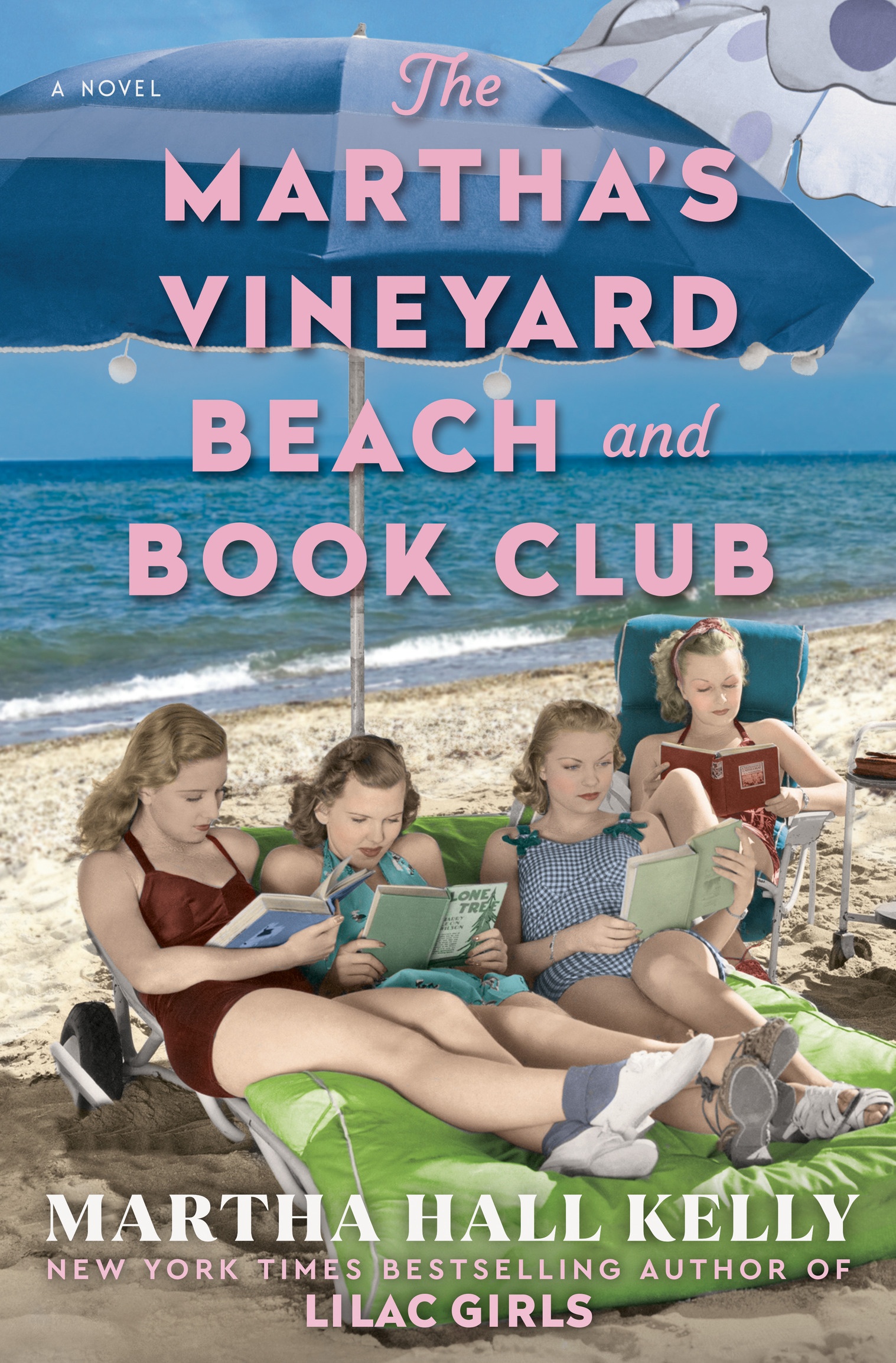
The Martha's Vineyard Beach and Book Club
About this book
On Martha’s Vineyard, a small reading circle offers companionship during a period when war reorganises work, courtship, and the information people are permitted to share. The women’s friendships become practical networks as much as literary ones.
A later search into the club’s past reveals letters, omissions, and choices that descendants have inherited without fully understanding. The island holds both the intimacy of a year-round community and the pressure of outsiders arriving with different claims on it.
Martha Hall Kelly uses the book club to connect private reading with public events. Stories give the characters a language for experiences they cannot announce directly, while the surviving records show how easily a woman’s contribution can be reduced to family anecdote.
The Martha’s Vineyard Beach and Book Club is historical fiction about female friendship, wartime responsibility, and the archives ordinary people leave behind.
Read a sample
5,002 words
Plain text
From the opening
1
Mari
2016
I hoisted my backpack over my shoulder and joined the crush of people streaming down the ferry’s gangplank.
I’d made it to Martha’s Vineyard at last, that storied island. I’d heard it was almost too charming. That Princess Diana had stayed there. Lots of presidents. Carly Simon and James Taylor once upon a time. There had to be something cool about it.
I stood under the canopy and scanned the people coming to meet their friends and families. Mrs. Devereaux had been so vague in her letter. Take the 9:30 ferry. I’ll fetch you in Vineyard Haven. Had I gotten the day wrong?
I wiped the sweat off my upper lip. I’d forgotten my sunglasses and was beyond jet-lagged from taking the red-eye from L.A. to Boston.
An amped-up bridal party pressed by me in a haze of Miss Dior, gold Mylar balloons bobbing above them; matching straw hats identified them as Bride and Bride Squad, as if the world didn’t know. I stepped back to let a couple not that much older than me walk by, a toddler in the father’s arms and a sweet-looking mutt leashed behind. The perfect family.
I walked across to the gray-shingled terminal building, the asphalt radiating heat, and sat cross-legged on a bench, watching the crowd of rich-looking tourists, flannel-shirted farmer types, and lunch-tote-carrying workers from the mainland. Were some headed to those stately white houses that lined the harbor, the ones probably built by men with names like Ichabod, the kitchens done over with double Sub-Zeros and too much white marble? Life was good for people here in almost-too-charming land.
I held my suede fringe bag close, one of my mother’s favorites. My high-waisted jeans and halter top had seemed right at the time when I left L.A., but from the few stares and glances cast in my direction, I now knew I looked out of place. Not that I cared much about dressing for others. I dressed for joy. And my dwindling bank account.
I’d eaten nothing since the peanuts on the plane, because the ferry snack bar offered only industrial-looking clam chowder and some shriveled hot dogs. And a ten-dollar deck of playing cards featuring a vintage Martha’s Vineyard map, which I’d bought in a moment of impulse and regretted as soon as cash changed hands.
I called Nate’s number. “This is Nate. Sorry I’m not here right now, but we’ll talk soon.” Why did he never pick up? He was always so busy with his tech start-up, which was taking forever to start up.
I sipped my bottle of club soda, an economical drink since the bubbles made me feel fuller, and watched my fellow passengers match up with their rides. A white Range Rover arrived, and the bridal party wrangled their balloons into the car and piled in. Soon a white-haired woman wearing a pink button-down shirt waved to the perfect family, and off they went, the mother fussing over the daughter or daughter-in-law.
It made me miss my own mom. Not that my mother would’ve worn anything remotely buttoned down. If a shirt didn’t have a seventies vibe, Nancy Starwood wasn’t wearing it. We’d spent hours browsing the L.A. thrift shops as a team, hunting through the racks on Melrose, on the lookout for band T’s and vintage Levi’s. All the shop owners loved her charming way and always saved her the good stuff.
Soon the crowds thinned. Where is Mrs. Devereaux? I checked my phone and found it nonresponsive. Maybe a new phone with some battery life would be a good thing to save for.
I turned the golden bracelet on my wrist, a habit I’d just acquired. Before I left L.A., I found the circle of gold hearts in the electric-pink sock my mom used to store her jewelry in. The hearts were kind of corny and the bracelet wasn’t really my mother’s style—or mine, either—but it gave me an odd sort of comfort now.
I approached a woman wearing an orange vest, who stood waving cars onto the ferry to return to the mainland. “Where’s the closest public phone? My ride hasn’t shown up.”
“Across the street,” the woman said. “Vineyard Bikes will let you use theirs.”
I dodged cars and hurried into the shop. Bikes filled every inch of the place, even hanging from the rafters, and I ran one finger along the seat of a tandem bike resting against the wall. That much togetherness would be a mistake no matter how good the relationship.
A guy I guessed was in his mid-thirties, maybe two years older than me, stood bent over an overturned bicycle, his hair pulled back in a messy bun. He spun the wheel with a satisfying ticking sound. I basked in the cool darkness of the place and admired his strong-looking back, a body part underappreciated in men.
I waved. “Hey.”
“Hey.” He looked up and tucked a stray lock behind one ear. “Great bag.”
I ran one hand down the suede, taken aback that a male human had admired a piece of my clothing, a first for me. “My mother’s. I’m sorry, but the person I was supposed to meet is a no-show. Mind if I use your phone?”
He nodded toward the counter. “Have at it.”
I dialed the number from the letter, and while it rang, I considered the bike man’s profile and decided if he’d been born in the seventeenth century he could have passed for a Flemish painter or composer.
Continue reading the sampleClose the sample
“Is it always this crowded here?” I asked, phone to my ear.
“It’s an August Friday, so yes. March, not so much.”
I liked the way he said Mahch in that famous Massachusetts accent.
I hung up the phone. “No one there.”
I stepped to the window and checked the ferry terminal again. After paying my mother’s funeral expenses, I couldn’t afford a long cab ride.
“I’m here from L.A. Just flew into Logan this morning. How much to rent a bike to ride to Chilmark?”
“Twenty bucks a day.” He glanced at me. “But it’s a tough ride.” He straightened, brushed off his jeans, and gave me his full attention. “Used to biking?”
“I went on a Berkeley trip once back in college—toured Hershey, Pennsylvania.”
“Oh, that garden spot.”
“But it was really fun, actually.” I shooed away the image of my ex-boyfriend, Justin, riding off with Jennifer Sibley down Chocolate World Way.
“Well, you’d be fine biking the flat roads along the coast, but the roads Up-Island are hillier. Trust me, just take Stagecoach Taxi.”
“How much would that be?” I asked.
“Around sixty bucks.”
I pictured the inside of my wallet and the two twenty-dollar bills and change there. At thirty-four I should have been well past the backpacking phase of life and able to afford a taxi. Just a late bloomer, my mother had said. “That’s kind of a lot for me right now…”
He reached up into the rafters and pulled down a pale-green bike, a surprising feat of strength, and I stepped back to watch. I’d always found men who did physical labor more attractive than their office-working counterparts.
“I get it. It’s possible to live out here without a lot of money, but you have to be creative. I can do it for ten if that helps.”
“It does, thanks.”
He went to the counter and hovered his pen above a form.
“Name?”
“Mari Starwood.”
He smiled. “You could be a movie star with that name.”
I’d actually been christened Marigold Violet Starwood, named after a British soap my mother had a passing fancy for, but I rarely shared my full name. Not because I didn’t like it; more to avoid people’s same old jokes about it.
“Are you an actress? Being so…”
“So what?” I asked.
“I don’t know.” He searched my face for a few long seconds. “Beautiful.”
I glanced away, hiding my smile. He was just flirting, but that wasn’t a word I’d use to describe myself. Interesting, perhaps. But black hair and Elvira-white skin wasn’t the most sought-after vibe in L.A., where blonds ruled. Just the thought that there might be a more relaxed beauty standard here in the land of farmers and fishermen made me feel newly buoyant.
I told him I had to leave tonight on the seven-thirty ferry. I’d scored a quick turnaround flight out of Boston for less than three hundred dollars round trip.
“You’ll want to stay longer. It’s a unique place. The air alone here helps people reconsider things.”
“I need to get home. I’m moving. Going back to school for physical wellness. Hoping to make a bit more money so I can afford a bigger place.” I forced myself to stop oversharing with this random stranger and pulled the deck of cards from my bag. “Can you show me where I’m going, on this map here?”
I liked the easy way he leaned his forearms on the counter, rested the deck of cards on his palm, and pointed to various spots as he spoke. “The island’s bigger than some people think—twenty-three miles long. There are six towns. We’re here in Vineyard Haven, one of the two main ports. You’re going to what they call Up-Island, to Chilmark. Lots of farms up there. At the other end is fancy Edgartown. It’s like New England Land at Disney World. You need big bucks to hang around there. The bar at Atria has amazing two-for-one gin gimlets on Tuesdays, though.”
“I have to go to Copper Pond Farm, wherever that is.”
He stood a little taller. “That’s a very cool place—huge piece of property. Used to be an Army base just above it. Highest spot here. Now kids go there to make out.”
I felt an absurd rise of heat in my cheeks. What would Nate think about me chatting up the bike man? “I’m meeting a woman from there. For a private painting class. Supposed to be starting at eleven.”
“Elizabeth Devereaux? She’s famous.”
“I know. We studied her work in an art class.” I’d taken Intro to American Painting during my wanting-to-be-an-artist phase at Berkeley. Not that I was any great painter or anything. Elizabeth Devereaux would probably think my work was a total joke.
“Wow. For one of her one-on-one workshops? I thought she didn’t take students anymore.”
“I wrote and told her how much I love her work and she accepted me,” I said, aiming for vagueness. He didn’t need to know the real reason I was here.
“Well, Mrs. Devereaux’s a private person. I paint a little, too, and met her once, at a gallery opening last year, but I’ve only seen her farm from the water. It’s gated, and they say the dirt road is in terrible shape. Out here, seems the more exclusive the property, the worse the potholes.”
“There were no photos of her online. What’s she like?”
“A bit brusque, but very kind to the artist community here. She loved talking shop but not much about her personal life. I asked her about her farm, and she just changed the subject.”
“She’s ninety-something?”
“Still an amazing talent, though. Said she paints every day. Were you an art major?”
“I wish. I love to paint. I had to major in something that would pay the bills, though. Communications. But I ended up in the health-food industry.” I’d never actually graduated, after my scholarship ran out. I tried not to think about the blender station at the Jamba on Wilshire, where I whipped up Mango-A-Go-Go’s and microwaved sandwiches, the elder statesman of the baby-faced staff.
The bike man leaned in over the counter. “Devereaux paintings go for more than this whole shop’s worth. You’re lucky to get in with her.”
“Who’s lucky to get in with her?”
We turned and found a woman standing in the doorway, dressed in a comfortable-looking pair of paint-spattered cargo pants, which I instantly wanted, and a gauzy linen shirt. Tall and thin, she wore a wide-brimmed straw hat, her white hair plaited to one side, down across her chest.
“Mrs. Devereaux—”
“Ronan, isn’t it?” she asked with just a trace of a French accent. “So this is where you spend your days? You should be painting.” She stepped toward me. “Are you Miss Starwood, by chance? I figured you might be here chatting. All the girls seem to find their way to Ronan White.” Mrs. Devereaux just stared at me, lost for a moment.
“Yes, I’m Mari.” I shifted in my shoes. How did she recognize me? She continued to gaze at me. “Are you okay?” I asked.
Mrs. Devereaux seemed to emerge from her trance. She turned and started out the door. “Let’s get going, shall we, if we’re to get some painting done? Mustn’t dawdle.”
I looked back and found Ronan watching me go. And part of me wished I was on my way to drink gin gimlets with him instead.
I followed Mrs. Devereaux through the parking lot to a yellow convertible jeep with its top down. Despite some rust along the door bottoms, it was in great shape for a vehicle that was clearly much older than I was, and I slid into the passenger side, the leather seat hot through my jeans.
Mrs. Devereaux turned the key in the ignition, and the sun glinted off a thin gold band on her left hand. Is there a Mr. Devereaux?
I’d never seen anyone drive a stick shift before, and Mrs. Devereaux was a master at it, surprisingly strong. “So what’s life like for you out in California?” she asked. “Do you paint a lot?”
“Whenever I can. Mostly portraits. I build stuff, too. Just made a little dollhouse for my boss’s niece.”
Mrs. Devereaux’s gaze lingered on me again, this time for a longer moment.
“Is everything okay?” I asked. “I could drive if you’re feeling lightheaded.” It was the kind of offer I often made without thinking, but I hadn’t driven a car in five years, since my mother sold the Mustang, never mind a stick shift.
“Oh, no. Never felt better.”
I sat back and tried to relax as we drove along the main street of the harbor town, past an organic-food shop and a drugstore, along with some T-shirt shops. “Welcome to Vineyard Haven,” she said.
“Cute town.” I loved the boutiques, a nice break from the Glendale Galleria.
“Had a terrible fire here in 1883. Everything burned, clear down to the water, if you can believe it.”
We passed a sweet storefront with books displayed in the plate-glass windows. Bunch of Grapes Books. I turned in my seat. “Was that Allen Whiting’s book in the window? Amazing landscapes.”
“Yes. Great art books. A person could spend all day in there. You know, why not stay the night in my guest room? Come back and browse. And it’ll give us more time to paint.”
For a private person, she was pretty free with the invitation. And I hadn’t really intended to do any actual painting. More just fact-finding. “Thank you, but I need to get back. Nonrefundable flight.”
“Do you read?”
“Mostly nonfiction. But now I’m reading all my mom’s old novels. Makes me feel closer to her.” I pulled a worn paperback from my bag, my mother’s copy of Valley of the Dolls, which I’d found when I was cleaning out our closet. “Read this on the flight. It’s a wild one. Drug overdoses and stuff. Good, but pretty unrealistic.”
We passed a cute coffee bar with café tables out front, advertising matcha lattes.
“Whatever happened to plain black coffee?” Mrs. Devereaux asked.
“Matcha’s good for you. At least that’s what Gwyneth Paltrow says. And tastes amazing.”
“Blech,” Mrs. Devereaux said, waving the idea away.
We passed a vintage-clothing store with a few dresses hung outside, swinging in the breeze. My mother would have liked the vibe of the town—a little corny, not trying too hard to be cool. I ran one finger along my heart bracelet.
Mrs. Devereaux glanced over. “Pretty.”
“My mother’s,” I said. “I think she got it from a thrift shop.” It pinched me to look at it, but it felt good to have inherited something, no matter how small, from my mom. The Medi Clinic doctor in Los Feliz had floated Lexapro as a way to treat the sadness. But I didn’t want to forget my mother. I just wanted her back.
“You like vintage clothes?” Mrs. Devereaux asked.
“Yeah. They have great energy. Love guessing the past in them. And they’re always well made. Plus, thrifting’s good for the planet.”
Mrs. Devereaux nodded, as if that had some deeper meaning.
“This farm we’re going to. How long have you lived there?” I had limited time to get my real questions answered.
She checked her side mirror. “Off and on for a few years.”
“Ever get out to Los Angeles?” I asked.
She looked over at me. “No, never.”
We drove by a restaurant advertising warm lobster rolls and past a bank with a Spanish-tile roof that looked like it belonged in Carmel-by-the-Sea. It was a cute town with great exploration potential if I came back one day. But once she opened up to me and I got what I came for from Mrs. Devereaux, I’d never need to return.
We continued Up-Island along an untraveled road arched with ancient trees, and I breathed in the honeysuckle air, feeling renewed. It was such a different vibe from the West Coast. The light made everything seem crisper, and there was a wetter, briny sweetness to the air, none of that woodsmoke and cedar scent of L.A.
We passed what Mrs. Devereaux said was the old Alley’s General Store and then lots of sheep meadows, and later she veered onto a dirt road and drove through an open gate. Off to the side was a blue farm stand, metal buckets of white lilies there for sale.
We drove along, as she expertly skirted most of the washtub-sized potholes, and I held on to the door handle. “Is there someone who can fix this road?”
“It keeps the curious away,” she said with a smile.
Soon the wild cry of gulls and terns met our ears, and we emerged from the woods to a hazy blue sky and a sweeping lawn that ran to a bluff overlooking the water. A small, two-story stone-faced cottage stood off to our left, a white-painted picket fence along the front of it, which had surrendered to a glorious tangle of creamy-pink climbing roses, white lilies, and foxglove. A magnificent old barn stood to our right, a rust-colored cow grazing near it, and rows of emerald-green plants grew up the hill. I’d never set foot on a farm before. Unless you counted Knott’s Berry Farm.
“Wow.” I stepped from the car. I liked the smell of the farm, the roses, the freshly mowed hay and the salt air, and even the manure. “You live here by yourself?”
“I do.”
“Is this your family home?”
“Oh, no. Just taking care of it for a friend.”
“Lucky you.” I shielded my eyes with one hand and took in the old barn, newly renovated. They’d done it right—updated but not too modern, with black-framed architectural windows and a cedar-shake roof. “Cool barn.”
“It’s a dairy farm, but we also grow potatoes and hay.”
We walked toward the edge of the bluff, where two easels stood next to canvas camp stools. Just seeing those easels made me regret my decision to leave without taking the painting class. Mrs. Devereaux was probably an amazing teacher.
I waved toward a clearing on the hill where an enormous boulder sat, surrounded by a grove of tall curly-branched trees, which swayed in the gentle wind. The scene was a familiar one. “That big rock,” I said. “And those trees. You’ve painted them.”
“Oh, the beetlebungs. Aren’t they just marvelous? They grow all over here, Up-Island. The bees love the blossoms, and you should taste the honey.”
I watched the branches bob and the leaves flutter. “They’re almost alive, like women dancing.”
“I like their scientific name, Nyssa sylvatica, nymph of the woods. Sometimes I think there’s something magical about them. They helped the family that lived here get through a lot.”
I turned and took in the vista, the waves lapping the shore and the low islands in the distance. “Amazing view.”
Mrs. Devereaux waved across the landscape. “The property runs from cove to cove. Salt Cove to the right, with the sandy beach, and Pepper Cove to the left around the bend—not much beach to speak of over there. Just an old boathouse.” She shielded her eyes with one hand. “In the distance are the Elizabeth Islands. Named by explorer Bartholomew Gosnold in 1602.”
“After you?” I asked.
Mrs. Devereaux laughed. “Oh, no, after Queen Elizabeth. And he named the Vineyard after his daughter Martha.”
“Thank God this property hasn’t been developed,” I said.
She nodded. “We’re very lucky.”
Just the thought of some big mansion being built here, or cluster homes with asphalt driveways, made me a little sick.
Mrs. Devereaux gestured to the cottage’s stonework. “You can see the seam in the front where it was flaked. Cut into sections to be moved.”
I craved a quick look at the inside of the house. “Do you have a place I can plug in my phone, Mrs. Devereaux?”
“In the kitchen. Help yourself. I don’t stand on formality here. Kitchen’s at the back of the house.”
I slipped into the cottage, the entryway cool and shaded, and let the screen door bang behind me. I passed a narrow staircase to the low-ceilinged living room; a threadbare velvet sofa was set between its two windows. I stopped short at the frameless paintings of varying sizes hung above the sofa, all of which featured the same subject: the boulder in the far field. Each caught the massive stone at a different time of day or different season, one under a covering of snow, each with different light and color, much like Monet’s thirty haystack paintings.
From my jeans pocket I slid a page I’d torn from my art textbook, which showed a photograph of my favorite painting, Untitled. A landscape. E. Devereaux, 1992, printed below it. The big rock. Those beetlebung trees.
I continued on to the kitchen, with its wide white porcelain sink, knotty-pine cabinets, and round oak table, the finishes so worn and lived-in that the room must have been the heart of the house. Somewhere along the way that part had been an addition, tacked on to the older stone front of the house. It smelled good in there, like sugar and wood ash and vanilla extract. I admired the old stone fireplace and the little model tugboat on the mantel. I was a big fan of fireplaces in kitchens, and I stepped closer to read the inscription carved into the wood: Deal justly, love mercy, and pay all debts. I ran a finger along the words carved there. That was such an easier, simpler time.
An HGTV star might rip out the old paneling and replace it with shiplap, but to me it was perfect as it was. I wanted to bake banana bread or can something in there.
I found a cord and left my phone charging on the counter, and on my way out I stopped at the entryway closet; its door was open a crack. I found it packed with clothes and ran one hand along the variety of smallish-sized men’s shirts and jackets hung there, loving the feel of the rough wools and cashmere I never got to wear at home.
I found my way back out to Mrs. Devereaux, who stood on the bluff at the easels, picking through a faded cigar box full of paint tubes.
My gaze wandered to the beach below, past a weathered gray shack to a wide plum-colored pond, iridescent as a dragonfly’s wing, the sand a coppery brown around the edges.
“The colors look so different on this coast,” I said. “More intense somehow. That pond…”
Mrs. Devereaux swished her paintbrush around in a baby-food jar of turpentine. “That’s Copper Pond. Gets that aubergine color from minerals in the soil. Has magical properties, they say.” She waved the brush in the direction of the woods behind the house. “On that hilltop above us, there was an Army camp—loaded with tents, filled with soldiers.”
“Who built this house?” I asked.
“That would be old Ginny Smith’s grandparents. Started farming here in the 1800s, off the boat from England via the mills in New Bedford.”
“Who lived here last?”
“Ginny and her three grandchildren. All gone now. Few remember them.”
I shut the paint box, my heart beating a bit faster. “Mrs. Devereaux, do you know anyone by the name of Nancy Starwood?”
Mrs. Devereaux set down her brush and turned. “Is that why you’re really here?”
“I’m afraid I haven’t been completely honest with you. Though I’d love to paint with you, I’m not here to take your class.”
“Oh, really?” she asked, not at all shocked by my revelation.
“I found your name among my mother’s things. She passed away this spring.”
Mrs. Devereaux held the easel to steady herself. “I’m terribly sorry for your loss. What happened?”
“She had a brain aneurysm at the library where she worked.”
“Sudden.” Mrs. Devereaux looked down at her hands. “I see.”
“At least it happened in the place where she was happiest,” I said.
We listened to the waves lap the distant shore.
“So why are you here?” Mrs. Devereaux asked.
“Before she died, she’d been planning a trip, I think. And I found your name—first in the search history on her computer and then written on the back of an envelope. The words cadence and briar were written there, too. Names, maybe? Strange ones.”
“No stranger than Marigold Violet. I like that your mother named you after a soap.”
Something buzzed, warm and deep in me. “I don’t—”
“I guess I haven’t been totally honest, either. I was actually expecting your mother here, but then I received your painting-class inquiry and noticed the similar last name. I had no idea she’d passed.”
“Why did you contact her to begin with?” I asked.
“She reached out to me.”
I wrapped my arms around my waist. “Why? Did she know you? My family has no connection to this place.”
“I’m afraid you’re wrong.”
“But my mother never set foot out of California in her whole life.”
Mrs. Devereaux picked up her paintbrush. “I think you’ll find you’re mistaken about that, too, Miss Starwood.”
“I don’t understand.”
“It’s an extraordinary story, really. And it all started with the Smith girls.”
2
Briar
Copper Pond Farm, August 1942
It was my brother Tom’s twentieth birthday, and our dog, Scout, and I watched the party from up in the barn hayloft. Half of the island stood packed in there wishing Tom well; the other half stood down on the distant beach, cooking the lobsters, silhouetted by the raging bonfire. It was easy to count our blessings from up there. A bounty of lobsters and corn and Gram’s Portuguese bread. The most generous and loyal friends, many of them once Mum and Pop’s. And a farm that somehow provided for us no matter the season.
But it wasn’t all rosy, of course. Some days felt like we were all sailing the river Styx on our way to Hades; every day was something new to dread. Hitler’s Nazi storm terrorizing Europe. Gram’s illness. German U-boats downing American ships just off our shores. But none of us saw the big one coming. That we would kill one of our own. That surprised us all.
Scout sniffed the air as the lobster scent drifted up from the beach. Our guests gathered at the table—Gram’s church ladies, Tom’s work friends, farm neighbors; even Sharkey Athearn from the post office, who liked no one, came—and not just for the free supper. We were all there for the charm. Tom had it in buckets, and everyone wanted their little piece of it, me most of all. Since our parents died in a car crash in Boston when I was six, Tom had been the kindest stand-in father. And I wanted to give him his birthday gift.
To pass the time, I picked burrs from Scout’s coat and dropped them below onto my sister, Cadence, who stood flirting with the Mayhew twins. I’d managed to land a nice collection of them on the shoulders of her sweater without her realizing. Little did the twins know she’d never grant either of them a date, saving herself for some future perfect man to take her off the island to New York City. Cadence had gotten the largest proportion of beauty in the family genetic lottery, the famous MacNeil look from Gram’s family’s side—anthracite-black hair with natural curl and thick-lashed eyes so startlingly blue that folks often stopped and stared. I didn’t resent her for it. I was always more comfortable disappearing.
Cadence felt a burr land in her hair, pulled it out, then glared up at me in the loft and stomped off, probably to find her friend Bess and dance with her, causing the unattached men there to stare at them longingly. Just another fun night for Cadence.
I’d rigged an old record player to a speaker Gram brought from church, and a few people danced. Others gathered around the world’s longest wooden table, just plywood on sawhorses, which Gram covered with newspaper, the traditional lobster-night tablecloth. The chairs were my favorite part. Everyone knew to bring their own, and I loved seeing them drawn around the table, a striped canvas beach chair pulled up between a velvet-seated dining chair and a paint-splattered step stool, as varied as we islanders ourselves.