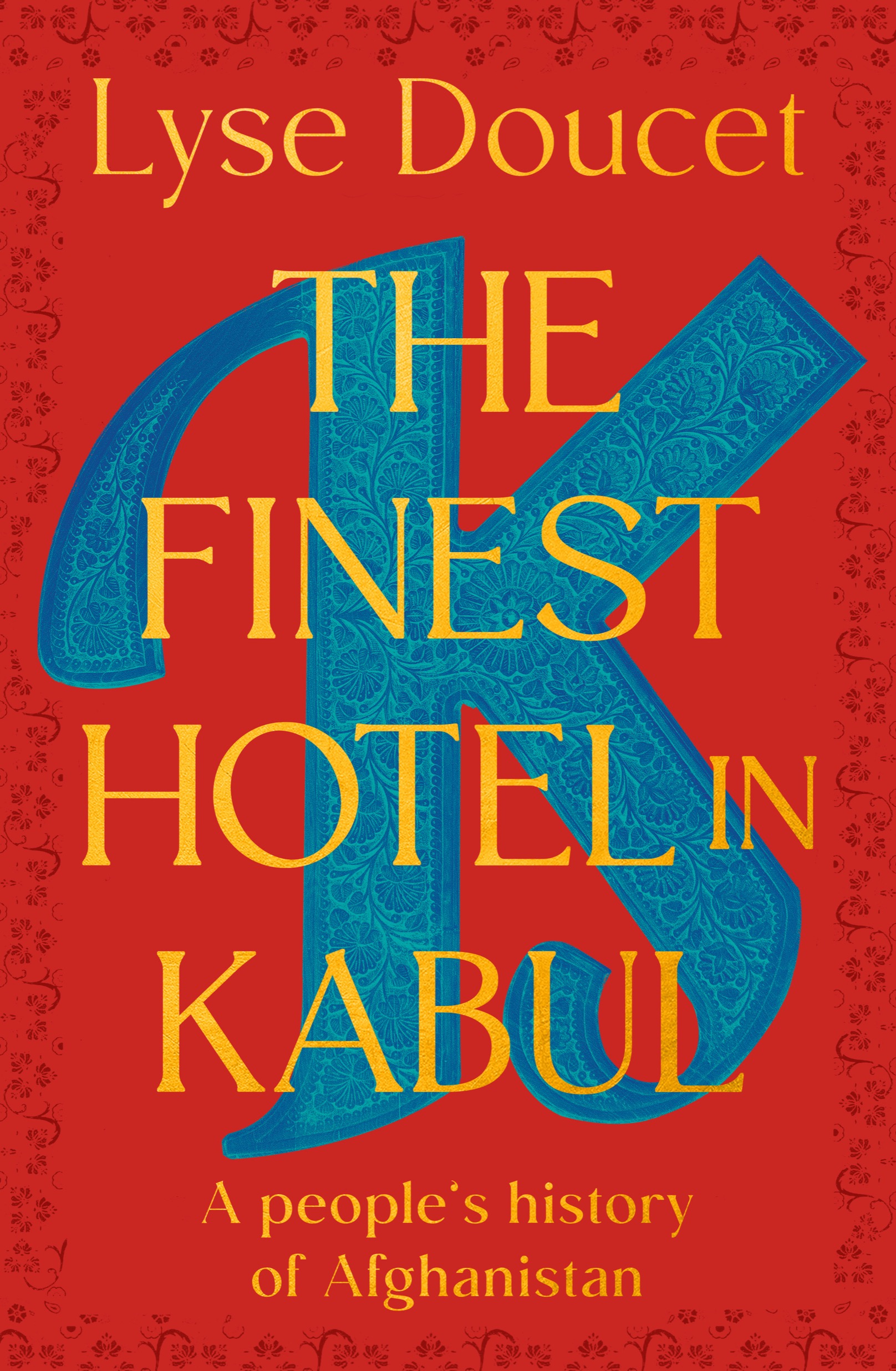
The Finest Hotel in Kabul: A People's History of Afghanistan
About this book
When the hotel opened in 1969, Afghanistan's first luxury hotel represented a modernizing kingdom connected to international travel. Its restaurants, fashions, and service standards promised a future very different from the wars now associated with Kabul.
Lyse Doucet has stayed at the Inter-Continental since 1988 and tells its history through employees including longtime housekeeper Hazrat. The building survives coups, Soviet occupation, civil war, the United States invasion, attacks, and two eras of Taliban rule.
A hotel records political change through practical details: who can enter, what food can be served, which music is permitted, and whether staff can get home safely. Personal continuity makes regime changes visible without implying that ordinary Afghans experienced them in the same way.
The Finest Hotel in Kabul is a people's history of modern Afghanistan organized around one institution. Doucet combines reporting and historical research with the accumulated knowledge of people whose work outlasted successive governments.
Read a sample
5,054 words
Plain text
From the opening
Preface
‘How long will you be staying?’ asked the man behind the black marble counter. I didn’t know the answer. It was Christmas 1988, the day after my thirtieth birthday, and the gloam of the Inter-Continental Kabul was an unlikely place to be celebrating. The cavernous lobby, chilly and dark, stretched into forbidding corners, brightened solely by a shiny blue-and-white banner promoting the Soviet airline Aeroflot. Most of the chandeliers, their dangling crystals hushed by dust, were dark; only one glinted stoically above the reception desk. But the wooden grid of pigeonholes behind the front counter, packed with chunky metal keys, left little doubt. Almost no one else was staying here.
Would it be six days or six weeks? I wrestled with all the forces that might keep me in this ghostly place and all the ones that might not. An awkward pause pressed down upon me and the Afghan receptionist, his brown suit as gloomy as the lobby. He raised a quizzical eyebrow. And then he smiled, his welcome illuminating the room.
I had just landed in Kabul for the first time. The spiralling descent into one of the world’s highest capitals stuns its visitors into an awed silence. Sharp undulating ridges of rock puckered in folds of black, grey and a rusty red had given way to the sharp, snowy-white peaks of the Hindu Kush. Far below, the latticed landscape of miniature mud houses was dotted with flat-roofed factories and domed palaces and mosques that loomed ever larger. It was no ordinary arrival. The aircraft had banked sharply in a breathtaking corkscrew manoeuvre, flares bursting outwards with white-hot fire – a way to divert any heat-seeking missiles blasting from mountain bunkers, the foxholes of the Western-funded rebel fighters known as the mujahideen who were locked in battle with the Soviet-backed government in Kabul.
That winter, the harshest in more than a decade, Kabul was in the crosshairs of a Cold War conflict that was decades old. Afghanistan’s unravelling had begun in 1973, four years after the Inter-Continental Kabul’s grand opening, when its mild-mannered King Zahir Shah had been toppled by his cousin. The putsch soon tipped Afghanistan into a blood-soaked spiral: another coup, three leaders assassinated one after the other, then the Soviet invasion over the Christmas of 1979, which sparked what would become the most grievous war in the world.
I had travelled to the Afghan capital to report on the Red Army’s pull-out, following a disastrous decade-long occupation. As I departed from neighbouring Pakistan, where I had spent the past few months, one mujahideen commander cheerily told me he would soon see me in Kabul, since their victory was now in sight. Another warned that I would certainly be killed there.
I had been nudged out of Pakistan by a competitive colleague who had made it clear that I should find a different patch. The kindness of strangers and friends had helped to secure me an escape route: a rare Afghan visa. The advice had been that there were really only two places to stay. The older, more conveniently located Kabul Hotel – smack in the centre, but with dubious communications and cuisine, and an even murkier history. And the Inter-Continental – high on a hill on the edge of the city, but with better telephone and telex links and food worth eating, as well as a certain faded splendour. As the clapped-out yellow taxi chugged out of the airport in a fug of diesel fuel, I made a split-second decision. We headed for the hill.
I soon discovered that hospitality is hard-wired in Afghans. At the front desk, Sharif, with his sunbeam smile, and Salem, his dour sidekick, were a delightful double act, offering assistance with a wink, as spooks of the Soviet-backed ruling party lurked. Amanullah, at room service, scribbled caricatures of journalists on food bills to bring some cheer to the bleak bedrooms – a very Afghan vision of ‘service with a smile’. Nasir, the telephone operator, offered Dari-language lessons during anxious waits for a telephone line in that once-upon-a-time before the ease of the internet and mobile phones. His impromptu class started with learning the phrase dostad daram. I soon found out it means ‘I love you’. As so often among Afghans, the gift was laughter.
I ended up staying nearly a year. The hotel became my Afghan home. The masking tape criss-crossing my windows offered scant protection from rocket fire, but looked the part. Carpets from merchants who always lent their wares before demanding a purchase – a tactic honed through history, to all but ensure a sale – provided a personal touch. As the Soviet troop withdrawal on 15 February 1989 approached, the Inter-Continental started bursting with journalists who came and went, until the hotel echoed with emptiness again.
Over the decades, when returning to Kabul to report on momentous times, I have often stayed in the place that everyone called simply ‘the Inter-Con’. And, over time, I came to realise it was more than just a hotel. As Afghanistan lurched through decades of trial and terror, laced with bright but brief beginnings, the Inter-Con was an unbreakable constant. A white box of cement and steel, it stands on a hill watching over the city, a front-row seat to history. On its roof, its kicking letter K still proclaims its pedigree – even though its connection to the global Inter-Continental chain was severed soon after Soviet tanks rumbled into the capital in 1979. Afghans stubbornly held on to the name, in the hope of restoring its early glory and membership in that coveted club. It never gave in, never gave up; the Inter-Con is a very Afghan hotel.
Continue reading the sampleClose the sample
Its brutalist exterior lacks the graceful arches and elegant domes of the city’s historical royal palaces. But what was born in 1969 as the finest hotel in Kabul became its most storied building. History – good, bad and bloody – was made within its walls. It became home to fashion shows and beauty pageants, bikinis by the pool, vodka-soaked Soviet receptions, warlord rockets, a guest named Osama Bin Laden, American election observers, Afghan female MPs and Taliban suicide bombers. Its doors stayed open through every kind of political system: a peaceable kingdom, Soviet-backed communism, warlordism, Islamism and a would-be democracy bankrolled by the West. Politics, like hotel guests, checked in and out. Whoever rules Afghanistan sets the rules at the Inter-Con. Today it is run by the Taliban, again.
In a listing of the world’s finest hotels, some sparkle for the elegance of their architecture, their exquisite cuisine, the standards of their service. The Hotel Inter-Continental Kabul, Afghanistan’s first five-star luxury hotel, earned a distinction of its own. It survived. At times guests cursed it as the ‘worst hotel in the world’ – a place without running water, reliable heating or even bread that could pass a taste test. Bedrooms became bunkers. Chandeliers shattered. Floors were ravaged, renovated, ravaged and renovated again. In a land where most Afghans worried whether they would see their next meal or their next day, the Inter-Con was a constant. Through moments of heart-rending uncertainty and suffering its receptionists kept smiling, waiters kept serving, cooks kept pots on the boil, cleaners snapped sheets across beds, bellboys kept lugging luggage up and down the stairs when the lifts were broken or the electricity was cut. The hotel became their misl-e khana – like their own home.
History always moves in a multitude of singular stories that carry far bigger truths. Afghanistan’s story tells us that war is more than the blast of bombs, the whistle of bullets. It’s a mother’s anxious eyes, the song of a soldier, a soul-soothing camaraderie, the pause before going out the door. It plays out on the frontlines of everyday life, in dashed dreams, wrecked weddings and the courage of people who hold each other close and do what they can to carry on.
This book is a history of Afghanistan told through the story of this landmark hotel, and through the lives of the staff who kept it going. Most Afghans, when asked for old photographs or videos, reply apologetically that they lost almost all their physical keepsakes during one upheaval or another. But I have always marvelled at their memory. Perhaps when so much is snatched away by forces beyond their control, remembering becomes a weapon to hold fast to the past. But memories can blur, take a new shape in each telling. This book is based on recollections of the many Afghans and foreigners who have gone in and out of the Inter-Con. I have listened carefully to their accounts, checked translations, and backed up their stories, as far as possible, by historical records. Every effort has been made to tell their story faithfully, as they told it to me. At moments in this book you will also read my own stories too.
It is written with enormous gratitude for the many Afghans, over many years, who have made me feel at home. For all that’s been lost, Afghans’ deeply ingrained sense of hospitality still remains. Of all the country’s many proverbs, one has always been my favourite: ‘It doesn’t matter how big your home is, what matters is how big your heart is.’
Introduction
The Year of Reckoning
Summer 2021
It was no way for a young man to spend a Saturday night in Kabul. Sadeq had been quietly considering his options. He could have joined his friends at their favourite hangout, the Nokhbagan snooker club, home to the best tables in the city. His friends kept calling him, pleading, ‘Come on! Sadeq jaan, you work too hard.’ Or he could have hung on in the hotel after his shift ended, to get his head around more English grammar. He needed it for the language tests that could speed up his long-awaited exit to study in the United States. Perhaps he should have gone home. He could hear his father’s caution ringing in his ears: ‘Don’t stay out late, my son. It’s too dangerous these days.’ But as the lengthening shadows began to dance with the shine of the chandeliers, the hotel’s human-resources manager burst into Sadeq’s cubbyhole office and threw a sheet of paper on his desk. ‘Sign here. You’re in charge.’
Sadeq’s decision was made for him. There was no one else to look after the Inter-Con tonight. Only the sharp dresser with the megawatt smile. He had risen to the role of acting front-office manager less than two years previously, at twenty years old, just under a fortnight into the job. It was, Sadeq believed, down to his sheer force of personality and prodigious effort. True, his big brother Hasib had put in a good word. But he did the rest.
He looked down the list that was staring up at him. There was the wedding getting under way down by the pool: about 240 guests. Some of them would certainly linger, dine, dance into the early hours. Then there was another wedding in the ballroom in the morning. Both were in the safe hands of banquet manager Sadozai. He’d been around this hotel for more than thirty years; he knew what to do. There was a sprinkling of guests across the hotel’s five floors, some of them now browsing the buffet in the Bukhara Restaurant. And if he tugged open the curtain of his snug glass-fronted office he was certain to see two of his colleagues, also twenty-something strivers, sitting calmly behind the reception desk, probably scrolling on their mobile phones under the gold-rimmed clocks that marked the time in Dubai, London, New York, Paris and Kabul. He could do this.
His only worry was security. His role demanded a laser focus on the Inter-Con’s three rings of steel. Afghan media was burning with reports that the Taliban were advancing towards Kabul at lightning speed. The US president, Joe Biden, was still vowing to bring every American soldier home by the date seared in everyone’s memory: 11 September. Every other NATO army was packing up after twenty long years, if they hadn’t left already. But the stories from the frontlines were mind-bending. That Afghan soldiers were running out of bullets, even running out of bread. That entire units were cursing their commanders, fleeing for their lives. In some places Taliban fighters were said to be simply walking in, taking over.
But a Taliban conquest of Kabul? Impossible, Sadeq told himself again, as he tucked his hotel checklist into the pocket of his best blue suit. Not when this capital was defended like a citadel. Not when the powerful Afghan army, still backed by US and British troops for a few more weeks, was standing strong. And not when the fortress-like Western embassies still hadn’t pulled up their drawbridges. He saw the formidable security at the US compound every time he went to check on the status of the visa applications for himself, his father and three sisters to join their mother and brothers, who were already in America. Not even a pigeon could fly in undetected.
Sadeq leaned back in his chair, just short of the point of completely tipping over. Mood music from the ‘3 Hours Best Romantic Relaxing Music’ playlist was wafting under his door. Sometimes he asked why God had decided to make him an Afghan. So much kept getting in his way. He was at the stage of life when a young man should be well on his way to his future. By the time he was twenty-seven, when so many responsibilities and maybe even marriage kicked in, his chance to make his dreams come true would be over. Only five years to go. And here he was, stuck in the starting blocks.
He pushed away from his desk, stepping into the luminous lobby and out of the revolving front door; the balmy August night was washed by the magic of a half-moon. As Sadeq took the steps down to the lower terrace he walked into a nocturnal fairyland. A sweeping canopy of twinkling lights was mirrored in the glimmering pool. Sequins winked on women’s dresses as they shimmied to the wedding band, the flashes of phone cameras and cascades of laughter adding even more sparkle. On the rim of the oblong pool, a singer with a mop of slicked-back hair was belting out the lyrics of Ahmad Zahir, the ‘Elvis of Afghanistan’:
‘Although my spring has turned to autumn because of your absence, why should I fear?
Oh flower! May you always possess the spring of youth, may no autumn befall you.’
Sadeq half-listened as he looked around, noticing that only a small number of guests still dawdled around the titanic buffet table on the far side of the terrace. Ahmad Zahir’s laments were bringing the event trickling to a close: From above, the rain came. My beloved entered the hallway. I asked for a kiss … O woe, her eyes filled with tears.
Ahmad Zahir’s songs weren’t Sadeq’s favourites. But how Afghans still loved, still missed, their great star. He had performed and partied around this very pool five decades previously. He had been killed – most Afghans believed assassinated – in 1979. But his music and his memory would never die.
Sadeq tripped back up the stairs. The outer rim of the watchtowers, nestled in dense thickets of evergreens, hugged the hillside, the highest lookout straddling the rocky knoll that faced the front entrance. Another cordon of razor wire shadowed the wall around the hotel. The third stretched from the bottom of the hill to the top on the main lane. Along the way it passed three striped barricades; three boxy guard cabins; two electronic scanners; two possible pat-downs; and a heavy steel slab of a gate on the crest of the hill stretching across the entry to the forecourt. And there was a fourth, of a sort: the thick arboreal fence formed of tall pines, elegant Persian and Russian willows and flowering fruit trees, lining both sides of the path.
This hotel had been the domain of the trees long before the arrival of all this metal, the pines rising high and straight like watchtowers. The elegant spherical shrubs called Pasha Khana, ‘mosquitoes’ houses’, were there to catch insects. And on the fringes of the forecourt and down by the pool, the graceful acacias rustling with the faintest of breezes. The gardeners who lovingly tended them by day Afghanised their name to akst, ‘photograph’. They saw everything, just like the multiple banks of security cameras across the hotel.
Sadeq circled around the splashing fountain, festooned like a Christmas tree with garlands of tiny bright lanterns. On the far side of the forecourt, inside the ballroom’s golden double doors, trusted Sadozai and his waiters were putting the finishing touches to another wedding layout. ‘Shab Bakhair,’ Sadeq called out. ‘A good night to you.’ All was in order. Of course. Round tables were covered in white tablecloths embossed with tiny white flowers. Straight-backed chairs were dressed up in folds of red fabric pinched into a bow at the back. And, at the far end of the ballroom, the regal thrones of the bride and groom were draped in white sashes.
Sadeq admired honest, hard-working staff like Sadozai. They were the real cement and steel of the Inter-Con. But he could not stomach the thought that he too would be here in thirty years, still riding a bicycle back and forth to work. Still, this was a good job, he reminded himself, as he slipped back into his office and shut the door with a reassuring click. And it made good sense for someone studying for a business degree, down at the American University of Afghanistan. Some day he would run his own company.
His eyes wandered to his walls. When he looked straight ahead, he faced an impressive Afghan snow leopard, the rare big cat that was able to cross the largest of rivers, swim the coldest of waters. Behind him were painted silhouettes of the Chapandaz, mighty Afghan horsemen galloping across the steppe in a frenzied game of buzkashi, a rough-and-tumble Afghan version of polo. This, too, was what it meant to be an Afghan.
And at his feet, on the floor beside his desk, were his new finds. The spiralling horns of a Marco Polo sheep, a trophy dating back to the days of the last king, Zahir Shah, who had loved to hunt, but tried to protect these precious animals. Next to it, a finely engraved round plaque with a K dancing at its centre, wreathed by the words ‘Inter-Continental Hotels’. Hotel heirlooms – Sadeq had dug them out of the dusty jumble in one of the outhouses behind the ballroom, in his efforts to unearth this hotel’s history and put it on show for everyone to admire. The flaring horns would be mounted above the entrance to the coffee shop.
He leaned back in his chair. The past week had been stressful. The hotel’s new managers had fired 160 people – about half of the hotel’s staff, including some of its longest-serving, most loyal employees. It had been a painful week. But the office of the president of Afghanistan had been categorical: ‘This hotel isn’t even making enough money to pay its electricity bills!’
So much of Sadeq’s time was spent trying to bring in more business. In the spring he had escorted security teams from embassies and aid agencies around the hotel, so that they could inspect the reinforced defences – his attempt to reassure them it was safe to stay. His old general manager, who had also just been sacked, had even revealed to Sadeq that he was rekindling the hope to rejoin the global luxury hotel group, after all these decades. The Inter-Continental’s head office in Britain hadn’t even answered his emails, but the manager wasn’t sure if he had the right address.
The hotel had been a no-go for most foreigners since the bloody Taliban assault of 2018. Entire floors had been shredded. Forty guests had been shot dead or blown up, fourteen of them foreigners. The Taliban were warning Afghans to stay away from dens frequented by infidels and enemies, like this one. But it was Afghans who kept coming. And there were many here tonight.
It was a little past 3 a.m. Within hours all the well-rehearsed steps of another day at the Inter-Con would begin again. Sadeq made one last stop to chat with his fellow twenty-somethings behind the front desk and exchange final greetings. Khoda Hafiz. ‘May God protect you.’ Manda na bashi. ‘May you not be tired.’ He picked up one of the brand-new electronic keys to access the lifts. He had reached the end of his list, the end of his energy. All the gates were checked, all the main doors locked. The last of the wedding guests had vroomed down the hill, their voices carried in the quiet of the dark. Only the distant rumble of US military aircraft powering in and out of Kabul’s international airport broke the silence. That and the staccato barks of stray dogs, the kings of the night, reclaiming their streets.
Sadeq fell into bed in a third-floor room, out like a light, safe on the other side of its heavy door. Every door of the Inter-Con was bulletproof.
‘Don’t watch the news!’ Abida’s doctor told her, over and over again. ‘The news is making you sick.’
That was the hardest prescription to follow. Abida obediently took the doctor’s pills for high blood pressure, diabetes, tummy ache and more. She swallowed a rainbow of colours for her assortment of aches. But she had to watch the news. She couldn’t fall sleep until she saw the late-evening bulletin. And, even then, she was still sometimes jolted wide awake in the middle of the night. At fifty-five, Abida lived her life in a haze of worry. Fear for the future of her eight children. Grief for her lost husband, killed by a rocket decades earlier. And now, since exactly one week ago, anxiety over her own fate after she had lost her job as a sous-chef at the Inter-Continental.
Abida shoved all these thoughts to the back of her mind as she reclined on her red-and-gold toshak mattress, a mug of steaming green tea in her hands.
‘Salaam. Welcome to the News at Ten.’ The TOLOnews anchor Waheed Ahmadi was in Abida’s mud-and-timber home again. The deep-set eyes on her TV screen were so dark and intense that he seemed to be staring directly at her. Pay attention! ‘Our top headline, some important news.’ Abida leaned in; Ahmadi’s bushy black moustache curled at its tips as he spoke: ‘President Ashraf Ghani is consulting Afghan and international partners to prevent further instability in the country.’
Ghani was her president. She had voted for him in 2014, and again in 2019. Her whole family had. She told them to. And she was sure they heeded their mother’s word. Abida wriggled into a more comfortable position, listening attentively. The screen cut to her president, addressing the entire nation: ‘I know you are worried about your present and your future,’ he said. ‘As the president, I assure you that my focus is to prevent further instability, violence and displacement of my people.’
Abida sank into the soft, squishy cushions; she had embroidered them herself. All her worries somersaulted in her mind. Her future, and that of her family, hung in the balance. The Inter-Con’s, too. A team of her fellow hotel workers, the oldest and wisest men, had been meeting the president’s legal advisors today to argue their case of unfair dismissal and to demand compensation: 160 of them had been let go, in one fell swoop. Hotel managers had apologised. ‘These are the president’s orders,’ they told her. My president has done this? she asked herself. They kept repeating the same refrain: ‘We are so sorry, but there is no money.’ They said they had done it according to the rules.
But Abida had only found out last Saturday, as she trudged up the hill to the hotel. An angry knot of her colleagues, including four women from housekeeping and laundry, had been halted at the second security gate. ‘Let us through. We work here!’ they shouted. The guard waved a long list of names in their long faces. ‘Look! You no longer work here.’
Abida held onto the hope that she could get her job back. But now the Taliban were said to be at the gates of Kabul, back at the door of her life. And here was her president on TV, dressed in a dark blazer, crisp white turban and a Covid mask, walking solemnly down the long red carpet outside the presidential palace as if there was nothing to worry about.
The news report switched to him looking straight into the camera reassuringly, his turban now removed. ‘Security forces will be consolidated and serious measures will be taken.’ Abida kept watching, now breathing a little easier. At least their security was in safe hands.
Her tea was now lukewarm. She sipped the last dregs. The next report was all the way from New York and the leader of the United Nations, the secretary-general, Mr António Guterres. ‘Afghanistan is spinning out of control and facing an unbelievable catastrophe,’ he declared.
Abida gasped, her heart tightening in her chest, exactly the way her doctor had warned her. She couldn’t bear to watch. When the Taliban had taken power in 1996, she had been forced to leave her first job as a cook in the Kabul Hotel in the city centre. Afghan women were told they couldn’t work outside their homes; their place was in the house. It had been one of the worst days of her life. Then, five years later, came one of her best days. She had pressed her radio set to her ear, so as not to miss a single word on Kabul Radio from her new leader, Hamid Karzai, who had taken over from the Taliban. ‘We respect Afghan women, who are half of our country’s population,’ he said, the applause that was erupting from the radio competing with its crackle. ‘And we give rights to them under the country’s law.’
Abida Nazeri – chef, seamstress, widow, mother of eight children – had been the first woman to sign up for a job at one of the government-owned hotels. She had dazzled the Inter-Con’s new foreign managers with her mouth-watering Afghan dumplings. They had never tasted mantu and ashak before; had never even heard of them. They gushed over the plump pockets of pasta stuffed with oniony Afghan leeks and finely chopped meat and onions, smothered in a velvety garlicky yogurt sauce. She was hired on the spot.
Last week, the day she was sacked, had been another of her darkest days. Abida had never imagined it would happen to her. Not in a hotel where they respectfully called her Madar jaan, ‘dear mother’.
She admitted that her aches and pains told her loudly every day that she had worked too long, too hard, for too many years. Her doe-eyes were now ringed with dark circles, crinkled at their corners. But when she applied a touch of pink lipstick, perfectly matching her favourite headscarf, she still shone a fine-looking smile. And how she could cook! Only months ago she had received the hotel’s ‘Star Performer for the Month. In recognition of her Valuable Contribution.’ They gave her a certificate in a gilded frame. A golden star-pin she fixed to her chef’s whites. Even a week’s extra salary.
But last week one of the managers had belittled her with his dark eyes. ‘Dear mother, isn’t it time for you to go home and spend time with your children, and grandchildren?’ The hotel she had loved for so long no longer loved her in return. How could she pay the fees for her son, studying dentistry at a private university? Who would pay the medical bills for her daughter, Mariam, who had studied journalism, but had suffered for years with tumours in her ovary? This had been Abida’s life’s real work: an illiterate mother educating all her children. She had come so far. And now it felt as if her past was in hot pursuit. The Taliban could be coming back to take it all away.
Abida cradled her empty teacup. Her hands looked older, too, calloused from years of cooking and sewing. The Taliban were promising they had changed. Their leaders kept telling journalists they would govern differently this time. She had to believe this was true. Otherwise she was sure she’d be struck down by a stroke.
The last TOLOnews bulletin of the night was almost over. The final story was about the United States providing 500 million doses of the coronavirus vaccine to poorer countries. It was good to end with good news. The camera cut to a wide view of TOLO’s grand studio, with its vivid red desk and pulsing blue backdrop. Waheed Ahmadi sat in the distance, his eyes no longer in close focus, as he signed off.
‘Thank you for joining us for this hour’s news. Good night.’
The morning of 15 August began with the dawn call to prayer bouncing from one hill to the next, the first light filtering through the beige smog sitting stubbornly on top of the city. Mohammad Aqa made his way to work in a dust-caked commuter minibus in the tangle of morning traffic and the racket of the streets: the blaring horns of luxury bulletproof 4x4s, the revving roar of motorcycles, the tinny tinkling of bicycle bells, the hapless shouts of the traffic cops with their outsized peaked caps.
His shift began at 7 a.m. He hopped off at his usual stop at the bottom of the hill to make his way up the slope, through the gauntlet of bollards and barriers and through the roll call of obligatory courtesies. Salaam Salaam … Sobh Bakhair, ‘Good morning … How are you? How is your health? May you not be tired.’ By the time he reached his staff locker in the basement, he was a bit tired in fact. He swiftly changed into his black trousers, slipped into his white shirt, tightly knotted his black tie and pulled on his black jacket. The manager of the Bukhara Restaurant was ready to work.