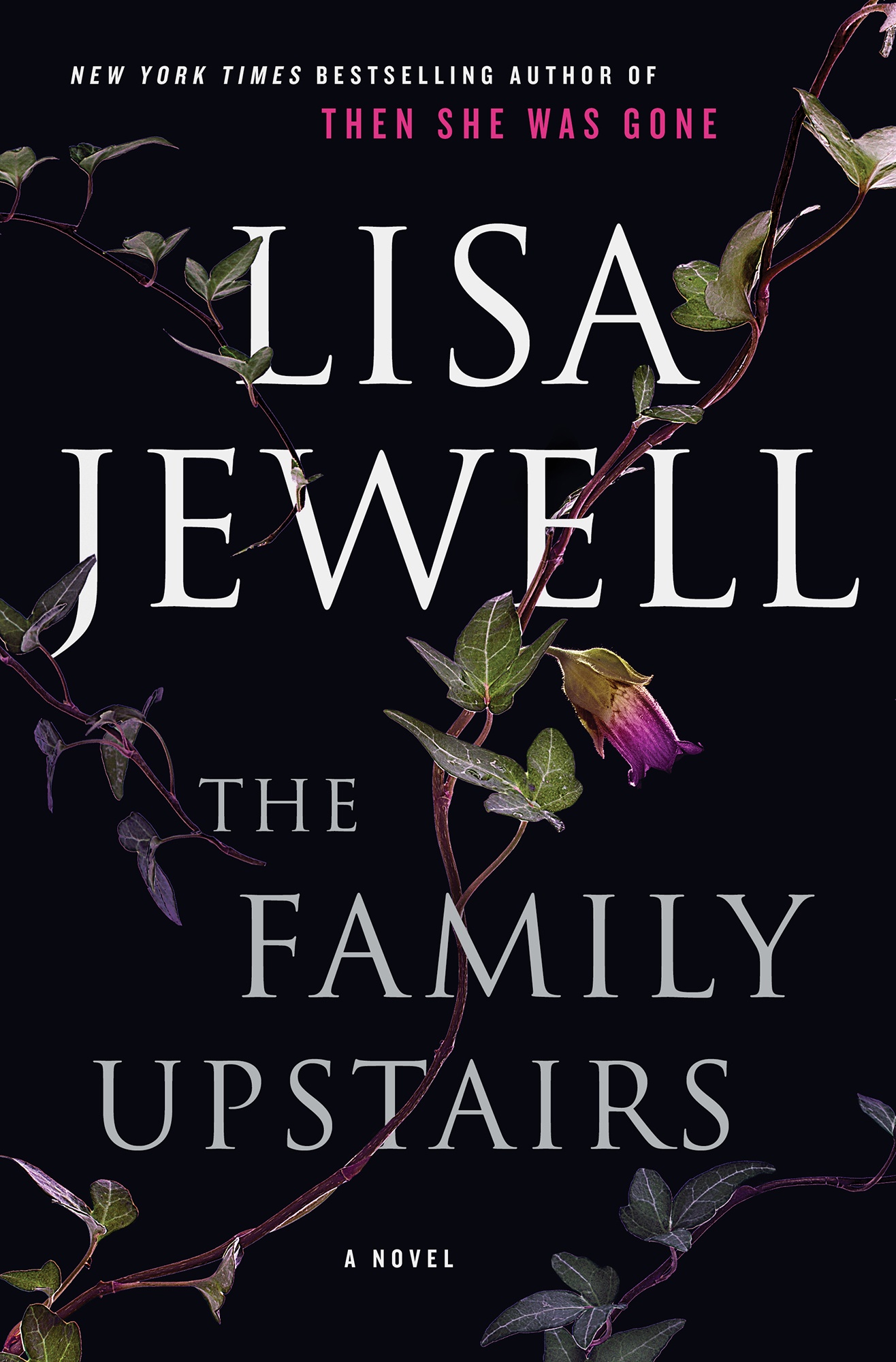
The Family Upstairs
About this book
Libby Jones has waited for the letter naming her biological parents, but the answer includes a valuable abandoned house on the Thames. She learns that she was found there as a baby after an apparent cult-like household collapsed, while older children vanished.
Other viewpoints follow a woman struggling with her children in France and a boy recalling how outsiders gradually took control of his wealthy family's home. Their stories approach the same address from different times and unequal knowledge.
Property, coercion, hunger, charisma, and family loyalty explain how respectable walls became a closed system. Libby's search attracts people who have had twenty-five years to imagine what the baby's return might mean for their own survival.
The Family Upstairs is Lisa Jewell's domestic mystery about identity and an occupied home. It resolves its central history while leaving characters who continue into a sequel, making this the correct first volume for readers following the family beyond the reveal.
Read a sample
5,102 words
Plain text
From the opening
Prologue
It would be inaccurate to say that my childhood was normal before they came. It was far from normal, but it felt normal because it was all I’d known. It’s only now, with decades of hindsight, that I can see how odd it was.
I was nearly eleven when they came, and my sister was nine.
They lived with us for more than five years and they turned everything very, very dark. My sister and I had to learn how to survive.
And when I was sixteen, and my sister was fourteen, the baby came.
I
1
Libby picks up the letter off the doormat. She turns it in her hands. It looks very formal; the envelope is cream in color, made of high-grade paper, and feels as though it might even be lined with tissue. The postal frank says: “Smithkin Rudd & Royle Solicitors, Chelsea Manor Street, SW3.”
She takes the letter into the kitchen and sits it on the table while she fills the kettle and puts a tea bag in a mug. Libby is pretty sure she knows what’s in the envelope. She turned twenty-five last month. She’s been subconsciously waiting for this envelope. But now that it’s here she’s not sure she can face opening it.
She picks up her phone and calls her mother.
“Mum,” she says. “It’s here. The letter from the trustees.”
She hears a silence at the other end of the line. She pictures her mum in her own kitchen, a thousand miles away in Dénia: pristine white units, lime-green color-coordinated kitchen accessories, sliding glass doors onto a small terrace with a distant view to the Mediterranean, her phone held to her ear in the crystal-studded case that she refers to as her bling.
“Oh,” she says. “Right. Gosh. Have you opened it?”
“No. Not yet. I’m just having a cup of tea first.”
“Right,” she says again. Then she says, “Shall I stay on the line? While you do it?”
“Yes,” says Libby. “Please.”
She feels a little breathless, as she sometimes does when she’s just about to stand up and give a sales presentation at work, like she’s had a strong coffee. She takes the tea bag out of the mug and sits down. Her fingers caress the corner of the envelope and she inhales.
“OK,” she says to her mother, “I’m doing it. I’m doing it right now.”
Her mum knows what’s in here. Or at least she has an idea, though she was never told formally what was in the trust. It might, as she has always said, be a teapot and a ten-pound note.
Libby clears her throat and slides her finger under the flap. She pulls out a sheet of thick cream paper and scans it quickly:
To Miss Libby Louise Jones
As trustee of the Henry and Martina Lamb Trust created on 12 July 1977, I propose to make the distribution from it to you described in the attached schedule…
She puts down the covering letter and pulls out the accompanying paperwork.
“Well?” says her mum, breathlessly.
“Still reading,” she replies.
She skims and her eye is caught by the name of a property. Sixteen Cheyne Walk, SW3. She assumes it is the property her birth parents were living in when they died. She knows it was in Chelsea. She knows it was big. She assumed it was long gone. Boarded up. Sold. Her breath catches hard at the back of her throat when she realizes what she’s just read.
“Er,” she says.
“What?”
“It looks like… No, that can’t be right.”
“What!”
“The house. They’ve left me the house.”
“The Chelsea house?”
“Yes,” she says.
“The whole house?”
“I think so.” There’s a covering letter, something about nobody else named on the trust coming forward in due time. She can’t digest it at all.
“My God. I mean, that must be worth…”
Libby breathes in sharply and raises her gaze to the ceiling. “This must be wrong,” she says. “This must be a mistake.”
“Go and see the solicitors,” says her mother. “Call them. Make an appointment. Make sure it’s not a mistake.”
“But what if it’s not a mistake? What if it’s true?”
“Well then, my angel,” says her mother—and Libby can hear her smile from all these miles away—“you’ll be a very rich woman indeed.”
Libby ends the call and stares around her kitchen. Five minutes ago, this kitchen was the only kitchen she could afford, this flat the only one she could buy, here in this quiet street of terraced cottages in the backwaters of St. Albans. She remembers the flats and houses she saw during her online searches, the little intakes of breath as her eye caught upon the perfect place—a suntrap terrace, an eat-in kitchen, a five-minute walk to the station, a bulge of ancient leaded windows, the suggestion of cathedral bells from across a green—and then she would see the price and feel herself a fool for ever thinking it might be for her.
She compromised on everything in the end to find a place that was close to her job and not too far from the train station. There was no gut instinct as she stepped across the threshold; her heart said nothing to her as the estate agent showed her around. But she made it a home to be proud of, painstakingly creaming off the best that T.J.Maxx had to offer, and now her badly converted, slightly awkward one-bedroom flat makes her feel happy. She bought it; she adorned it. It belongs to her.
Continue reading the sampleClose the sample
But now it appears she is the owner of a house on the finest street in Chelsea and suddenly her flat looks like a ridiculous joke. Everything that was important to her five minutes ago feels like a joke—the £1,500-a-year raise she was just awarded at work, the hen weekend in Barcelona next month that took her six months to save for, the MAC eye shadow she “allowed” herself to buy last weekend as a treat for getting the pay raise, the soft frisson of abandoning her tightly managed monthly budget for just one glossy, sweet-smelling moment in House of Fraser, the weightlessness of the tiny MAC bag swinging from her hand, the shiver of placing the little black capsule in her makeup bag, of knowing that she owned it, that she might in fact wear it in Barcelona, where she might also wear the dress her mother bought her for Christmas, the one from French Connection with the lace panels she’d wanted for ages. Five minutes ago her joys in life were small, anticipated, longed-for, hard-earned and saved-up-for, inconsequential little splurges that meant nothing in the scheme of things but gave the flat surface of her life enough sparkles to make it worth getting out of bed every morning to go and do a job which she liked but didn’t love.
Now she owns a house in Chelsea and the proportions of her existence have been blown apart.
She slides the letter back into its expensive envelope and finishes her tea.
2
There is a storm brewing over the Côte d’Azur; it sits dark as damsons on the horizon, lying heavy on the crown of Lucy’s head. She cups her skull with one hand, grabs her daughter’s empty plate with the other, and lowers it to the ground so that the dog can lick off the gravy stains and crumbs of chicken.
“Marco,” she says to her son, “finish your food.”
“I’m not hungry,” he replies.
Lucy feels rage pulse and throb at her temples. The storm is edging closer; she can feel the moisture cooling in the hot air. “This is it,” she says, her voice clipped with the effort of not shouting. “This is all there is to eat today. This is the end of the money. No more. No telling me you’re hungry at bedtime. It’ll be too late then. Eat it. Please.”
Marco shakes his head long-sufferingly and cuts into his chicken schnitzel. She stares at the top of his head, the thick chestnut hair swirling from a double crown. She tries to remember the last time they all washed their hair and she can’t.
Stella says, “Mama, can I have a dessert?”
Lucy glances down at her. Stella is five years old and the best mistake Lucy ever made. She should say no; she’s so hard on Marco, she should not be so soft on his sister. But Stella is so good, so yielding and easy. How can she deny her something sweet to eat?
“If Marco finishes his schnitzel,” she says evenly, “we can get an ice cream to share.”
This is clearly unfair on Stella, who finished her chicken ten minutes ago and shouldn’t have to wait for her brother to finish his. But Stella’s sense of injustice seems still to be unformed and she nods and says, “Eat quickly, Marco!”
Lucy takes Marco’s plate from him when he is done and puts it on the pavement for the dog. The ice cream comes. It is three flavors in a glass bowl with hot chocolate sauce, crumbled praline, and a pink foil palm tree on a cocktail stick.
Lucy’s head throbs again and she eyes the horizon. They need to find shelter and they need to do it soon. She asks for the bill, places her card on the saucer, and taps her number into the card reader, her breath held against the knowledge that now there is no money in that account, that there is no money anywhere.
She waits while Stella licks out the glass bowl, then she unties the dog’s lead from the table leg and collects their bags, handing two to Marco, one to Stella.
“Where are we going?” asks Marco.
His brown eyes are serious; his gaze is heavy with anxiety.
She sighs. She looks up the street toward Nice’s Old Town, down the street toward the ocean. She even looks at the dog, as though he might have a good suggestion to make. He looks at her eagerly, as though there might be another plate to lick. There’s only one place to go and it’s the last place she wants to be. But she finds a smile.
“I know,” she says, “let’s go and see Mémé!”
Marco groans. Stella looks uncertain. They both remember how it was last time they stayed with Stella’s grandmother. Samia was once a film star in Algeria. Now she is seventy years old, blind in one eye, and living in a scruffy seventh-floor apartment in a tower block in l’Ariane with her disabled adult daughter. Her husband died when she was just fifty-five and her only son, Stella’s father, disappeared three years ago and hasn’t been in touch since. Samia is angry and raw and rightly so. But she has a roof and a floor; she has pillows and running water. She has everything right now that Lucy can’t offer her children.
“Just for one night,” she says. “Just tonight and then I’ll sort something out for tomorrow. I promise.”
They reach Samia’s building just as the rain starts to fall, tiny water bombs exploding on the hot pavement. In the graffiti-daubed lift on the way to the seventh floor, Lucy can smell them: the humid aroma of unwashed clothes, of greasy hair, of trainers that have been worn too long. The dog, with his coat of dense wiry hair, smells particularly horrible.
“I can’t,” says Samia at her front door, blocking their entrance. “I just can’t. Mazie is sick. The carer needs to sleep here tonight. There is no room. There is just no room.”
A crack of thunder booms overhead. The sky behind them turns brilliant white. Sheets of rain sluice from the sky. Lucy stares at Samia desperately. “We have nowhere else to go,” she says.
“I know,” says Samia. “I know that. I can take Stella. But you and the boy and the dog, I’m sorry. You’ll have to find somewhere else.”
Lucy feels Stella push against her leg, a shiver of unease running through her small body. “I want to stay with you,” she whispers to Lucy. “I don’t want to stay without you.”
Lucy crouches down and takes Stella’s hands. Stella’s eyes are green, like her father’s; her dark hair is streaked hazel-blond, her face tanned dark brown from the long hot summer. She is a beautiful child; people stop Lucy on the street sometimes to tell her so, with a soft gasp.
“Baby,” she says. “You’ll be dry here. You can have a shower; Mémé will read you a story…”
Samia nods. “I’ll read you the one you like,” she says, “about the moon.”
Stella presses herself tighter against Lucy. Lucy feels her patience ebbing. She would give anything to be allowed to sleep in Mémé’s bed, to be read the book about the moon, to shower and slip into clean pajamas.
“Just one night, baby. I’ll be here first thing tomorrow to collect you. OK?”
She feels the flutter of Stella’s head nodding against her shoulder, the intake of her breath against tears. “OK, Mama,” says Stella, and Lucy bundles her into Samia’s flat before either of them can change their mind. Then it is just her and Marco and the dog, yoga mats rolled up on their backs, heading into the heavy rain, into the darkening night, with nowhere to go.
For a while they take shelter beneath the flyover. The constant fizz of car tires over hot wet tarmac is deafening. The rain keeps falling.
Marco has the dog held in his lap, his face pressed against the dog’s back.
He looks up at Lucy. “Why is our life so shit?” he asks.
“You know why our life is shit,” she snaps.
“But why can’t you do something about it?”
“I’m trying,” she says.
“No you’re not. You’re letting us go under.”
“I am trying,” she hisses, fixing him with a furious gaze. “Every single minute of every single day.”
He looks at her doubtfully. He is too, too clever and knows her too, too well. She sighs. “I’ll get my fiddle back tomorrow. I can start making money again.”
“How are you going to pay for the repairs?” He narrows his eyes at her.
“I’ll find a way.”
“What way?”
“I don’t know, all right? I don’t know. Something will come up. It always does.”
She turns from her son then and stares into the parallel lines of headlights burning toward her. A huge cannon of thunder explodes overhead, the sky lights up again, the rain becomes, if it is possible, even heavier. She pulls her battered smartphone from the outside pocket of her rucksack, turns it on. She sees that she has 8 percent battery charge left and is about to switch it off again when she notices her phone has sent her a notification from her calendar. It’s been there for weeks now but she can’t bring herself to cancel it.
It says, simply: The baby is 25.
3
Chelsea, Late 1980s
My name, like my father’s name, is Henry. This duplication was the cause of occasional confusion, but as my mother called my father darling and my sister called him Daddy and pretty much everyone else called him Mr. Lamb or sir, we got by.
My father was the sole beneficiary of his own father’s fortune, made from slot machines. I never knew my grandfather—he was very old when my dad was born—but he was from Blackpool and his name was Harry. My father never worked a day in his life, just sat around waiting for Harry to die so that he could be rich in his own right.
He bought our house on Cheyne Walk in Chelsea the very same day he got his hands on the money. He’d been house-hunting during Harry’s dying days, had his eye on the place for a few weeks, was terrified that someone else was going to put an offer in on it before he could claim his inheritance.
The house was empty when he bought it and he spent years and thousands filling it with what he used to call objets: moose heads looming off paneled walls; hunting swords hanging crossed above doorways; mahogany thrones with barley-twist backs; a medieval-style banqueting table for sixteen, replete with scars and wormholes; cabinets full of pistols and bullwhips; a twenty-foot tapestry; sinister oil portraits of other people’s ancestors; reams of gold-blocked leather-bound books that no one would ever read; and a full-sized cannon in the front garden. There were no comfortable chairs in our house, no cozy corners. Everything was wood and leather and metal and glass. Everything was hard. Especially my father.
He lifted weights in our basement and drank Guinness from his own private keg in his own private bar. He wore £800 handmade suits from Mayfair that barely accommodated his muscles and his girth. He had hair the color of old pennies and raw-looking hands with tight red knuckles. He drove a Jaguar. He played golf although he hated it because he wasn’t designed to swing a golf club; he was too solid, too unyielding. He went on shoots on the weekends: disappeared on Saturday morning wearing a tight-fitting tweed jacket with a trunk full of guns and came home on Sunday evening with a brace of wood pigeons in an ice box. Once, when I was about five, he brought home an English bulldog he’d bought from a man on the street using the mint-fresh fifty-pound notes he kept rolled up in his jacket pocket. He said it reminded him of himself. Then it shit on an antique rug and he got rid of it.
My mother was a rare beauty.
Not my words. My father’s.
Your mother is a rare beauty.
She was half German, half Turkish. Her name was Martina. She was twelve years younger than my dad, and back then, before they came, she was a style icon. She would put on a pair of dark sunglasses and take herself off to Sloane Street to spend my father’s money on bright silk scarves and gold-encased lipsticks and intense French perfume and she would be photographed sometimes, her wrists encircled with bag handles, and put in the posh papers. They called her a socialite. She wasn’t really. She went to glamorous parties and wore beautiful clothes but when she was at home she was just our mum. Not the best mum, but not the worst, and certainly a relatively soft spot in our big, masculine, machete-adorned Chelsea mansion.
She’d once had a job, for a year or so, introducing important fashion people to each other. Or at least that was my impression. She had little silver business cards in her purse, printed with the words Martina Lamb Associates in hot pink. She had an office on the King’s Road, a bright loft room over a shop, with a glass table and leather chairs and a telex machine, rails of clothes in clear plastic and a vase of white lilies on a plinth. She would take me and my sister into work with her on school holidays and give us crisp piles of tantalizingly white paper from a ream in a box, and a handful of Magic Markers. The phone would ring occasionally, and Mummy would say, “Good morning, Martina Lamb Associates.” Sometimes a visitor would be buzzed in via the intercom—my sister and I fighting over whose turn it was to press the button. The visitors were shrill, very thin women who only wanted to talk about clothes and famous people. There were no “associates,” just our mother and the occasional wide-eyed teenage girl on work experience. I don’t know what happened to it all. I just know that the loft office disappeared, and the silver business cards disappeared, and Mummy just carried on being a housewife again.
My sister and I went to school in Knightsbridge—quite possibly the most expensive school in London. Our father was not afraid of spending money then. He loved spending money. The more the better. Our uniform was shit brown and bile yellow with knickerbocker-style trousers for the boys. Thankfully, by the time I was old enough to be humiliated by the attire, my father had no money left to pay for school fees, let alone for corduroy knickerbockers from the Harrods school uniform department.
It all happened so slowly, yet so extraordinarily quickly, the change to our parents, to our home, to our lives after they arrived. But that first night, when Birdie appeared on our front step with two large suitcases and a cat in a wicker box, we could never have guessed the impact she would have, the other people she would bring into our lives, that it would all end the way it did.
We thought she had just come to stay for the weekend.
4
Libby can hear the whisper of every moment that this room has existed, feel every breath of every person who has ever sat where she is sitting.
“Seventeen ninety-nine,” Mr. Royle had replied in answer to her earlier question. “One of the oldest legal practices in the capital.”
Mr. Royle looks at her now across his heavily waxed desktop. A smile flickers across his lips and he says, “Well, well, well. This is some birthday present, no?”
Libby smiles nervously. “I’m still not convinced it’s really true,” she says. “I keep expecting someone to tell me it’s a big windup.”
Her choice of words—big windup—feels wrong in this venerable and ancient setting. She wishes she’d used a different turn of phrase. But Mr. Royle doesn’t seem concerned. His smile stays in place as he leans forward and passes Libby a thick pile of paperwork. “No winding up, I can assure you, Miss Jones.
“Here,” he says, pulling something from the pile of paper. “I wasn’t sure whether to give this to you now. Or maybe I should have sent it to you. With the letter. I don’t know—it’s all so awkward. It was in the file and I kept it back, just in case it didn’t feel right. But it does seem the right thing to do. So here. I don’t know how much your adoptive parents were able to tell you about your birth family. But you might want to take a minute to read this.”
She unfolds the piece of newsprint and lays it out on the table in front of her.
Socialite and husband dead in suicide pact.
Teenage children missing; baby found alive.
Police yesterday were called to the Chelsea home of former socialite Martina Lamb and her husband, Henry, after reports of a possible triple suicide. Police arrived at lunchtime and found the bodies of Mr. and Mrs. Lamb side by side on the floor of the kitchen. A second man, who has yet to be identified, was also found dead. A baby, believed to be female and ten months old, was found in a room on the second floor. The baby has been taken into care and is said to be in good health. Neighbors have observed that there were numerous children living in the house in recent years and there are varying reports of other adults living at the property, but no trace was found of any other residents.
The cause of death is still to be ascertained, but early blood samples tested appear to suggest that the trio may have poisoned themselves.
Henry Lamb, 48, was the sole beneficiary of the estate of his father, Mr. Harry Lamb, of Blackpool, Lancashire. He had suffered from ill health in recent years and was said to be wheelchair-bound.
Police are now trawling the country for sightings of the couple’s son and daughter, who are described as roughly fourteen to sixteen years old. Anyone with any information on the whereabouts of the children is invited to contact the Metropolitan Police at the earliest possible juncture. Anyone who may have spent time living at the property with the family in recent years is also of great interest to the police.
She stares at Mr. Royle. “Is that…? The baby left behind—is that me?”
He nods. She can see genuine sadness in his eyes. “Yes,” he says. “Such a tragic story, isn’t it? And such a mystery. The children, I mean. The house was in trust for them, too, but neither of them ever came forward. I can only assume, well, that they’re… anyway.” He leans forward, clutches his tie, and smiles, painfully. “May I offer you a pen?”
He tips a wooden pot of expensive-looking ballpoint pens toward her and she takes one. It has the name of the firm printed on its barrel in gold script.
Libby stares at it blankly for a moment.
A brother.
A sister.
A suicide pact.
She shakes her head, very slightly; then she clears her throat and says, “Thank you.”
Her fingers clutch the solid pen tightly. She can barely remember what her signature is supposed to look like. There are sticky plastic arrows attached to the edges of the pages she is expected to sign, pointing her in the right direction. The sound of the pen against the paper is almost excruciating. Mr. Royle watches benignly; he pushes his teacup across the desk a few inches, then back again.
As she signs, she feels very strongly the import of this moment, this invisible turning in her life taking her from here to there. On one side of this pile of papers are careful supermarket shops, one week away a year, and an eleven-year-old Vauxhall Corsa. On the other are the keys to an eight-bedroom house in Chelsea.
“Good,” he says, almost with a sigh of relief, as Libby passes him back the paperwork. “Good, good, good.” He flicks through it, casting his gaze over the spaces next to the plastic arrows, and then he looks up at Libby and smiles and says, “Right. I think it’s time for you to take ownership of the keys.” He pulls a small white Jiffy bag from a drawer in his desk. The label on the packet says “16 Cheyne Walk.”
Libby peers inside. Three sets of keys. One with a metal key ring with the Jaguar logo on it. One with a brass key ring with a cigarette lighter built into it. And one set without a key ring.
He gets to his feet. “Shall we go?” he says. “We can walk. It’s only just around the corner.”
It’s a violently hot summer’s day. Libby can feel the heat of the paving stones through the soles of her slip-on canvas shoes, the glare of the midday sun burning through the thin film of cloud. They walk down a street filled with restaurants, all open to the pavement, fully laid-up tables set on special platforms and protected from the sun by vast rectangular parasols. Women in oversized sunglasses sit in twos and threes drinking wine. Some of them are as young as her and she marvels at how they can afford to sit drinking wine in a posh restaurant on a Monday afternoon.
“So,” says Mr. Royle, “this could be your new neighborhood, I suppose. If you decided to live in the house.”
She shakes her head and issues a small nervous laugh. She can’t form a proper reply. It’s all just too silly.
They pass tiny boutiques and antiques shops filled with bronzes of foxes and bears, vast twinkling chandeliers the size of her bathtub. Then they are by the river and Libby can smell it before she sees it, the wet-dog tang of it. Wide boats slip by each other; a smaller boat with more rich people on it bubbles past: champagne in a silver cooler, a windswept golden retriever at the prow squinting against the sun.
“It’s just down here,” says Mr. Royle. “Another minute or two.”
Libby’s thighs are chafing and she wishes she’d worn shorts instead of a skirt. She can feel sweat being absorbed by the fabric of her bra where the cups meet in the middle and she can tell that Mr. Royle, in his tight-fitting suit and shirt, is finding the heat unbearable, too.
“Here we are,” he says, turning to face a terrace of five or six redbrick houses, all of differing heights and widths. Libby guesses immediately which is hers, even before she sees the number sixteen painted on the fanlight in a curly script. The house is three floors high, four windows wide. It is beautiful. But it is, just as she imagined it would be, boarded up. The chimney pots and gutters are overgrown with weeds. The house is an eyesore.
But such a beautiful eyesore. Libby inhales sharply. “It’s very big,” she says.
“Yes,” says Mr. Royle. “Twelve rooms in total. Not including the basement.”
The house stands well back from the pavement behind ornate metal railings and an overgrown parterre garden. There is a wrought-iron canopy running toward the front door and to the left is a full-sized cannon set on a concrete block.
“Would you like me to do the honors?” Mr. Royle indicates the padlock securing the board over the front door.
Libby nods and he unlocks it, hefting the hoarding away by looping his fingers around it. It comes away with a terrible groan and behind it is a huge black door. He rubs his fingertips together and then goes through the keys methodically until he finds the one that opens the door.
“When was the last time anyone was in this house?” she asks.
“Gosh, I suppose a few years back now when something flooded. We had to get in with the emergency plumbers. Repair some damage. That sort of thing. Right, here we are.”
They step into the hallway. The heat of outdoors, the hum of traffic, the echo of the river all fade away. It’s cool in here. The floor is a soft dark parquet, scarred and dusty. A staircase ahead has a dark wood barley-twist banister, with an overflowing bowl of fruit carved into the top of the newel post. The doors are carved with linen folds and have ornate bronze handles. The walls are half paneled with more dark wood and papered with tatty wine-red flock wallpaper, which has vast bald patches where the moths have eaten it away. The air is thick and full of dust motes. The only light comes from the fanlights above each doorway.