Steve Jobs
About this book
Steve Jobs asked Walter Isaacson to write his biography and gave him no right to approve the manuscript. Isaacson interviewed Jobs more than forty times, then spoke with family members, friends, competitors, designers, engineers, and colleagues who often remembered the same events differently.
The story moves from adoption and the electronics culture of Silicon Valley to the partnership with Steve Wozniak, the Apple II and Macintosh, Jobs's removal from Apple, the years at NeXT and Pixar, and his return to a company close to failure.
The later chapters follow the iMac, iPod, iTunes, iPhone, and iPad, products shaped by Jobs's insistence that hardware, software, and presentation form a single experience. The same insistence could produce clarity, cruelty, impossible demands, and work people did not know they could finish.
Published in 2011, Steve Jobs does not make temperament the price of innovation or excuse it as genius. Isaacson keeps the achievements and damage in the same frame, asking what was essential to the work and what simply became part of the legend.
Read a sample
5,056 words
Plain text
From the opening
INTRODUCTION
How This Book Came to Be
In the early summer of 2004, I got a phone call from Steve Jobs. He had been scattershot friendly to me over the years, with occasional bursts of intensity, especially when he was launching a new product that he wanted on the cover of Time or featured on CNN, places where I’d worked. But now that I was no longer at either of those places, I hadn’t heard from him much. We talked a bit about the Aspen Institute, which I had recently joined, and I invited him to speak at our summer campus in Colorado. He’d be happy to come, he said, but not to be onstage. He wanted instead to take a walk so that we could talk.
That seemed a bit odd. I didn’t yet know that taking a long walk was his preferred way to have a serious conversation. It turned out that he wanted me to write a biography of him. I had recently published one on Benjamin Franklin and was writing one about Albert Einstein, and my initial reaction was to wonder, half jokingly, whether he saw himself as the natural successor in that sequence. Because I assumed that he was still in the middle of an oscillating career that had many more ups and downs left, I demurred. Not now, I said. Maybe in a decade or two, when you retire.
I had known him since 1984, when he came to Manhattan to have lunch with Time’s editors and extol his new Macintosh. He was petulant even then, attacking a Time correspondent for having wounded him with a story that was too revealing. But talking to him afterward, I found myself rather captivated, as so many others have been over the years, by his engaging intensity. We stayed in touch, even after he was ousted from Apple. When he had something to pitch, such as a NeXT computer or Pixar movie, the beam of his charm would suddenly refocus on me, and he would take me to a sushi restaurant in Lower Manhattan to tell me that whatever he was touting was the best thing he had ever produced. I liked him.
When he was restored to the throne at Apple, we put him on the cover of Time, and soon thereafter he began offering me his ideas for a series we were doing on the most influential people of the century. He had launched his “Think Different” campaign, featuring iconic photos of some of the same people we were considering, and he found the endeavor of assessing historic influence fascinating.
After I had deflected his suggestion that I write a biography of him, I heard from him every now and then. At one point I emailed to ask if it was true, as my daughter had told me, that the Apple logo was an homage to Alan Turing, the British computer pioneer who broke the German wartime codes and then committed suicide by biting into a cyanide-laced apple. He replied that he wished he had thought of that, but hadn’t. That started an exchange about the early history of Apple, and I found myself gathering string on the subject, just in case I ever decided to do such a book. When my Einstein biography came out, he came to a book event in Palo Alto and pulled me aside to suggest, again, that he would make a good subject.
His persistence baffled me. He was known to guard his privacy, and I had no reason to believe he’d ever read any of my books. Maybe someday, I continued to say. But in 2009 his wife, Laurene Powell, said bluntly, “If you’re ever going to do a book on Steve, you’d better do it now.” He had just taken a second medical leave. I confessed to her that when he had first raised the idea, I hadn’t known he was sick. Almost nobody knew, she said. He had called me right before he was going to be operated on for cancer, and he was still keeping it a secret, she explained.
I decided then to write this book. Jobs surprised me by readily acknowledging that he would have no control over it or even the right to see it in advance. “It’s your book,” he said. “I won’t even read it.” But later that fall he seemed to have second thoughts about cooperating and, though I didn’t know it, was hit by another round of cancer complications. He stopped returning my calls, and I put the project aside for a while.
Then, unexpectedly, he phoned me late on the afternoon of New Year’s Eve 2009. He was at home in Palo Alto with only his sister, the writer Mona Simpson. His wife and their three children had taken a quick trip to go skiing, but he was not healthy enough to join them. He was in a reflective mood, and we talked for more than an hour. He began by recalling that he had wanted to build a frequency counter when he was twelve, and he was able to look up Bill Hewlett, the founder of HP, in the phone book and call him to get parts. Jobs said that the past twelve years of his life, since his return to Apple, had been his most productive in terms of creating new products. But his more important goal, he said, was to do what Hewlett and his friend David Packard had done, which was create a company that was so imbued with innovative creativity that it would outlive them.
Continue reading the sampleClose the sample
“I always thought of myself as a humanities person as a kid, but I liked electronics,” he said. “Then I read something that one of my heroes, Edwin Land of Polaroid, said about the importance of people who could stand at the intersection of humanities and sciences, and I decided that’s what I wanted to do.” It was as if he were suggesting themes for his biography (and in this instance, at least, the theme turned out to be valid). The creativity that can occur when a feel for both the humanities and the sciences combine in one strong personality was the topic that most interested me in my biographies of Franklin and Einstein, and I believe that it will be a key to creating innovative economies in the twenty-first century.
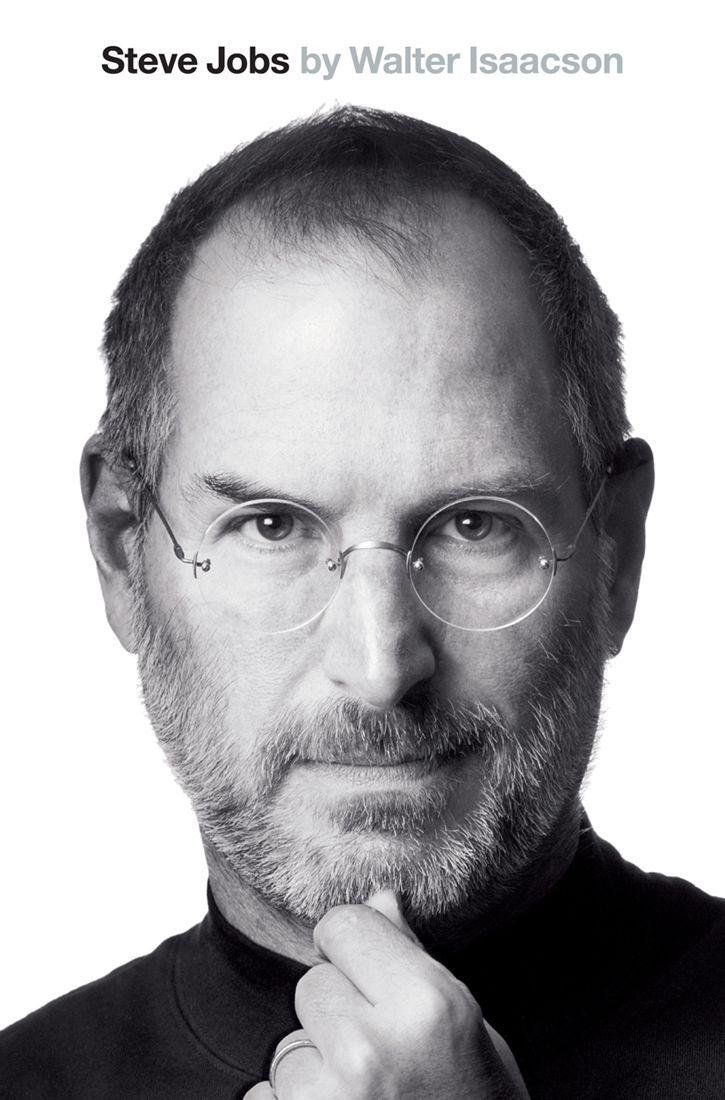
I asked Jobs why he wanted me to be the one to write his biography. “I think you’re good at getting people to talk,” he replied. That was an unexpected answer. I knew that I would have to interview scores of people he had fired, abused, abandoned, or otherwise infuriated, and I feared he would not be comfortable with my getting them to talk. And indeed he did turn out to be skittish when word trickled back to him of people that I was interviewing. But after a couple of months, he began encouraging people to talk to me, even foes and former girlfriends. Nor did he try to put anything off-limits. “I’ve done a lot of things I’m not proud of, such as getting my girlfriend pregnant when I was twenty-three and the way I handled that,” he said. “But I don’t have any skeletons in my closet that can’t be allowed out.” He didn’t seek any control over what I wrote, or even ask to read it in advance. His only involvement came when my publisher was choosing the cover art. When he saw an early version of a proposed cover treatment, he disliked it so much that he asked to have input in designing a new version. I was both amused and willing, so I readily assented.
I ended up having more than forty interviews and conversations with him. Some were formal ones in his Palo Alto living room, others were done during long walks and drives or by telephone. During my two years of visits, he became increasingly intimate and revealing, though at times I witnessed what his veteran colleagues at Apple used to call his “reality distortion field.” Sometimes it was the inadvertent misfiring of memory cells that happens to us all; at other times he was spinning his own version of reality both to me and to himself. To check and flesh out his story, I interviewed more than a hundred friends, relatives, competitors, adversaries, and colleagues.
His wife also did not request any restrictions or control, nor did she ask to see in advance what I would publish. In fact she strongly encouraged me to be honest about his failings as well as his strengths. She is one of the smartest and most grounded people I have ever met. “There are parts of his life and personality that are extremely messy, and that’s the truth,” she told me early on. “You shouldn’t whitewash it. He’s good at spin, but he also has a remarkable story, and I’d like to see that it’s all told truthfully.”
I leave it to the reader to assess whether I have succeeded in this mission. I’m sure there are players in this drama who will remember some of the events differently or think that I sometimes got trapped in Jobs’s distortion field. As happened when I wrote a book about Henry Kissinger, which in some ways was good preparation for this project, I found that people had such strong positive and negative emotions about Jobs that the Rashomon effect was often evident. But I’ve done the best I can to balance conflicting accounts fairly and be transparent about the sources I used.
This is a book about the roller-coaster life and searingly intense personality of a creative entrepreneur whose passion for perfection and ferocious drive revolutionized six industries: personal computers, animated movies, music, phones, tablet computing, and digital publishing. You might even add a seventh, retail stores, which Jobs did not quite revolutionize but did reimagine. In addition, he opened the way for a new market for digital content based on apps rather than just websites. Along the way he produced not only transforming products but also, on his second try, a lasting company, endowed with his DNA, that is filled with creative designers and daredevil engineers who could carry forward his vision. In August 2011, right before he stepped down as CEO, the enterprise he started in his parents’ garage became the world’s most valuable company.
This is also, I hope, a book about innovation. At a time when the United States is seeking ways to sustain its innovative edge, and when societies around the world are trying to build creative digital-age economies, Jobs stands as the ultimate icon of inventiveness, imagination, and sustained innovation. He knew that the best way to create value in the twenty-first century was to connect creativity with technology, so he built a company where leaps of the imagination were combined with remarkable feats of engineering. He and his colleagues at Apple were able to think differently: They developed not merely modest product advances based on focus groups, but whole new devices and services that consumers did not yet know they needed.
He was not a model boss or human being, tidily packaged for emulation. Driven by demons, he could drive those around him to fury and despair. But his personality and passions and products were all interrelated, just as Apple’s hardware and software tended to be, as if part of an integrated system. His tale is thus both instructive and cautionary, filled with lessons about innovation, character, leadership, and values.
Shakespeare’s Henry V—the story of a willful and immature prince who becomes a passionate but sensitive, callous but sentimental, inspiring but flawed king—begins with the exhortation “O for a Muse of fire, that would ascend / The brightest heaven of invention.” For Steve Jobs, the ascent to the brightest heaven of invention begins with a tale of two sets of parents, and of growing up in a valley that was just learning how to turn silicon into gold.
CHAPTER ONE
CHILDHOOD
Abandoned and Chosen
The Adoption
When Paul Jobs was mustered out of the Coast Guard after World War II, he made a wager with his crewmates. They had arrived in San Francisco, where their ship was decommissioned, and Paul bet that he would find himself a wife within two weeks. He was a taut, tattooed engine mechanic, six feet tall, with a passing resemblance to James Dean. But it wasn’t his looks that got him a date with Clara Hagopian, a sweet-humored daughter of Armenian immigrants. It was the fact that he and his friends had a car, unlike the group she had originally planned to go out with that evening. Ten days later, in March 1946, Paul got engaged to Clara and won his wager. It would turn out to be a happy marriage, one that lasted until death parted them more than forty years later.
Paul Reinhold Jobs had been raised on a dairy farm in Germantown, Wisconsin. Even though his father was an alcoholic and sometimes abusive, Paul ended up with a gentle and calm disposition under his leathery exterior. After dropping out of high school, he wandered through the Midwest picking up work as a mechanic until, at age nineteen, he joined the Coast Guard, even though he didn’t know how to swim. He was deployed on the USS General M. C. Meigs and spent much of the war ferrying troops to Italy for General Patton. His talent as a machinist and fireman earned him commendations, but he occasionally found himself in minor trouble and never rose above the rank of seaman.
Clara was born in New Jersey, where her parents had landed after fleeing the Turks in Armenia, and they moved to the Mission District of San Francisco when she was a child. She had a secret that she rarely mentioned to anyone: She had been married before, but her husband had been killed in the war. So when she met Paul Jobs on that first date, she was primed to start a new life.
Like many who lived through the war, they had experienced enough excitement that, when it was over, they desired simply to settle down, raise a family, and lead a less eventful life. They had little money, so they moved to Wisconsin and lived with Paul’s parents for a few years, then headed for Indiana, where he got a job as a machinist for International Harvester. His passion was tinkering with old cars, and he made money in his spare time buying, restoring, and selling them. Eventually he quit his day job to become a full-time used car salesman.
Clara, however, loved San Francisco, and in 1952 she convinced her husband to move back there. They got an apartment in the Sunset District facing the Pacific, just south of Golden Gate Park, and he took a job working for a finance company as a “repo man,” picking the locks of cars whose owners hadn’t paid their loans and repossessing them. He also bought, repaired, and sold some of the cars, making a decent enough living in the process.
There was, however, something missing in their lives. They wanted children, but Clara had suffered an ectopic pregnancy, in which the fertilized egg was implanted in a fallopian tube rather than the uterus, and she had been unable to have any. So by 1955, after nine years of marriage, they were looking to adopt a child.
Like Paul Jobs, Joanne Schieble was from a rural Wisconsin family of German heritage. Her father, Arthur Schieble, had immigrated to the outskirts of Green Bay, where he and his wife owned a mink farm and dabbled successfully in various other businesses, including real estate and photoengraving. He was very strict, especially regarding his daughter’s relationships, and he had strongly disapproved of her first love, an artist who was not a Catholic. Thus it was no surprise that he threatened to cut Joanne off completely when, as a graduate student at the University of Wisconsin, she fell in love with Abdulfattah “John” Jandali, a Muslim teaching assistant from Syria.
Jandali was the youngest of nine children in a prominent Syrian family. His father owned oil refineries and multiple other businesses, with large holdings in Damascus and Homs, and at one point pretty much controlled the price of wheat in the region. His mother, he later said, was a “traditional Muslim woman” who was a “conservative, obedient housewife.” Like the Schieble family, the Jandalis put a premium on education. Abdulfattah was sent to a Jesuit boarding school, even though he was Muslim, and he got an undergraduate degree at the American University in Beirut before entering the University of Wisconsin to pursue a doctoral degree in political science.
In the summer of 1954, Joanne went with Abdulfattah to Syria. They spent two months in Homs, where she learned from his family to cook Syrian dishes. When they returned to Wisconsin she discovered that she was pregnant. They were both twenty-three, but they decided not to get married. Her father was dying at the time, and he had threatened to disown her if she wed Abdulfattah. Nor was abortion an easy option in a small Catholic community. So in early 1955, Joanne traveled to San Francisco, where she was taken into the care of a kindly doctor who sheltered unwed mothers, delivered their babies, and quietly arranged closed adoptions.
Joanne had one requirement: Her child must be adopted by college graduates. So the doctor arranged for the baby to be placed with a lawyer and his wife. But when a boy was born—on February 24, 1955—the designated couple decided that they wanted a girl and backed out. Thus it was that the boy became the son not of a lawyer but of a high school dropout with a passion for mechanics and his salt-of-the-earth wife who was working as a bookkeeper. Paul and Clara named their new baby Steven Paul Jobs.
When Joanne found out that her baby had been placed with a couple who had not even graduated from high school, she refused to sign the adoption papers. The standoff lasted weeks, even after the baby had settled into the Jobs household. Eventually Joanne relented, with the stipulation that the couple promise—indeed sign a pledge—to fund a savings account to pay for the boy’s college education.
There was another reason that Joanne was balky about signing the adoption papers. Her father was about to die, and she planned to marry Jandali soon after. She held out hope, she would later tell family members, sometimes tearing up at the memory, that once they were married, she could get their baby boy back.
Arthur Schieble died in August 1955, after the adoption was finalized. Just after Christmas that year, Joanne and Abdulfattah were married in St. Philip the Apostle Catholic Church in Green Bay. He got his PhD in international politics the next year, and then they had another child, a girl named Mona. After she and Jandali divorced in 1962, Joanne embarked on a dreamy and peripatetic life that her daughter, who grew up to become the acclaimed novelist Mona Simpson, would capture in her book Anywhere but Here. Because Steve’s adoption had been closed, it would be twenty years before they would all find each other.
Steve Jobs knew from an early age that he was adopted. “My parents were very open with me about that,” he recalled. He had a vivid memory of sitting on the lawn of his house, when he was six or seven years old, telling the girl who lived across the street. “So does that mean your real parents didn’t want you?” the girl asked. “Lightning bolts went off in my head,” according to Jobs. “I remember running into the house, crying. And my parents said, ‘No, you have to understand.’ They were very serious and looked me straight in the eye. They said, ‘We specifically picked you out.’ Both of my parents said that and repeated it slowly for me. And they put an emphasis on every word in that sentence.”
Abandoned. Chosen. Special. Those concepts became part of who Jobs was and how he regarded himself. His closest friends think that the knowledge that he was given up at birth left some scars. “I think his desire for complete control of whatever he makes derives directly from his personality and the fact that he was abandoned at birth,” said one longtime colleague, Del Yocam. “He wants to control his environment, and he sees the product as an extension of himself.” Greg Calhoun, who became close to Jobs right after college, saw another effect. “Steve talked to me a lot about being abandoned and the pain that caused,” he said. “It made him independent. He followed the beat of a different drummer, and that came from being in a different world than he was born into.”
Later in life, when he was the same age his biological father had been when he abandoned him, Jobs would father and abandon a child of his own. (He eventually took responsibility for her.) Chrisann Brennan, the mother of that child, said that being put up for adoption left Jobs “full of broken glass,” and it helps to explain some of his behavior. “He who is abandoned is an abandoner,” she said. Andy Hertzfeld, who worked with Jobs at Apple in the early 1980s, is among the few who remained close to both Brennan and Jobs. “The key question about Steve is why he can’t control himself at times from being so reflexively cruel and harmful to some people,” he said. “That goes back to being abandoned at birth. The real underlying problem was the theme of abandonment in Steve’s life.”
Jobs dismissed this. “There’s some notion that because I was abandoned, I worked very hard so I could do well and make my parents wish they had me back, or some such nonsense, but that’s ridiculous,” he insisted. “Knowing I was adopted may have made me feel more independent, but I have never felt abandoned. I’ve always felt special. My parents made me feel special.” He would later bristle whenever anyone referred to Paul and Clara Jobs as his “adoptive” parents or implied that they were not his “real” parents. “They were my parents 1,000%,” he said. When speaking about his biological parents, on the other hand, he was curt: “They were my sperm and egg bank. That’s not harsh, it’s just the way it was, a sperm bank thing, nothing more.”
Silicon Valley
The childhood that Paul and Clara Jobs created for their new son was, in many ways, a stereotype of the late 1950s. When Steve was two they adopted a girl they named Patty, and three years later they moved to a tract house in the suburbs. The finance company where Paul worked as a repo man, CIT, had transferred him down to its Palo Alto office, but he could not afford to live there, so they landed in a subdivision in Mountain View, a less expensive town just to the south.
There Paul tried to pass along his love of mechanics and cars. “Steve, this is your workbench now,” he said as he marked off a section of the table in their garage. Jobs remembered being impressed by his father’s focus on craftsmanship. “I thought my dad’s sense of design was pretty good,” he said, “because he knew how to build anything. If we needed a cabinet, he would build it. When he built our fence, he gave me a hammer so I could work with him.”
Fifty years later the fence still surrounds the back and side yards of the house in Mountain View. As Jobs showed it off to me, he caressed the stockade panels and recalled a lesson that his father implanted deeply in him. It was important, his father said, to craft the backs of cabinets and fences properly, even though they were hidden. “He loved doing things right. He even cared about the look of the parts you couldn’t see.”
His father continued to refurbish and resell used cars, and he festooned the garage with pictures of his favorites. He would point out the detailing of the design to his son: the lines, the vents, the chrome, the trim of the seats. After work each day, he would change into his dungarees and retreat to the garage, often with Steve tagging along. “I figured I could get him nailed down with a little mechanical ability, but he really wasn’t interested in getting his hands dirty,” Paul later recalled. “He never really cared too much about mechanical things.”
“I wasn’t that into fixing cars,” Jobs admitted. “But I was eager to hang out with my dad.” Even as he was growing more aware that he had been adopted, he was becoming more attached to his father. One day when he was about eight, he discovered a photograph of his father from his time in the Coast Guard. “He’s in the engine room, and he’s got his shirt off and looks like James Dean. It was one of those Oh wow moments for a kid. Wow, oooh, my parents were actually once very young and really good-looking.”
Through cars, his father gave Steve his first exposure to electronics. “My dad did not have a deep understanding of electronics, but he’d encountered it a lot in automobiles and other things he would fix. He showed me the rudiments of electronics, and I got very interested in that.” Even more interesting were the trips to scavenge for parts. “Every weekend, there’d be a junkyard trip. We’d be looking for a generator, a carburetor, all sorts of components.” He remembered watching his father negotiate at the counter. “He was a good bargainer, because he knew better than the guys at the counter what the parts should cost.” This helped fulfill the pledge his parents made when he was adopted. “My college fund came from my dad paying $50 for a Ford Falcon or some other beat-up car that didn’t run, working on it for a few weeks, and selling it for $250—and not telling the IRS.”
The Jobses’ house and the others in their neighborhood were built by the real estate developer Joseph Eichler, whose company spawned more than eleven thousand homes in various California subdivisions between 1950 and 1974. Inspired by Frank Lloyd Wright’s vision of simple modern homes for the American “everyman,” Eichler built inexpensive houses that featured floor-to-ceiling glass walls, open floor plans, exposed post-and-beam construction, concrete slab floors, and lots of sliding glass doors. “Eichler did a great thing,” Jobs said on one of our walks around the neighborhood. “His houses were smart and cheap and good. They brought clean design and simple taste to lower-income people. They had awesome little features, like radiant heating in the floors. You put carpet on them, and we had nice toasty floors when we were kids.”
Jobs said that his appreciation for Eichler homes instilled in him a passion for making nicely designed products for the mass market. “I love it when you can bring really great design and simple capability to something that doesn’t cost much,” he said as he pointed out the clean elegance of the houses. “It was the original vision for Apple. That’s what we tried to do with the first Mac. That’s what we did with the iPod.”
Across the street from the Jobs family lived a man who had become successful as a real estate agent. “He wasn’t that bright,” Jobs recalled, “but he seemed to be making a fortune. So my dad thought, ‘I can do that.’ He worked so hard, I remember. He took these night classes, passed the license test, and got into real estate. Then the bottom fell out of the market.” As a result, the family found itself financially strapped for a year or so while Steve was in elementary school. His mother took a job as a bookkeeper for Varian Associates, a company that made scientific instruments, and they took out a second mortgage. One day his fourth-grade teacher asked him, “What is it you don’t understand about the universe?” Jobs replied, “I don’t understand why all of a sudden my dad is so broke.” He was proud that his father never adopted a servile attitude or slick style that may have made him a better salesman. “You had to suck up to people to sell real estate, and he wasn’t good at that and it wasn’t in his nature. I admired him for that.” Paul Jobs went back to being a mechanic.
His father was calm and gentle, traits that his son later praised more than emulated. He was also resolute. Jobs described one example:
Nearby was an engineer who was working at Westinghouse. He was a single guy, beatnik type. He had a girlfriend. She would babysit me sometimes. Both my parents worked, so I would come here right after school for a couple of hours. He would get drunk and hit her a couple of times. She came over one night, scared out of her wits, and he came over drunk, and my dad stood him down—saying “She’s here, but you’re not coming in.” He stood right there. We like to think everything was idyllic in the 1950s, but this guy was one of those engineers who had messed-up lives.
What made the neighborhood different from the thousands of other spindly-tree subdivisions across America was that even the ne’er-do-wells tended to be engineers. “When we moved here, there were apricot and plum orchards on all of these corners,” Jobs recalled. “But it was beginning to boom because of military investment.” He soaked up the history of the valley and developed a yearning to play his own role. Edwin Land of Polaroid later told him about being asked by Eisenhower to help build the U-2 spy plane cameras to see how real the Soviet threat was. The film was dropped in canisters and returned to the NASA Ames Research Center in Sunnyvale, not far from where Jobs lived. “The first computer terminal I ever saw was when my dad brought me to the Ames Center,” he said. “I fell totally in love with it.”