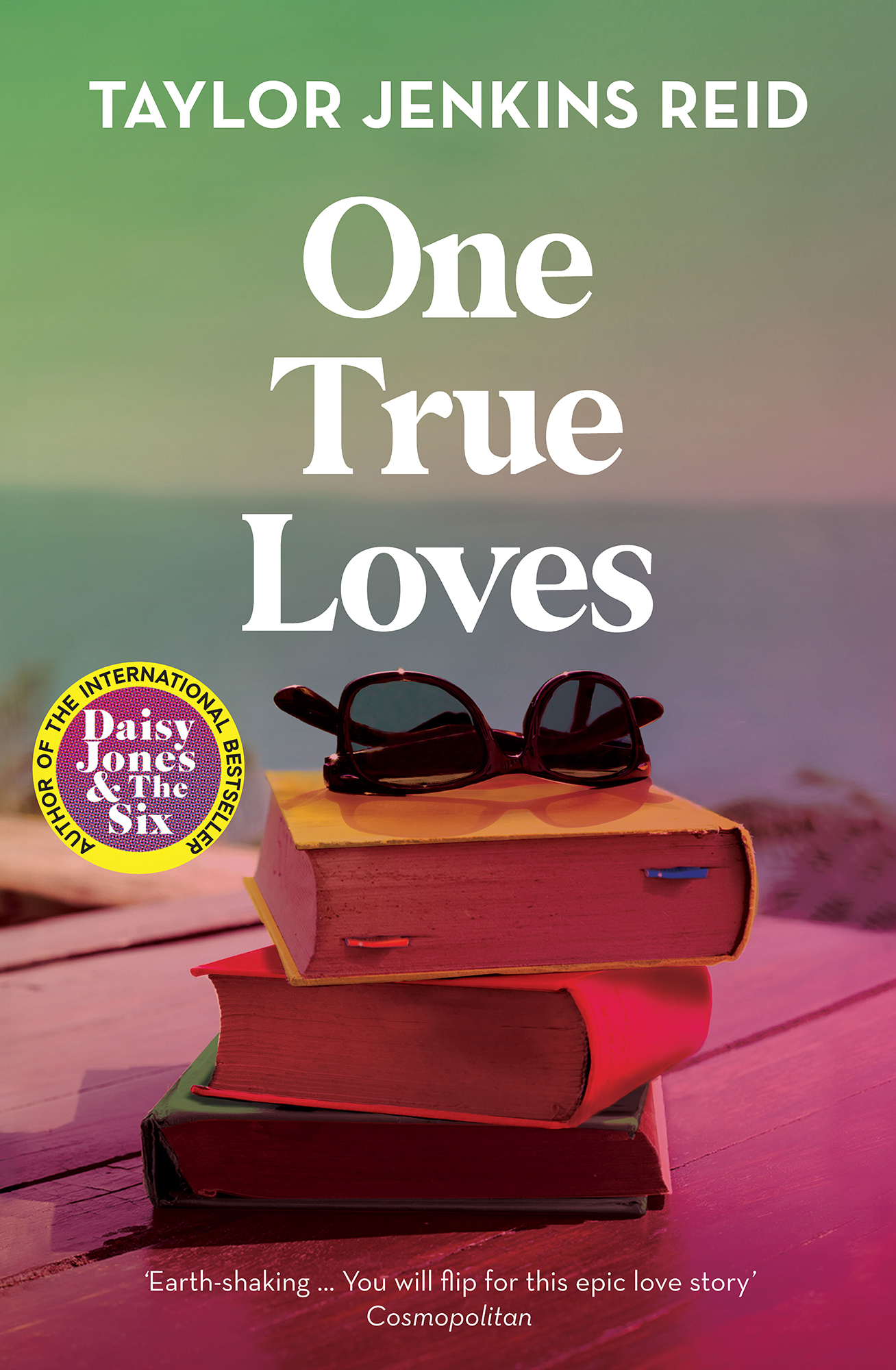
One True Loves
About this book
Emma Blair married her high-school love, Jesse, and built a life of travel far from the family bookstore. When his helicopter vanishes, certainty gives way to years of grief and a return home she never planned.
Sam helps Emma become someone who can want a future again. Their engagement feels like a second life until Jesse is found alive, bringing the promises of two different selves into the same present.
One True Loves is not arranged around a simple contest between men. Its real decision concerns whether love must remain unchanged to have been true.
Read a sample
5,021 words
Plain text
From the opening
I am finishing up dinner with my family and my fiancé when my husband calls.
It is my father’s sixty-fourth birthday. He is wearing his favorite sweater, a hunter green cashmere one that my older sister, Marie, and I picked out for him two years ago. I think that’s why he loves it so much. Well, also because it’s cashmere. I’m not kidding myself here.
My mother is sitting next to him in a gauzy white blouse and khakis, trying to hold in a smile. She knows that a tiny cake with a candle and a song are coming any minute. She has always been childlike in her zeal for surprises.
My parents have been married for thirty-five years. They have raised two children and run a successful bookstore together. They have two adorable grandchildren. One of their daughters is taking over the family business. They have a lot to be proud of. This is a happy birthday for my father.
Marie is sitting on the other side of my mother and it is times like these, when the two of them are right next to each other, facing the same direction, that I realize just how much they look alike. Chocolate brown hair, green eyes, petite frames.
I’m the one that got stuck with the big butt.
Luckily, I’ve come to appreciate it. There are, of course, many songs dedicated to the glory of a backside, and if my thirties have taught me anything so far, it’s that I’m ready to try to be myself with no apologies.
My name is Emma Blair and I’ve got a booty.
I am thirty-one, five foot six, with a blond, grown-out pixie cut. My hazel eyes are upstaged by a constellation of freckles on the top of my right cheekbone. My father often jokes he can make out the Little Dipper.
Last week, my fiancé, Sam, gave me the ring he has spent over two months shopping for. It’s a diamond solitaire on a rose gold band. While it is not my first engagement ring, it is the first time I’ve ever worn a diamond. When I look at myself, it’s all I can see.
“Oh no,” Dad says, spotting a trio of servers headed our way with a lit slice of cake. “You guys didn’t…”
This is not false modesty. My father blushes when people sing to him.
My mother looks behind her to see what he sees. “Oh, Colin,” she says. “Lighten up. It’s your birthday…”
The servers make an abrupt left and head to another table. Apparently, my father is not the only person born today. My mother sees what has happened and tries to recover.
“…Which is why I did not tell them to bring you a cake,” she says.
“Give it up,” my dad says. “You’ve blown your cover.”
The servers finish at that table and a manager comes out with another slice of cake. Now they are all headed right for us.
“If you want to hide under the table,” Sam says, “I’ll tell them you’re not here.”
Sam is handsome in a friendly way—which I think might just be the best way to be handsome—with warm brown eyes that seem to look at everything with tenderness. And he’s funny. Truly funny. After Sam and I started dating, I noticed my laugh lines were getting deeper. This is most likely because I am growing older, but I can’t shake the feeling that it’s because I am laughing more than I ever have. What else could you want in a person other than kindness and humor? I’m not sure anything else really matters to me.
The cake arrives, we all sing loudly, and my father turns beet red. Then the servers turn away and we are left with an oversized piece of chocolate cake with vanilla ice cream.
The waitstaff left five spoons but my father immediately grabs them all. “Not sure why they left so many spoons. I only need one,” he says.
My mother goes to grab one from him.
“Not so fast, Ashley,” he says. “I endured the humiliation. I should get to eat this cake alone.”
“If that’s how we are playing it…” Marie says. “For my birthday next month, please put me through this same rigmarole. Well worth it.”
Marie drinks a sip of her Diet Coke and then checks her phone for the time. Her husband, Mike, is at home with my nieces, Sophie and Ava. Marie rarely leaves them for very long.
“I should get going,” Marie says. “Sorry to leave, but…”
She doesn’t have to explain. My mom and dad both stand up to give her a hug good-bye.
Once she’s gone and my father has finally agreed to let us all eat the cake, my mom says, “It sounds silly but I miss that. I miss leaving someplace early because I was just so excited to get back to my little girls.”
I know what’s coming next.
I’m thirty-one and about to be married. I know exactly what is coming next.
“Have you guys given any thought to when you might start a family?”
I have to stop myself from rolling my eyes. “Mom—”
Sam is already laughing. He has that luxury. She’s only his mother in an honorary capacity.
“I’m just bringing it up because they are doing more and more studies about the dangers of waiting too long to have a child,” my mom adds.
Continue reading the sampleClose the sample
There are always studies to prove I should hurry and studies to prove that I shouldn’t and I’ve decided that I will have a baby when I’m goddamn good and ready, no matter what my mother reads on the Huffington Post.
Luckily, the look on my face has caused her to backpedal. “Never mind, never mind,” she says, waving her hand in the air. “I sound like my own mother. Forget it. I’ll stop doing that.”
My dad laughs and puts his arm around her. “All right,” he says. “I’m in a sugar coma and I’m sure Emma and Sam have better things to do than stay out with us. Let’s get the bill.”
Fifteen minutes later, the four of us are standing outside the restaurant, headed to our cars.
I’m wearing a navy blue sweater dress with long sleeves and thick tights. It is just enough to insulate me from the cool evening air. This is one of the last nights that I’ll go anywhere without a wool coat.
It’s the very end of October. Autumn has already settled in and overtaken New England. The leaves are yellow and red, on their way to brown and crunchy. Sam has been over to my parents’ house once already to rake the yard clean. Come December, when the temperature free-falls, he and Mike will shovel their snow.
But for now the air still has a bit of warmth to it, so I savor it as best I can. When I lived in Los Angeles, I never savored warm nights. You don’t savor things that last forever. It is one of the reasons I moved back to Massachusetts.
As I step toward the car, I hear the faint sound of a ringing cell phone. I trace it back to my purse just as I hear my father rope Sam into giving him a few guitar lessons. My father has an annoying habit of wanting to learn every instrument that Sam plays, mistaking the fact that Sam is a music teacher for Sam being his music teacher.
I dig through my purse looking for my phone, grabbing the only thing lit up and flashing. I don’t recognize the number. The area code 808 doesn’t ring a bell but it does pique my interest.
Lately, no one outside of 978, 857, 508, or 617—the various area codes of Boston and its suburbs—has reason to call me.
And it is 978 specifically that has always signified home no matter what area code I was currently inhabiting. I may have spent a year in Sydney (61 2) and months backpacking from Lisbon (351 21) to Naples (39 081). I may have honeymooned in Mumbai (91 22) and lived, blissfully, for years, in Santa Monica, California (310). But when I needed to come “home,” “home” meant 978. And it is here I have stayed ever since.
The answer pops into my head.
808 is Hawaii.
“Hello?” I say as I answer the phone.
Sam has turned to look at me, and soon, my parents do, too.
“Emma?”
The voice I hear through the phone is one that I would recognize anywhere, anytime—a voice that spoke to me day in and day out for years and years. One I thought I’d never hear again, one I’m not ready to even believe I’m hearing now.
The man I loved since I was seventeen years old. The man who left me a widow when his helicopter went down somewhere over the Pacific and he was gone without a trace.
Jesse.
“Emma,” Jesse says. “It’s me. I’m alive. Can you hear me? I’m coming home.”
I think that perhaps everyone has a moment that splits their life in two. When you look back on your own timeline, there’s a sharp spike somewhere along the way, some event that changed you, changed your life, more than the others.
A moment that creates a “before” and an “after.”
Maybe it’s when you meet your love or you figure out your life’s passion or you have your first child. Maybe it’s something wonderful. Maybe it’s something tragic.
But when it happens, it tints your memories, shifts your perspective on your own life, and it suddenly seems as if everything you’ve been through falls under the label of “pre” or “post.”
I used to think that my moment was when Jesse died.
Everything about our love story seemed to have been leading up to that. And everything since has been in response.
But now I know that Jesse never died.
And I’m certain that this is my moment.
Everything that happened before today feels different now, and I have no idea what happens after this.
BEFORE
Emma and Jesse
Or, how to fall in love and fall to pieces
I have never been an early riser. But my hatred for the bright light of morning was most acute on Saturdays during high school at ten after eight a.m.
Like clockwork, my father would knock on my door and tell me, “The bus is leaving in thirty minutes,” even though the “bus” was his Volvo and it wasn’t headed to school. It was headed to our family store.
Blair Books was started by my father’s uncle in the sixties, right in the very same location where it still stood—on the north side of Great Road in Acton, Massachusetts.
And somehow that meant that the minute I was old enough to legally hold a job, I had to ring up people’s purchases some weekdays after school and every Saturday.
I was assigned Saturdays because Marie wanted Sundays. She had saved up her paychecks and gotten a beat-up navy blue Jeep Cherokee last summer.
The only time I’d been inside Marie’s Jeep was the night she got it, when, high on life, she invited me to Kimball’s Farm to get ice cream. We picked up a pint of chocolate for Mom and Dad and we let it melt as we sat on the hood of her car and ate our own sundaes, comfortable in the warm summer air.
We complained about the bookstore and the fact that Mom always put Parmesan cheese on potatoes. Marie confessed that she had smoked pot. I promised not to tell Mom and Dad. Then she asked me if I’d ever been kissed and I turned and looked away from her, afraid the answer would show on my face.
“It’s okay,” she said. “Lots of people don’t have their first kiss until high school.” She was wearing army green shorts and a navy blue button-down, her two thin gold necklaces cascading down her collarbone, down into the crevice of her bra. She never buttoned her shirts up all the way. They were always a button lower than you’d expect.
“Yeah,” I said. “I know.” But I noticed that she didn’t say, “I didn’t have my first kiss until high school.” Which, of course, was all I was really looking for. I wasn’t worried that I wasn’t like anyone else. I was worried that I wasn’t like her.
“Things will get better now that you’re going to be a freshman,” Marie said as she threw away the rest of her mint chocolate chip. “Trust me.”
In that moment, that night, I would have trusted anything she told me.
But that evening was the exception in my relationship with my sister, a rare moment of kinship between two people who merely coexisted.
By the time my freshman year started and I was in the same building as her every day, we had developed a pattern where we passed each other in the hallways of home at night and school during the day like enemies during a cease-fire.
So imagine my surprise when I woke up at eight ten one Saturday morning, in the spring of ninth grade, to find out that I did not have to go to my shift at Blair Books.
“Marie is taking you to get new jeans,” my mom said.
“Today?” I asked her, sitting up, rubbing my eyes, wondering if this meant I could sleep a little more.
“Yeah, at the mall,” my mom added. “Whatever pair you want, my treat. I put fifty bucks on the counter. But if you spend more than that, you’re on your own.”
I needed new jeans because I’d worn holes into all of my old ones. I was supposed to get a new pair every Christmas but I was so particular about what I wanted, so neurotic about what I thought they should look like, that my mother had given up. Twice now we had gone to the mall and left after an hour, my mother trying her best to hide her irritation.
It was a new experience for me. My mother always wanted to be around me, craving my company my entire childhood. But I had finally become so annoying about something that she was willing to pass me off to someone else. And on a Saturday, no less.
“Who’s going to work the register?” I said. The minute it came out of my mouth, I regretted it. I was suddenly nervous that I’d poked a hole in a good thing. I should have simply said, “Okay,” and backed away slowly, so as to not startle her.
“The new boy we hired, Sam,” my mom said. “It’s fine. He needs the hours.”
Sam was a sophomore at school who walked into the store one day and said, “Can I fill out an application?” even though we weren’t technically hiring and most teenagers wanted to work at the CD store down the street. My parents hired him on the spot.
He was pretty cute—tall and lanky with olive skin and dark brown eyes—and was always in a good mood, but I found myself incapable of liking him once Marie deemed him “adorable.” I couldn’t bring myself to like anything she liked.
Admittedly, this type of thinking was starting to limit my friend pool considerably and becoming unsustainable.
Marie liked everyone and everyone liked Marie.
She was the Golden Child, the one destined to be our parents’ favorite. My friend Olive used to call her “the Booksellers’ Daughter” behind her back because she even seemed like the sort of girl whose parents would own a bookstore, as if there was a very specific stereotype and Marie was tagging off each attribute like a badge of honor.
She read adult books and wrote poetry and had crushes on fictional characters instead of movie stars and she made Olive and I want to barf.
When Marie was my age, she took a creative writing elective and decided that she wanted to “become a writer.” The quotation marks are necessary because the only thing she ever wrote was a nine-page murder mystery where the killer turned out to be the protagonist’s little sister, Emily. I read it and even I could tell it was complete garbage, but she submitted it to the school paper and they loved it so much they ran it in installments over the course of nine weeks in the spring semester.
The fact that she managed to do all of that while still being one of the most popular girls in school made it that much worse. It just goes to show that if you’re pretty enough, cool comes to you.
I, meanwhile, had covertly read the CliffsNotes in the library for almost every book assigned to us in English 1. I had a pile of novels in my room that my parents had given me as gifts and I had refused to even crack the spines.
I liked music videos, NBC’s Thursday Must-See TV lineup, and every single woman who performed at Lilith Fair. When I was bored, I would go through my mom’s old issues of Travel + Leisure, tearing out pictures and taping them to my wall. The space above my bed became a kaleidoscope of magazine covers of Keanu Reeves, liner notes from Tori Amos albums, and centerfolds of the Italian Riviera and the French countryside.
And no one, I repeat no one, would have confused me for a popular kid.
My parents joked that the nurse must have given them the wrong child at the hospital and I always laughed it off, but I had, more than once, looked at pictures of my parents as children and then stared at myself in the mirror, counting the similarities, reminding myself I belonged to them.
“Okay, great,” I told my mom, more excited about not having to go to work than spending time with my sister. “When are we leaving?”
“I don’t know,” my mom said. “Talk to Marie. I’m off to the store. I’ll see you for dinner. I love you, honey. Have a good day.”
When she shut my door, I lay back down on the bed with vigor, ready to relish every single extra minute of sleep.
Sometime after eleven, Marie barged into my room and said, “C’mon, we’re leaving.”
We went to three stores and I tried on twelve pairs of jeans. Some were too baggy, some too tight, some came up too high on my waist.
I tried on the twelfth pair and came out of the dressing room to see Marie staring at me, bored senseless.
“They look fine; just get them,” she said. She was wearing head-to-toe Abercrombie & Fitch. It was the turn of the millennium. All of New England was wearing head-to-toe Abercrombie & Fitch.
“They look weird in the butt,” I said, staying perfectly still.
Marie stared at me, as if she expected something.
“Are you gonna turn around so I can see if they are weird in the butt, or what?” she finally said.
I turned around.
“They make you look like you’re wearing a diaper,” she told me.
“That’s what I just said.”
Marie rolled her eyes. “Hold on.” She circled her finger in the air, indicating that I should go back into the dressing room. And so I did.
I had just pulled the last pair of jeans off when she threw a pair of faded straight-leg ones over the top of the door.
“Try these,” she said. “Joelle wears them and she has a big butt like yours.”
“Thanks a lot,” I said, grabbing the jeans from the door.
“I’m just trying to help you,” she said, and then I could see her feet walk away, as if the conversation was over simply because she wasn’t interested in it anymore.
I unzipped the fly and stepped in. I had to shimmy them over my hips and suck in the tiniest bit to get them buttoned. I stood tall and looked at myself in the mirror, posing this way and that, turning my head to check out what I looked like from behind.
My butt was growing shapelier by the day and my boobs seemed to have stagnated. I had read enough of my mother’s Glamour magazines to know that this was referred to as “pear shaped.” My stomach was flat but my hips were growing. Olive was starting to gain weight in her boobs and her stomach and I wondered if I wouldn’t prefer that sort of figure. Apple shaped.
But, if I was being honest with myself, what I really wanted was all that my mother had passed on to Marie. Medium butt, medium boobs, brown hair, green eyes, and thick lashes.
Instead, I got my father’s coloring—hair neither fully blond nor fully brunette, eyes somewhere in between brown and green—with a body type all my own. Once, I asked my mother where I got my short, sturdy legs from and she said, “I don’t know, actually,” as if this wasn’t the worst thing she’d ever said to me.
There was only one thing about my appearance that I truly loved. My freckles, that cluster of tiny dark spots under my right eye. My mom used to connect the dots with her finger as she put me to bed as a child.
I loved my freckles and hated my butt.
So as I stood there in the dressing room, all I wanted was a pair of jeans that made my butt look smaller. Which these seemed to do.
I stepped out of the dressing room to ask Marie’s opinion. Unfortunately, she was nowhere to be found.
I stepped back into the dressing room, realizing I had no one to make this decision with but me.
I looked at myself one more time in the mirror.
Maybe I liked them?
I looked at the tag. Thirty-five bucks.
With tax, I’d still have money left over to get teriyaki chicken from the food court.
I changed out of them, headed to the register, and handed over my parents’ money. I was rewarded with a bag containing one pair of jeans that I did not hate.
Marie was still missing.
I checked around the store. I walked down to the Body Shop to see if she was there buying lip balm or shower gel. Thirty minutes later, I found her buying earrings at Claire’s.
“I’ve been looking all over for you,” I said.
“Sorry, I was looking at jewelry.” Marie took her change, delicately put it back into her wallet, and then grabbed the tiny white plastic bag that, no doubt, contained fake gold sure to stain her ears a greenish gray.
I followed Marie as she walked confidently out of the store and toward the entrance where we’d parked.
“Wait,” I said, stopping in place. “I wanted to go to the food court.”
Marie turned toward me. She looked at her watch. “Sorry, no can do. We’re gonna be late.”
“For what?”
“The swim meet,” she said.
“What swim meet?” I asked her. “No one said anything about a swim meet.”
Marie didn’t answer me because she didn’t have to. I was already following her back to the car, already willing to go where she told me to go, willing to do what she told me to do.
It wasn’t until we got in the car that she deigned to fill me in. “Graham is the captain of the swim team this year,” she said.
Ah, yes.
Graham Hughes. Captain of every team he’s on. The front-runner for “best smile” in the yearbook. Exactly the sort of person Saint Marie of Acton would be dating.
“Great,” I said. It seemed clear that my future entailed not just sitting and watching the fifty-meter freestyle, but also waiting in Marie’s car afterward while she and Graham made out in his.
“Can we at least hit a drive-through on the way there?” I asked, already defeated.
“Yeah, fine,” she said.
And then I mustered up as much confidence as I possibly could and said, “You’re paying.”
She turned and laughed at me. “You’re fourteen. You can’t buy your own lunch?”
She had the most amazing ability to make me feel stupid even at my most self-assured.
We stopped at a Burger King and I ate a Whopper Jr. in the front seat of her car, getting ketchup and mustard on my hands and having to wait until we parked to find a napkin.
Marie ditched me the minute we smelled the chlorine in the air. So I sat on the bleachers and did my best to entertain myself.
The indoor pool was full of barely clothed, physically fit boys my age. I wasn’t sure where to look.
When Graham got up on the diving block and the whistle blew, I watched as he dove into the water with the ease of a bird flying through the air. From the minute he entered the water, it was clear he was going to win the race.
I saw Marie, over in the far corner, bouncing up and down, willing him to win, believing in him with all of her might. When Graham claimed his throne, I got up and walked around, past the other side of the bleachers and through the gym, in search of a vending machine.
When I came back—fifty cents poorer, a bag of Doritos richer—I saw Olive sitting toward the front of the crowd with her family.
One day last summer, just before school started, Olive and I were hanging out in her basement when she told me that she thought she might be gay.
She said she wasn’t sure. She just didn’t feel like she was totally straight. She liked boys. But she was starting to think she might like girls.
I was pretty sure I was the only one who knew. And I was also pretty sure that her parents had begun to suspect. But that wasn’t my business. My only job was to be a friend to her.
So I did the things friends do, like sit there and watch music videos for hours, waiting for Natalie Imbruglia’s “Torn” video to come on so that Olive could stare at her. This was not an entirely selfless act since it was my favorite song and I dreamt of chopping off my hair to look just like Natalie Imbruglia’s.
Also not entirely selfless was my willingness to rewatch Titanic every few weeks as Olive tried to figure out if she liked watching the sex scene between Jack and Rose because she was attracted to Leonardo DiCaprio or Kate Winslet.
“Hey!” she said as I entered her sight line that day at the pool.
“Hey,” I said back. Olive was wearing a white camisole under an unbuttoned light blue oxford button-down. Her long jet-black hair hung straight and past her shoulders. With a name like Olive Berman, you might not realize she was half-Jewish, half-Korean, but she was proud of where her mother’s family had come from in South Korea and equally proud of how awesome her bat mitzvah was.
“What are you doing here?” she asked me.
“Marie dragged me and then ditched me.”
“Ah,” Olive said, nodding. “Just like the Booksellers’ Daughter. Is she here to see Graham?” Olive made a face when she said Graham’s name and I appreciated that she also found Graham to be laughable.
“Yeah,” I said. “But… wait, why are you here?”
Olive’s brother swam until he graduated last year. Olive had tried but failed to make the girls’ swim team.
“My cousin Eli swims for Sudbury.”
Olive’s mom turned away from the swim meet and looked at me. “Hi, Emma. Come, have a seat.” When I sat down next to Olive, Mrs. Berman turned her focus back to the pool.
Eli came in third and Mrs. Berman reflexively pumped her hands into frustrated fists and then shook her head. She turned and looked at Olive and me.
“I’m going to go give Eli a conciliatory hug and then, Olive, we can head home,” she said.
I wanted to ask if I could join them on their way home. Olive lived only five minutes from me. My house was more or less between theirs and the highway exit. But I had trouble asking things of people. I felt more comfortable skirting around it.
“I should probably find Marie,” I said. “See if we can head out.”
“We can take you,” Olive said. “Right, Mom?”
“Of course,” Mrs. Berman said as she stood up and squeezed through the crowded bleachers. “Do you want to come say good-bye to Eli? Or should I meet you two at the car?”
“The car,” Olive said. “Tell Eli I said hi, though.”
Olive put her hand right into my Doritos bag and helped herself.
“Okay,” she said once her mom was out of earshot. “Did you see the girl on the other side of the pool, talking to that guy in the red Speedo?”
“Huh?”
“The girl with the ponytail. Talking to somebody on Eli’s team. I honestly think she might be the hottest girl in the world. Like ever. Like, that has ever existed in all of eternity.”
I looked toward the pool, scanning for a girl with a ponytail. I came up empty. “Where is she?” I said.
“Okay, she’s standing by the diving board now,” Olive said as she pointed. “Right there. Next to Jesse Lerner.”
“Who?” I said as I followed Olive’s finger right to the diving board. And I did, in fact, see a pretty girl with a ponytail. But I did not care.
Because I also saw the tall, lean, muscular boy next to her.
His eyes were deep set, his face angular, his lips full. His short, light brown hair, half-matted, half-akimbo, the result of pulling the swimming cap up off his head. I could tell from his swimsuit that he went to our school.