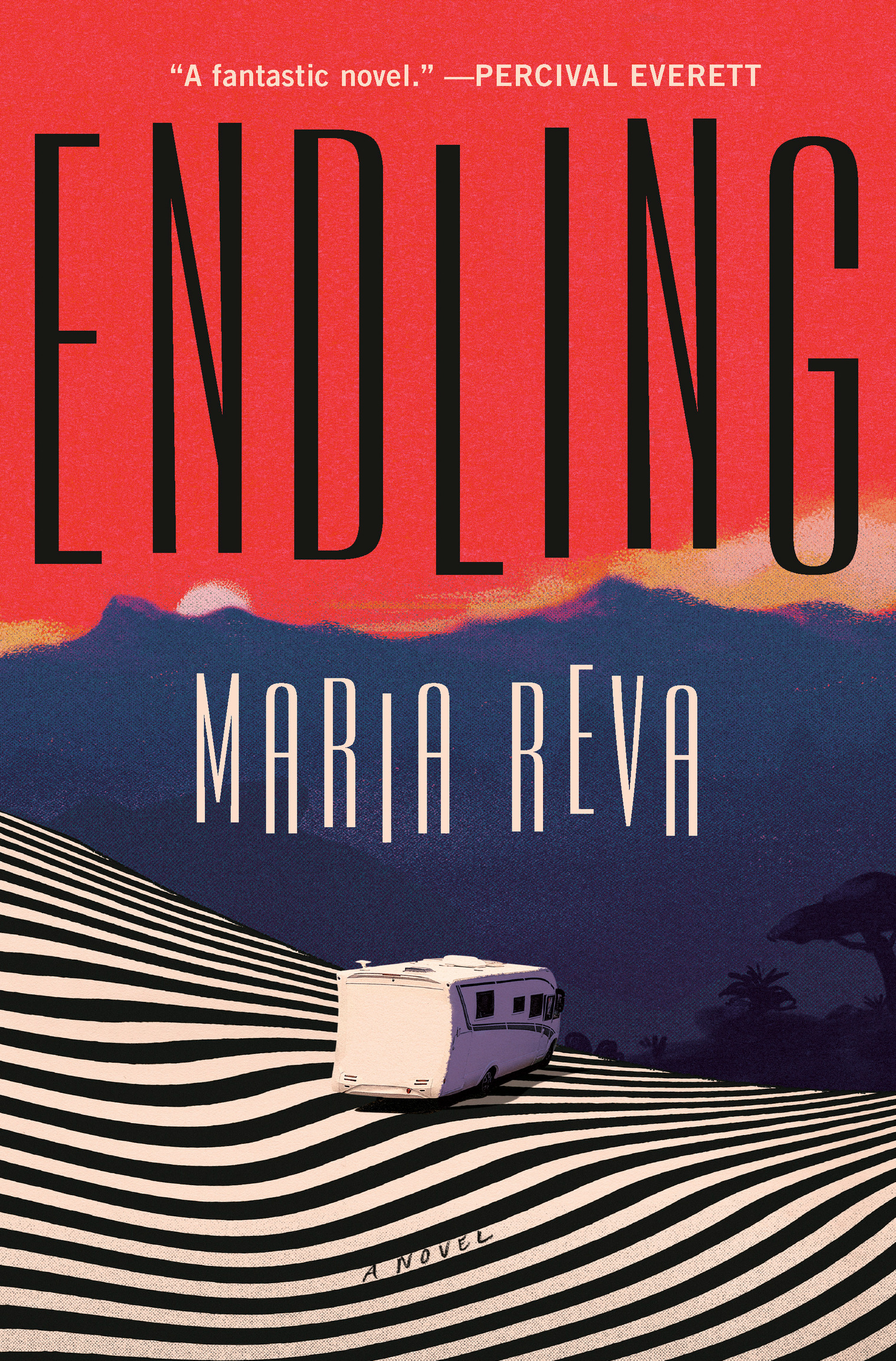
Endling
About this book
Yeva searches forests for endangered snails and funds her work by entertaining Western men who visit Ukraine expecting compliant wives. Nastia and Solomiya pose as a prospective bride and translator while looking for their activist mother.
The women’s schemes collide, producing kidnapped bachelors, a last-of-its-kind snail, and a journey whose comic machinery cannot remain separate from the invasion beginning around them. The novel then allows the author’s own wartime reality to enter and disturb the fiction.
Maria Reva uses metafiction to ask what stories can ethically contain while people represented in them face real danger. Extinction operates at several scales—species, family, country, and the ordinary sense that tomorrow will resemble today.
Endling is a darkly comic Ukrainian novel about conservation, the marriage industry, feminist resistance, and war. Its formal turns are part of its argument about narration under conditions that keep changing faster than a manuscript.
Read a sample
5,006 words
Plain text
From the opening
1
Anastasia, the girl called herself. Achingly young—too young, thought Yeva, to be taking part in the romance tours. Yeva would be getting talked at by some bachelor, and from across the banquet room or yacht deck she’d notice the girl watching her intently, round blank face trained on her like a telescope dish. That face, normally flat and deadened, as if the girl had long ago checked out, twitched, tried to wink, send a signal to Yeva, now that the girl’s handler had loosened her clutches. Help. Maybe the girl was being trafficked, who knew. Once, the girl followed her to the parking lot and watched as Yeva got into her trailer. She was probably longing to get in, too, be whisked away somewhere safe before her “interpreter” caught up with her, quick and officious, and yanked her away by the elbow.
Rumor had it the girl was into God. Of course she was, sad thing. The religious ones made the perfect victims, used to bowing under threat from above. In the past Yeva would have risen to the rescue, but she was done caring. All those earthly worries she used to have—mollusk conservation, romantic prospects, the Russian tanks amassing at the border and how no one believed anything would come of it except Yeva, who according to her family was always crying wolf and blowing everything out of proportion, prattling on about the collapse of this ecosystem or that, ruining all the fun, ruining, on behalf of barely there river turtles, the marriage agency’s balloon release over the Dnipro—blah blah blah. None of it mattered anymore. Even Yeva was tired of Yeva.
How Yeva became involved with the romance tours: a blue-eyed blonde had approached her at a gas station as she was refueling her mobile lab. The woman had seemingly materialized out of nowhere. This was on the dusty outskirts of some backwater town after another expedition (a success: two gastropod survivors found). As Yeva watched the numbers tick up on the diesel pump gauge, her tank taking forever to fill, the woman chatted on about the weather. Then she told Yeva about an “opportunity” to get free headshots.
When Yeva asked what in hell she’d need headshots for, the stranger seemed taken aback, like Yeva had just turned down a free lottery ticket. She recovered quickly. “Pardon me, I hope you don’t mind my saying so,” the woman said in a low secretive voice (which surely was part of her script, too), “I just thought you might be an aspiring model.”
Had Yeva’s family sent the woman, in their latest matchmaking scheme? Had they stooped as low as that, plotting to send portraits of her to any viable suitor?
When the fuel pump clicked off, Yeva tore her credit card from its slot (the payment authorized, she saw with relief) and began her usual maintenance check of the mobile lab. Some idiot had graffitied Free Candy on the expanse of white on the trailer’s side. Yeva swore under her breath, continued the check. Kneeling by the front wheel, she had already forgotten the woman when a chirping voice asked from above, “Nice RV. Are you on holiday?”
Yeva saw the way the high-heeled stranger peered at the piles of clothes strewn over the bench seat of the driver’s cabin, the crumpled-up sleeping bag, the slimy yellowed mouth retainer on the dash. The woman’s face sank with pity over Yeva’s itinerant life.
The woman told her about a party at the hotel in town that night. Did she want to come?
Yeva climbed into the driver’s seat, about to slam the door on the stranger.
“Free entry for the ladies. There’s a thousand-dollar raffle.” The woman emphasized, “USD.”
That Saturday night was the first time Yeva had ever won anything. She’d stayed through the entire party, waiting for the winner to be announced at 2:00 a.m., tipping back free rosé at an empty corner table as more blue-eyed blondes in tight club dresses and stilettos wriggled around her to the thumping music. The hotel: self-consciously second-tier, the faded carpet patterned with crowns and the letters VIP. The wine tasted like acid reflux; back in that golden time, Yeva was still full of hope and cared what alcohol tasted like. There were a few men there, foreigners dressed like they’d just come from a ball game, accompanied by interpreters. Some of them tried to yell words at Yeva over the crackling loudspeakers beside her. Their interpreters gestured, urging Yeva to follow them to a quieter place: Photo booth? Outside? Anywhere but beside these earsplitting speakers? Yeva stayed in her spot, ignoring whatever this was—an afterparty of diplomats? A corporate retreat?—eyes on her phone in case of an alarm from her lab, until at last the hall went silent and a matronly woman in a powder-blue pantsuit stood at a tippy lectern, introduced herself by an ancient-sounding name, Efrosinia, and began rattling off the raffle numbers.
Before the romance tours, Yeva had relied on government and NGO grants, which had dwindled in recent years. Who wants to fund the research on functionally extinct species? People like Yeva are never the stars of environmental summits and galas, prattling on and on about yet another battle lost, yet another species gone down the chute. Donors only want to fund winners.
That evening, holding the raffle money in her hands, for the first time in her life Yeva felt like a winner. Later she suspected that the raffle was rigged in favor of newcomers to pull them into more of these weird parties, but winning felt good at the time. And one thousand USD got her far: a new multi-stage filtration and misting system, specialized full-spectrum lighting with automated dimming, a sanitization chamber for soil (secondhand, but still good), more realistic terrarium landscaping that included live moss.
Continue reading the sampleClose the sample
Soon Yeva started going on dates with the foreigners. The work—though she’d never admit it to the whiny interpreters—was easy. She quickly understood that the marriage agency didn’t expect her to actually marry any of the men it carted in from the West. Sure, a few women really were there to find love—“Needles,” they were unofficially called. But then there was everyone else, the shining golden hay, just there to populate the parties, show up for a date or two, keep the bride-to-bachelor ratio high. Yeva didn’t mind being the agency’s shimmering bait, her headshot plastered all over their website. Let these men come here to look for their Needles in the hay. The hunt must be part of the thrill, she figured, what kept some men coming back tour after tour. Meanwhile, women like Yeva—nicknamed “Brides”—could also return tour after tour and, without bending any rules, make decent money. In fact, the agency endorsed the practice: any gifts ordered by bachelors through the agency—gym membership, cooking class, customizable charm bracelet—could be redeemed by the brides for cash from the agency offices. And most reliably, the hourly interpreter fee had to be split with brides after each date (this, with a great condescending sigh from the interpreters, as if they were being charitable, as if they were doing all the work). Even if the brides spoke English, which Yeva and many others did, the bachelors were not allowed to converse with the brides without these middle-women present. Translation apps on phones were also no-nos. What’s less romantic than a lady and gentleman on a date, eyes glued to their phones? Translation apps drained transnational love of its mystique, Efrosinia and her assistants lamented. Yeva had heard of brides who went further than receiving and redeeming gifts, who outright scammed the men through kickbacks with overpriced restaurants, or through fake medical procedures they said they needed to fund, but in Yeva’s estimation this wasn’t worth the effort or the risk. She did fine just by showing up, date after date, racking up hours like in any other job.
Soon Yeva had refurbished her entire lab. New decontamination bath for foods introduced to the trailer, a backup generator, a solar panel for the summer months, upgraded software for alerting her phone whenever humidity, temperature, light levels rose or fell outside tolerance. She traveled around the country looking for survivors, knowing that when she ran low on funds she could dip into one of the many cities and towns that were part of the romance tours and top up. No more paperwork that ate into fieldwork, no more waiting for measly grants while species slipped through her fingers like sand.
(She should have been more careful, she knew. Should have waited to raise enough funds to establish a captive rearing lab with a dedicated staff, a stationary haven for gastropod populations while she conducted evacuations. She should have endured the slow grind of bureaucracy: applying for grants, collaborating with university labs, playing politics, and tiptoeing around the egos of the older researchers, many of whom still ascribed to an outdated Soviet-era taxonomy that didn’t even recognize some of the most endangered species as distinct. If only there had been time. But she’d had to go rogue, haul the lab with her.)
The greatest challenge for Yeva during her dates with the bachelors: her phone. The constant pinging, the alarms, drove the interpreters crazy and drew side-eyes from the administrators during socials, but Yeva told herself that the interruptions made her look desirable to the men. Like she had a rich social life, countless friends pulling her in all directions, suitors knocking. She wanted to believe this herself. Whenever she had to run out in the middle of a date to adjust humidity levels in the lab or open another air vent, she’d invent an excuse. A work call from some normal job a normal person would have. A cousin in need of relationship advice. A baby—her own! (This last being the nuclear option: a way to end not only that evening’s date but the possibility of future ones.) Never would the bachelors suspect what she was leaving them for: the bottomless needs of 276 snails.
Snails! There’d been a time when she would tell anyone who’d listen how amazing these creatures were.
How the many gastropod species have evolved to live anywhere on the planet, from deserts to deep ocean trenches. How they have gills to live in water, or have lungs to live on land—some, like the apple snail, possess one of each, to withstand both monsoons and droughts.
How some species can survive extreme temperatures, unsuitable for human life, with their highly reflective shells and the insulating properties of their spirals. How they can create a mucus seal between shell aperture and rock to minimize water evaporation, and can stay dormant for years before rains wake them up.
How a snail can possess both male and female parts and reproduce solo.
How the giant tritons can grow to up to a foot and a half, while some types of dot snails can fit through the eye of a needle.
How they represented, for the Mesoamericans, joy and rebirth, the shape of their shells the circle of life.
How some can crawl upside down along the surface of water, grabbing onto ripples of their own slime, or make rafts out of bubbles.
How some resemble medieval knights—shells reinforced with iron, soft flesh armored in thick metal plates—as they edge along toxic hydrothermal vents.
And yet, what did it matter now?
So what if every hour, another native Hawaiian snail perished at the jaws of the invasive wolfsnail?
So what if the tiny jelly-mantled Glutinous snail, once one of the most widespread snails in Europe, had been all but wiped out?
So what if every fifty-three hours, one of the most diverse animal groups on the planet lost yet another of its species?
Snails weren’t furry or cute. They weren’t interactive with humans.
Snails weren’t pandas—those oversize bumbling toddlers that sucked up national conservation budgets—or any of the other charismatic megafauna, like orcas or gorillas. Snails weren’t huggy koala bears, which in reality were vicious and riddled with chlamydia. Nor were snails otters, which looked like plush toys made for mascots by aquariums, despite the fact that they lured dogs from beaches to drown and rape them.
A crunch under the boot. A speck to flick off a lettuce leaf. Not much better than slugs. The genus name gastropod woefully uninspiring: stomach-foot. Dumb and slow. The woodland ones Yeva had been trying to save were not even colorful.
Snails were just that—snails.
On grant applications, before she self-funded through romance tours, Yeva wrote about the calcium cycle and the terrestrial mollusk’s pivotal role in regulating it. About turkeys that, during egg gestation, deliberately sought out snails like vitamin pills. About the role of gastropods in deadwood decomposition. How, due to their low mobility and sensitivity to environmental changes, gastropods served as barometers of a biome’s health. Birds and insects can fly, unwittingly lay eggs in outlying areas where their offspring can’t survive, but snails stay in place. It’s the snails that tell you which ravine to save, which patch of forest lies at the core of their own species alongside many others.
But that’s not why Yeva loved them, not really. Snails could’ve been useless, purely ornamental, and she’d still have scoured every leaf and grass blade for them. She could spend hours watching them in their terrariums, hours while her own mind slowed, slowed, emptied. When she lifted her eyes, the world seemed separate from her, a movie in comical fast motion, something she could turn off.
During Yeva’s first year working the romance tours, when bachelors asked about her day job and she was in a rare mood to divulge, she’d frame what she did as a rescue mission. She was plucking endangered snails from their shrinking habitats and reviving their populations in captivity. One day, she’d reintroduce them into ecologically protected zones (of which there were few, but Rome wasn’t built in a day). She toured all around the country, including the self-proclaimed People’s Republics of Donetsk and Luhansk, where the war puttered on. She evacuated survivors even if she didn’t have room for them. (She had vowed never to repeat one of her early mistakes: once, she’d chosen not to rescue the dozen Annilika severus from their ravine at the base of the Carpathians, but by the time she came back for them, new terrarium at the ready, the ravine had been filled by a mudslide. She never saw another A. severus snail again.) And she witnessed just enough miracles to blind her with hope: two rare Tordionus bazilikae on an onion stalk sticking out of a dumpster, when she wasn’t looking for them. Another time, a cluster of newborns at the edge of a military range. These early successes had to be signs—she was destined for this rescue mission. She and her charges would outpace environmental destruction. It wasn’t impossible, after all. She’d steer her Noah’s Ark to every nook and cranny of the country, no leaf unturned.
“A dangerous thing, early success,” a bachelor told her during one date, describing his own investment ventures. A jackpot in his early twenties had led him to believe in his own so-called instincts until he hit financial ruin. But Yeva was hardly listening. Her interpreter had long ago wilted into her martini, and Yeva’s eyes were glued to the terrarium cam on her phone (agency rules be damned). Two Pacillum dulcis, the only known surviving members of their kind, had been circling each other for the past six hours in courtship, and at last, one had stabbed the other with its calcareous dart. The other counterstabbed with its own dart. Any moment now, they would finally copulate. Within two weeks their population might balloon to fifty. Yeva would need more supplies.
Yeva needed to keep going on dates.
Sometimes, to the wrath of the interpreters and boredom of the bachelors, she felt inspired to talk about the minutiae of her work, the metrics she had to keep steady.
Once, a bachelor asked over dinner, “Ever tried eating them? Escargot?”
Yeva almost bit through her tongue.
A year into the romance tours, after the mobile lab was fully refurbished, Yeva had a little money to spare. She hired a teenager she’d spied graffitiing a bridge to paint a logo on the side of the vehicle: a green cross (like a red cross of an ambulance) and below it, two hands cupping a clump of dirt with a two-leaved sprout. The hands were cliché, she knew. They screamed environmental. Who, in real life, held dirt and a sprout in their hands like that? Any individual or nonprofit claiming the thinnest allegiance with the planet used that stupid picture. But she hadn’t been able to think of an alternative. What was she going to ask the teenager to paint instead—a snail? She’d been ridiculed enough, by old lab mates at the university with loftier pursuits, by her family, who considered her homeless, by the internet at large (well, not personally, but she couldn’t help but take it as such).
The internet ridicule had started with a question by GrassToucher89 on an online English-language forum: What do you call a snail expert?
The upvoted answers:
I thought this was the beginning of a joke.
A little disappointed it isn’t.
Same here!
A Frenchman?
It’s Steve, but his full name is Steven.
Here’s a better question: What do you call a radio show about snails? A gastropodcast!
So-nailed it.
Of course Yeva had to get in there, give these clowns her five cents, slip in a comment about the term “gastropodologist”—how it was the most accurate but only the sticklers adopted it, while most experts preferred the broader term “malacologist” despite its inclusion of mollusks without backbones (clams, octopi, et cetera); “malacologist” was also the term endorsed by the Estuarine Mollusk Alliance, who, in their annual Musseling in on Biodiversity conference, pledged to be more inclusive of land snails. To which MadamePeanutButter responded: This is fucking adorable—which enraged her further, powering her five-hundred-word counter on the history of the (now outdated) term “helicologist” (Helix being a predominant genus for shelled land snail), concluding with the statement that, really, snail experts were a pacifist crew and you could call them many names, just not “conchologist,” amateurs who collected shells on beaches in white linen pants and formed drum circles and disturbed the peace (and the calcium cycle). Yeva’s comment kept being upvoted, overtaking all others—and that was when she began to suspect they were still making fun of her.
After that, she had the logo of the hands cradling a sprout painted on the side of her lab. From the outside, not a whiff of the malacological.
Begrudgingly, she also had a collapsible outdoor shower installed at the back of the lab after a diva interpreter refused to work with her, claiming she stank. Yeva justified the expense as an investment in more bachelor dates, which meant more money for snailing.
Two hundred and seventy-six specimens. Thirteen species, six of which were already considered extinct in the wild. Those were the numbers at the height of the mission. To think back on those numbers now! To remember what it felt like, to see populations stabilizing instead of shrinking! To shed the sad, humdrum mantle of eclipsazoologist!
(Eclipsazoology: the study of extinct animals, with “eclipse” originally meaning abandonment or downfall. Now that’s what you call a snail expert, she wanted to add to the online fray—her last word—but held herself back.)
(Eclipsazoology: not a widely accepted term, some smart-ass would surely comment. What you mean is paleontology. But the latter connoted ancient life, fossils, mass extinction events humans had nothing to do with.)
Her lofty long-ago conservation mission made her laugh now.
Her new mission was whittled down to a simple checklist:
It was a conservationist in Hawaii, extinction capital of the world, who’d helped her set up her lab. She’d reached out to him online after reading a profile in a malacological journal describing how he’d built a mobile rearing lab for three hundred native snail species. The article boasted double-page spreads of his charges—arresting glossy shells, their designs like blown-glass Christmas ornaments, so much better suited for public sympathy than Yeva’s drab grayish specimens. There was a clear villain to the story: the invasive rosy wolfsnail—originally introduced by the Hawaii Department of Agriculture to control another previously introduced invasive snail—which followed native snails’ slime and yanked them out of their shells with its jagged jaws. Yeva had marveled at the conservationist’s tireless efforts, the decades he’d spent caring for his charges in his trailer, the exclosures he’d designed: patches of forest protected by special walls (too slippery for lizards and chameleons, too deep for rats to burrow, and at their tops, to ward off the final contenders, rosy wolfsnails, a spiny copper mesh and electric charge.)
Yeva and the conservationist texted back and forth for years. In English peppered with Latin (why not also resurrect a dead language while they were at it?), they shared data and snail care tips. Though they’d never admit to having favorites, two snails dominated their exchange: His, an eighteen-year-old Achatinella spirita named Jonah, a school tour celebrity who not only survived being eaten by a rat (he had the telltale gashes on his shell) but was found, in poetic justice, atop the carcasses of two rosy wolfsnails that had tried to eat each other; hers, a tree snail, preternaturally social, whose scraggly conical shell spiraled to the left instead of the right, rendering breeding impossible with 99 percent of his species. To an already decimated population Lefty was, biologically speaking, useless. She loved him all the more.
From the usual pings of her phone, which she couldn’t turn off even when she slept, the conservationist’s texts were a reprieve. A warm rock to lie on. The one soul, across hemispheres, who took her mission seriously but could also rib her about it. They joked about their monk-like lives, inseparable from their trailers as snails from their shells. They would die in those trailers, and the snails would crawl over their faces, but would not eat their faces, as cats might. Instead, the snails’ rejuvenative slime would imbue their corpses with a youthful glow.
But their efforts would be worth it, they reminded each other. Some of the populations grew under their care and, even if it took decades, would surely draw back from the brink of extinction. There were signs that Hawaii’s rosy wolfsnail population had peaked, was now cannibalizing itself. Ditto for humanity, the conservationist said. His and Yeva’s charges would prevail. They’d adapt to ever-scorching climes, droughts, floods. They just needed time to do so in peace, without people around. Snails were, by definition, slow.
Yet for some species, it was too late. Sometimes the population numbers were too small to begin with (Yeva would return to the sites of their evacuations every quarter, scour every leaf and twig, looking for more survivors without success). Or Yeva and the conservationist couldn’t crack the exact metrics necessary to replicate native habitats. Or they did crack the code and their charges slithered around their tanks happily but refused to mate.
Sometimes the texts contained no words, only numbers:
00:01
04:13
17:45
Or, if it happened during a four-hour sleeping shift:
23:00–03:00
A time stamp. More precisely, a death stamp. The moment a species vanished.
This was also the moment when Yeva and the conservationist needed each other most. For comfort, for reassurance that, despite setbacks, their labs still offered the snails a higher chance of survival than the wild. They needed each other to bear witness, because the rest of the world didn’t. The news might get published in a niche journal or website, but most of the time media outlets ignored these humble victims of the Earth’s sixth mass extinction. Meanwhile, Najin and Fatu, the last northern white rhinos (mother and daughter), were the belles of the extinction ball. They lived round the clock under the protection of armed guards. Tourists visited from all over the world to pet them, then cry in their cars. When the rhinos passed gas together, The New York Times called it “the rarest symphony in the world.”
Yeva remembered the first time she’d had to record an extinction time stamp. It wasn’t always easy to tell if snails were dead; they’d often seal themselves in their shells with mucus as though for hibernation, then shrink away inside, leaving the world quietly. The weightless shells, exit still barred, taunted her like a disappearing act, a last magic trick. This first endling, though, announced the Gula mirabilus extinction with a loud thunk when it fell from its terrarium wall. Not an abnormal occurrence in itself, the falling: snails fell from their surfaces surprisingly often. But Yeva had sensed something was off and tried to reattach the endling. It wouldn’t hold. She stroked its buttery yellow underside, willing it to retract into its shell. This species had been known for their loud chewing. On windless nights, when Yeva lay awake feeling crushed by the weight of her work, their raspy gnawing calmed her. She imagined herself surrounded by an entire forest of these vigorous eaters. One day, she told herself on those nights, surely she would be.
She did not know how long she’d sat cradling the limp little body in her palm, paralyzed by an indescribable feeling, as if she was swelling and shrinking at the same time. A twinge of awe, to be the one to witness an evolutionary branch millions of years in refinement be snipped off; a twinge of power, to have played a hand in it just by having been born human. But mostly, she felt tiny and dumb and powerless.
A year later, Yeva was driving to Polesia when she received another time stamp—not for one of the conservationist’s endlings, but for one of his colleagues’, out in Alaska. She pulled over to the side of the road as soon as she saw the digits flash on her phone. The endling had been a polar peeper frog with oversize childlike eyes, named Tutan—Tlingit for “hope.” On the eve of his death, Tutan had sung for the first time in years, calling for a mate that did not exist. The conservationist forwarded Yeva a recording.
“Do you hear him?” he texted.
Yeva thought she could pick out the occasional chirp from the scratchy recording. “Loud and clear,” she lied. She felt a small pang of resentment: the endling’s last moments on Earth, and it pined over not getting laid. Of course, this was normal. If anything, endlings should pine all the louder for the sake of their species. Yeva was the abnormal one.
“Isn’t Tutan’s song beautiful?” he texted.
At least gastropods yearned in silence, Yeva thought but did not say.
(“Wouldn’t it be more humane to put them out of their misery?” a notary from Illinois once asked during a date, when Yeva made the mistake, again, of discussing her work. His words were the cruelest she’d ever heard. Finish the endlings off, just because they couldn’t fuck? The conservationist never would have said such a thing. He seemed the only one who understood what they were doing, didn’t see it as pointless. Or maybe he did, but he kept at the task anyway.)
The conservationist was typing, ellipses bouncing on her phone screen. Yeva rummaged around in her glove box for a pack of cigarettes, lit one, took a long drag. She shouldn’t, she knew. She had to keep herself healthy, but each death stamp hit her harder and harder in those days. Populations were slipping. She glanced again at the screen.
“Te amo,” he’d typed, in Latin.
At first, Yeva thought he’d made a mistake. Or perhaps she misunderstood this dead language? But it was such a simple phrase, loud and clear.
He video-called her immediately. A rarity, given the expense, the data charges. She picked up. From twelve thousand kilometers away, from remote Hawaiian forests to deep Ukraine, his smile met hers. His raven-black hair, his neat goatee. His very existence was a miracle, Yeva knew. His great-grandmother had been a so-called picture bride from Japan, matched by family to an Osakan tradesman in Kauai. But when she’d stepped off the ship into the dockside wedding ceremony that awaited her, when she’d seen how much older her about-to-be husband really was, she’d stepped right back onto the ship and locked herself in a crew room. It was the husband’s younger, stylish cousin who enticed her off the ship, and so she’d stayed and married him instead.
The conservationist’s kind, puffy-eyed face said, “I want to come meet you.”
No, no, no. They needed to backtrack. “Nice to meet you, too,” she babbled, pretending not to understand.
“I mean I want to visit you. Meet you. In the flesh.”
In the flesh. The phrase made her wince. She forced a laugh, hoping he’d made a joke, but he kept talking, making plans. He confessed that he’d been thinking this through for months. It was risky, but he could do it. He’d been training an intern who could hold down the fort at the lab. He couldn’t be away long, of course, only a couple of days—he’d be hopping on the plane and hopping right back on the return flight the next day, and he’d be horribly jet-lagged in addition to the usual sleep deprivation from the nightly lab alarms, but they’d finally meet face-to-face. Wouldn’t that be nice?
It would. Yet she mumbled something about bad reception, hung up. That was the last time she responded to his texts and time stamps. She willed herself to forget his name.