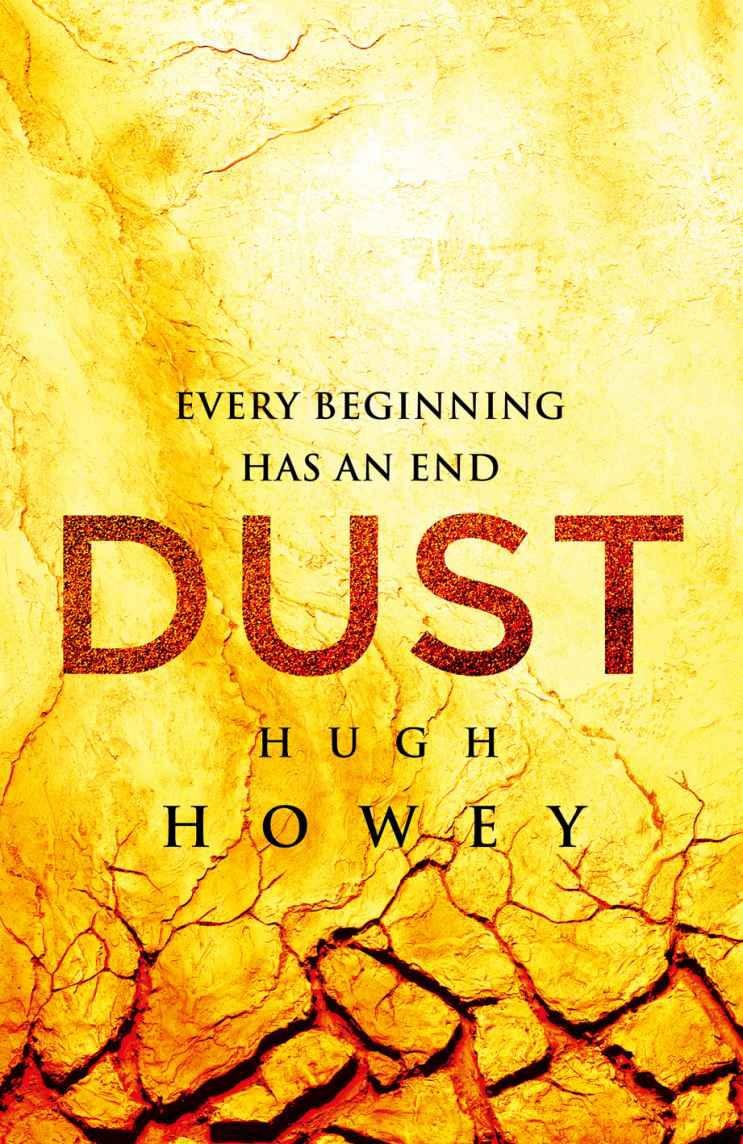
Dust
About this book
After the events of Wool, Juliette has authority in Silo 18 but not automatic trust. Her knowledge of Silo 17 and of the machinery connecting their worlds forces her to choose between a dangerous excavation and the safer lie many residents would prefer.
The history disclosed in Shift gives the reader a wider view of the forces monitoring the silos. Donald's choices inside Silo 1 and Juliette's work below ground approach the same crisis from different positions, each limited by failing bodies, contested information, and time.
Engineering remains as important as revelation: pumps, digging equipment, power, air, and structural damage determine whether truth can be acted upon. Political leadership matters because no escape plan works if the people asked to risk everything do not believe its author.
Dust completes Hugh Howey's original Silo trilogy and depends on both Wool and Shift. The finale brings the mechanical, historical, and moral questions together, asking whether a population prepared for extinction can still choose an unplanned future.
Read a sample
5,021 words
Plain text
From the opening
Prologue
“Is anyone there?”
“Hello? Yes. I’m here.”
“Ah. Lukas. You weren’t saying anything. I thought for a second there … that you were someone else.”
“No, it’s me. Just getting my headset adjusted. Been a busy morning.”
“Oh?”
“Yeah. Boring stuff. Committee meetings. We’re a bit thin up here at the moment. A lot of reassignments.”
“But things have been settling down? No uprisings to report?”
“No, no. Things are getting back to normal. People get up and go to work in the morning. They collapse in their beds at night. We had a big lottery this week, which made a number of people happy.”
“That’s good. Very good. How’s the work on server six coming?”
“Good, thanks. All of your passcodes work. So far it’s just more of the same data. Not sure why any of this is important, though.”
“Keep looking. Everything’s important. If it’s in there, there has to be a reason.”
“You said that about the entries in these books. But so many of them seem like nonsense to me. Makes me wonder if any of this is real.”
“Why? What’re you reading?”
“I’m up to volume C. This morning it was about this … fungus. Wait a second. Let me find it. Here it is. Cordyceps.”
“That’s a fungus? Never heard of it.”
“Says here it does something to an ant’s brain, reprograms it like it’s a machine, makes it climb to the top of a plant before it dies—“
“An invisible machine that reprograms brains? I’m fairly certain that’s not a random entry.”
“Yeah? So what does it mean, then?”
“It means … It means we aren’t free. None of us are.”
“How uplifting. I can see why she makes me take these calls.”
“Your mayor? Is that why—? She hasn’t answered in a while.”
“No. She’s away. Working on something.”
“Working on what?”
“I’d rather not say. I don’t think you’d be pleased.”
“What makes you think that?”
“Because I’m not pleased. I’ve tried to talk her out of this. But she can be a bit … obstinate at times.”
“If it’s going to cause trouble, I should know about it. I’m here to help. I can keep heads turned away—”
“That’s just it … she doesn’t trust you. She doesn’t even believe you’re the same person every time.”
“It is. It’s me. The machines do something with my voice.”
“I’m just telling you what she thinks.”
“I wish she would come around. I really do want to help.”
“I believe you. I think the best thing you can do right now is just keep your fingers crossed for us.”
“Why is that?”
“Because I’ve got a feeling that nothing good will come of this.”
Part I ~ The Dig
Silo 18
1
Dust rained in the halls of Mechanical; it shivered free from the violence of the digging. Wires overhead swung gently in their harnesses. Pipes rattled. And from the generator room, staccato bangs filled the air, bounced off the walls, and brought to mind a time when unbalanced machines spun dangerously.
At the locus of the horrible racket, Juliette Nichols stood with her coveralls zipped down to her waist, the loose arms knotted around her hips, dust and sweat staining her undershirt with mud. She leaned her weight against the excavator, her sinewy arms shaking as the digger’s heavy metal piston slammed into the concrete wall of Silo 18 over and over.
The vibrations could be felt in her teeth. Every bone and joint in her body shuddered, and old wounds ached with reminders. Off to the side, the miners who normally manned the excavator watched unhappily. Juliette turned her head from the powdered concrete and saw the way they stood with their arms crossed over their wide chests, their jaws set in rigid frowns, angry perhaps for her appropriating their machine. Or maybe over the taboo of digging where digging was forbidden.
Juliette swallowed the grit and chalk accumulating in her mouth and concentrated on the crumbling wall. There was another possibility, one she couldn’t help but consider. Good mechanics and miners had died because of her. Brutal fighting had broken out when she’d refused to clean. How many of these men and women watching her dig had lost a loved one, a best friend, a family member? How many of them blamed her? She couldn’t possibly be the only one.
The excavator bucked and there was the clang of metal on metal. Juliette steered the punching jaws to the side as more bones of rebar appeared in the white flesh of concrete. She had already gouged out a veritable crater in the outer silo wall. A first row of rebar hung jagged overhead, the ends smooth like melted candles where she’d taken a blowtorch to them. Two more feet of concrete and another row of the iron rods had followed, the silo walls thicker than she’d imagined. With numb limbs and frayed nerves she guided the machine forward on its tracks, the wedge-shaped piston chewing at the stone between the rods. If she hadn’t seen the schematic for herself – if she didn’t know there were other silos out there – she would’ve given up already. It felt as though she were chewing through the very earth itself. Her arms shook, her hands a blur. This was the wall of the silo she was attacking, ramming it with a mind to pierce through the damn thing, to bore clear through to the outside.
Continue reading the sampleClose the sample
The miners shifted uncomfortably. Juliette looked from them to where she was aiming as the hammer bit rang against more steel. She concentrated on the crease of white stone between the bars. With her boot, she kicked the drive lever, leaned into the machine, and the excavator trudged forward on rusted tracks one more inch. She should’ve taken another break a while ago. The chalk in her mouth was choking her; she was dying for water; her arms needed a rest; rubble crowded the base of the excavator and littered her feet. She kicked a few of the larger chunks out of the way and kept digging.
Her fear was that if she stopped one more time, she wouldn’t be able to convince them to let her continue. Mayor or not – a shift head or not – men she had thought fearless had already left the generator room with furrowed brows. They seemed terrified that she might puncture a sacred seal and let in a foul and murderous air. Juliette saw the way they looked at her, knowing she’d been on the outside, as though she were some kind of ghost. Many kept their distance as if she bore some disease.
Setting her teeth, foul-tasting grit crunching between them, she kicked the forward plate once more with her boot. The tracks on the excavator spun forward another inch. One more inch. Juliette cursed the machine and the pain in her wrists. Goddamn the fighting and her friends dead. Goddamn the thought of Solo and the kids all alone, a forever of rock away. And goddamn this mayor nonsense, people looking at her as though she suddenly ran all the shifts on every level, as though she knew what the hell she was doing, as though they had to obey her even as they feared her—
The excavator lurched forward more than an inch, and the pounding hammer bit screamed with a piercing whine. Juliette lost her grip with one hand, and the machine revved up as if fit to explode. The miners startled like fleas, several of them running toward her, shadows converging. Juliette hit the red kill switch, which was nearly invisible beneath a dusting of white powder. The excavator kicked and bucked as it wound down from a dangerous, runaway state.
“You’re through! You’re through!”
Raph pulled her back, his pale arms, strong from years of mining, wrapping around her numb limbs. Others shouted at her that she was done. Finished. The excavator had made a noise as if a connecting rod had shattered; there had been that dangerous whine of a mighty engine running without friction, without anything to resist. Juliette let go of the controls and sagged into Raph’s embrace. A desperation returned, the thought of her friends buried alive in that tomb of an empty silo and her unable to reach them.
“You’re through – get back!”
A hand that reeked of grease and toil clamped down over her mouth, protecting her from the air beyond. Juliette couldn’t breathe. Ahead of her, a black patch of empty space appeared, the cloud of concrete dissipating.
And there, between two bars of iron, stood a dark void. A void between prison bars that ran two layers deep and all around them, from Mechanical straight to the Up Top.
She was through. Through. She now had a glimpse of some other, some different, outside.
“The torch,” Juliette mumbled, prying Raph’s calloused hand from her mouth and hazarding a gulp of air. “Get me the cutting torch. And a flashlight.”
2
“Damn thing’s rusted to hell.”
“Those look like hydraulic lines.”
“Must be a thousand years old.”
Fitz muttered the last, the oilman’s words whistling through gaps left by missing teeth. The miners and mechanics who had kept their distance during the digging now crowded against Juliette’s back as she aimed her flashlight through a lingering veil of powdered rock and into the gloom beyond. Raph, as pale as the drifting dust, stood beside her, the two of them crammed into the conical crater chewed out of the five or six feet of concrete. The albino’s eyes were wide, his translucent cheeks bulging, his lips pursed together and bloodless.
“You can breathe, Raph,” Juliette told him. “It’s just another room.”
The pale miner let out his air with a relieved grunt and asked those behind to stop shoving. Juliette passed the flashlight to Fitz and turned from the hole she’d made. She wormed her way through the jostling crowd, her pulse racing from the glimpses of some machine on the other side of the wall. What she had seen was quickly confirmed by the murmuring of others: struts, bolts, hose, plate steel with chips of paint and streaks of rust – a wall of a mechanical beast that went up and to the sides as far as their feeble flashlight beams could penetrate.
A tin cup of water was pressed into her trembling hand. Juliette drank greedily. She was exhausted, but her mind raced. She couldn’t wait to get back to a radio and tell Solo. She couldn’t wait to tell Lukas. Here was a bit of buried hope.
“What now?” Dawson asked.
The new third-shift foreman, who had given her the water, studied her warily. Dawson was in his late thirties, but working nights had saddled him with extra years. He had the large knotted hands that came from busting knuckles and breaking fingers, some of it from working and some from fighting. Juliette returned the cup to him. Dawson glanced inside and stole the last swig.
“Now we make a bigger hole,” she told him. “We get in there and see if that thing’s salvageable.”
Movement on top of the humming main generator caught Juliette’s eye. She glanced up in time to spy Shirly frowning down at her. Shirly turned away.
Juliette squeezed Dawson’s arm. “It’ll take forever to expand this one hole,” she said. “What we need are dozens of smaller holes that we can connect. We need to tear out entire sections at a time. Bring up the other excavator. And turn the men loose with their picks, but keep the dust to a minimum if you can help it.”
The third-shift foreman nodded and rapped his fingers against the empty cup. “No blasting?” he asked.
“No blasting,” she said. “I don’t want to damage whatever’s over there.”
He nodded, and she left him to manage the dig. She approached the generator. Shirly had her coveralls stripped down to her waist as well, sleeves cinched together, her undershirt wet with the dark inverted triangle of hard work. With a rag in each hand, she worked across the top of the generator, wiping away both old grease and the new film of powder kicked up by the day’s digging.
Juliette untied the sleeves of her coveralls and shrugged her arms inside, covering her scars. She climbed up the side of the generator, knowing where she could grab, which parts were hot and which were merely warm. “You need some help?” she asked, reaching the top, enjoying the heat and thrum of the machine in her sore muscles.
Shirly wiped her face with the hem of her undershirt. She shook her head. “I’m good,” she said.
“Sorry about the debris.” Juliette raised her voice over the hum of the massive pistons firing up and down. There was a day not too long ago when her teeth would’ve been knocked loose to stand on top of the machine, back when it was unbalanced six ways to hell.
Shirly turned and tossed the muddy white rags down to her shadow, Kali, who dunked them into a bucket of grimy water. It was strange to see the new head of Mechanical toiling away at something so mundane as cleaning the genset. Juliette tried to picture Knox up there doing the same. And then it hit her for the hundredth time that she was mayor, and look how she spent her time, hammering through walls and cutting rebar. Kali tossed the rags back up, and Shirly caught them with wet slaps and sprays of suds. Her old friend’s silence as she bent back to her work said plenty.
Juliette turned and surveyed the digging party she’d assembled as they cleared debris and worked to expand the hole. Shirly hadn’t been happy about the loss of manpower, much less the taboo of breaking the silo’s seal. The call for workers had come at a time when their ranks were already thinned by the outbreak of violence. And whether or not Shirly blamed Juliette for her husband’s death was irrelevant. Juliette blamed herself, and so the tension stood between them like a cake of grease.
It wasn’t long before the hammering on the wall resumed. Juliette spotted Bobby at the excavator’s controls, his great muscled arms a blur as he guided the wheeled jackhammer. The sight of some strange machine – some artifact buried beyond the walls – had thrown sparks into reluctant bodies. Fear and doubt had morphed into determination. A porter arrived with food, and Juliette watched the young man with his bare arms and legs study the work intently. The porter left his load of fruit and hot lunches behind and took with him his gossip.
Juliette stood on the humming generator and allayed her doubts. They were doing the right thing, she told herself. She had seen with her own eyes how vast the world, had stood on a summit and surveyed the land. All she had to do now was show others what was out there. And then they would lean into this work rather than fear it.
3
A hole was made big enough to squeeze through, and Juliette took the honors. A flashlight in hand, she crawled over a pile of rubble and between bent fingers of iron rod. The air beyond the generator room was cool like the deep mines. She coughed into her fist, the dust from the digging tickling her throat and nose. She hopped down to the floor beyond the gaping hole.
“Careful,” she told the others behind her. “The ground’s not even.”
Some of the unevenness was from the chunks of concrete that’d fallen inside – the rest was just how the floor stood. It appeared as though it’d been gouged out by the claws of a giant.
Shining the light from her boots to the dim ceiling high above, she surveyed the hulking wall of machinery before her. It dwarfed the main generator. It dwarfed the oil pumps. A colossus of such proportions was never meant to be built, much less repaired. Her stomach sank. Her hopes of restoring this buried machine diminished.
Raph joined her in the cool and dark, a clatter of rubble trailing him. The albino had a condition that skipped generations. His eyebrows and lashes were gossamer things, nearly invisible. His flesh was as pale as pig’s milk. But when he was in the mines, the shadows that darkened the others like soot lent him a healthful complexion. Juliette could see why he had left the farms as a boy to work in the dark.
Raph whistled as he played his flashlight across the machine. A moment later, his whistle echoed back, a bird in the far shadows, mocking him.
“It’s a thing of the gods,” he wondered aloud.
Juliette didn’t answer. She never took Raph as one to listen to the tales of priests. Still, there was no doubting the awe it inspired. She had seen Solo’s books and suspected that the same ancient peoples who had built this machine had built the crumbling but soaring towers beyond the hills. The fact that they had built the silo itself made her feel small. She reached out and ran her hand across metal that hadn’t been touched nor glimpsed for centuries, and she marveled at what the ancients had been capable of. Maybe the priests weren’t that far off after all …
“Ye gods,” Dawson grumbled, crowding noisily beside them. “What’re we to do with this?”
“Yeah, Jules,” Raph whispered, respecting the deep shadows and the deeper time. “How’re we supposed to dig this thing outta here?”
“We’re not,” she told them. She scooted sideways between the wall of concrete and the tower of machinery. “This thing is meant to dig its own way out.”
“You’re assuming we can get it running,” Dawson said.
Workers in the generator room crowded the hole and blocked the light spilling in. Juliette steered her flashlight around the narrow gap that stood between the outer silo wall and the tall machine, looking for some way around. She worked to one side, into the darkness, and scrambled up the gently sloping floor.
“We’ll get it running,” she assured Dawson. “We just gotta figure out how it’s supposed to work.”
“Careful,” Raph warned as a rock kicked loose by her boots tumbled toward him. She was already higher up than their heads. The room, she saw, didn’t have a corner or a far wall. It just curled up and all the way around.
“It’s a big circle,” she called out, her voice echoing between rock and metal. “I don’t think this is the business end.”
“There’s a door over here,” Dawson announced.
Juliette slid down the slope to join him and Raph. Another flashlight clicked on from the gawkers in the generator room. Its beam joined hers in illuminating a door with pins for hinges. Dawson wrestled with a handle on the back of the machine. He grunted with effort, and then metal cried out as it reluctantly gave way to muscle.
••••
The machine yawned wide once they were through the door. Nothing prepared Juliette for this. Thinking back to the schematics she’d seen in Solo’s underground hovel, she now realized that the diggers had been drawn to scale. The little worms jutting off the low floors of Mechanical were a level high and twice that in length. Massive cylinders of steel, this one sat snug in a circular cave, almost as if it had buried itself. Juliette told her people to be careful as they made their way through the interior. A dozen workers joined her, their voices mingling and echoing in the maze-like guts of the machine, taboo dispelled by curiosity and wonder, the digging forgotten for now.
“This here’s for moving the tailings,” someone said. Beams of light played on metal chutes of interlocking plates. There were wheels and gears beneath the plates and more plates on the other side that overlapped like the scales on a snake. Juliette saw immediately how the entire chute moved, the plates hinging at the end and wrapping around to the beginning again. The rock and debris could ride on the top as it was pushed along. Low walls of inch-thick plate were meant to keep the rock from tumbling off. The rock chewed up by the digger would pass through here and out the back, where men would have to wrestle it with barrows.
“It’s rusted all to hell,” someone muttered.
“Not as bad as it should be,” Juliette said. The machine had been there for hundreds of years, at least. She expected it to be a ball of rust and nothing more, but the steel was shiny in places. “I think the room was airtight,” she wondered aloud, remembering a breeze on her neck and the sucking of dust as she pierced through the wall for the first time.
“This is all hydraulic,” Bobby said. There was disappointment in his voice, as though he were learning that the gods cleaned their asses with water too. Juliette was more hopeful. She saw something that could be fixed, so long as the power source was intact. They could get this running. It was made to be simple, as if the gods knew that whoever discovered it would be less sophisticated, less capable. There were treads just like on the excavator but running the length of the mighty machine, axles caked in grease. More treads on the sides and ceiling that must push against the earth as well. What she didn’t understand was how the digging commenced. Past the moving chutes and all the implements for pushing crushed rock and tailings out the back of the machine, they came to a wall of steel that slid up past the girders and walkways into the darkness above.
“That don’t make a lick of sense,” Raph said, reaching the far wall. “Look at these wheels. Which way does this thing run?”
“Those aren’t wheels,” Juliette said. She pointed with her light. “This whole front piece spins. Here’s the pivot.” She pointed to a central axle as big around as two men. “And those round discs there must protrude through to the other side and do the cutting.”
Bobby blew out a disbelieving breath. “Through solid stone?”
Juliette tried to turn one of the discs. It barely moved. A barrel of grease would be needed.
“I think she’s right,” Raph said. He had the lid raised on a box the size of a double bunk and aimed his flashlight inside. “This here’s a gearbox. Looks like a transmission.”
Juliette joined him. Helical gears the size of a man’s waist lay embedded in dried grease. The gears matched up with teeth that would spin the wall. The transmission box was as large and stout as that of the main generator. Larger.
“Bad news,” Bobby said. “Check where that shaft leads.”
Three beams of light converged and followed the driveshaft back to where it ended in empty space. The interior cavern of that hulking machine, all that emptiness in which they stood, was a void where the heart of the beast should lie.
“She ain’t going nowhere,” Raph muttered.
Juliette marched back to the rear of the machine. Beefy struts built for holding a power plant sat bare. She and the other mechanics had been milling about where an engine should sit. And now that she knew what to look for, she spotted the mounts. There were six of them: threaded posts eight inches across and caked in ancient, hardened grease. The matching nut for each post hung from hooks beneath the struts. The gods were communicating with her. Talking to her. The ancients had left a message, written in the language of people who knew machines. They were speaking to her across vast stretches of time, saying: This goes here. Follow these steps.
Fitz, the oilman, knelt beside Juliette and rested a hand on her arm. “I am sorry for your friends,” he said, meaning Solo and the kids, but Juliette thought he sounded happy for everyone else. Glancing at the rear of the metal cave, she saw more miners and mechanics peering inside, hesitant to join them. Everyone would be happy for this endeavor to end right there, for her to dig no further. But Juliette was feeling more than an urge; she was beginning to feel a purpose. This machine hadn’t been hidden from them. It had been safely stowed. Protected. Packed away. Slathered in grease and shielded from the air for a reason beyond her knowing.
“Do we seal it back up?” Dawson asked. Even the grizzled old mechanic seemed eager to dig no further.
“It’s waiting for something,” Juliette said. She pulled one of the large nuts off its hook and rested it on top of the grease-encased post. The size of the mount was familiar. She thought of the work she’d performed a lifetime ago of aligning the main generator. “She’s meant to be opened,” she said. “This belly of hers is meant to be opened. Check the back of the machine where we came through. It should come apart so the tailings can get out, but also to let something in. The motor isn’t missing at all.”
Raph stayed by her side, the beam of his flashlight on her chest so he could study her face.
“I know why they put this here,” she told him, while the others left to survey the back of the machine. “I know why they put this next to the generator room.”
4
Shirly and Kali were still cleaning the main generator when Juliette emerged from the belly of the digger. Bobby showed the others how the back of the digger opened up, which bolts to remove and how the plates came away. Juliette had them measure the space between the posts and then the mounts of the backup generator to verify what she already knew. The machine they’d uncovered was a living schematic. It really was a message from older times. One discovery was leading to a cascade of others.
Juliette watched Kali wring mud from a cloth before dipping it into a second bucket of slightly less filthy water, and a truth occurred to her: An engine would rot if left for a thousand years. It would only hum if used, if a team of people devoted their lives to the care of it. Steam rose from a hot and soapy manifold as Shirly wiped down the humming main generator, and Juliette saw how they’d been working toward this moment for years. As much as her old friend – and now the Chief of Mechanical – hated this project of hers, Shirly had been assisting all this time. The smaller generator on the other side of the main power plant had another, greater, purpose.
“The mounts look right,” Raph told her, a measuring line in his hand. “You think they used that machine to bring the generator here?”
Shirly tossed down a muddy rag, and a cleaner one was tossed up. Worker and shadow had a rhythm like the humming of pistons.
“I think the spare generator is meant to help that digger leave,” she told Raph. What she didn’t understand was why anyone would send off their backup power source, even for a short time. It would put the entire silo at the whim of a breakdown. They may as well have found a motor crumbling into a solid ball of rust on the other side of the wall. It was difficult to imagine anyone agreeing with the plans coalescing in her mind.
A rag arced through the air and splashed into a bucket of brown water. Kali didn’t throw another up. She was staring toward the entrance of the generator room. Juliette followed the shadow’s gaze and felt a flush of heat. There, among the black and soiled men and women of Mechanical, an unblemished young man in brilliant silver stood, asking someone for directions. A man pointed, and Lukas Kyle, head of IT, her lover, started off in Juliette’s direction.
“Get the backup generator serviced,” Juliette told Raph, who visibly stiffened. He seemed to know where this was going. “We need to put her in just long enough to see what that digger does. We’ve been meaning to unhook and clean out the exhaust manifolds anyway.”
Raph nodded, his jaws clenching and unclenching. Juliette slapped his back and didn’t dare glance up at Shirly as she strode off to meet Lukas.
“What’re you doing down here?” she asked him. She had spoken to Lukas the day before, and he had neglected to mention the visit. His aim was to corner her.
Lukas pulled up short and frowned – and Juliette felt awful for the tone. There was no embrace, no welcoming handshake. She was too wound up from the day’s discoveries, too tense.
“I should ask the same thing,” he said. His gaze strayed to the crater carved out of the far wall. “While you’re digging holes down here, the head of IT is doing the mayor’s work.”
“Then nothing’s changed,” Juliette said, laughing, trying to lighten the mood. But Lukas didn’t smile. She rested her hand on his arm and guided him away from the generator and out into the hall. “I’m sorry,” she told him. “I was just surprised to see you. You should’ve told me you were coming. And listen … I’m glad to see you. If you need me to come up and sign some things, I’m happy to. If you need me to give a speech or kiss a baby, I’ll do that. But I told you last week that I was going to find some way to get my friends out. And since you vetoed my walking back over the hills—”
Lukas’s eyes widened at the flippant heresy. He glanced around the hall to see if others were around. “Jules, you’re worrying about a handful of people while the rest of the silo grows uneasy. There are murmurs of dissent all through the Up Top. There are echoes of the last uprising you stirred, only now they’re aimed at us.”