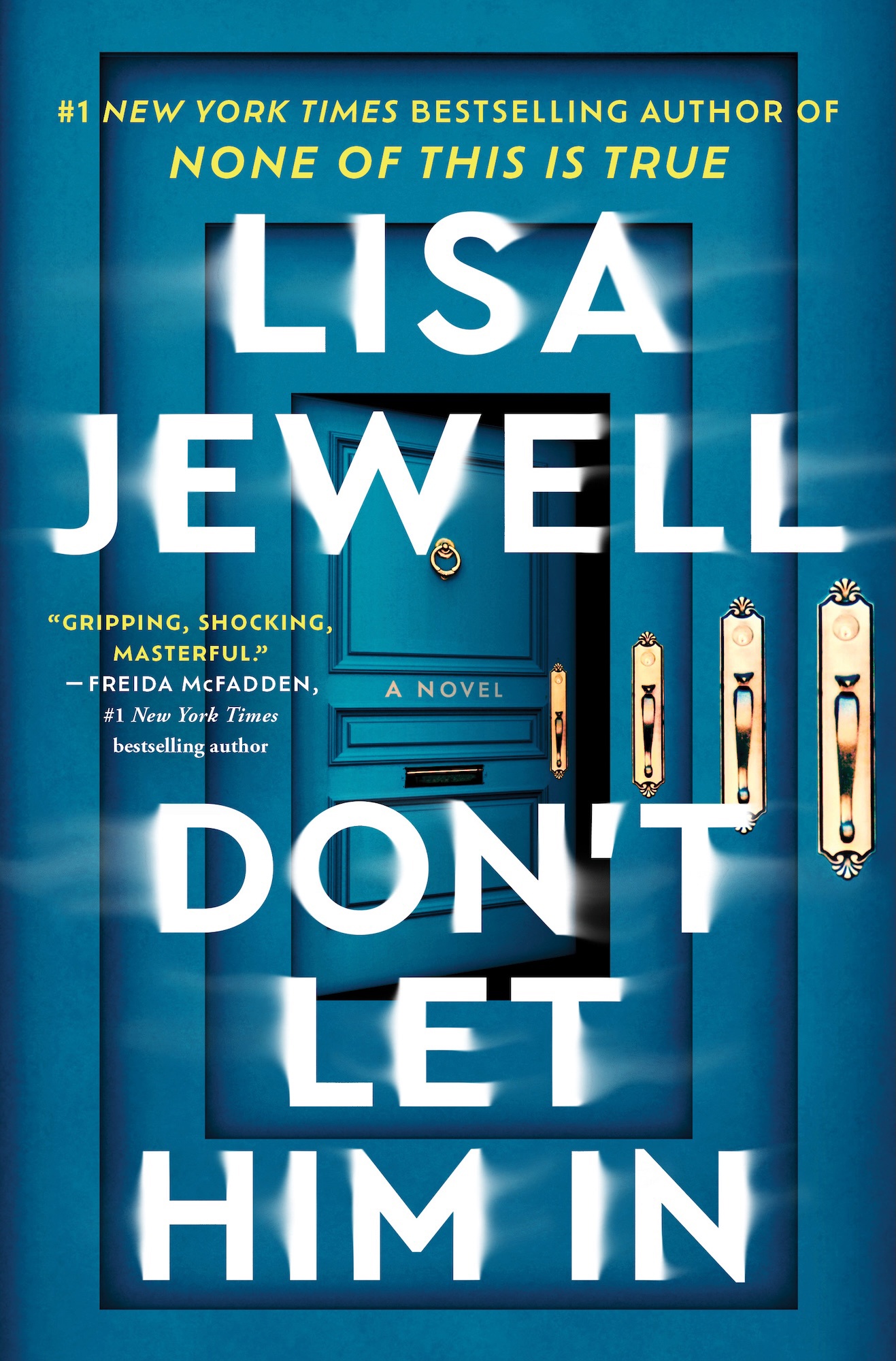
Don't Let Him In
About this book
A new relationship enters a family already unsettled by loss, and its apparent ease makes suspicion feel ungenerous. Elsewhere, another woman recognises details that do not belong to the identity being presented to her.
The women’s separate perspectives expose a pattern built from emotional timing, selective confession, and the pressure to ignore a doubt that cannot yet be proved. The danger lies not in one spectacular lie but in the disciplined maintenance of many plausible ones.
Lisa Jewell keeps the investigation rooted in domestic spaces and private communications. Each character has incomplete evidence, and the man at the centre benefits whenever shame or rivalry prevents them from comparing what they know.
Don’t Let Him In is a psychological thriller about intimacy used as access. Its suspense comes from watching isolated inconsistencies become a shared account that the deceiver can no longer control.
Read a sample
5,068 words
Plain text
From the opening
ONE NOVEMBER
The house is spectacular. A huge white stucco villa on three floors plus attic rooms, and a direct view of the sea visible through tall windows that frame the vista at the back and the front. I imagine that a wall must have been taken down at some point to offer up that level of open-plan space in a Victorian house. Steel beams put in. Expensive stuff. Just to give the owners more light and space. I feel an uncharacteristic twitch of jealousy. It’s not like me to envy others. I rarely, in fact, give a thought to them. But this is a different case altogether. I turn off the van’s engine and sit, just for a moment, readying myself. Through the window, on the other side of the house, I see the shadows of movement and as I pull on a baseball cap and open the driver’s door, I hear the muted murmur of chatter. There are four cars parked outside and clearly the day is still going strong. I go to the side of the van and pull open the door. There it is, my last delivery of the day: an extra-large bouquet of white hydrangeas and roses, no expense spared, in a pink bag. On the envelope is the inscription “Nina Swann & Family.”
I walk toward the front door, peering in subtly as I pass the kitchen window. A small group sits around the table, a mix of younger and older people. They all have wine, are dressed somberly. There is music playing, candles are flickering. I see art and photography and graphics on the walls; I see a designer kitchen in midnight blue and pink, with flashes of brass and copper, big globe light bulbs hanging at irregular intervals from golden chains, plants on shelves. Through a door at the back of the kitchen, I see huge velvet sofas, a mixing desk, a Gorillaz poster.
It’s the home of a Gen X man who has made good decisions, made a success of his life, piled his building blocks one on top of the other with precision and care. But also, the home of a man who made one really bad mistake that his wife and his family are going to pay for, over and over again.
I keep moving past the window and then I put my finger to the doorbell.
TWO
Ash thanks the delivery driver, then closes the front door behind her and carries the flowers to the kitchen. Here, her mother, Nina; her brother, Arlo; her grandmother; her uncle; her aunt; her three cousins; and her best friend all sit around the big wooden table, which is littered with wine-stained glasses, dirty plates, the gelatinous-looking remains of the canapés. The atmosphere is both brittle and unburdened. The worst of it is over, the day is done. Now Ash is shoeless in black tights, her heels abandoned earlier, once most of the other guests had left.
“Who are they from?” asks her mother. Her voice is ragged.
“Er…” Ash feels around the pale pink bag for a card, peels it off, and hands it to her mother.
“Please,” says her mother. “You do it.”
Ash pulls a small card from the envelope; it is the same shade of antique pink as the bag and has a linear rose embossed on the front, over which she subconsciously runs her fingertip. Inside is a note scribbled in messy florist’s handwriting with a water blotch on the ink.
Thinking of you all
Love and condolences,
The Tanners
“Who are the Tanners?”
Ash’s mother sighs. “Literally no idea. Can you put them in some water?”
“We’ve run out of vases.”
Her mother sighs again, and Ash knows that she must not mention anything more to do with flowers today. She sticks them in a vase that already holds a bouquet—the two bouquets look wildly mismatched, aesthetically unpleasing—then joins her family at the table.
Ella slops some white wine into Ash’s empty glass. Ash makes a kiss at her.
The sun didn’t come out today, not once, which is ironic as Ash’s father was obsessed with sunshine, chased it around the garden, chased it around the world, kept a UV lamp in his home office for gray days, studied forecasts religiously, insisted on barbecues at the merest hint of spring. He’d wanted this house because it was south-facing; he had his favorite suntrap spots in the garden, one in particular where he could sunbathe even in February, which he referred to as “Ibiza.” “I’m going to Ibiza for a bit,” he’d say on a sunny morning, a coffee in one hand, sunglasses on his head. There was always a bottle of sun cream by the back door. All year round.
But today, the day they said goodbye to him, the sun stayed away. Ash liked to think maybe he’d taken it for himself. But on the other hand—no. She very much believes that dead people have no influence.
He was fifty-four.
He was killed by a stranger.
Pushed onto the tracks.
Under a train.
He was on his way home from a restaurant opening, not one of his but a friend’s, in Soho. He was very drunk. He’d been drinking tequila slammers, according to his friend. The life and soul. Always the life and soul, Paddy Swann.
The man who pushed him was called Joe Kritner.
Continue reading the sampleClose the sample
There. Done. One moment. Two lives. More, if you include the train driver, the witnesses, the paramedics who had to pull the bits of him off the tracks.
There’s a photo album on the table; Ash and her brother, Arlo, had put it together. They’d left space in the final pages for guests to add their own photos of Dad, of Paddy. Ash opens it at a random page and sighs at the sight of her dad wearing a bucket hat and sunglasses, holding a pint of beer in a plastic cup at some kind of festival. Peak nineties, Ash thinks. He was born in 1970, so must have been about twenty-five here. Same age as she is now.
“Where’s that?” she asks her mum, turning the album toward her mother.
“Ha, Glastonbury. Of course.”
“Of course,” says Ash drily. “Were you there too?”
“Yup. Oasis. Pulp. The Cure. Boiling hot. We went with Lena and Johnny. Dad got very, very…”
“Drunk?” Arlo suggests.
“And the rest.”
They all smile wryly. Everyone knows what Paddy was like. He liked to drink, he liked to take party drugs, he liked to get stoned. He liked to listen to music all the time, always walked around in headphones. He liked vinyl, liked T-shirts, liked live music, liked people, liked food.
Paddy Swann was the most uncomplicated human being in the world, and then, two weeks ago, a very complicated person used Paddy Swann as a character in his own very complicated internal story and pushed him under a train. And now he is dead.
The remains of his clan are loud now, they don’t know how to be quiet, even in the fading light of the day that they buried him. But the noise is riven through with something piquant and terrible. The lack of his voice, his laugh, his bulk. The fact that at the other end of today, everyone’s lives will continue without him.
Ash slams the album shut and grabs her wineglass, tips it back, ignores the sugary, cloying warmth of it in her mouth, the way it leaches into the stale insides of her cheeks. How will they go to bed tonight? How will they say that this day is over, and the next bit begins?
Part Two
THREE JANUARY
Ash picks up the card that is propped on the sideboard in the kitchen and reads the greeting inside.
Dear Nina and family
I just heard the news about Paddy. I am so devastated to hear of his death last year. Paddy and I worked together in a restaurant in Mayfair many, many moons ago. He was one of the nicest guys I ever knew, and one of the best chefs I’ve ever worked alongside. A few years ago, I chanced upon his restaurant in Whitstable and didn’t realize it was his place until I saw him passing across the floor. I stopped him and we had a chat, and he looked so well, so full of his usual bonhomie and generosity of spirit. He pulled up a chair and joined me for the rest of my meal, forced good wines upon me. We caught up a little on our lives, his spent growing a family and a restaurant empire on the south coast, mine living the bachelor life and running a wine bar not far from where we first met in Mayfair. I always thought our paths would cross again someday, that I’d go back to Whitstable and enjoy another hour or two in his delightful company, eat another one of his delicious meals, but it never happened, life got in the way, and now it is too late.
Anyway, I just wanted you to know how much I adored Paddy and how sorry I was to hear that he had gone so young and in such tragic circumstances.
Yours, with sympathy and with love, Nick Radcliffe
Ash waves the card at her mother, who is standing by the kettle, waiting for it to boil.
“Nice card.”
Her mother turns. Her eyes are dull and tinged with gray circles.
“Oh,” she says. “Yes. Very sweet.”
“You ever met him?”
“No. I don’t think so. At least, not that I remember.”
Ash pulls her phone out of her pocket and googles the name, adds Mayfair to the search terms. His name pops up on LinkedIn and she clicks it.
Nick Radcliffe is listed as the “Co-founder and Owner of Bar Amelie in London W1.” In his profile photo he looks about fifty, has pure white hair, a trim white beard, very blue eyes, and a pleasant smile. She turns the phone toward her mum. “Look,” she says.
Her mum glances distractedly at the photo and says, “Nope. Never seen him before. He’s quite hot, though.”
Ash throws her mother a look of horror.
“What?” says her mother. “There’s no law against it.”
Ash googles “Bar Amelie” and finds a glitzy website for it. It’s just off Curzon Street and is sleek and beautiful—brushed brass and pale velvet, three different types of caviar on the bar menu. It’s the antithesis of her dad’s restaurants: sandy-floored, rough-hewn, chalkboards, tongue-and-groove cladding, smoky chowders and chargrilled lobsters.
“We should go there,” Ash says, showing the wine bar’s website to her mum. “Get him to tell us more about what Dad was like back then, before you met him.”
“Your dad knew hundreds of people before I met him.”
“I know. But he sounds really nice. He might have stories.”
“Well then, you can go there,” she says. “I’m sure he’d be thrilled to meet Paddy’s lovely girl and share his stories with you. And you might get a free dinner. Or a job.”
This last sentence is clipped and raw and there follows a small, tense silence.
“I might,” says Ash. Then she puts the card back on the sideboard with a slightly haughty snap of her wrist. “I might.”
Ash works at the fashion exchange boutique in the village. People bring in their old clothes; she and the shop’s owner, Marcelline, steam them up in the back room to get the smell off them; then they hang them on expensive hangers next to displays of silk flowers and snazzy cabinetry. If the item sells, the customer gets 50 percent; the shop gets the rest.
It was meant to be temporary, this job, just a stopgap for the summer after coming back to live at home when London didn’t work out for her, while she sorted herself out. But then it had been September, then October, then her dad had died and now it is January, nearly February, and she is still working in the fashion exchange boutique and still sleeping in her childhood bedroom, and she will be twenty-six soon and did not expect to still be here.
But as much as she knows she shouldn’t be here, she doesn’t want to move out. Not now. She wants to be in this beautiful house where she grew up, which still smells of her father.
She has regressed. She is going backward. She is falling.
FOUR FOUR YEARS EARLIER
I kiss my wife on the lips. Her breath smells of last night’s toothpaste mixed with sleep. But I kiss her every morning. It’s what I do. It’s part of the thing, the illusion, the rhythms that have formed the percussion of the last four years of our lives. If I did not kiss her on her lips in the morning, then she would wonder… and I don’t want her to wonder. If she starts to wonder at the little things, then she will eventually start to wonder at the bigger things. So, I manage the little things forensically to make sure that everything is the same. Until it isn’t.
“Morning,” she says, curling into me, an arm reaching across my chest, her face nestling into the space between my shoulder and chin.
“Morning, my love.” I kiss her hair. It smells of her laundry, and also slightly of her scalpy essence, which I don’t love, but it’s part of the deal. I snuggle into her, and we lie like that for a moment, as we do every morning. And then I peel myself away from her and stretch and yawn and climb off the bed, find my gown where it is slung across the armchair in the window, and slide my arms into it. The sky through the window is a rich blue, more like July than February. It sends a shiver of hopefulness through me. My time here in this stultifying, unsatisfying place is drawing to an end. I can feel it sliding away, like a dropped silk scarf running between my fingers.
I turn and smile at my wife. “I love you,” I say.
“I love you too,” she replies.
Then I say, “Oh, by the way, I’m speaking to George today.”
George is my fictional financial advisor.
“He wants us to put a little more into our pensions. Just a thousand or two. He’s found a little wriggle room.”
Fictional pensions too. For the fictional future that we will be spending together.
“Oh,” says my wife. “That’s good. But I don’t really have the cash to hand right now. Not after paying for your knee surgery.”
I feel my jaw clench.
“I really think we should do it, though. Darling.” The word almost hurts to utter. “Think about our future. You don’t want to be doing this forever. You work so hard. We both work so hard. We need something soft to fall back onto, and the sooner the better. Every penny we put into that pension now, the closer we get to what we both want.”
I hear her sigh, and I know it’s a sigh of acquiescence and I feel my jaw unlock. The picture of the future I have painted for us is so exquisite that I almost wish it could be real. We will sell this house, this stupid house she bought when she left her stupid husband (nothing makes me happier than talking about how stupid her ex-husband is), and we will buy a house in the Algarve and she will paint and I will potter, and her children will come to stay and all of this, this dreadful day-after-day toil and drudgery, it will be over and we will be happy, forever.
“I’ll see what I can do,” she says.
“Thank you, darling,” I say, and this time the word doesn’t hurt because this time I mean it. She is my darling. My darling wife who would do anything for me. Absolutely anything.
FIVE MARCH
Two days after Ash’s twenty-sixth birthday, a parcel arrives. Ash sees it on the front step as she arrives home from work. It’s not an Amazon parcel, it’s in a smart box with a handwritten label, and at first she assumes it’s for her, a late gift. But she looks closer and sees that it’s addressed to her mother, so she scoops it up and brings it into the kitchen.
“Mum,” she calls out. “There’s a parcel.”
“I know,” Nina replies from her office at the top of the landing. “I asked the guy to leave it. I was in a Zoom.”
“Looks interesting. Can I open it?”
“If you like.”
Ash unloops her bag from across her chest and pulls off her teddy bomber jacket and oversized scarf. She gets scissors from a drawer and slices through the tape. As she folds back the arms of the box, she sees another box inside, pale antique pink with a teal satin ribbon.
“Er, Mum. I think you should open this. It looks like a present.”
“Give me a minute.”
Nina appears a moment later, taking AirPods from her ears and pulling a cardigan on over her work shirt.
“Ooh,” she says, glancing at the pretty box. She looks at the writing on the address label and shrugs. “Don’t recognize that.”
Then she pulls the lid off the box and peels back some tissue paper to reveal a scuffed-up copper Zippo lighter and a note in a small envelope.
She glances at Ash, and Ash shrugs. Then she opens the small envelope and reads out the note:
Dear Nina,
I was going through old boxes the other day, looking for some letters from my late mother, when I came across this. It belonged to Paddy. He left it at the restaurant one night and I took it home to make sure nobody else snaffled it. When I mentioned it to him, he told me to keep it. I think he was intending to give up smoking, but I’m not sure that he ever did.
Anyway, I thought you might want it. A little bit of history.
I do hope you are holding up OK?
All my very best, as before,
Yours Nick Radcliffe
“Wow.” Her mum holds the lighter in the palm of her hand and stares at it.
Ash can see tears glistening across the surface of her eyes and touches her arm gently. “That’s wonderful,” she says. “Isn’t it?” She picks up the letter and sees that Nick Radcliffe’s email address is written under his signature. He clearly wants a response. “Can I?” Ash glances at the lighter in her mother’s palm.
Her mother passes it to her, and Ash is taken aback by the weight of it in her hand.
“Everyone had these in the eighties and nineties,” says her mother. “The smell of them—it takes me back.”
Ash lifts it to her nose: a hit of butane, burnt metal, smoke. “Will you write to thank him?”
“I suppose so,” Nina replies, her chest going up and dropping down with a heavy sigh. “Yes. I should.”
“He wrapped it so nicely too. Do you think he’s gay?”
“Ash!”
“Just joking! But it is so beautiful. The tissue paper. All of it.” She hands the lighter back to her mother, who curls her fingers around it. “Can I keep the box?”
“Of course,” says her mother. Then she sighs again and says, “I’ve got another stupid Zoom in a minute. But I’ll be down after that. Maybe we could light the fire and watch some trash?”
Ash smiles and nods. “Yes. That would be nice.”
Ash takes the box up to her room. She puts it on her dressing table. She’ll fill it with something. With trinkets. Mementos. She goes to the window of her room, which overlooks the sea. The sun has just set, the sky through the bare trees is a dark, haunting gray, lacy with pale clouds catching the ends of the daylight. She feels the thud and canter of time running by as her early twenties bleed into her late twenties and thirty appears heavy on the horizon. She hears the drone of her mother’s tired, end-of-the-week professional voice talking about staffing issues with the people who run her dead father’s restaurants, the restaurants that her mother now has to run, even though she has another job, albeit a part-time one that she can do in an hour or two a day, but still, it’s a lot. Her mother is tired and sad and alone. And so is she.
Four months and eight days since her dad died.
She thinks of Arlo, her baby brother, far away from here, living a life unaffected by the echoes of devastation that still ring around their home. He has his big, messy house full of friends, his high-paying job, his pub nights and club nights, his girlfriends (a different one every week), his weed, his tattoos, his normal life. He has the same freewheeling, formless starter life that Ash had been living up until eight months ago, but while Arlo takes it in his stride, hers had nearly broken her.
She flops onto her bed and goes onto Hinge, scrolls mindlessly for a while, thinking that a boy might save her, but they all look ugly to her, stupid and ugly. Then she goes onto Airbnb and looks at expensive apartments in stunning European cities that she can’t afford to visit. Then, and only then, does she go to her camera roll, scroll backward through February, through their hideous Christmas, past the funeral and into the summer before, when she was lost and broken by a sequence of events that she still can’t explain, and back further again until there she is, a year ago today, before any of the bad things had happened, and she stares at herself, that girl with slightly shorter hair, with a mouth wide open in the throes of laughter, her arm around her father, his arm around her, a glass of wine in his other hand, an apron tied around his waist, and a smile, that smile, the one he always had when it was sunny, when there was food, and especially when he was with her and Arlo, because he loved them both so much.
She lets her phone drop onto her chest, and she cries.
SIX FOUR YEARS EARLIER
I look at my wife across the breakfast table. She looks tired. She’s been looking tired a lot recently. It’s probably my fault, but there’s not a lot I can do about that. She was forty-four when I met her, a youthful forty-four. She’s forty-eight now but looks closer to midfifties. She’s put on a few pounds, keeps going on about “perimenopause” when she’s ten years younger than Jennifer Aniston, who doesn’t appear to have any problem keeping herself in shape. I want to tell her to put less butter on her toast, but I can’t because that would be unpleasant, and I am a very pleasant man and a very good husband.
“You look like you could do with a holiday,” I say.
She glances up at me, her tired eyes suddenly bright. But then they dull again. “We can’t afford a holiday,” she says. “You know that.”
“Well, what if I told you that I’d had a bit of a windfall.” I put it out there with a flourish.
“You have?”
“Yes, just a few hundred. Money I lent a friend a couple of years ago, they finally paid me back.”
“A friend?”
“Yes. Peter Tovey. Remember I told you? He needed it to keep his child at that special school?” There is of course no such person as Peter Tovey and this never happened. But what difference does it make?
She shakes her head vaguely. “No,” she says. “I don’t think I remember. But that’s good, then. I mean, maybe we should put it toward one of the loans instead, though. A holiday would be nice, but the overdraft could really—”
I cut her off by reaching across the table and grabbing both her hands, smiling up at her with the brightest, warmest smile I can muster. “Darling, come on, look at you. You’re exhausted. You need this. I’ll book us something. Leave it with me.”
I slide the box across the kitchen counter the following day. It’s sky blue, her favorite color, and tied up with a silk ribbon. She looks at me, her tired eyes filled with curiosity and anticipation.
“I hope you haven’t done anything silly,” she says.
“Might have,” I reply, and rock back on my heels, eye her with affection. “Go on.”
She slips the lid off the box and there it is, the printout from the internet for the weekend in Lille I’ve bought for us, which includes an eight-course tasting dinner and travel on the Eurostar. “It’s a Wowcher thing,” I say. “We can use it any time before December thirty-first. So, shall we get our diaries out? Find a date?”
It only cost a couple of hundred per person, and she’s paying for it, of course, even though she doesn’t know that. I used the money she transferred into my account last month to put into our fictional pensions. But it’s the thought that counts and the expensive gift box is all part of the illusion. A basic husband would just have forwarded the email, but a top-notch husband, the sort of husband a woman yearns for, prints it off and puts it in a box in her favorite color, presents it with a soft smile, and suddenly it’s more than just a cheap Wowcher deal, it’s a display of love and adoration.
She opens up her phone and beams at me, then scrolls through to her calendar app. “How about June?” she says. “Maybe the middle? The seventeenth?”
I pull out my own phone, find my diary, and scroll to 17 June, and of course there’s nothing there because my life doesn’t work like that, it doesn’t have markers and delineations, it doesn’t hang on dates and plans, it just hurls itself at me in disjointed chunks that I have to somehow knit together into something that looks like normality, and it’s why I work so hard to maintain my charming exterior, because my interior is a chaotic hellscape beyond anyone’s possible imaginings.
“Yes,” I say, typing it into my phone, nodding, pretending to sound organized. “Yes. Perfect. Leave it with me. I’ll book it tomorrow.”
I kiss her on her cheek, breathe in and then quickly out again to expel the slightly sour, slightly salty smell of her skin, that end-of-day, officey smell that she sometimes has.
“You go and have a shower,” I say. “I’ll do dinner.”
“Are you sure?”
“Of course I’m sure. Go. It’ll be on the table in half an hour.”
I kiss her again and smile at her, tenderly, softly, so genuinely that I can almost make myself believe that I adore her.
Then I turn and pull some garlic from the fridge, put it on a board, find a sharp knife, and hum something French under my breath as I cut it into thin, thin slices.
SEVEN NOVEMBER
They have passed through a whole summer without barbecues, without noisy late-night parties, tents on the lawns, and Dad behind his decks. They have passed through Dad’s fifty-fifth birthday, Arlo’s twenty-fourth. And now they have passed through the first anniversary of Paddy’s death. A full turn of the cosmos. A full complement of birthdays and anniversaries, seasons and holidays. A full year without him.
Ash glances up as Nina dashes into the kitchen, looking a little frantic.
She’s wearing her dyed brown hair up in a topknot, big hoop earrings, red lipstick, a black crew neck, and cropped indigo jeans, platform-soled boots. She’s fifty-one, but she can still get away with dressing like that. As she passes, Ash gets the backdraft of musky perfume.
“Are you going somewhere?”
“No, not going anywhere. Staying in. With Nick.”
Ash exhales and closes her eyes slowly at the mention of his name.
Nick Radcliffe.
He’s so lovely.
Such a lovely man.
But he’s arrived too soon.
“What time is he getting here?”
“Half an hour ago.”
Nina pulls a bottle of Dad’s wine off the shelf and shoves it in the freezer, embedding it between packets of frozen peas and spinach and vegan nuggets that have been there since Paddy was still alive.
A year since he died. That’s not very long. Not after thirty-three years together, twenty-eight years of marriage, two children, a devastating death. It’s not very long at all. Nick seems lovely, but if only he’d arrived in their lives another year from now. Maybe even two. Maybe when there was nothing left in the freezer from when Paddy was still alive.
But Ash can’t say anything, she can’t make a fuss, because she is twenty-six and a half years old, and she should not be living at home. She should be out in the world, not sitting here watching her mother shove wine in the freezer drawer, not having to smell her mother’s special perfume or watch her mother trying really hard to be wonderful for a man who isn’t Ash’s father.
The doorbell rings.
“Shit,” says Nina, trying in vain to get the freezer drawer to shut.
“I’ll do that,” says Ash, getting to her feet.
Her mother smiles and goes to the door.
“Hello, you,” she hears her say. Then, “Oh! Thank you! They’re beautiful. Come in!”
Ash has just got the freezer drawer to close when he walks in.
Nick is six foot two. Dad was small. Only five foot eight. But what he lacked in stature he made up for in charisma. Nick has a full head of thick white hair. Dad’s was thinning and had just started turning gray, about 20 percent of the way there, mainly around his ears. Nick wears a shirt and a jacket. Dad never wore a shirt or a jacket, he wore T-shirts and hoodies and denim jackets. Nick has white teeth. Dad’s were a bit discolored. He’d had them bleached once, for his fortieth, but all the coffee and red wine had taken them back to normal again in under a year. Nick has piercing blue-gray eyes. Dad’s were a deep golden brown, like brandy. Nick is handsome. Dad was just nice-looking.