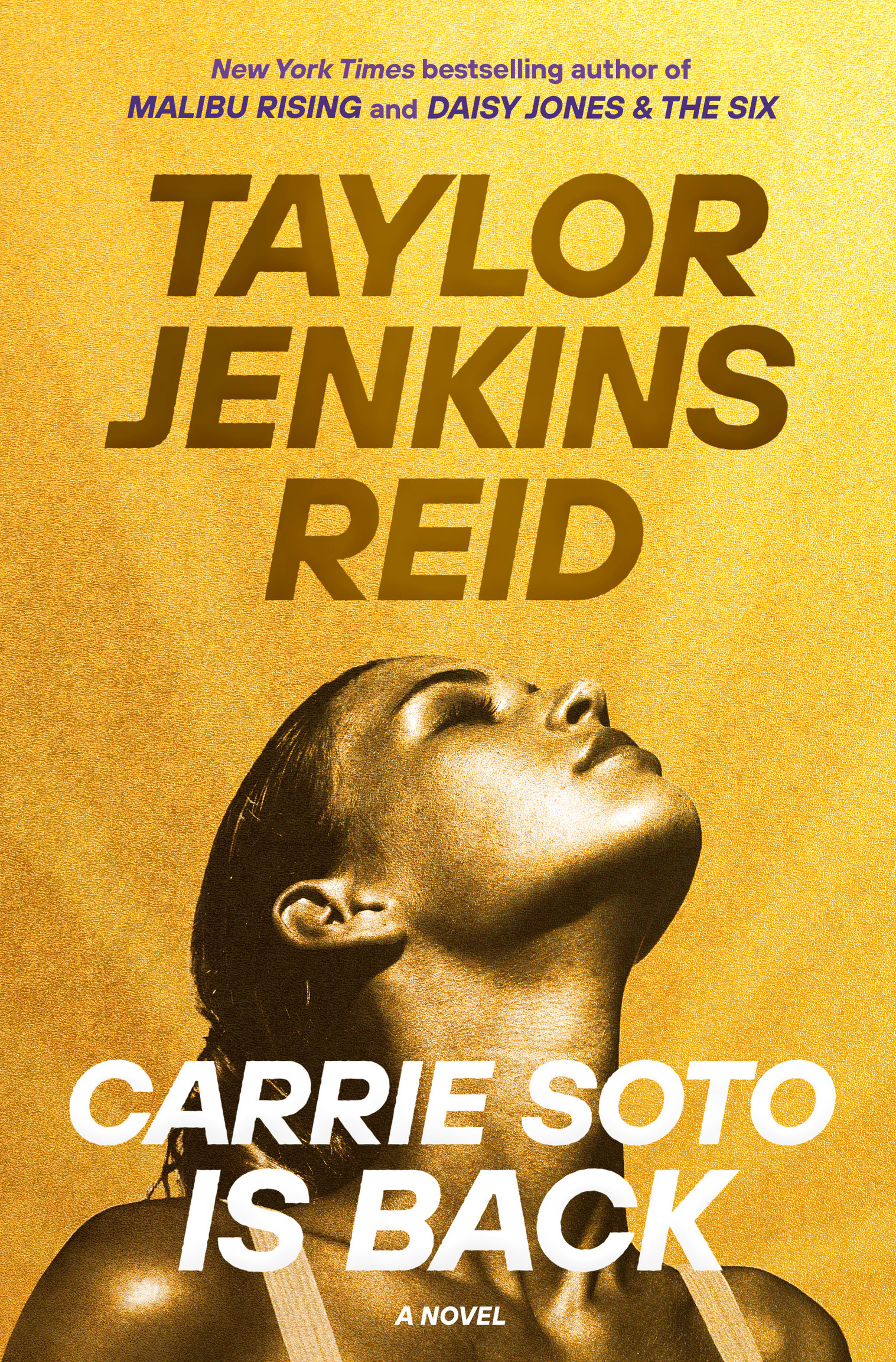
Carrie Soto Is Back
About this book
Carrie Soto retired with twenty Grand Slam titles and little interest in being loved. When a younger player approaches her record, Carrie decides at thirty-seven to attempt the comeback most of the sport expects to fail.
Her father Javier resumes coaching her, and former rival Bowe Hunt becomes a training partner. Technique and conditioning matter, but so do the fears Carrie has hidden inside contempt for weakness.
Carrie Soto Is Back follows a full competitive season and treats ambition without apology. Victory remains important even as Carrie learns that a life cannot be secured by records alone.
Read a sample
5,006 words
Plain text
From the opening
CHAN VS. CORTEZ
US Open
September 1994
My entire life’s work rests on the outcome of this match.
My father, Javier, and I sit front row center at Flushing Meadows, the sidelines just out of reach. The linesmen stand with their arms behind their backs on either side of the court. Straight in front of us, the umpire presides over the crowd high in his chair. The ball girls crouch low, ready to sprint at a moment’s notice.
This is the third set. Nicki Chan took the first, and Ingrid Cortez squeaked out the second. This last one will determine the winner.
My father and I watch—along with the twenty thousand others in the stadium—as Nicki Chan approaches the baseline. She bends her knees and steadies herself. Then she rises onto her toes, tosses the ball in the air, and with a snap of her wrist sends a blistering serve at 126 miles per hour toward Ingrid Cortez’s backhand.
Cortez returns it with startling power. It falls just inside the line. Nicki isn’t able to get to it. Point Cortez.
I let my eyes close and exhale.
“Cuidado. The cameras are watching our reactions,” my father says through gritted teeth. He’s wearing one of his many panama hats, his curly silver hair creeping out the back.
“Dad, everyone’s watching our reactions.”
Nicki Chan has won two Slam titles this year already—the Australian Open and the French Open. If she wins this match, she’ll tie my lifetime record of twenty Grand Slam singles titles. I set that record back in 1987, when I won Wimbledon for the ninth time and established myself as the greatest tennis player of all time.
Nicki’s particular style of play—brash and loud, played almost exclusively from the baseline, with incredible violence to her serves and groundstrokes—has enabled her to dominate women’s tennis over the past five years. But when she was starting out on the WTA tour back in the late eighties, I found her to be an unremarkable opponent. Good on clay, perhaps, but I could beat her handily on her home turf of London.
Things changed after I retired in 1989. Nicki began racking up Slams at an alarming rate. Now she’s at my heels.
My jaw tenses as I watch her.
My father looks at me, his face placid. “I’m saying that the photographers are trying to get a shot of you looking angry, or rooting against her.”
I am wearing a black sleeveless shirt and jeans. A pair of tortoiseshell Oliver Peoples sunglasses. My hair is down. At almost thirty-seven, I look as good as I’ve ever looked, in my opinion. So let them take as many pictures as they want.
“What did I always tell you in junior championships?”
“Don’t let it show on your face.”
“Exacto, hija.”
Ingrid Cortez is a seventeen-year-old Spanish player who has surprised almost everyone with her quick ascent up the rankings. Her style is a bit like Nicki’s—powerful, loud—but she plays her angles more. She’s surprisingly emotional on the court. She hits a scorcher of an ace past Nicki and hollers with glee.
“You know, maybe it’s Cortez who’s going to stop her,” I say.
My father shakes his head. “Lo dudo.” He barely moves his lips when he talks, his eye consciously avoiding the camera. I have no doubt that tomorrow morning, my father will open the paper and scan the sports pages looking for his photo. He will smile to himself when he sees that he looks nothing short of handsome. Although he lost weight earlier this year from the rounds of chemo he endured, he is cancer-free now. His body has bounced back. His color looks good.
As the sun beats down on his face, I hand him a tube of sunscreen. He squints and shakes his head, as if it is an insult to us both.
“Cortez got one good one in,” my father says. “But Nicki saves her power for the third set.”
My pulse quickens. Nicki hits three winners in a row, takes the game. It’s now 3–3 in the third set.
My father looks at me, lowering his glasses so I can see his eyes. “Entonces, what are you going to do?” he asks.
I look away. “I don’t know.”
He puts his glasses back on and looks at the court, giving me a small nod. “Well, if you do nothing, that is what you are doing. Nothing.”
“Sí, papá, I got it.”
Nicki serves wide. Cortez runs and scrambles to catch it on the rise, but it flies into the net.
I look at my father. He wears a slight frown.
In the players’ box, Cortez’s coach is hunched over in his seat, his hands cupping his face.
Nicki doesn’t have a coach. She left her last one almost three years ago and has taken six Slams since then without anyone’s guidance.
My dad makes a lot of cracks about players who don’t have coaches. But with Nicki, he seems to withhold judgment.
Cortez is bent over, holding her hand down on her hips and trying to catch her breath. Nicki doesn’t let up. She fires off another serve across the court. Cortez takes off running but misses it.
Nicki smiles.
I know that smile. I’ve been here before.
On the next point, Nicki takes the game.
“Dammit,” I say at the changeover.
Continue reading the sampleClose the sample
My father raises his eyebrows. “Cortez crumbles as soon as she doesn’t control the court. And Nicki knows it.”
“Nicki’s powerful,” I say. “But she’s also hugely adaptable. When you play her, you’re playing somebody who is adjusting on the fly, tailoring their game to your specific weakness.”
My father nods.
“Every player has a weak spot,” I say. “And Nicki is great at finding it.”
“Right.”
“So what’s hers?”
My father is now holding back a smile. He lifts his drink and takes a sip.
“What?” I ask.
“Nothing,” my father says.
“I haven’t made a decision.”
“All right.”
Both players head back out onto the court.
“Nicki is just a tiny bit slow,” I say, watching her walk to the baseline. “She has a lot of power, but she’s not fast—not in her footwork or her shot selection. She’s not quite as quick as Cortez, even today. But especially not as quick as Moretti, Antonovich, even Perez.”
“Or you,” my father says. “There’s nobody on the tour right now who is as fast as you were. Not just with your feet, but with your head, también.”
I nod.
He continues. “I’m talking about getting into position, taking the ball out of the air early, taking the pace off so Nicki can’t hit it back with that power. Nobody on the tour is doing that. Not like you did.”
“I’d have to meet her power, though,” I tell him. “And somehow still maintain speed.”
“Which will not be easy.”
“Not at my age and not with my knee,” I say. “I don’t have the jumps I used to have.”
“Es verdad,” my father says. “It will take everything you have to give.”
“If I did it,” I say.
My father rolls his eyes but then swiftly paints another false smile on his face.
I laugh. “Honestly, who cares if they get a picture of you frowning?”
“I’m staying off your back,” my father says. “You stay off mine. ¿Lo entendés, hija?”
I laugh again. “Sí, lo entiendo, papá.”
Nicki takes the next game too. One more and it’s over. She’ll tie my record.
My temples begin to pound as I envision it all unfolding. Cortez is not going to stave off Nicki Chan, not today. And I’m stuck up here in the seats. I have to sit here and watch Nicki take away everything I’ve worked for.
“Who’s going to coach me?” I say. “You?”
My father does not look at me, but I can see his shoulders stiffen. He takes a breath, chooses his words.
“That’s for you to answer,” he finally says. “It’s not my choice to make.”
“So, what? I’m gonna call up Lars?”
“You are going to do whatever you want to do, pichona,” my father says. “That is how adulthood works.”
He is going to make me beg. And I deserve it.
Cortez is busting her ass to make the shots. But she’s tired. You can see it in the way her legs shake when she’s standing still. She nets a return. It’s now 30–love.
Motherfucker.
I look around at the crowd. People are leaning forward; some are tapping their fingers. Every one of them seems to be breathing a little faster. I can only imagine what the sportscasters are saying.
The spectators sitting around us are looking at my father and me out of the corner of their eyes, watching my reaction. I’m starting to feel caged.
“If I do it…” I say softly. “I want you to coach me. That’s what I’m saying, Dad.”
He looks at me as Cortez scores a point off Nicki. The crowd holds their breath, eager to see history being made. I might be too if it weren’t my history on the line.
“Are you sure, hija? I am not the man I once was. I don’t have the…stamina I once did.”
“That makes two of us,” I say. “You’ll be coaching a has-been.”
Now it’s 40–15. Nicki is at championship point.
“I’d be coaching the greatest tennis player of all time,” my father says. He turns to me and grabs my hand. I am staring down forty, but still, somehow, his hands dwarf mine. And just like when I was a child, they are warm and rough and strong. When he squeezes my palm, I feel so small—as if I am forever a child and he is this giant I will have to gaze up at to meet his eye.
Nicki serves the ball. I inhale sharply.
“So you’ll do it?” I ask.
Cortez sends it back.
“We might lose…badly,” I say. “Prove to everyone the Battle Axe can’t hack it now. They’d love that. I’d tarnish not only my record but my legacy. It might…ruin everything.”
Nicki hits a groundstroke.
My father shakes his head. “We cannot ruin everything. Because tennis is not everything, pichona.”
I am not sure I agree.
Cortez returns the shot.
“Still,” I say. “We’d have to work harder together than we ever have. Are you up for that?”
“It would be the honor of my lifetime,” my father says. I can tell there are tears forming in his eyes, and I stop myself from looking away. He holds my hand tighter. “To coach you again, pichona, I’d die happy.”
I try to move past the tender ache taking hold in my chest. “So I guess that decides it, then,” I say.
A smile takes over my father’s face.
Nicki lobs the ball. It arcs through the air, slowly. The stadium watches as it flies high, then starts its descent.
“I guess I’m coming out of retirement,” I say.
The ball looks like it is going to be out. If so, Cortez will delay defeat for the moment.
My father puts his arm around me, hugging me tight. I can barely breathe. He whispers in my ear, “Nunca estuve más orgulloso, cielo.” He lets go.
The ball falls, landing just inside the baseline. The crowd is silent as it bounces, high and fast. Cortez has already backed off, thinking it would be long, and it is too late now. It’s impossible to return. She lunges forward and misses.
There is no sound for a split second, and then the roar erupts.
Nicki Chan just won the US Open.
Cortez falls to the ground. Nicki throws her fists into the air.
My father and I smile. Ready.
THE FIRST TIME AROUND
1955–1965
My father moved to the United States from Buenos Aires at age twenty-seven. He had been an excellent tennis player back in Argentina, winning thirteen championships over his eleven-year career. They called him “Javier el Jaguar.” He was graceful but deadly.
But, as he would tell it, he went too hard on his knees. His jumps were too high, and he didn’t always land properly. As he approached thirty, he knew that they wouldn’t hold up for much longer. He retired in 1953—something he never talked to me about without tensing up and eventually leaving the room. Soon after that, he started making plans to come to the United States.
In Miami, he got a job at a fancy tennis club as a hitter, available all day to play with any member who wanted a game. It was a job normally reserved for college students home for the summer—but he did it with the same focus with which he competed. As he told many of the members at that first club, “I do not know how to play tennis without my full heart.”
It wasn’t long until people started asking him for private lessons. He was known for his commitment to proper form, his high expectations, and the fact that if you listened to el Jaguar, you’d probably start winning your matches.
By 1956, he had offers to work as a tennis instructor all over the country. That’s how he landed at the Palm Tennis Club in Los Angeles, where he met my mother, Alicia. She was a dancer, teaching the waltz and foxtrot to club members.
My mother was tall and stood taller, wearing four-inch heels wherever she went. She walked slowly, purposefully, and always looked people in the eye. And it was hard to make her laugh, but when she finally did, it was so loud you could hear it through the walls.
On their first date, she told my father that she thought he had tunnel vision when it came to tennis. “It is something you have to grow out of soon, Javier. Or else, how will you learn to be whole?”
My father told her she was out of her mind. Tennis was what made him whole.
She responded by saying, “Ah, so you’re stubborn too.”
Still, he showed up the next day at the end of one of her classes with a dozen red roses. She took them and said thank you, but he noticed she didn’t smell them before she set them down. My father got the sense that while he had given flowers to only a few women in his life, my mother had received flowers from dozens of hopeful men.
“Will you teach me the tango?” he said.
She looked at him sideways, not buying for one minute that this Argentine didn’t have at least a passing knowledge of the tango. But then she put one hand on his shoulder and another in the air, and said, “Come on, then.” He took her hand, and she taught him how to lead her across the dance floor.
My father says he couldn’t take his eyes off her; he says he marveled at how easy it was to glide with her across the room.
When they got to the end, my father dipped her and she smiled at him and then said, rather impatiently, “Javier, this is when you kiss me.”
Within a few months, he’d convinced her to elope. He told her that he had big dreams for them. And my mother told him his dreams were his own. She didn’t need much at all besides him.
The night my mother told him she was pregnant, she sat in his lap in their Santa Monica apartment and asked if he could feel that he held the weight of two people. He teared up as he smiled at her. And then he told her he could feel in his gut that I was a boy, and that I was going to be twice the tennis player he’d ever been.
When I was a baby, my father would bring a high chair to the courts so I could watch him play. He says I would dart my head back and forth, tracking the ball. According to him, my mother would sometimes come and try to take me out of the high chair to sit in the shade or have a snack, but I’d cry until she brought me back to the court.
My father loved to tell the story of the time when I was just barely a toddler and he first put a racket in my hand. He softly tossed the ball to me, and he swears that on that fateful day, I swung and made contact.
He ran back to the house, carrying me on his shoulders, to tell my mother. She smiled at him and continued making dinner.
“Do you understand what I’m telling you?” he said.
My mother laughed. “That our daughter likes tennis? Of course she likes tennis––it’s the only thing you’ve shown her.”
“That’s like saying Achilles was a great warrior simply because he lived during wartime. Achilles was a great warrior because it was his destiny to be one.”
“I see. So Carolina is Achilles?” my mother asked, smiling. “And what does that make you, a god?”
My father waved her away. “She’s destined,” he said. “It is plain as day. With your grace and my strength, she can be the greatest tennis player the world has ever seen. They will tell stories about her one day.”
My mother rolled her eyes at him as she began to put dinner on the table. “I would rather she was kind and happy.”
“Alicia,” my father said as he stood behind my mother and wrapped his arms around her. “No one ever tells stories about that.”
I do not remember being told my mother had died. Nor do I remember her funeral, though my father says I was there. As he tells it, my mother was making soup and realized we were out of tomato paste, so she put her shoes on and left me with him in the garage while he was changing the oil in the car.
When she didn’t come home, he knocked on our neighbors’ door and asked them to watch me while he searched through the streets.
He saw the ambulance a few blocks away and his stomach sank. My mother had been hit by a car when she was crossing the street on her way home.
After my mother’s body was buried, my father refused to go into their bedroom. He started sleeping in the living room; he kept his clothes in a hamper by the TV. It went on for months. Whenever I had a bad dream, I’d leave my own bed and walk right to the couch. He was always there, with the TV on, static hissing as he slept.
And then, one day, light flooded into the hallway. Their bedroom door was open, the dust that had long accumulated was off the handle, and everything of my mother’s was packed into cardboard boxes. Her dresses, her high heels, her necklaces, her rings. Even her bobby pins. Somebody came to the house and took them all out. And that was it.
There wasn’t much left of her. Barely any proof she’d ever lived. Just a few pictures I’d found in my father’s top drawer. I took my favorite one and stashed it under my pillow. I was afraid that if I didn’t, it would soon be gone too.
For a while after that, my dad would tell me stories about my mother. He’d talk about how she wanted me to be happy. That she was good and fair. But he cried when he told them, and pretty soon, he stopped telling them altogether.
To this day, the only significant memory I have of my mother is hazy. I can’t tell what is real and what are the gaps that I’ve filled in over time.
In my head, I can see her standing in the kitchen over the stove. She is in a maroon dress with a pattern on it, something like polka dots or tiny flowers. I know that her hair is curly and full. My father calls from across the house to me, using the name he had for me then, “Guerrerita.” But then my mother shakes her head and says, “Don’t let him call you a warrior––you are a queen.”
Most of the time, I’m absolutely positive that all of this actually happened. But sometimes, it feels so obvious that the entire thing must have been a dream.
What I actually remember most about her is the emptiness she left behind. There was this sense, within the house, that there used to be someone else here.
But now it was just my father and me.
In my first concrete memories, I am young but already annoyed. I am annoyed at all of the other girls’ questions: “Where is your mom?” “Why isn’t your hair ever brushed?” Annoyed at the teacher’s insistence that I speak English without any traces of my father’s accent. Annoyed at being told to play nicer during recess, when all I wanted to do was race the other kids across the field or see who could swing highest on the swing set.
I suspected the problem was that I was always the winner. But I could not for the life of me understand why that made people want to play with me less instead of more.
Those early memories of trying to make friends are all accompanied by the same twinge of confusion: I’m doing something wrong, and I don’t know what it is.
When school let out, I used to watch all the other students greet their mothers at pickup. My classmates told their moms about their days, bristled at the squeezes their moms gave them by the car, wiped their mothers’ kisses off their cheeks.
I could have watched them for hours. What else did they do with their moms after school? Did they go out for ice cream? Did they go shopping together for those pretty pencil cases some of them had? Where were they all getting those hair bows?
As they drove away, I would dutifully begin my walk two blocks over, to meet my father on the public tennis courts.
I grew up on the court. The public courts after school, the country club courts during the summers and on weekends. I grew up in tennis skirts and ponytails. I grew up sitting in the shade by the sidelines, waiting while my father finished a lesson.
He loomed over the net. His serves were always fluid, his groundstrokes smooth. His opponent, or whomever he was teaching, always looked so chaotic in comparison. My father was unfailingly in control of the court.
In hindsight, I can see that he must have been tense and lonely most days of my young life. He was a widowed single father in a country that was not his home, with no one else to rely on. It seems obvious to me now that my dad was likely stretched so tight he could nearly have snapped.
But if his days were hard, his nights restless, he grew very good at hiding it from me. The time I got to spend with him felt like a gift that other kids didn’t get. Unlike them, my time had purpose; my father and I were working toward something of meaning. I was going to be the best.
Every day after school, when my father was finally done with his paid lessons, he would turn and look at me. “Vamos,” he would say. “Los fundamentos.” At which point, I would pick up my racket and join him at the baseline.
“Game, set, match: Why do we say this?” my father would ask me.
“Because each time you play, it is a game. You must win the most games to win the set. And then you must win the most sets to win the match,” I’d recite.
“In a game, the first point is…”
“Fifteen. Then 30. Then 40. Then you win. But you have to win by two.”
“When the score is 40–all, what do we call that?”
“Deuce. And if you’re at deuce and win a point, that brings you to either advantage-in or advantage-out, depending on whether you’re serving or not.”
“So how do you win?”
“If you are serving at ad-in, you have to win the next point to win the game. You have to win six games to win the set, but, again, you have to win by two. You can’t just win a set 6–5.”
“And a match?”
“Women play three sets, men often play five.”
“And love? What does it mean?”
“It means nothing.”
“Well, it means zero.”
“Right, you have no points. Love means nothing.”
Having gotten all the answers right, I would get a pat on the shoulder. And then we would practice.
There are many coaches out there who innovate, but that was never my father’s style. He believed in the beauty and simplicity of doing something the way it has always been done but better than anyone else has ever done it. “If I had been as committed to proper form as you will be, hijita,” he would say, “I would still be playing professional tennis.” That was one of the only times he told me something that I suspected wasn’t true. I knew even then that not many people ever played tennis professionally past age thirty.
“Bueno, papá,” I would say as we began our drills.
My entire childhood was drills. Drill after drill after drill. Serves, groundstrokes, footwork, volleys. Serves, groundstrokes, footwork, volleys. Again and again. All summer long, after school, every weekend. My dad and I. Always together. Our little team of two. Proud coach and star student.
I loved that each element of the game had a wrong way and a right way to execute it. There was always something concrete to strive for.
“De nuevo,” my dad would say, as I tried for the fiftieth time that day to perfect my flat serve. “I want both arms coming up at the same speed at the same time.”
“De nuevo,” he’d say, a grown man crouching down low to get eye-to-eye with me when I was no taller than his hip. “In a pinpoint stance, you must bring your back foot in before you connect.”
“De nuevo,” he’d say, smiling. “Save that spin for a second serve, hijita. ¿Entendido?”
And each time, at the ages of five, six, seven, eight, he’d be met with the same response. “Sí, papá.” Sí, papá. Sí, papá. Sí, papá.
Over time, my father started peppering his “De nuevo” with “Excelente.”
I reached every day for those “excelentes.” I dreamed about them. I lay in bed at night on my Linus and Lucy sheets, staring at the framed Rod Laver press photo I’d begged my father for, going over my form in my head.
Soon enough, my groundstrokes were strong, my volleys were sharp, my serves were deadly. I was an eight-year-old able to serve from the baseline and hit the small target of a milk carton one hundred times in a row.
People walking by the courts would think they were clever when they called me “Little Billie Jean King,” as if I didn’t hear it ten times a day.
Soon, my father introduced the idea of strategy.
“A lot of players can win the games they serve,” my father would say. “Decime por qué.”
“Because a serve is the only time a player can control the ball.”
“¿Y qué más?”
“If you serve it right, you control the serve and then the return. And even the rally.”
“Exacto. Holding your game when you serve is the basis of your strategy.”
“Bueno, entiendo.”
“But most people, they focus all their energy on their serve. They perfect their serve so much, and they forget the most important part.”
“The return.”
“Exacto. Your serve is your defense, but you can win games with a good return. If you hold all the games you serve, and your opponent holds all their games, who is going to win the set?”
“The first person to break the other one’s service game.”
“Exacto. If you break their serve in just one game—just one—and you hold all of your own, you will win the set.”
“So I have to be a good server and a good returner.”
“You have to be what we call an ‘all-court player,’ ” he said. “Great at serving, volleying, groundstrokes, and your return. Okay, let’s play.”
He always won, day after day. But I kept trying. Match after match, every evening after school, sometimes twice on weekends.
Until one cloudy January afternoon, when the air was just a bit too crisp. All day it had been threatening to do the very thing the Southern California sky had promised to almost never do.
We were tied in the first set when I returned two serves in a row with cross-court forehands that were so fast, my father couldn’t get to them.
And for the first time in my young life, I broke his serve.
“¡Excelente!” he said with his arms in the air, running over to my side of the court. He spun me in the air.
“I did it!” I said. “I broke your serve!”
“Yes, you did,” he told me. “Yes, you did.”
About two minutes after I won the set, the sky cracked open and the rain started pouring down. My father put his jacket over my head as we raced to the car.
After we got in and shut the doors, I looked over at him. His face was all lit up even as he shivered from the cold. “Excelente, pichoncita,” he said as he grabbed my hand and squeezed. “Muy pero muy bien.” He was still smiling as he turned the key in the ignition and backed out of the parking lot.