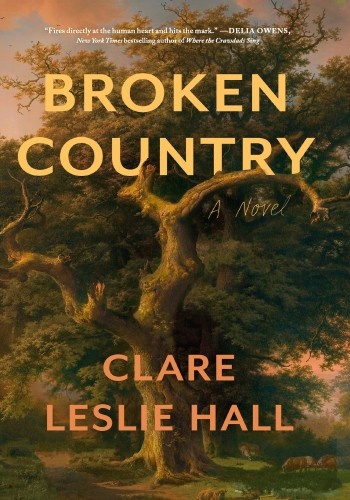
Broken Country
About this book
Beth has built a quiet life with her husband Frank on his family farm in North Dorset, a life held together partly by what neither of them says about the past. When Frank's brother shoots a dog worrying their sheep, its owner turns out to be Gabriel Wolfe, the man Beth loved as a girl.
Gabriel has returned to the village with his young son Leo, whose presence touches the grief Beth and Frank carry for their own dead child. Meetings that begin as neighbourly obligation revive memories of class, desire, and the different futures Beth once believed were available to her.
The story moves between 1968, Beth's adolescence, and a courtroom in 1969, revealing consequences before it supplies all their causes. That structure makes every rural domestic scene part of a larger question: which betrayal became fatal, and whose version will survive public judgment.
Broken Country is both a love story and a crime novel, but its strongest tension lies in the ordinary loyalties surrounding the central triangle. Clare Leslie Hall writes about marriage, bereavement, land, and the damage caused when a buried choice is mistaken for a finished one.
Read a sample
5,091 words
Plain text
From the opening
The farmer is dead, he is dead and all anyone wants to know is who killed him. Was it an accident or was it murder? It looks like murder, they say, with that gunshot wound to the heart, so precise it must have been intended.
They are waiting for me to speak. Two pairs of eyes relentless in their stares. But how can I tell them what he wants me to say, the words we have practiced over and over in the minutes before the police arrive?
I shake my head, I need more time.
It’s true what they say: You can live a whole lifetime in a final moment. We are that boy and girl again with all of it ahead, a glory-stretch of light and wondrous beauty, of nights beneath the stars.
He is waiting for me to look at him and, when I do, he smiles to show me he is fine, the briefest nod of his head.
Say it, Beth. Say it now.
I look at his face again, beautiful to me then and now and always, one final glance between us before everything changes.
1968
Hemston, North Dorset
“Gabriel Wolfe is back living in Meadowlands,” Frank says, the name exploding at me over breakfast. “Divorced now. Just him and his boy rattling around in that huge place.”
“Oh.”
It seems to be the only word I have.
“That’s what I thought,” Frank says. He gets up from his side of the table and walks around to mine, takes my face in his hands, kisses me. “We won’t let that pillock cause us any grief. We’ll have nothing to do with him.”
“Who told you?”
“It was the talk of the pub last night. Took two huge great lorries to bring all their stuff from London, apparently.”
“Gabriel hated it here. Why would he come back?”
His name feels strange on my tongue, the first time I’ve spoken it aloud in years.
“There’s no one else to look after the place. His father long gone, his mother on the other side of the world. Up to her neck in dingo shit, with any luck.”
Frank always manages to make me laugh.
“What’s here for him, anyway?” Frank says, casually, but I see it, the unsaid thought that flits across his mind. Aside from you. “He’s bound to sell up and move to Las Vegas or Monte Carlo or wherever it is these…”—he grapples for the word, looks pleased with himself when he finds it—“celebrities hang out.”
Frank spends all the daylight hours and a fair few at nighttime out on the farm, caring for our animals and tending the land. He works harder than anyone I know but always takes time to notice the beauty of a spring sunset or the sudden, dizzying soar of a skylark, his attunement to weather and wildlife set deep in his bones. One of many things I love about him. Frank doesn’t have time to read novels or go to the theater. He wouldn’t know a dry martini if someone chucked one in his face. He’s the very antithesis of Gabriel Wolfe, or at least, the one we read about in the papers.
I watch my husband leaning against the door to pull on his boots. In twenty minutes’ time his skin will be permeated three layers deep with the stench of cow dung.
The door, rapped hard from the other side, makes Frank start. “Bloody hell,” he says, yanking it open so quickly his brother falls into the room.
Our mornings invariably start this way.
Jimmy, still ruddy from last night’s beer, eyes screwed half shut, one strand of hair sticking straight up as if it’s gelled, says: “Aspirin, Beth? Got a banger.”
I take down the medicine box from the dresser where it lives primarily in use for Jimmy’s hangovers. Once upon a time it was full of infant paracetamol and emergency plasters.
There are five years between them but Frank and Jimmy look so similar that, from a distance, even I struggle to tell them apart. They are well over six foot with dark, almost black hair and eyes so blue people often do a double take. Their mother’s eyes, I’m told, though I never had the chance to meet her. They are both wearing shabby corduroys and thick shirts, soon to be covered in the navy overalls that are their daily uniform. In the village they are sometimes called “the twins,” but only in jest; Frank is very much the older brother.
“What happened to ‘just going to finish this pint and call it a night’?” Frank says, grinning at Jimmy.
“Beer is God’s reward for an honest day’s toil.”
“That from the Bible?”
“If it isn’t, it should be.”
“We’ll be with the lambs at midday. See you then?” Frank calls to me as the brothers go out of the door, still laughing as they cross the yard.
With the men out milking and the kitchen cleared there are plenty of jobs to get on with. Washing—so much of it—both brothers’ overalls rinsed and waiting for me on the scrubbing board. The breakfast washing-up. A floor that always needs sweeping, no matter how often I take the broom to it.
Instead, I make a fresh pot of coffee and put on an old waxed jacket of Frank’s and sit at the little wrought iron table looking out across our fields until my gaze meets its target: three red chimneys of differing heights peering above the fuzz of green oak on the horizon.
Continue reading the sampleClose the sample
Meadowlands.
Before
1955
I don’t know I am trespassing, I am lost in a dreamworld, my head full of romantic scenarios in which I triumph. I picture myself beside a fountain with an orchestra in full flow, receiving an impassioned declaration of love. I read a lot of Austen and Brontë at this time, I have a tendency to embellish.
I must have been staring up at the sky, head in the clouds quite literally: The collision comes out of nowhere.
“What the hell?”
This boy I bump into, his shoulder bashing into mine, is no hero. Tall, slender, arrogant, like a teenage Mr. Darcy.
“Don’t you look?” he says. “This is private land.”
I find the whole “private land” thing slightly absurd, particularly when it’s accompanied by a curt, cut glass accent like this one. This meadow we are in, green and curving, oaks with their cloud-bloom flowering, is England in its full glory. It’s Keats, it’s Wordsworth. It should be for everyone to enjoy.
“Are you smiling?” He looks so annoyed, I almost laugh.
“We’re in the middle of nowhere. There is no one else here. How could it possibly matter?”
The boy stares back at me for a moment before he takes in what I have said. “You’re right. God. What is wrong with me?” He holds out his hand, a peace offering. “Gabriel Wolfe.”
“I know who you are.”
He looks at me expectantly, waiting for my name. But I don’t feel like telling him yet. I’ve heard talk of Gabriel Wolfe, the famously handsome boy from the big house, but this is the first time I’ve seen him in the flesh. He has a good face: dark eyes framed by eyelashes my girlfriends would kill for, wavy brown hair that flops across his forehead, sharp cheekbones, elegant nose. A patrician kind of beauty, I suppose you might call it. But he is wearing tweed trousers tucked into woolly socks. Draped across his shoulders like a cape is a jacket of matching tweed, belt dangling. Old man’s clothes. He’s not my type at all.
“What were you doing here?”
“Looking for a place to sit and read.” I draw my book out of my coat pocket—a slim volume of Emily Dickinson.
“Oh. Poetry.”
“You sound a little disappointed. P. G. Wodehouse more your thing?”
He sighs. “I know what you’re thinking. But you’re wrong.”
I’m smiling again, I can’t help it. “What are you, a mind reader?”
“You think I’m a brainless, upper-class twit. A Bertie Wooster.”
I tilt my head and consider him. “He’d love your getup, you have to admit. He’d say it was spiffing.”
When Gabriel laughs, it changes him completely.
“These are my father’s old fishing trousers. I nicked them out of a box of stuff going to the jumble sale. I wouldn’t have worn them if I’d known you’d take such offense.”
“Is that what you’re doing, fishing?”
“Yes, just down there. I’ll show you, if you like.”
“I thought it was out-of-bounds for plebs like me?”
“You see, that’s why you have to come. I’ve been rude and I’d like to make it up to you.”
I stand before him, unsure. I don’t want to get caught up in something that is hard to get out of. All I wanted was a pretty spot to sit and read.
He smiles again, that face-changing smile. Handsome even in his old man’s garb. “I’ve got biscuits. Please come.”
“What kind of biscuits?”
Gabriel hesitates. “Custard creams.”
Fountain, orchestra. Lake, biscuits. It’s not so much of a stretch.
“Well, in that case…” I say, and this is how it begins.
1968
Of all the seasons, early spring, when the air is sly with cold and the birds are starting up and the fields are filled with lambs, has always been my favorite. Bobby was mad for our lambs. He fed the waifs year after year with a bottle, that was his job, he wouldn’t let anyone else touch it, even stayed off school to do it one time. A spirited boy, he wore shorts right the way through winter and no coat, even when the headmistress sent him home for one. A golden boy, he sang so much when he was little we called him Elvis. He was tall and skinny with brown hair that stuck up just like his uncle’s.
Jimmy has the transistor radio playing, I can hear it well before I reach the tin barn. It’s the Beatles: “Hello, Goodbye” at full volume. Not very pastoral, but it’s clearly working for Jimmy’s hangover. I watch him as I come in through the gate at the top of the field, he has one hand resting on a ewe’s backside, hips swaying from side to side, left foot jiggling.
“Where’s Frank?” I say, and Jimmy points to the bottom of the field.
Together we stand and watch as my husband vaults the fence. One strong arm placed on the top rail, his body swung out at a right angle before he clears it like an Olympian hurdler. I see him doing it most days but it still gives me a small rush of pleasure, the simple joy of it in a man whose life is dominated by hard work.
He walks up the field toward us, swinging his arms energetically; even from here I know he is probably whistling. This is Frank where he most loves to be.
Most of our ewes have delivered, we have forty-six lambs out to pasture with a handful still in the stalls. Only one bottle feeder and one stillborn. Frank and Jimmy look over the pregnant sheep, palms against their bellies to check for a breach, examining their rears for signs of birth. It’s more instinct than anything; they could do it in their sleep. Jimmy is the soft touch, he chats to the ewes while he works, gives them Rich Tea biscuits when he’s done. Frank is always in a rush, in his head an unending checklist of tasks, a brain that holds too much.
“Think we could wrap up the mothers’ meeting and crack on?” Frank says, and Jimmy rolls his eyes.
“Bossy so-and-so, isn’t he?” he tells the ewes.
The sheep have a long, sloping field to themselves but they don’t spread out much, always clustered up here, next to the barn. In a week or so the lambs will become more independent, and that’s when they start frisking off in one direction or another, spindly legs buckling. The stage Bobby loved the most. He was a farm boy, he understood how it worked, but every single year it broke his heart when it was time to ship his babies off to market.
I don’t know which of us hears the barking first. We spin around to a golden-haired lurcher tearing toward us.
A stray dog, no owners with him, charging our lambs.
“Get out of it!” Frank tries to block the lurcher. He is six foot two, broad and fierce, but the dog just darts around him, straight into the thick of our ewes.
The sheep are moaning, tiny offspring bleating in fear; only a few days old, but they sense the danger. A flick-switch change in the dog. Eyes black, teeth bared, body rigid with adrenaline.
“Gun, Jimmy! Now!” Frank yells, and Jimmy turns and runs to the shed.
He’s fast, Frank, racing at the dog with his primeval roar, but the dog is quicker. It picks off a lamb, nips it up by its neck, throat ripped open. The appalling red of its blood, a jet of crimson pools on the grass. One lamb, two lambs, then three; guts spilling out like sacrificial entrails. The ewes are scattering everywhere now, stumbling out, terror-blind, their newborns exposed.
I’m running at the dog, shrieking, trying to gather up the lambs but I hear Jimmy yelling, “Out of the way, Beth! Move.”
And then Frank has grabbed me into his arms so tightly I’m pressed right into his chest, and I can feel the thundering of his heart. I hear the gunshot and then another, and the dog’s quick, indignant howl of pain. It’s over.
“Bloody hell,” Frank says, pulling back, checking my face, a palm pressed against my cheek.
We walk over to the dog, the three of us cooing and calling out to the sheep, “Come on, girls,” but they are shivering and bleating and giving the three infant corpses a wide berth.
Out of nowhere, like a mirage, a boy comes running up the field. Small and skinny in shorts. Maybe ten years old. “My dog,” he screams.
His voice so sweet and high.
“Fuck,” Jimmy says, just as the child sees the bloody heap of fur and yelps, “You killed my dog!”
His father is here now, panting and flushed, but scarcely different from the boy I knew. “Oh, Jesus Christ, you shot him.”
“Had to.” Frank gestures at the butchered lambs.
I don’t think Gabriel has any idea who Frank is, or at least, who he is married to, but then he turns and catches sight of me. Momentarily, panic flits across his face before he recovers himself.
“Beth,” he says.
But I ignore him. No one is looking after the child. He is standing by his dog, hands covering his eyes as if to black out the horror.
“Here.” I’m beside him in seconds, my hands on his shoulders. And then I kneel in front of him and wrap my arms around him. He begins to weep.
“Keep crying,” I say. “Crying will help.”
He collapses against me, wailing now, a boy in shorts in my arms.
And this is how it begins again.
The Trial
Old Bailey, London, 1969
Nothing could prepare me for the agony of watching the man I love sitting high up in the dock, flanked by two prison officers, as he awaits his verdict.
A man accused of an unthinkable crime.
He never glances up at the gallery to search for my face and he doesn’t look at the jury either. Doesn’t observe them, as I do, examining each one, panic pounding through me, as I ask myself: Will this tired-looking, gray-haired woman believe in his innocence? Will this middle-aged man in his banker’s garb of pinstripe suit, blue shirt with a white collar and cuffs, be the one to vote against him? The young man with shoulder-length hair, who looks kinder than the rest, might he be our ally? Mostly they are inscrutable, the seven men and five women who hold his fate in their hands. My sister says it’s good there are plenty of women. They are more compassionate, she says, as a rule. It feels like clutching at straws, but a part of me hopes the female jurors might understand the derailing passion that made us risk everything.
After months of our talking about it, the trial has begun. Everything about this courtroom seems to emphasize the severity of our situation: the high ceiling and wood-paneled walls; the judge, resplendent in red on his high-back chair, like a king on his throne as he surveys his court; beneath him the barristers in wigs and black gowns, looking through papers as they wait for proceedings to begin; and the court clerk quietly pompous as he stands before the dock and makes his chilling proclamation: “You are charged with the murder…”
The press bench is filled with journalists in tweed jackets and ties, not a single woman among them. And then there is the gallery, where I sit with Eleanor, along with all the rubberneckers. Not so long ago I shared their thirst for human drama. How avidly I followed the Profumo scandal and the subsequent trial of Stephen Ward. I remember, as if it were yesterday, the photos of Christine Keeler and Mandy Rice-Davies leaving court, how stylish they looked, how the press still managed to denigrate and cheapen them.
It’s very different when the prisoner in the dock is the person you love. Look up. Please, my love. I try to engage him telepathically, the way we always used to, but he stares ahead with his strange, blank eyes. The only giveaway of the distress I know he is feeling—felt in every waking moment since—is the angry clench of his jaw. To an outsider, perhaps, he looks hostile, but I know better. It’s the only way he can stop himself from crying.
Before
If I were to paint a picture of a classic English lake it would look just like the one at Meadowlands.
The surface is covered with clusters of water lilies, the flowers a fist of white and pink with bold yellow hearts. At the far end a pair of willow trees stretch out across the water, and three white swans are gliding toward us in a uniform line, as if the gaps between them have been measured with a ruler.
Gabriel has set himself up with a rug, a picnic hamper, and a folding canvas chair, a pair of fishing rods propped up against it. He gestures to the chair—“Be my guest”—but I choose to sit next to him on the rug instead. From the hamper he produces a tartan thermos of tea and a packet of Garibaldi biscuits.
I raise my eyebrows and he grins.
“I thought you might not come if I told you it was squashed-fly biscuits.”
I watch him pour tea into a white tin mug with a navy rim. He has beautiful hands, with long elegant fingers. He adds milk and sugar without asking and hands it to me.
On the far side of the lake, near to the willows, there’s an ancient-looking khaki tent, the kind you see in safari films. I can imagine Grace Kelly sitting outside it, sipping a gin and tonic, a neat shirt tucked into her fawn-colored breeches.
“What’s the tent for?”
“I camp here in summer. Wake up and swim every morning. Fry bacon and eggs on a little stove.”
It seems odd to me, a boy who lives in a house the size of Meadowlands, choosing to rough it instead under canvas.
Like everyone else in the village I’ve been to Meadowlands for the annual summer fete. I’ve eaten wedges of Victoria sandwich in the tea tent, hooked myself up to my sister for the three-legged race, come last but one in the egg and spoon. I’ve seen Gabriel’s mother, Tessa, dressed like a fashion model in head-to-toe black: her neatly tailored suit more fitting for Paris than Hemston; a wide-brimmed hat, huge sunglasses; scarlet lips her only hint of color. Compared to all the other mothers in their plain print dresses and sandals, she always seemed exotic and untouchable. I can picture his father, Edward, besuited, bespectacled, and much older, gamely lobbing balls at the coconut shy.
What I can’t remember is Gabriel.
“Why have I never seen you at the village fete?”
“I’ve always been away at school. Not anymore, though. I sat my last exam two weeks ago. Three months at home before I go to university, not sure how I’ll stand it.”
I gesture to our view. The glittering water and overhanging trees, their fronds reflected in a mirror image of feathery gold. The irregular stipple of white and pink. “How hard can it be?”
He glances at me, then shrugs. “It’s not a sob story, if that’s what you mean. I know how lucky I am. But I’ve been at boarding school most of my life. I don’t know anyone my age here. I suppose what I’m saying is, I don’t much like being at home.”
“What about your parents? Don’t you get on with them?”
He swivels his hand in a so-so gesture. “My father is quiet, scholarly, spends most of his time shut up in his study, reading; I don’t quite know how he ended up with my mother—a moment of madness, I think. They could not be more different. He doesn’t ask me anything, she never leaves me alone. She wants to know every detail of my life, who my friends are, which parties I’ve been invited to, whether or not I have a girlfriend. Especially that. She has a weird fascination with my love life. And she can be difficult. Especially when she drinks, which is most of the time.”
I met Gabriel fifteen minutes ago, perhaps less, but already I can tune into the words he doesn’t say. I can picture him aged ten or twelve, sitting beside a tall, exquisitely dressed Christmas tree, surrounded by presents but craving something else: teasing and chaos and banter.
When I begin to talk about my own family, I catch the wistfulness on Gabriel’s face. I tell him about my sister, who is about to finish her first year as a secretary for a solicitors’ firm in London. Her days may be spent taking minutes for short-tempered men, but at night she explores London in all its postwar glory. She writes to me of jazz clubs in Soho and after-hours drinking dens, wandering at dawn through the flower market at Covent Garden, waking hours later to a bedroom strewn with red roses.
To a country girl, the life my sister is leading seems one of unparalleled color and richness; I cannot wait to join her.
I tell Gabriel we have spent most of our adolescence leaning out of Eleanor’s bedroom window, sharing cigarettes filched from our father’s packet of Benson & Hedges, spinning daydreams for one another.
“What do teenage girls dream about? James Dean? Marlon Brando?”
“Bit more highbrow than that,” I say, immediately defensive.
But Gabriel is right, we spoke of boys and love mostly.
“And”—he looks up as if he’s examining the thin trail of cloud above us—“were there any ordinary mortals in these dreams of yours? I suppose I’m asking if there’s someone in particular you care about?”
Actually, there is, though I’m not about to tell Gabriel that. There’s very little to tell. A boy who takes the same bus to school and always smiles at me. A boy who is tall and broad and handsome, who looks too big for his uniform, as if one day he might burst out of it. His skin is always sunburned from weekends working on the family farm. He has let it be known in time-honored fashion, from his friends to mine, he would like to take me out one day. I have filtered back that if he asked me, I would be likely to say yes.
It seems simplest to evade the question. “Mostly we’d make up futures for each other. The dreams I spun for Eleanor were always more elaborate than the ones she made up for me. Eleanor gets bored easily. And I could get so lost in the detail, hours of conversations, wrong turns leading to right ones, I’d always make her wait for her happy ending.”
“You’re a storyteller, then. You’ll become a writer, I bet.”
“I write poetry.”
I never tell anyone about the poems I write, probably because I suspect they are bad. I can’t stop writing them, though, filling notebooks with lines of verse, half phrases, and pleasing word pairings when I should be crafting an essay on the Russian Revolution.
He taps the Emily Dickinson on the rug between us. “A poet,” he says. “I had a feeling you might be.”
“A bad poet. Maybe even a terrible one.”
“Don’t say that. You have to fool yourself into thinking you already are the thing you want to become. That’s what my father says. You write, therefore you’re a writer.”
There’s a moment’s silence, and then he says, “I write too,” and I recognize the sheepishness with which he says it.
We smile, perhaps both thinking the same thing: two would-be writers, two dreamers, two lonely teenagers waiting for their lives to begin. Who would have thought we’d have so much in common?
“What kind of things?”
“A novel I’ve started over and over. It always collapses at the same point, about seventy pages in.”
“What’s it about?”
“I’m embarrassed to tell you.”
“Does it, by any chance, feature a boy from a big house with questionable taste in clothes?”
Gabriel looks crestfallen and I am filled with sudden self-loathing. Why am I behaving like this? I don’t know him well enough, and my humor is clearly misjudged. “I’m sorry. I’m teasing you but I shouldn’t. I know better than anyone how painful this whole thing is.”
“You’re right about the autobiography aspect. The main character is a drunk. A beautiful woman, unhappily married to a much older man. The only thing I want in life is to write novels. I used to want to be Graham Greene. But then I read Lucky Jim by Kingsley Amis and it changed everything for me. It’s such a funny book, but daring too. And that’s the kind of novelist I’d like to be. Taking risks. Surprising people. A bestseller before I am thirty, if I’m lucky. There. I’ve told you my innermost secret. You can laugh at me now.”
“I don’t want to laugh at you,” I burst out. “I want to take back every mean thing I’ve said. Can we start again?”
This time it’s me who holds out a hand for him to shake.
“You’re a strange girl, Beth Kennedy,” he says, taking my hand.
“Good strange or bad strange?”
“Good strange, definitely. My kind of strange. I have a sixth sense for these things.”
The light is beginning to drift from the sky by the time I get up to leave. We have been talking for several hours.
“I’ll walk you to the road,” Gabriel says.
“Escorting me off your land?”
“More eking out the last minutes with you.”
I feel a rush of pleasure at this, not that I show it.
“When will you come again?”
I like that for him it’s a foregone conclusion we will see each other again.
“At the weekend?”
“Come on Friday evening. The lake is magical at night.”
There’s a frisson of awkwardness when we say goodbye, as if we should shake hands or kiss or something, but we do neither.
“Goodbye, then,” I say.
“The tweed is going straight in the dustbin,” he calls after me.
“Good,” I shout back.
At the bend in the road, I turn around to wave and I can sense his eyes following me until I disappear from view.
1968
In all the fantasies over the years of meeting Gabriel Wolfe again, driving his child and his dead dog home was never one of them. Leo is sitting in the back of the Land Rover, the dog wrapped in an old coat of Frank’s. His weeping cuts me to the bone.
Gabriel occasionally tries to bridge the impossible task of placating us both, and excusing the dog. “It was instinct,” he tells his son. “Lurchers were bred to hunt and kill. The farmer did the only thing he could. He had to stop him.”
“He murdered Rocket,” Leo says.
“Oh, honey,” Gabriel says, with a slight twang that makes me think of his American wife. “He had to protect his lambs.”
Gabriel says this without much conviction, and I understand. How can a lay person appreciate the true cost to a farmer in losing his sheep? It’s not the money, although we rely on the sale of each lamb to keep us going through the winter months. It’s the heartbreak of seeing your animals destroyed. The absolute terror of the flock as they watch their own being slaughtered. Five months of nurturing the pregnant ewe, the joy of its lamb being born, which doesn’t diminish no matter how many times you see it, only for the lamb to be lost to a savage, bloody death.
Even so, the boy’s pain is hard to bear.
“I’m sorry,” I say.
“Beth?”
I glance at Gabriel. He has not lost any of his handsomeness with age.
“This is not your fault.”
It’s surreal seeing him like this, a normal person, a father dealing with a bereft son, instead of the alter ego I have become used to seeing in newspapers and magazines. Gabriel Wolfe, enfant terrible of the literary world. In the years since I knew him, Gabriel has become the thing he desired more than anything else, a respected author. His first novel, published when he was just twenty-four, was a bestseller; his dream had come true in the space of six years. A combination of his edgy writing and indisputable good looks kept the press attention rolling in. If publishing had rock stars, then Gabriel was Mick Jagger and his pretty, blond wife was Marianne Faithfull. And our lives, his and mine, became polar opposites. I was now a farmer’s wife, my days filled with bitterly cold mornings, the magic of a lamb being born at sunrise.