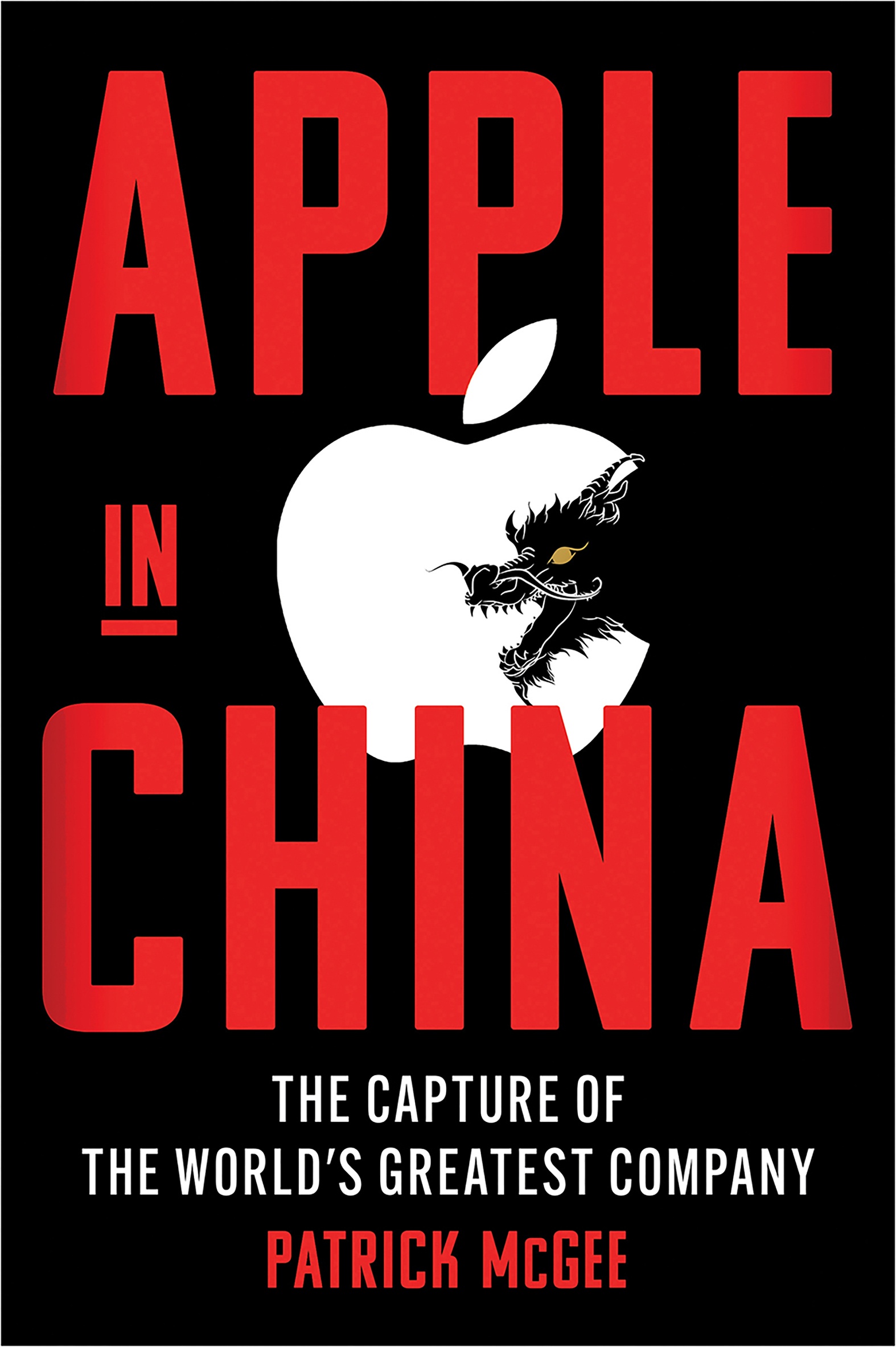
Apple in China: The Capture of the World's Greatest Company
About this book
Apple entered China looking for factories capable of producing difficult products at immense scale. Its engineers did more than place orders: they transferred methods, equipment, training, and production knowledge across a growing network of suppliers.
That investment helped create capabilities far beyond Apple assembly lines. Chinese firms learned precision manufacturing while local officials gained leverage over a company whose devices, revenue, and product schedules came to depend on continued access.
McGee follows executives, engineers, factory owners, and political negotiations to show how operational brilliance narrowed strategic choice. Decisions that solved the next launch also deepened a concentration risk that would take years to unwind.
Apple in China is a business history of mutual transformation rather than a simple story of outsourcing. It asks what a corporation has given away when its most valuable supply chain becomes inseparable from a rival state's industrial ambitions.
Read a sample
5,107 words
Plain text
From the opening
PROLOGUE “INCOMPARABLE” ARROGANCE
Xi Jinping wasted no time making it known to the world’s biggest tech company that things would be different. On March 15, 2013, just one day after he was inaugurated as China’s new president, Beijing’s state broadcaster aired its annual Consumer Day show, a segment watched by millions that dated back to 1991. Every March, China Central Television would call out various corporate players that hadn’t been treating customers well. In the 1990s, Chinese companies were savagely criticized. By the 2000s, foreign companies came under scrutiny, with McDonald’s and French grocery chain Carrefour called out for food violations in 2012. And in 2013, the target was Apple. The CCTV charged that Apple treated Chinese customers poorly and unequally. In foreign markets, CCTV said, broken iPhones were wholly replaced or restored with new parts, but Chinese customers’ phones were fixed with refurbished parts.
In Cupertino, Apple executives were perplexed by the allegations. Initially, there was no worry, just confusion. It looked like a simple misunderstanding. Apple’s warranties were near identical around the globe, whether the consumer was in China or Canada. The gap between the negative coverage and the apparent problems—warranty differences, of all things—was jarring. So the iPhone maker reacted the way any company might: It matter-of-factly denied the claims, clarifying that its warranties in China were “more or less the same as in the U.S. and all over the world.” For good measure, Apple added that it provided an “incomparable user experience.”
Wrong answer! Cupertino was soon victim to a digital blitzkrieg as state-backed media engaged in a coordinated multi-week attack on Apple. Some newspapers called the company “dishonest” and said Apple’s customer service was poor. China’s quality inspection bureau warned Apple of “severe repercussions” if it didn’t improve its warranties. The People’s Daily, a Beijing mouthpiece, scolded the “empty and self-praising” statement in an editorial printed on its front page. Millions of Chinese subscribers woke up to a paper whose chief headline read: “Strike Down Apple’s ‘Incomparable’ Arrogance.” The editorial accused the company of greed and “throwing its weight around,” portraying it as just the latest foreign company to exploit the Chinese consumer. “Here we have the Western person’s sense of superiority making mischief,” the editorial said. “If there’s no risk in offending the Chinese consumer, and it also makes for lower overheads, then why not?” The editorial had a menacing “or else…” tone to it, pointing out that Chinese consumers had “propped up the brand’s remarkable results.” It’d be a shame if something happened to it, was implied.
For Apple, the stakes were enormous. From its founding in a garage in 1976 through its incredible growth in the 1980s to its near bankruptcy in 1996, Apple largely manufactured its own computers. It operated major factories in California and Colorado, Ireland, and Singapore. Shortly before Steve Jobs returned to the company in 1997, Apple began to abandon this strategy, though, in favor of offshoring its production to contract manufacturers. Production initially moved to South Korea and Taiwan, and then Mexico, Wales, the Czech Republic, and China. It was a period of experimentation before the armies of flexible, affordable, and hardworking laborers in China prevailed, aided by government policies meant to lure multinational corporations by offering depressed salaries, a suppressed currency, and a relaxed take on labor laws. As the Chinese scholar Qin Hui puts it, the country’s competitiveness was based on “low wages, low welfare, and low human rights.”
These operations played such a salient role in Apple’s success that by 2011 the unassuming character behind them, chief operating officer Tim Cook, was handpicked by Steve Jobs to succeed him as CEO. Cook, unlike Jobs, wasn’t a charismatic leader or a product visionary, but his appointment was a recognition that he’d established unparalleled efficiencies that had become a decisive factor in Apple’s ascent. The selection signaled that Apple’s goal for the coming decade was less about breakthrough products and more about distributing, at scale, the hit products it had already conceived.
The vitriolic commentary directed at Apple following the CCTV episode, coupled with a sharp decline in China sales, underscored that Apple’s gargantuan operations in the country had created the company’s biggest vulnerability: its newfound dependence on a single country, China. For the prior decade this risk had felt remote. China was opening to the world, embracing capitalism and marching toward democracy. But in 2013, Xi took China in a radically different direction. The years of being a multinational haven were over. Prizing “indigenous innovation,” Xi hardened conditions in the country and twisted the arms of corporations to “give back” to China, part of a goal to turn the country into the unquestioned leader in technology.
At the time of the digital blitzkrieg, Apple’s business in China had been soaring—a development that, harkening back to the way things had looked at the time of the 2008 Beijing Olympics, was wholly unexpected. Back then, Apple had opened its first China store. That year, its China revenues were far less than $1 billion; by 2012, they’d ballooned to almost $23 billion. But with the negative publicity, sales abruptly declined: Greater China revenues had experienced 67 percent growth in the December quarter, but growth plummeted to just 8 percent in 2013’s March quarter, and in the June quarter they shrank 14 percent. An internal document from Apple later said the decline was “likely influenced by the Chinese Government’s decision to target Apple on Consumer Day.” Apple, in a matter of weeks, went from feeling untouchable to fearing its products would be blacklisted.
Continue reading the sampleClose the sample
Eighteen days after the CCTV episode, Tim Cook personally apologized with a letter, translated into Mandarin and posted on Apple’s China website. He offered “sincere apologies,” said he had “immense respect” for China, and acknowledged that a “lack of communication” had led to Apple appearing arrogant or signaling that it didn’t value feedback. He declared a new replacement policy that was superior to what American customers would receive.
In the years since, two narratives within Apple have developed regarding what happened in those eighteen days. One is that CEO Tim Cook underwent something of a twenty-first-century show trial: Beijing had deliberately accused Apple of something it knew wasn’t true, to demonstrate its power. The whole episode was a spectacle designed to make Cupertino understand its junior position in the partnership and then publicly kowtow. Some hard-liners in China certainly saw Cook’s apology this way: On social media one rejoiced that Apple had been compelled to “bow its arrogant head.”
But there is a competing, more nuanced narrative that points to real setbacks experienced by Chinese consumers. The problem here wasn’t with Apple per se, but rather with a series of challenges that had emerged from counterfeit iPhones being sold around the country. In some cases, bad actors and duped customers were bringing fake iPhones to the Apple Store, saying they were defective and asking for a replacement. Employees would determine the products were knockoffs and reject them. These difficulties were exacerbated by dozens of sham stores emerging in cities where Apple hadn’t built a retail presence. These stores could appear so genuine that the employees themselves thought they were real. The phony stores often sold real goods, but it was a grift—they had no interest in replacing defective or broken hardware. The experience of customers going to these stores for help created misinformation, fueling anger and complaints to government officials. The situation was confounding: Beijing’s concerns were valid, in that there was real consumer anger, and yet its critiques were technically wrong, as Apple warranties were virtually identical across the world.
Neither of these narratives, however, represents the full story, revealed later in this book. In any case, the Consumer Day incident and its aftermath was a watershed episode for Apple. Cupertino realized just how deeply exposed it was in China and how ill-equipped it was to understand the situation and respond. Apple’s top brass abruptly came to understand that they had no answers to basic questions like What’s our government strategy in China? or What’s our political strategy in China? For years the company had relied on partners, led by Taiwanese assembly giant Foxconn, to engage with provincial governments on labor issues and supply chain challenges. Apple had no broader, coordinated strategy. It employed around 1,000 engineers in China at the time, but none were senior. The company was orchestrating vast production networks but doing so under the radar. Not a single manufacturing site bore the Apple name or displayed a bitten fruit outside, yet by 2012 the value of Apple-owned machinery in the country had soared to $7.3 billion—more than Apple’s US buildings and retail stores put together. Apple had essentially cracked the code on how to manufacture the world’s best products without doing any of the manufacturing itself. It wasn’t really “outsourcing” in the normal sense—that would imply it was sending blueprints to companies capable of taking the orders and executing. Instead, Apple was routinely sending its top engineers, designers, procurement specialists, and lawyers from the United States into hundreds of factories across the country, where they’d import machinery, train armies of workers, coordinate the delivery of intermediate goods, and scrutinize suppliers to ensure compliance. Apple’s influence was enormous, but no senior executives lived in China or understood the politics, nor had Apple appointed anyone to oversee the business or manage government affairs.
The thinness of its team on the ground might have been unremarkable in 2009, when Apple was primarily just an operator that used China as a base for building products and exporting them around the world. But by 2012 the iPhone had become a massively sought-after device by Chinese consumers, boosting Apple’s regional revenues by 2,830 percent. That growth testified to the dual potency of Apple’s remarkable product designs and world-leading production. But its particular success in China was totally unforeseen and not the result of some well-thought-out strategy. In just a few years the Greater China region had progressed from delivering minimal revenue to generating almost 15 percent of Apple’s global total. This wild success was as surprising to Cupertino as to everyone else—even Tim Cook called it “mind-boggling.” When Time published a cover story called “The Cult of Apple in China” in mid-2012, writer Hannah Beech had correctly mused: “much of Apple’s growth in China has been a lesson in how to prosper without really trying.”
The Age of Apple
Apple in China tells a huge untold story—how Apple used China as a base from which to become the world’s most valuable company, and in doing so, bound its future inextricably to a ruthless authoritarian state. It’s the story of how Apple convinced Beijing it was not merely a merchant in China, but a kind of patron and mentor, financing, training, supervising, and supplying Chinese manufacturers. This isn’t a story about the globalization of electronics, but rather, about its Chinafication.
The prevailing Western narrative about Apple in China is remarkably narrow. The go-to story of the past two decades has been about the tedium of assembling Apple products—a tale of low wages, underage employees, sixteen-hour workdays, suicides at Foxconn, and accusations of forced Uighur labor. This narrative isn’t wrong, but it misses the biggest piece of the puzzle: It’s not merely that Apple has exploited Chinese workers, it’s that Beijing has allowed Apple to exploit its workers, so that China can in turn exploit Apple.
It would be banal to say that Apple wouldn’t be Apple today without China. There is no other place on earth that could have provided similar cost, efficiency, and scale. What this book contends is more intriguing—that China wouldn’t be China today without Apple. Its investments in the country have been spectacular, rivaling nation-building efforts in cost, man-hours, and impact. Apple itself estimates that since 2008 it has trained at least 28 million workers—more people than the entire labor force of California. China brilliantly played its long-term interests against Apple’s short-term needs. In 1999, none of Apple’s products were made in mainland China; by 2009, virtually all were. This rapid consolidation reflects a transfer of technology and know-how so consequential as to constitute a geopolitical event, like the fall of the Berlin Wall—but it’s an event that played out over many years, hidden by the twin threats of strict nondisclosure agreements and a censored media landscape where all the action was.
Internal documents obtained for this book reveal that Apple’s investments in China reached $55 billion per year by 2015, an astronomical figure that doesn’t include the costs of components in Apple hardware—the so-called Bill of Materials, which would more than double the figure. Compare that to the CHIPS and Science Act, the flagship policy of the Biden administration that then–Commerce Secretary Gina Raimondo called “a once-in-a-generation investment”—one that would “usher in a new era of American leadership in advanced semiconductor manufacturing.” The CHIPS and Science Act, which is designed to stimulate computer chip fabrication in America, will cost the US government $52 billion over four years—$3 billion shy of what Apple invested annually in China nearly a decade earlier. Let me underscore this point: Apple’s investments in China, every year for the past decade, are at least quadruple the amount the US commerce secretary considered a once-in-a-generation investment.
Although it’s far from secret that Apple manufactures its products in China, the seminal role the tech giant has played there is largely unheralded and unknown. By contrast, Taiwan’s critical, multi-decade role industrializing China through investment and worker training is widely recognized. At least three major books have been written on the subject in English since 2017. Even Xi Jinping, who seeks to annex Taiwan and has little reason to flatter its citizens, has acknowledged that China’s forty years of opening and reform “has to be chalked up to our Taiwan compatriots and Taiwan companies.” Taipei calculates that between 1991 and 2022, total business investment from the corporate sector exceeded $203 billion, a huge number by any standard—barring Cupertino’s.
The size and influence of Apple aren’t properly understood, in part because they are so difficult to fathom. How can it be, for instance, that demand from China’s 1.4 billion people indirectly supports, across all industries, between 1 million and 2.6 million jobs in America; whereas, by Tim Cook’s estimate, Apple alone supports 5 million jobs in China—3 million in manufacturing and another 1.8 million in app development? That upside-down contrast boggles the mind: one super-corporation has more of an impact on job creation in China than all of China has on America.
As I write this, Apple is expected to pull in $414 billion of global revenue in 2025, a company record. Since 2007, the iPhone alone has already earned a cumulative $2 trillion in sales. Apple’s business is so large and lucrative that in 2024 its $94 billion of net profit exceeded all revenue at NVIDIA—the chips architect worth $3 trillion that rivals Apple for world’s most valuable company. It’s common to hear that Apple is now stagnating, either because innovation has slowed or its hardware has reached commercial saturation. But the ubiquity of the iPhone has allowed Apple to wring huge profit from a new business in the last few years: services. The number of Apple devices in active use surpassed 2.35 billion in 2025, led by 1.4 billion iPhone users who spend more than four hours a day immersed in their glowing screens. These users represent the richest quintile of people in the world, and Apple can advertise or promote features to them—wireless payment, television shows, music streaming, fitness offerings—for free. In fact, Google pays Apple close to $20 billion a year just to be the default search engine on the iPhone.
The control Apple has over its ecosystem is extraordinary: When in 2021 Apple changed how third parties like Instagram and Facebook could “track users”—ostensibly a move to protect the privacy of iPhone owners—Meta estimated the new policy diminished its annual earnings by $10 billion. Meanwhile, revenue from Apple’s own privacy-first ad business was on a path to grow from $1 billion in 2020 to $30 billion by 2026. One advertising executive characterized the change as going “from playing in the minor leagues to winning the World Series in the span of half a year.” On average, Apple’s Services business earns margins north of 70 percent, double that of its hardware, and the business has been growing at nearly 20 percent a year for six years—all before potentially being supercharged by new artificial intelligence features. In short, the notion that Apple is at its peak is patent nonsense. But there is one Achilles’ heel: The fate of all the company’s hardware production relies on the good graces of America’s largest rival.
One of the narrative arcs of this book is how Apple, a company that built the world’s most sophisticated supply chain, ended up making the rookie and calamitous mistake of concentrating the vast bulk of its operations in a single area. As tech analyst Horace Dediu puts it: “It’s hard to reconcile the fact that the greatest American company, the most capitalist thing in the world, survives on the basis of a country that has Communist in its title.” In the years after Steve Jobs’s death, Dediu argued that maintaining Apple’s team, its culture, was paramount. “But today, what keeps Tim Cook up at night is China,” he says. “The China thing is existential.”
This book details how the Taiwanese manufacturer Foxconn refined an idea developed in America in the 1960s—electronics contract manufacturing—and took it to unprecedented heights using cheap and readily available labor in mainland China to develop cutting-edge expertise on a scale unknown anywhere else. At a time when China was severely lacking in manufacturing skill, Taiwanese entrepreneurs played a vital role in building operations and transferring skills to the mainland. None was more influential than Foxconn, whose revenues today are greater than Facebook parent Meta and NVIDIA combined. Its ascent to become the world’s largest maker of electronic components was driven by Apple’s sending troops of engineers en masse to mainland China to teach automation, engineering, and manufacturing.
But after years of Apple seemingly calling the shots, with Chinese provincial governments and suppliers bending over backward to win orders, the power dynamics have shifted. Since 2017, Beijing has made increasing demands of Apple’s China business, applying greater control over the content on the iPhone, forcing customer data to be housed in Chinese data centers, and pressuring Apple to partner with more local businesses. Cupertino has chosen not to expend political capital to fight Beijing’s more draconian demands; it has banned thousands of apps in the country, including The New York Times, encrypted messaging tools such as WhatsApp, and virtual private networks (VPNs) that had enabled users to bypass the Great Firewall. It has also supported companies such as Yangtze Memory Technologies Corp (YMTC)—a Beijing-sponsored chipmaker that a bipartisan group of US senators believe is a national security risk. When Apple shifted production to China in the early 2000s, Washington believed that free trade would help develop a middle class and inculcate democracy in what was then the world’s most populous country. Instead, economic success empowered China’s rulers, reinforcing their once-tenuous hold on the country and enabling Beijing to weaponize its manufacturing might. As one former Apple engineer puts it: “We’ve trained a whole country, and now that country is using it against us.”
Apple, having invested billions of dollars on infrastructure and training to make Chinese factories unparalleled world leaders, has had little choice but to comply with Beijing. So the “real estate” within the iPhone is increasingly Chinese, as state-subsidized companies known as “the Red Supply Chain” win more orders at the expense of Apple’s long-time American, Taiwanese, and Japanese partners.
As the first major history of Apple in the twenty-first century, this book focuses less on product appearance and software features, and more on how the hardware gets made. It’s a perspective shift that places the company’s five-decade lifespan into its proper geopolitical context. Multinational corporations weren’t calling the shots in the early 2000s, as they believed; they were actively being lured by the siren call of an emerging superpower.
Today, Apple works with more than 1,500 suppliers in fifty countries. But all roads lead through China: 90 percent of all production occurs in the country, and its much-vaunted assembly operations in Vietnam and India are no less dependent on the China-centric supply chain.
Operations for the iPhone alone span 200 production lines in China, each making an average 3,330 units a day—nearly a quarter billion per year. From 2007 through 2019, all iPhones were assembled by Taiwanese groups working in China, but their influence is rapidly waning; mainland Chinese groups with political backing have been taught the necessary skills and are taking over. How strategic this all was on the part of Beijing is difficult to surmise. But if hindsight is twenty-twenty, a former senior designer at Apple says it looks like Beijing’s strategy was to “brain drain” Taiwan, learn everything that is needed, then “cash them out,” and take over. Where Taiwan remains strongest is in semiconductors. Every notable Apple product relies on chips sourced from a single company in Taiwan, TSMC, by far the world’s most advanced chipmaker and the crux of Taipei’s “Silicon Shield” against possible invasion by Beijing.
Washington has reconciled itself to China’s authoritarian turn, but America’s biggest company has not—and probably cannot. The iPhone maker’s relationship with China has become politically untenable, yet the business ties are unbreakable. No other country comes remotely close to offering the right combination of quality, scale, and flexibility needed to ship close to half a billion luxury products each year. Nor does Cupertino want to stop selling into a country with the world’s largest middle class. Only a dozen multinationals earn more than $10 billion a year in China, and Apple tops the list with around $70 billion. Never mind conceiving “the next big thing.” Apple’s China Problem is the company’s biggest risk, the most consequential unknown for Tim Cook’s legacy, and an urgent challenge for Washington.
This is the story of how Apple got here.
PART ONE SAVING APPLE
CHAPTER 1 THE BRINK OF BANKRUPTCY
Joe O’Sullivan needed to sell Apple’s Macintosh factory in Fountain, Colorado, and fast. The week before, in late March 1996, Apple stunned observers by announcing it would lose $700 million that quarter, the biggest financial setback in its history. Debts were coming due, and Apple needed cash. But the Fountain deal was no ordinary asset sale. It was a capitulation.
The personal computer (PC) industry had undergone an enormous shift over the previous fifteen years, from companies building their own computers to outsourcing as much production as possible. Apple was the last holdout. Since its founding by two college dropouts named Steve in 1976, manufacturing had been part of the company’s culture. But now it was failing. The rest of the industry had off-loaded most of their production to contract manufacturers that had proved far nimbler and more cost-effective.
O’Sullivan, a self-deprecating, straight-talking Irishman who would spend fifteen years working in Apple operations on three continents and rise to the level of vice president, was in talks to sell the Fountain factory to SCI Systems, a contract manufacturer with little brand-name resonance relative to the profound role it played in the early history of personal computers.
Founded as Space Craft Inc, SCI was born in 1961 to help America compete with the Soviets after the launch of Sputnik. Its CEO, Olin B. King, had been a young engineer and brash entrepreneur when he cofounded SCI in the basement of his home in Huntsville, Alabama, known as “Rocket City.” King and his staff earned their technical chops building satellites for the US government, near NASA’s Marshall Space Flight Center. By the 1970s, SCI had switched tactics to build missile components for the superpower arms race and, eventually, instruments for NASA’s Saturn V, the rocket that launched astronauts to the moon.
SCI had emerged as the ideal buyer in part because it could take over the manufacturing of Apple’s products and retain much of the 1,100-person workforce. O’Sullivan was adamant that Apple get a good deal on the 340,000-square-foot factory, but the talks had reached an impasse. The Apple crew were thirty-somethings from California sporting T-shirts and a disdain for custom. They referred to their suit-wearing counterparts as “the grumpy old men from Huntsville,” and irked them by critiquing the bagels that were served. But Apple also wanted SCI to be liable in the event that a sizable number of assembled products failed once they were in customers’ hands, even if it was months later. SCI wouldn’t sign, considering this an onerous risk—which it was.
King was no pushover. He was a cantankerous and difficult man who relished being known as “the Godfather of Huntsville.” He enjoyed money and the social life it enabled, driving a large BMW at a time when imported luxury cars were virtually nonexistent in Alabama. More than anyone else, King brought into being what is now known as electronics manufacturing services, the stealth manufacturing industry now worth half a trillion dollars in annual revenue.
O’Sullivan had been negotiating all through the night, lawyers from Apple by his side. He was a savvy dealmaker and was happy being patient to get the best possible offer. Until, that is, he got a late-night call from Fred Forsyth, senior vice president of Worldwide Operations. “Joe, you need to sign this week,” his superior said.
When O’Sullivan started to recount the standoff and stressed the wisdom of taking his time, Forsyth interjected and spoke over him. O’Sullivan, tired from late-night bargaining, didn’t immediately grasp the urgency in Forsyth’s voice. Casually he replied: “It’s not going to be done quickly, if we want the terms in our favor.” Forsyth answered with a cadence and pitch that immediately unnerved the Irishman: “The deal has to be done quickly,” he said, “or you don’t get paid on Thursday.”
The discussion had gone from casual to job-threatening in a matter of seconds. O’Sullivan shot back: “Come on, there is no need to threaten that!” What Forsyth said in return was relieving, personally, but only heightened the alarm. “No, you don’t understand,” he said, “if the deal doesn’t get done, none of us will get paid on Thursday.”
Death Spiral
Apple’s corporate death was such a real possibility that it sought bankruptcy counsel. It hired a leading lawyer, Harvey Miller, of the law firm Weil, Gotshal & Manges. The company wasn’t quite at the point of telling Miller to draw up the necessary papers, but it explored options to understand what a Chapter 11 filing could offer. Fred Anderson, who joined Apple as chief financial officer in March 1996, would later say: “This company was in a death spiral.”
Months earlier, Apple’s treasurer had warned the board of directors that Apple “would be out of money somewhere around May.” Cash reserves had shrunk to $500 million, dangerously low for a company with 13,000 employees and $150 million of loans coming due in April. The holiday quarter of 1995 should have brought in reams of cash, but Apple’s sales team had panicked over the launch of Microsoft Windows 95. Desperate to maintain market share and move inventory, they cut prices by as much as 30 percent, to below cost. Apple revenues soared to a record high $3.15 billion, but—losing money on each sale—the company stunned Wall Street with a $69 million loss, rather than the predicted $150 million profit.
The terrible results had cost German-born Michael Spindler his job as CEO. It had been Spindler’s idea to flood the market with affordable Macs to compete with PCs. Apple warehouses were filled with nearly $1 billion of unsold inventory, a greater sum than the combined profits of the previous three years. Apple’s board concluded that the best way out of the crisis was to sell the company. They’d already spent months scouting IBM, Sun Microsystems, and the Dutch electronics group Philips as possible buyers. Nothing much came from the talks, but a good offer almost certainly would have been accepted. Unfortunately, Apple’s trajectory toward oblivion was so clear that when Sun CEO Scott McNealy pitched a merger, in late January 1996, he wouldn’t even pay the stock market price. Apple was trading at around $28 a share, but McNealy’s “best offer” was $23—valuing the company at just $2.8 billion. Apple considered the bid ridiculous and insulting. Yet McNealy was correct in his assessment. If anything, he was too generous. In six weeks, Apple shares would slide below $23. Within a year, they’d trade under $15.
Shortly after the Sun-Apple talks broke down, Apple’s rainbow-color logo graced the cover of BusinessWeek, set against an all-black background. In bold gray letters was the headline: “The Fall of an American Icon.” The article accurately portrayed Apple as “in near-meltdown” and in need of “a radical overhaul.” It resonated widely. Another senior vice president of Apple, Guerrino De Luca, was in talks to buy a house in San Francisco the week the issue was published. He’d secured a mortgage and put in an offer. Everything was a go. But the owner of the home subscribed to BusinessWeek and got nervous. “This guy works for Apple!” he protested. De Luca’s banker tried to explain it wasn’t a problem, that De Luca had already secured a loan, but the owner wouldn’t listen. His offer was denied.
The Threat from Boca Raton—and Huntsville
In a way, it was amazing Apple had made it this far against a field of rivals who could achieve lower cost and better distribution for every computer they sold. Apple’s survival was testament to the twin and somewhat contradictory forces of its founders. The Steve Wozniak–led Apple II computer, released in 1977, was the first personal computer to define a standard for others to follow, and it would be Apple’s number one revenue driver for an entire decade. The second force was the advanced nature of the Macintosh operating system (OS). It really was a decade ahead of its time when, in 1984, a boyish and handsome Steve Jobs, then just twenty-eight, unveiled the Mac with dramatic flair to a packed auditorium. When Jobs clicked the mouse—itself a novelty at the time—the computer took the air out of the room by speaking. “Hello. I’m Macintosh,” it said in an unnatural, synthetic voice, like it was Siri’s grandfather. “It sure is great to get out of that bag.”